
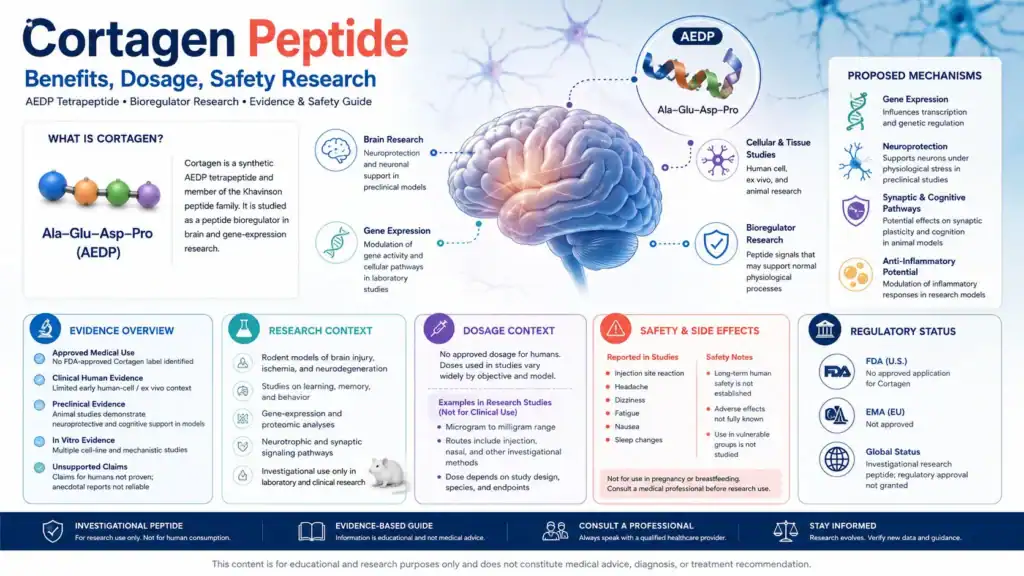
Cortagen peptide is an educationally discussed synthetic tetrapeptide associated with the sequence Ala-Glu-Asp-Pro, also abbreviated AEDP, in bioregulator literature and chemical databases 1, 2. This article reviews Cortagen research in a therapeutic information context, including proposed mechanisms, brain-health claims, dosage information reported in studies, safety limits, and regulatory status. It is not personalized medical advice, and it should not be used to decide whether to take, inject, combine, or prescribe Cortagen.
- Cortagen is a synthetic tetrapeptide identified as Ala-Glu-Asp-Pro, with PubChem listing the compound as H-Ala-Glu-Asp-Pro-OH and molecular formula C17H26N4O9 [1].
- Cortagen is described in older bioregulator literature as a peptide obtained by directed synthesis based on amino acid analysis of the natural brain cortex peptide preparation Cortexin [2].
- The main Cortagen research themes include gene expression, microarray findings, oxidative stress, neuroprotection, peripheral nerve models, and brain ischemia models [2], 3, 4, 5.
- Human clinical evidence for Cortagen is limited in publicly accessible, indexed sources, while much of the direct evidence comes from animal, in vitro, mechanistic, or older regional studies [2], [4], [5], 6, 7.
- No FDA-approved Cortagen prescribing label was identified in the FDA approval resources reviewed for this article; FDA resources explain that approved-drug databases and the Orange Book are used to identify products approved on the basis of safety and effectiveness 8, 9.
- Cortagen dosage information should be read as study context only, because published animal studies used routes such as subcutaneous, intramuscular, and intraperitoneal administration rather than approved human dosing instructions [2], [4], [7].
- Safety, side effects, contraindications, interactions, pregnancy, breastfeeding, and long-term brain health effects remain insufficiently characterized for human medical use in the accessible literature [8], 10.
Related dosage pages: For vial-specific concentration, reconstitution, and measurement examples, see Cortagen (20 mg Vial) Dosage Protocol. Each linked protocol remains a separate reference because vial strength changes concentration and syringe-unit calculations.
Fast Answer
Cortagen peptide is a synthetic AEDP tetrapeptide, Ala-Glu-Asp-Pro, discussed mainly as a bioregulator peptide in brain cortex, gene expression, neuroprotection, and cognitive support research [1], [2]. The evidence base is limited: direct research includes animal models, in vitro work, microarray studies, and early mechanistic literature, not a clear FDA-approved therapeutic label [2], [4], [7], [8], [9]. Cortagen dosage and administration details should be interpreted as research context, not personal medical instructions.
Evidence basis note: This page uses chemical databases, peer-reviewed studies, regulator resources, and clinical-trial registry context as source categories. Claims that lack strong human evidence are identified as preliminary, preclinical, mechanistic, or unsupported rather than presented as established medical benefits.
What Is the Cortagen Peptide?
Cortagen peptide is a synthetic short peptide composed of four amino acids, commonly represented as Ala-Glu-Asp-Pro or AEDP, and it is most often discussed in the context of peptide bioregulators and nervous-system research [1], [2]. The strongest publicly accessible identity data support Cortagen as a research compound, not as an FDA-approved medicine [1], [8], [9].
Cortagen as a Synthetic Tetrapeptide
Cortagen is a synthetic tetrapeptide, which means it is made from four amino acid residues rather than being a large protein or a complex tissue extract [1], [2]. The 2004 microarray paper describes Cortagen as obtained by directed synthesis based on amino acid analysis of Cortexin, a natural brain cortex peptide preparation [2].
This distinction matters. A synthetic tetrapeptide has a defined amino acid sequence, while a natural brain cortex peptide preparation may contain a mixture of peptides and other small components. That makes Cortagen easier to discuss chemically, but it does not automatically make its clinical effects predictable.
Amino Acid Sequence: Ala-Glu-Asp-Pro
The amino acid sequence of Cortagen is Ala-Glu-Asp-Pro, abbreviated AEDP in peptide shorthand [1], [2]. PubChem lists the compound as H-Ala-Glu-Asp-Pro-OH, with molecular formula C17H26N4O9 and PubChem CID 18439621 [1].
A sequence is an identity marker, not proof of benefit. For Cortagen, the sequence helps connect the compound to older bioregulator literature, but claims about brain health, cognitive function, neuroprotection, and anti-aging effects still need to be judged by study type and quality.
Why Cortagen Is Classified as a Bioregulator Peptide
Cortagen is classified as a bioregulator peptide because the literature around Khavinson peptide family compounds describes short peptides as molecules that may influence gene expression, protein synthesis, cell signaling, and tissue-specific biological effects [2], [3]. A 2021 systematic review from this research tradition states that short peptides of 2 to 7 amino acid residues can interact with nuclear structures, histones, DNA, and gene-expression processes [3].
That framework is mechanistic. It does not mean Cortagen has proven clinical efficacy for cognitive decline, traumatic brain injuries, dementia, Alzheimer’s disease, or long-term brain health.
Why Cortagen Is Studied for Brain Function
Cortagen is studied for brain function because it was developed from analysis of a brain cortex peptide preparation and is discussed in literature involving the central nervous system, neuroprotection, gene expression, and cortical biology [2], [5], [7]. The evidence is strongest as a research hypothesis and weakest as a basis for personal treatment decisions.
Brain Cortex and Central Nervous System Context
Cortagen’s connection to the brain cortex comes from its reported origin as a synthetic mimic derived from analysis of Cortexin, described as a natural brain cortex peptide preparation [2]. Cortexin itself is a more complex polypeptide extract, and one 2021 rat study evaluated Cortexin, Cerebrolysin, and Actovegin in acute and chronic brain ischemia models 11.
Cortexin data should not be treated as Cortagen data. Cortexin contains multiple peptides and components, while Cortagen is a specific tetrapeptide; shared origin does not establish equivalent pharmacology, safety, or clinical effect [2], [11].
Cognitive Support Claims Versus Medical Treatment Claims
Cognitive support claims for Cortagen are usually based on proposed mechanisms, animal behavior studies, and bioregulator theory rather than large, independently replicated human trials [3], [7]. In a mouse study, Cortagen was tested in locomotor activity habituation and elevated plus maze paradigms, which are behavioral research tools, not diagnostic tests for human cognitive disorders [7].
Medical treatment claims require a higher standard. Claims about Cortagen for cognitive decline, dementia, Alzheimer’s disease, traumatic brain injury, or ischemic brain injury should be viewed cautiously unless supported by well-designed human studies and regulatory review.
How Cortagen Peptide Is Thought to Work
Cortagen peptide is thought to work through gene-expression and cell-signaling mechanisms proposed for short peptide bioregulators, but the exact human mechanism of action remains uncertain [2], [3]. The available data suggest biological activity in laboratory and animal models, not a fully validated clinical pharmacology model.
Gene Expression and Transcription Hypotheses
Cortagen research includes the hypothesis that short peptides can influence transcription, protein biosynthesis, and gene expression patterns [2], [3]. In the 2004 mouse-heart microarray study, researchers analyzed 15,247 transcripts after five consecutive days of Cortagen exposure and reported altered expression in 234 non-redundant transcripts, including 110 known genes [2].
The study involved mouse heart tissue, not human brain tissue. It is relevant to gene expression and peptide bioregulator hypotheses, but it cannot prove Cortagen improves cognition or treats neurological disease in humans.
Microarray Findings and Gene Expression Patterns
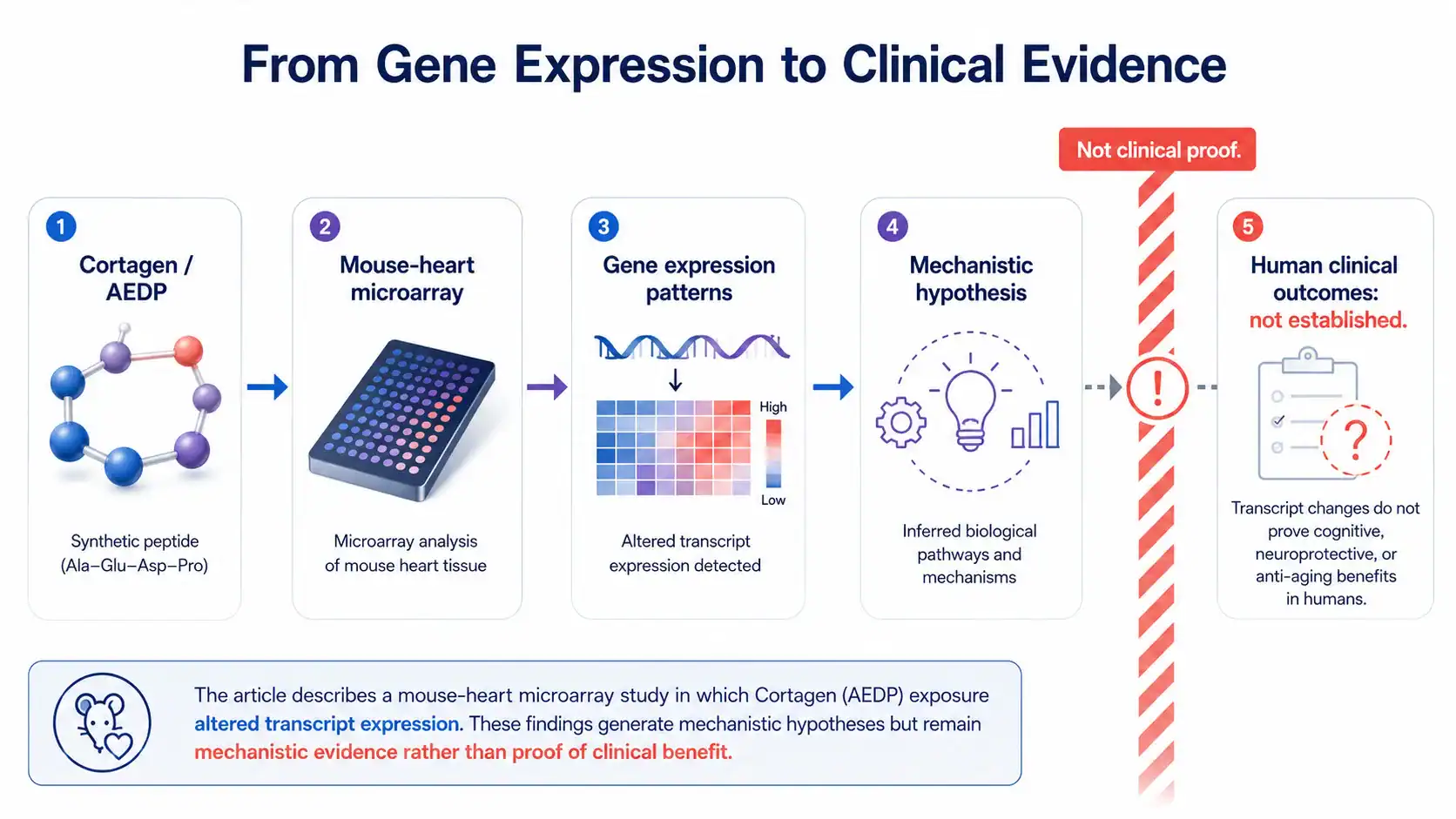
Microarray findings show how Cortagen may affect gene expression patterns under specific experimental conditions [2]. In the 2004 study, 6-month-old female CBA mice were divided into two groups of 10 animals, and the experimental group received subcutaneous Cortagen at 0.1 microgram per animal per day for 5 days [2].
The reported transcript changes included genes linked to cell signaling, gene and protein expression, metabolism, cell structure, and defense categories [2]. These findings are useful for mechanism mapping, but microarray changes do not automatically translate into clinical outcomes.
Why Mechanism Does Not Prove Clinical Benefit
A plausible Cortagen mechanism does not prove a Cortagen benefit in humans. Gene expression, epigenetic changes, antioxidant effects, and neurotrophic signaling can be biologically interesting while still falling short of showing safety, efficacy, dosage, durability, and patient benefit in clinical settings [3], [8].
This distinction is especially important for Cortagen because much of the public discussion around cognitive support and anti-aging effects is stronger than the accessible human evidence.
Mechanism of Action: Neuroprotection and Oxidative Stress
Cortagen’s proposed mechanism of action includes neuroprotection-related, oxidative-stress-related, and gene-regulatory pathways, but most of this support comes from animal, cell, and mechanistic studies [2], [5], [6], [7]. Human relevance remains uncertain.
Oxidative Stress and Antioxidant Pathways
Oxidative stress is part of the Cortagen research lane because brain ischemia and neuroprotection studies often evaluate antioxidant systems, lipid peroxidation, and brain tissue injury [5], [6]. A PubMed-indexed 2016 rat study reported that neurospecific protein preparations reduced neurological deficit and exerted antioxidant action during chronic ischemic brain damage in ischemic preconditioning models [6].
Those findings should not be simplified into “Cortagen is an antioxidant treatment.” The study context involved rats, experimental ischemia, and neurospecific peptide preparations, not an approved clinical indication for humans.
Neuron, Nerve, and Brain Tissue Models
Cortagen has been studied in peripheral nerve and brain tissue models, including a rat sciatic nerve transection and suturing model [4]. In that study, intramuscular Cortagen at 10 micrograms per kilogram for 10 days after sciatic nerve injury increased growth rate and conduction velocity in regenerating nerve fibers by 27% and 40%, respectively [4].
Peripheral nerve regeneration is complex and depends on the injury type, Schwann cell response, inflammatory signaling, growth factors, extracellular matrix, surgical repair, and local tissue environment 12. Rat nerve findings are not the same as a human treatment protocol.
Synaptic Plasticity and Neurotrophic Signaling
Cortagen and Cortexin have been discussed in relation to neural growth and neurotrophic factors, including in a mouse behavior study that described Cortagen as a synthetic analog of one Cortexin fraction [7]. The same study tested intraperitoneal Cortagen at 0.01, 0.03, and 0.10 mg/kg in CD-1 mice and reported dose-dependent behavioral effects [7].
The phrase “peptide enhances synaptic plasticity” appears in online discussions, but direct human evidence for Cortagen-enhanced synaptic plasticity is not established in the sources reviewed here. Neurotrophic signaling is best treated as a mechanistic research topic, not a confirmed human outcome.
Potential Benefits of Cortagen Peptide
Potential benefits of Cortagen peptide are best described by evidence level: chemical identity is well defined, mechanistic activity is plausible in the bioregulator literature, animal findings exist, and human therapeutic benefit remains weakly documented in accessible sources [1], [2], [3], [4], [7]. Cortagen should not be presented as a proven cognitive or anti-aging therapy.
Brain Health and Cognitive Function
Cortagen is commonly discussed for brain health and cognitive function because of its association with Cortexin, brain cortex research, and gene-expression hypotheses [2], [3], [7]. In mice, Cortagen was studied for locomotor activity and anxiety-related behavior, but those endpoints do not prove improvement in human memory, cognition, dementia, or Alzheimer’s disease [7].
A cautious interpretation is more useful: Cortagen belongs to a research category that studies nervous-system biology, but clinical claims about cognitive support require better human evidence.
Neuroprotective Effects in Research Settings
Neuroprotective effects have been explored in Cortagen-related and Cortexin-related research, including brain ischemia and peripheral nerve models [4], [5], [6], [11]. The rat sciatic nerve study reported improved nerve-fiber growth and conduction velocity after Cortagen administration, while brain ischemia studies reported changes in neurological deficit and antioxidant activity in animal models [4], [5], [6].
Preclinical neuroprotection can guide research priorities. It does not establish that Cortagen prevents brain injury, reverses cognitive decline, or treats human neurologic disease.
Biological Effects Reported in Bioregulator Literature
Bioregulator literature reports that short peptides can influence biological effects through gene expression, DNA-peptide interaction, chromatin behavior, and protein synthesis pathways [3]. An in vitro mouse splenocyte study reported that Cortagen activated interleukin-2 mRNA synthesis less strongly than Vilon and Epithalon 13.
That immune-cell finding belongs in a mechanistic evidence category. It should not be translated into claims that Cortagen improves immunity or treats immune dysfunction in humans.
What Is Cortagen Peptide Used For or Studied For?
Cortagen peptide has been studied mainly for gene expression, peripheral nerve regeneration, ischemic brain injury models, behavioral effects in mice, and epigenetic or chromatin-related mechanisms [2], [4], [5], [6], [7], 14. It should not be described as having established approved uses.
Age-Related Cognitive Decline and Dementia-Related Research
Age-related cognitive decline and dementia appear in Cortagen search intent because Cortagen is tied to aging, gene expression, brain cortex biology, and peptide bioregulator literature [2], [3], [14]. A 2015 paper examined Cortagen effects on aged heterochromatin in cultivated lymphocytes from individuals aged 80 and older, reporting changes in heterochromatin organization and ribosomal-gene activity [14].
That finding is not the same as a dementia trial. It is epigenetic and cytogenetic research, not proof that Cortagen treats Alzheimer’s disease, dementia, or age-related cognitive decline.
Brain Injury, Traumatic Brain Injury, and Ischemic Models
Brain injury and ischemic brain injury are relevant to Cortagen because animal research has examined peptide preparations in chronic ischemia and ischemic preconditioning models [5], [6]. A 2011 PubMed-indexed article concluded that Cortexin and Cortagen could be considered correcting agents in functional and metabolic disorders in the brain in chronic ischemia, but the available record points to animal or preclinical pharmacology rather than a large clinical evidence base [5].
Traumatic brain injuries require medical evaluation and evidence-based care. Cortagen should not be framed as a self-directed treatment for traumatic brain injury.
Cortagen Research: Human, Animal, and Cell Evidence
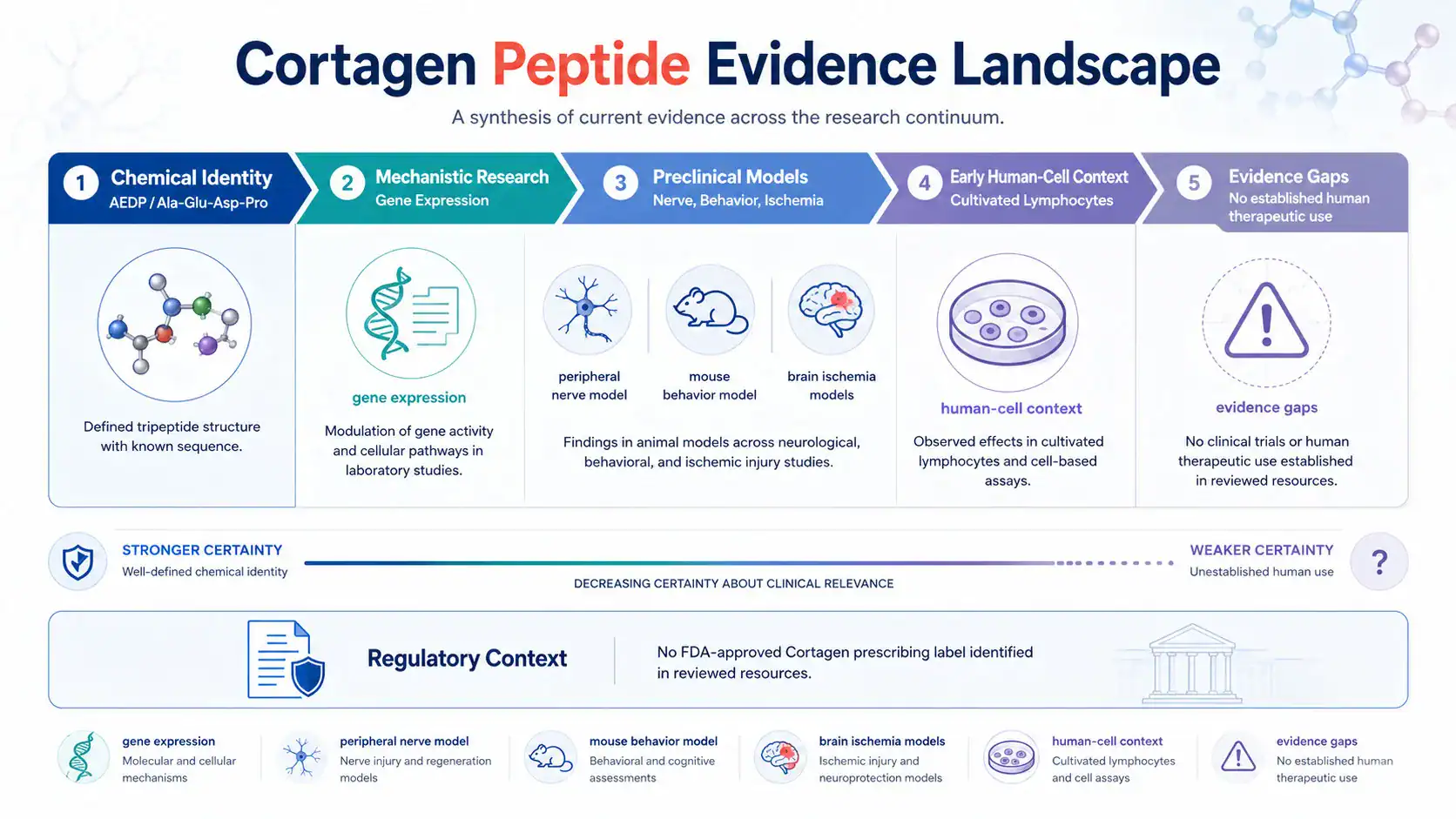
Cortagen research is weighted toward animal, in vitro, mechanistic, and limited early human-adjacent evidence rather than large human randomized trials [2], [4], [5], [7], [13], [14]. The strongest responsible article structure separates these evidence types instead of presenting all findings as equally reliable.
| Evidence Area | What Has Been Studied | Evidence Level | What It Can and Cannot Show |
|---|---|---|---|
| Chemical identity | Cortagen as H-Ala-Glu-Asp-Pro-OH, formula C17H26N4O9, PubChem CID 18439621 [1] | Database identity | Confirms compound identity, not clinical efficacy |
| Gene expression | 15,247 mouse-heart transcripts after 5 days of Cortagen exposure [2] | Preclinical mechanistic | Supports transcriptome hypotheses, not brain-health outcomes |
| Peripheral nerve regeneration | Rat sciatic nerve injury model with 10 micrograms/kg intramuscular Cortagen for 10 days [4] | Preclinical animal | Suggests nerve-model activity, not a human protocol |
| Mouse behavior | CD-1 mice receiving 0.01, 0.03, or 0.10 mg/kg intraperitoneal Cortagen [7] | Preclinical animal | Describes locomotor and anxiety-related endpoints, not human cognitive benefit |
| Brain ischemia | Rat ischemia and ischemic preconditioning models involving neurospecific peptide preparations [5], [6] | Preclinical animal | Suggests neuroprotection-related hypotheses, not approved treatment |
| Heterochromatin and aging | Cultivated lymphocytes from people aged 80 and older [14] | Early mechanistic human-cell context | Explores epigenetic effects, not clinical anti-aging proof |
| Regulatory status | FDA resources identify approved products and labeling; no Cortagen label was identified in those resources reviewed [8], [9] | Regulatory context | Supports caution about approval status and labeling |
What Human Evidence Has and Has Not Shown
Human evidence for Cortagen is not robust in the publicly accessible sources reviewed for this article. Older Cortagen papers refer to human posttraumatic peripheral nerve recovery, but the directly accessible paper used here focuses on mouse-heart gene expression and cites prior work rather than providing a full modern human trial report [2].
The 2015 heterochromatin paper used cultivated lymphocytes from individuals aged 80 and older, which gives some human-cell context, but it does not establish clinical benefit, dosing, safety, or disease outcomes [14]. Human clinical trials are normally registered in public registries such as ClinicalTrials.gov, which describes clinical studies as research involving human volunteers intended to add to medical knowledge 15.
Preclinical Findings in Brain Tissue and Cell Models
Preclinical Cortagen findings include changes in gene expression, peripheral nerve regeneration, behavioral endpoints in mice, and in vitro immune-cell gene expression [2], [4], [7], [13]. The Cortagen microarray study used mouse heart tissue, while the sciatic nerve study used a rat surgical injury model [2], [4].
Brain-related evidence also includes chronic ischemia and ischemic preconditioning research involving neurospecific peptide preparations [5], [6]. These models are valuable for research design, but their translation to human brain function, cognitive support, or neuroprotection is not automatic.
How to Interpret Experimental Biology Publications
Experimental biology publications should be read by asking what was studied, in what model, at what dose, for how long, and with what endpoint [2], [4], [7]. For Cortagen, many studies report molecular or animal endpoints rather than patient-centered outcomes such as cognitive-test improvement, disability reduction, disease progression, adverse-event rates, or long-term safety.
This is not a reason to dismiss Cortagen research. It is a reason to grade the evidence accurately.
Cortexin and Cortagen: How Related Brain Peptide Preparations Compare
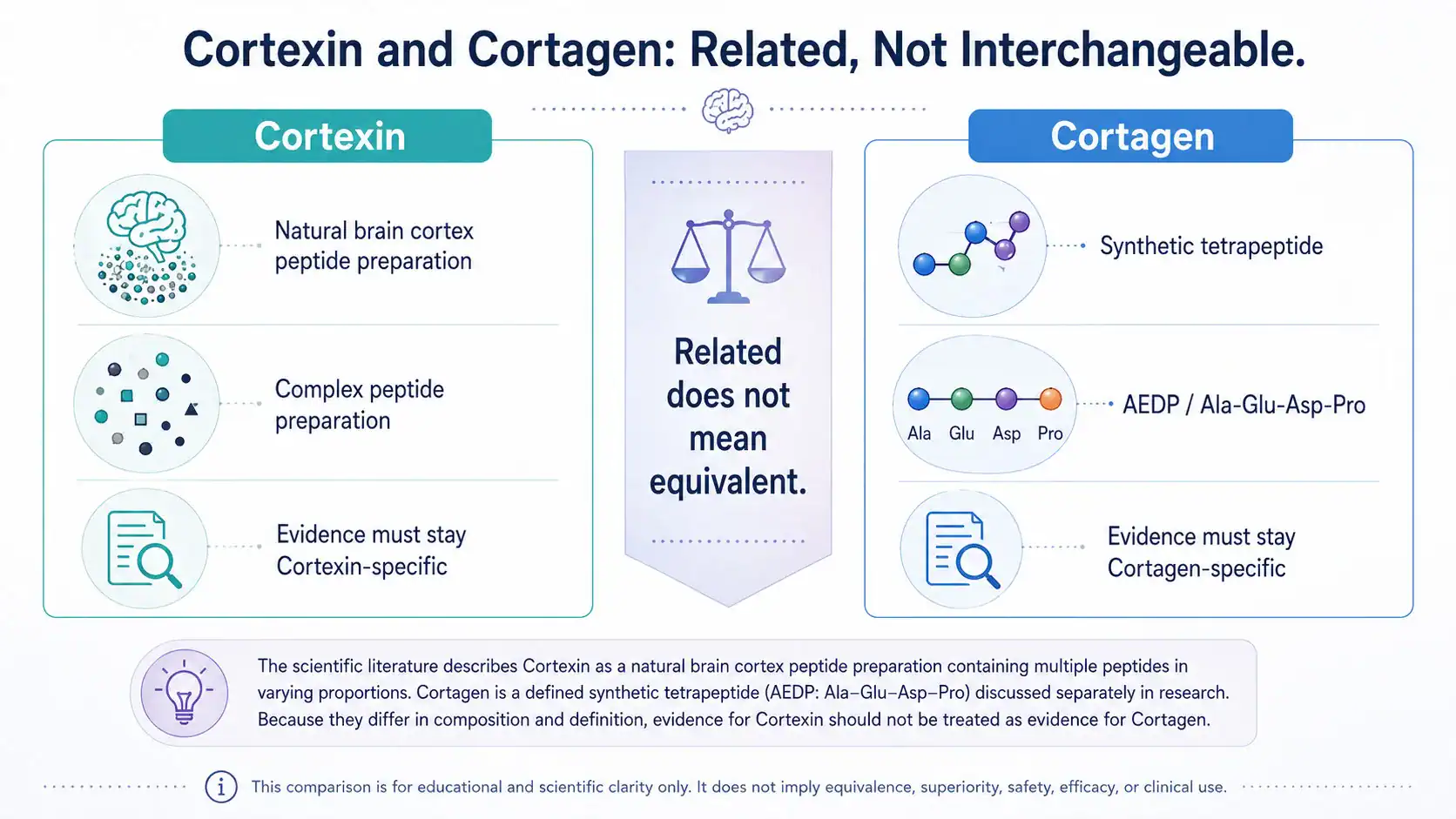
Cortexin and Cortagen are related in the literature, but they are not interchangeable. Cortagen is a defined AEDP tetrapeptide, while Cortexin is described as a natural brain cortex peptide preparation or polypeptide extract with multiple components [2], [7], [11].
Cortexin as a Natural Brain Cortex Peptide Preparation
Cortexin is described in the Cortagen literature as a natural brain cortex peptide preparation, and a PLOS One rat study evaluated Cortexin in acute and chronic brain ischemia models [2], [11]. In that study, Cortexin at 1 or 3 mg/kg/day was compared with Cerebrolysin and Actovegin in rats, and Cortexin-related receptor-binding and blood-brain barrier findings were reported [11].
Those Cortexin results are useful for comparison, not substitution. A complex extract may contain multiple active molecules, while Cortagen is a specific tetrapeptide.
Cortagen as a Synthetic Peptide Mimic
Cortagen is described as a synthetic analog of one Cortexin fraction in the mouse behavior paper [7]. The same paper tested Cortagen separately from Cortexin, which is a helpful design because it shows that related peptide preparations can have different behavioral profiles [7].
A synthetic mimic can be more defined chemically than a tissue extract, but it still requires its own efficacy, safety, pharmacokinetic, and dosing evidence.
Why Related Peptides May Not Have Equivalent Effects
Related peptides may not have equivalent effects because sequence, mixture complexity, tissue distribution, route of administration, receptor binding, metabolism, and study model all affect outcomes [7], [11]. Cortexin showed binding to AMPA, kainate, mGluR1, GABAA1, and mGluR5 receptors in vitro in one rat ischemia paper, but that receptor-binding result belongs to Cortexin, not necessarily Cortagen [11].
For readers, the practical rule is simple: do not borrow evidence from Cortexin and apply it to Cortagen unless a study directly tests Cortagen.
Cortagen Dosage: What Doses Have Been Used in Studies?
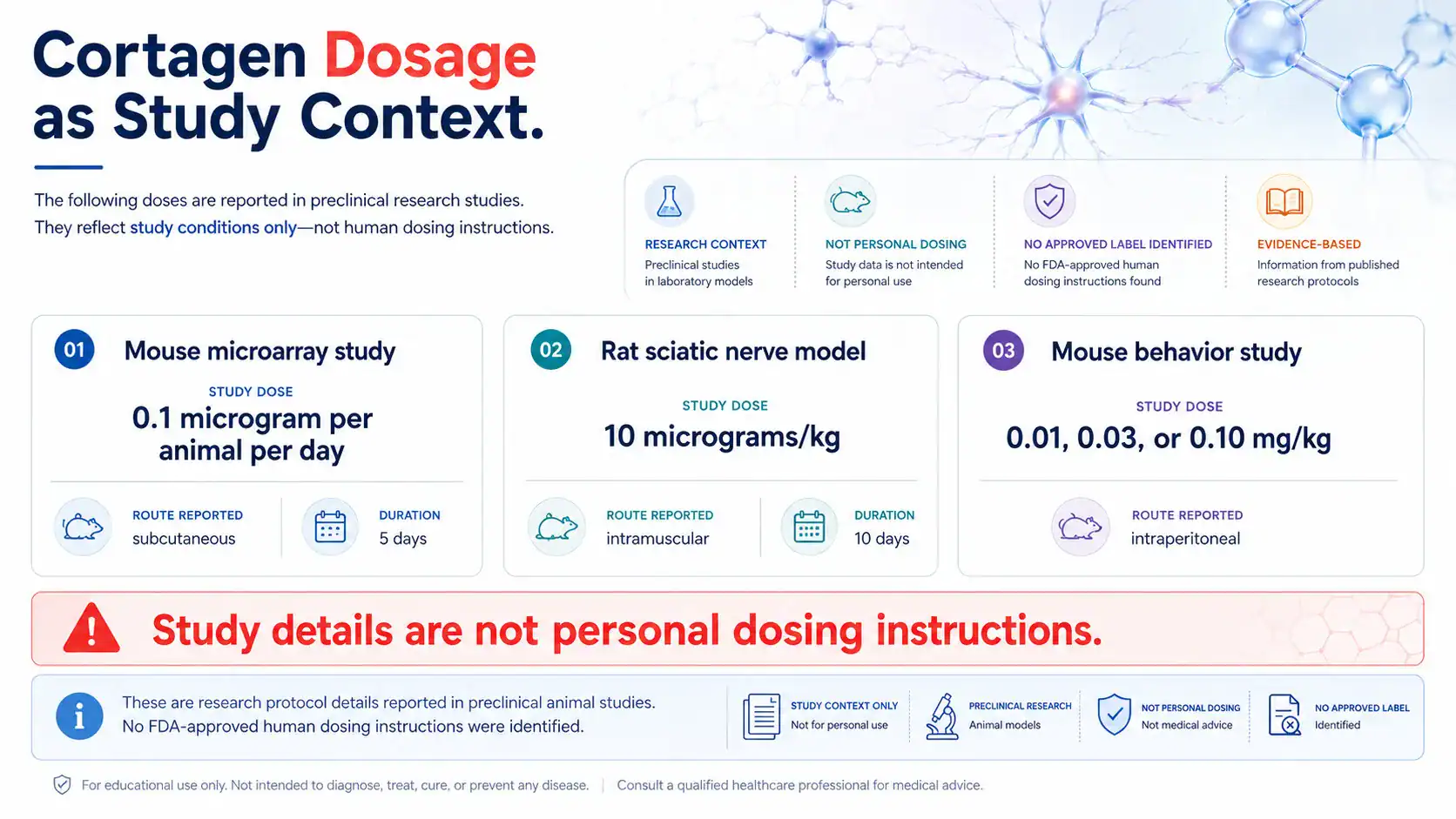
Cortagen dosage information comes from study protocols, not FDA-approved labeling, and should be treated as educational research context only [2], [4], [7], [8], [9]. Published nonhuman studies used different doses, species, routes, and durations, so they do not define a human dose.
Study-Reported Dose Ranges Versus Personal Dosing Advice
Study-reported Cortagen doses include 0.1 microgram per animal per day subcutaneously for 5 days in a mouse-heart microarray study, 10 micrograms per kilogram intramuscularly for 10 days in a rat sciatic nerve model, and 0.01, 0.03, or 0.10 mg/kg intraperitoneally in CD-1 mice for behavior experiments [2], [4], [7].
These are not personal dosing instructions. They are examples of how researchers designed animal experiments.
Cortagen Dosage Variables Researchers May Report
Cortagen dosage variables include species, body weight, route, treatment duration, timing after injury, tissue sampled, and outcome measure [2], [4], [7]. A rat nerve-regeneration model cannot be converted into a human cognitive-support protocol without clinical pharmacology data, human safety data, and a defined therapeutic endpoint.
FDA guidance for peptide drug products emphasizes clinical pharmacology considerations such as pharmacokinetics, drug interactions, organ impairment, QTc prolongation, immunogenicity risk, safety, and efficacy for peptide drug development 16. Cortagen does not have that kind of approved-label dosing framework in the sources reviewed [8], [9].
Why Dose-Response Evidence Remains Limited
Dose-response evidence for Cortagen remains limited because the available studies are small, model-specific, and not designed as modern human dose-ranging trials [2], [4], [7]. In the mouse behavior study, one Cortagen dose, 0.03 mg/kg, was associated with increased locomotion and few effects on anxiety-related behavior, while other doses and repeated regimens showed more complex emotional-affective findings [7].
This pattern is exactly why “best dose” claims are inappropriate. Dose can change both the measured effect and the risk profile.
Reconstitution, Concentration, and Administration Context
Reconstitution, concentration, and administration discussions for Cortagen should be framed as research-literacy context, not a practical self-use guide. Because Cortagen lacks an FDA-approved prescribing label in the sources reviewed, this article does not provide vial-specific preparation, injection, or self-administration instructions [8], [9], [10].
Educational Concentration Calculations, Not a Prescription
Educationally, concentration means the amount of peptide divided by the liquid volume used to prepare a solution. That math concept can help readers interpret research protocols, but it should not be mistaken for a prescription, a compounding instruction, or a safe-use protocol.
FDA cautions that compounded drugs are not FDA-approved and that the agency does not verify their safety, effectiveness, or quality before marketing [10]. FDA also notes that poor compounding can create serious quality problems, including contamination or too much or too little active ingredient [10].
Cortagen Administration Routes Discussed in Literature
Cortagen administration routes reported in the literature include subcutaneous injection in a mouse-heart gene expression study, intramuscular injection in a rat sciatic nerve injury study, and intraperitoneal injection in a mouse behavior study [2], [4], [7]. These routes are experimental methods, not recommended routes for readers.
Route matters because absorption, tissue distribution, local irritation, metabolism, and safety can differ across subcutaneous, intramuscular, intraperitoneal, oral, intranasal, and other routes. Cortagen-specific human route comparisons were not identified in the accessible sources reviewed.
Frequency and Duration Reporting in Research Protocols
Cortagen frequency and duration in the available animal literature include 5 consecutive days in the mouse microarray study and 10 days after sciatic nerve transection and suturing in the rat nerve-regeneration study [2], [4]. The mouse behavior study also included acute and sub-chronic testing paradigms [7].
Research duration is not a cycle recommendation. It describes what investigators did under controlled experimental conditions.
Side Effects and Safety Concerns With Cortagen
Cortagen side effects and safety concerns are not well characterized in modern human labeling or large clinical studies. The safest interpretation is that human adverse-event frequency, long-term risks, special-population risks, and interaction risks remain uncertain [8], [9], [10].
What Side Effects Have Been Reported?
The accessible Cortagen literature does not provide an FDA label with standardized adverse reactions, contraindications, warnings, or postmarketing safety data [8], [9]. In the mouse behavior paper, Cortagen’s effects varied by dose and regimen, and some repeated-treatment conditions were associated with anxiogenic effects, which should not be generalized as human side-effect data [7].
The lack of a labeled adverse-reaction table is not proof of safety. It means the evidence base is incomplete.
Safety Unknowns for Long-Term Brain Health Use
Long-term brain health use of Cortagen is not supported by established human safety data in the sources reviewed. Neuroactive compounds can have effects that depend on dose, route, frequency, baseline neurological status, psychiatric history, age, concurrent medications, and underlying disease.
The FDA’s peptide drug guidance highlights the need to assess issues such as drug interactions, organ impairment, QTc prolongation, immunogenicity, pharmacokinetics, safety, and efficacy in peptide drug products [16]. Those categories are useful safety questions for Cortagen, even though Cortagen itself lacks an approved human label in reviewed FDA sources [8], [9].
Quality, Sterility, and Contamination Risks With Unapproved Peptides
Quality, sterility, and contamination risks are central concerns for any unapproved or compounded peptide product. FDA states that compounded drugs are not FDA-approved and that poor compounding practices can result in contamination or incorrect amounts of active ingredient, which can lead to serious harm [10].
This is a regulatory and safety issue, not a brand-selection issue. Educational content should not turn Cortagen into a purchasing guide.
Contraindications, Interactions, and Medical Supervision
Cortagen has no FDA-approved prescribing label in the sources reviewed, so formal labeled contraindications and interactions are not available from FDA labeling [8], [9]. That absence should increase caution, not reduce it.
Who Should Discuss Cortagen With a Clinician?
People with neurological disease, psychiatric conditions, cardiovascular disease, pregnancy, breastfeeding, immune disorders, active cancer, kidney or liver disease, or multiple prescription medications should discuss peptide-related decisions with a licensed clinician. This is especially important because Cortagen is discussed around brain function, gene expression, immune signaling, and neuroactive endpoints in the literature [2], [3], [7], [13].
A clinician can also evaluate whether a symptom is a sign of an underlying condition that needs standard diagnosis and treatment.
Drug Interactions and Neuroactive Therapy Considerations
Drug interactions for Cortagen are not well defined in the accessible human evidence base. Because Cortagen is discussed in relation to central nervous system biology, neurotrophic signaling, locomotor behavior, gene expression, and immune-cell mRNA expression, interaction questions should be taken seriously rather than dismissed [3], [7], [13].
Readers using antidepressants, antiepileptics, sedatives, stimulants, anticoagulants, immune-modulating drugs, or cognitive medications should not assume Cortagen is interaction-free. The evidence is not strong enough to support that claim.
Regulatory Status: Is Cortagen Peptide FDA-Approved?
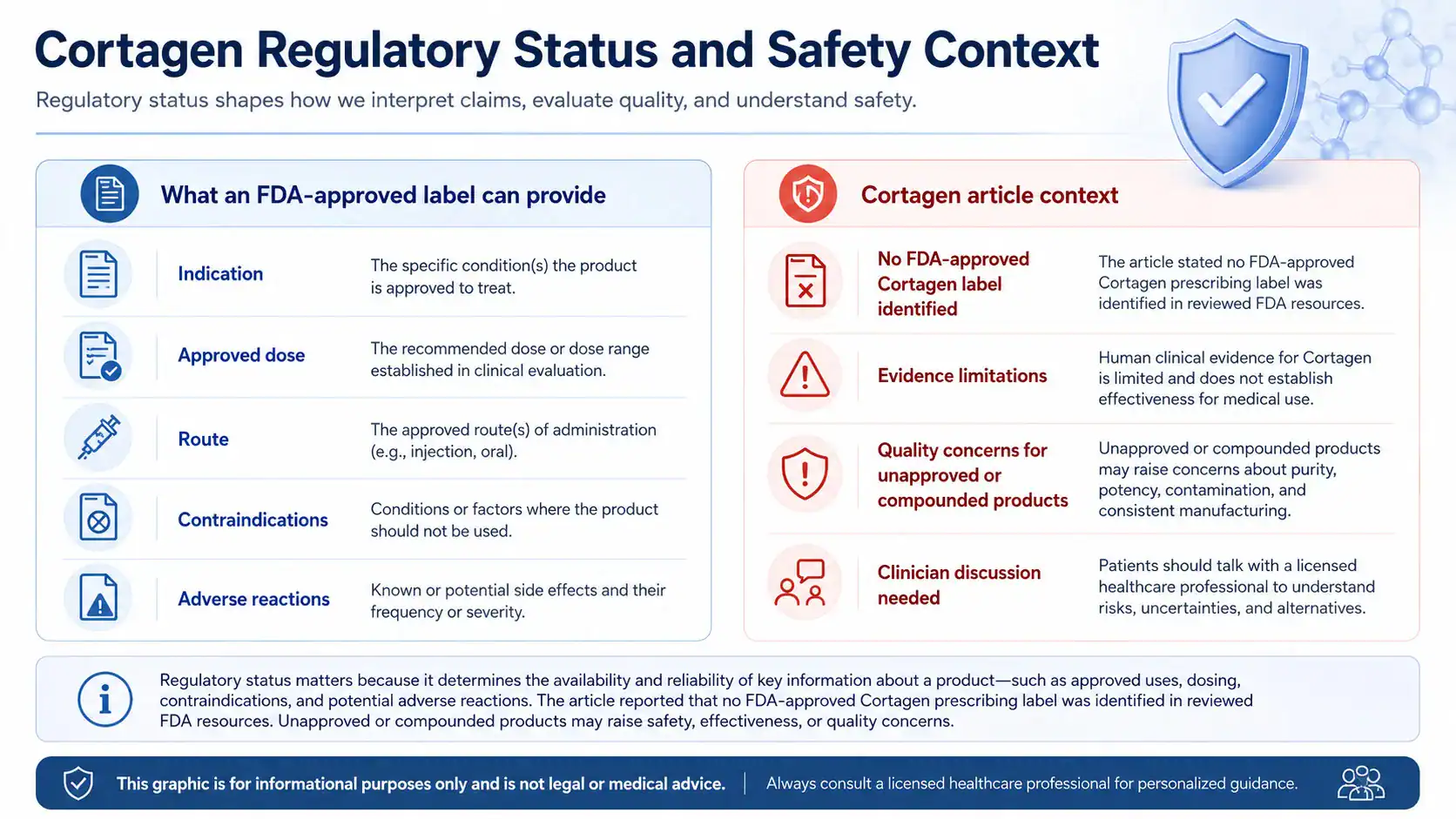
Cortagen peptide does not appear to have an FDA-approved prescribing label in the FDA approved-drug resources reviewed for this article. FDA explains that Drugs@FDA includes information about drugs approved for human use in the United States, and the Orange Book identifies drug products approved on the basis of safety and effectiveness [8], [9].
Approved Label Status and International Verification
FDA-approved status should be verified through FDA resources such as Drugs@FDA, labeling resources, and the Orange Book, not through peptide marketing pages [8], [9]. For Cortagen, the article found chemical and peer-reviewed research sources, but not an FDA-approved label establishing indication, dose, route, contraindications, or adverse reactions [1], [8], [9].
International status may differ by country. Still, regional medical use, older literature, or mention in bioregulator research should not be confused with FDA approval.
What Unapproved or Compounded Status Means for Safety
Unapproved or compounded status means a product may not have been reviewed by FDA for safety, effectiveness, quality, labeling, and manufacturing consistency [10]. FDA states that compounded drugs are not FDA-approved and that unnecessary use of compounded drugs can expose patients to serious health risks [10].
For Cortagen, regulatory status changes how claims should be read. It makes evidence quality, source quality, and clinician supervision more important.
Evidence Limitations and Unsupported Online Claims
Cortagen evidence limitations are substantial because the direct evidence base is mostly preclinical, mechanistic, small, older, regional, or indirect. The article should not present Cortagen as proven for cognitive enhancement, anti-aging, dementia, Alzheimer’s disease, traumatic brain injury, ischemic brain injury, or peripheral nerve recovery in humans [2], [4], [5], [7], [14].
Anti-Aging and Cognitive Enhancement Claims
Anti-aging and cognitive enhancement claims for Cortagen often outpace the evidence. The 2021 systematic review discusses short peptides, gene expression, protein synthesis, epigenetic mechanisms, and possible age-associated applications, but broad peptide bioregulator theory is not the same as Cortagen-specific clinical proof [3].
Cortagen may be a legitimate research subject in aging biology. It should not be marketed in educational content as a guaranteed geroprotective or cognitive-enhancing peptide.
Why Microarray Data Are Not Clinical Proof
Microarray data are not clinical proof because they measure gene expression changes, not patient outcomes. The Cortagen microarray study reported altered expression in 234 non-redundant transcripts after 5 days of exposure in mice, but the tissue was heart, the model was animal-based, and the endpoint was transcriptomic [2].
A transcript change may generate a hypothesis. It does not answer whether Cortagen improves memory, reduces injury, prevents cognitive decline, or changes long-term brain health in people.
Evidence Grading Framework for Cortagen Claims
Cortagen claims can be graded in four practical tiers: identity claims, mechanistic claims, preclinical outcome claims, and human therapeutic claims. Identity claims are strongest when supported by chemical databases; mechanistic claims are plausible but limited; preclinical outcome claims are model-specific; and human therapeutic claims need better evidence [1], [2], [3], [4], [7].
This framework prevents overreach. It lets readers learn what Cortagen is while avoiding the mistake of treating every biological effect as a medical benefit.
Key Takeaways for Readers
Cortagen is best understood as an investigational bioregulator peptide with a defined AEDP sequence, a niche literature base, and evidence that is more mechanistic and preclinical than clinically established [1], [2], [3], [4], [7]. The safest interpretation depends on evidence quality, regulatory status, and medical supervision.
Most Evidence-Grounded Points About Cortagen
The most evidence-grounded point is Cortagen’s identity: it is Ala-Glu-Asp-Pro, a synthetic tetrapeptide listed in PubChem and described in older bioregulator research [1], [2]. The second strongest point is that Cortagen has been studied in animal and cell models involving gene expression, peripheral nerve regeneration, locomotor behavior, ischemia-related endpoints, immune-cell IL-2 mRNA expression, and heterochromatin changes [2], [4], [5], [6], [7], [13], [14].
The weakest point is the common online claim that Cortagen is proven to improve human cognition or reverse age-related brain decline. That claim is not established by the sources reviewed here.
Questions to Discuss With a Clinician
Readers considering peptide-related medical decisions should use a clinician discussion checklist rather than a self-directed protocol:
- Is there an approved diagnosis and evidence-based treatment that should be considered first?
- Is Cortagen approved, investigational, compounded, or unapproved in the relevant jurisdiction?
- Are there neurological, psychiatric, cardiovascular, immune, pregnancy, breastfeeding, kidney, or liver factors that change risk?
- Are current medications likely to create unknown interaction concerns?
- What evidence level supports the claim being considered: approved labeling, human trial, animal model, in vitro study, mechanism, or anecdote?
- What adverse effects, monitoring plan, and stop criteria would a clinician consider?
- Are there FDA-approved or guideline-supported alternatives with better safety and efficacy data?
The safest way to interpret Cortagen peptide is through evidence quality, regulatory status, safety data, and clinician-guided decision-making.
Related dosage protocols and research
Use the available links to move between research context, dosage pages or comparisons, and supporting guides. When vial-size variants exist, they remain separate because concentration and syringe-unit calculations change with vial strength. Comparisons do not imply that different compounds are interchangeable.
Matching dosage protocols
Further research context
REFERENCES
- National Center for Biotechnology Information. H-Ala-Glu-Asp-Pro-OH, PubChem Compound Summary CID 18439621. PubChem. Accessed 2026.
- Anisimov SV, Khavinson VK, Anisimov VN. Elucidation of the effect of brain cortex tetrapeptide Cortagen on gene expression in mouse heart by microarray. Neuroendocrinology Letters. 2004;25(1/2):87-93. PMID: 15159690.
- Khavinson VK, Popovich IG, Linkova NS, Mironova ES, Ilina AR. Peptide Regulation of Gene Expression: A Systematic Review. Molecules. 2021;26(22):7053. DOI: 10.3390/molecules26227053. PMID: 34834147.
- Turchaninova LN, Kolosova LI, Malinin VV, Moiseeva AB, Nozdrachev AD, Khavinson VK. Effect of tetrapeptide cortagen on regeneration of sciatic nerve. Bulletin of Experimental Biology and Medicine. 2000;130:1172-1174. DOI: 10.1007/BF02682018. PMID: 11276314.
- Zarubina IV, Shabanov PD. Cortexin and cortagen as correcting agents in functional and metabolic disorders in the brain in chronic ischemia. Eksperimental’naia i Klinicheskaia Farmakologiia. 2011;74(2):8-15. PMID: 21476278.
- Zarubina IV, Shabanov PD. Neuroprotective Effects of Peptides during Ischemic Preconditioning. Bulletin of Experimental Biology and Medicine. 2016;160:448-451. DOI: 10.1007/s10517-016-3193-9. PMID: 26902350.
- Adriani W, Granstrem O, Romano E, Koroleva S, Laviola G. Modulatory Effects of Cortexin and Cortagen on Locomotor Activity and Anxiety-Related Behavior in Mice. The Open Neuropsychopharmacology Journal. 2011;2:22-29. DOI: 10.2174/1876523800902010022.
- U.S. Food and Drug Administration. Resources for Information: Approved Drugs. FDA. Updated 2022.
- U.S. Food and Drug Administration. Approved Drug Products with Therapeutic Equivalence Evaluations, Orange Book. FDA. Updated 2026.
- U.S. Food and Drug Administration. Compounding and the FDA: Questions and Answers. FDA. Updated 2025.
- Kurkin DV, Bakulin DA, Morkovin EI, Kalatanova AV, Makarenko IE, Dorotenko AR, et al. Neuroprotective action of Cortexin, Cerebrolysin and Actovegin in acute or chronic brain ischemia in rats. PLOS One. 2021;16(7):e0254493. DOI: 10.1371/journal.pone.0254493.
- Carvalho CR, Oliveira JM, Reis RL. Modern Trends for Peripheral Nerve Repair and Regeneration: Beyond the Hollow Nerve Guidance Conduit. Frontiers in Bioengineering and Biotechnology. 2019;7:337. DOI: 10.3389/fbioe.2019.00337.
- Kazakova TB, Barabanova SV, Khavinson VK, Glushikhina MS, Parkhomenko EP, Malinin VV, Korneva EA. In vitro effect of short peptides on expression of interleukin-2 gene in splenocytes. Bulletin of Experimental Biology and Medicine. 2002;133:614-616. DOI: 10.1023/A:1020210615148. PMID: 12447482.
- Lezhava T, Monaselidze J, Jokhadze T, Gaiozishvili M, et al. Epigenetic Regulation of “Aged” Heterochromatin by Peptide Bioregulator Cortagen. International Journal of Peptide Research and Therapeutics. 2015;21:157-163. DOI: 10.1007/s10989-014-9443-7.
- National Library of Medicine. ClinicalTrials.gov. U.S. National Library of Medicine. Accessed 2026.
- U.S. Food and Drug Administration. Clinical Pharmacology Considerations for Peptide Drug Products. FDA Draft Guidance. 2023. :::
FAQs
What does Cortagen peptide do?
Cortagen peptide is studied as a synthetic AEDP tetrapeptide connected to bioregulator, gene expression, and nervous-system research. Published literature has examined Cortagen in microarray, animal, cell, and brain- or nerve-related models, but clinical evidence for established human therapeutic use remains limited [1], [2], [4], [7]. Claims about cognitive support, neuroprotection, or anti-aging effects should be interpreted through evidence quality rather than treated as proven outcomes.
What are the potential benefits and uses of Cortagen peptide?
Potential benefits and uses of Cortagen peptide are mainly discussed around brain health, cognitive function, neuroprotection, oxidative stress, peripheral nerve models, and age-related biology. The strongest direct evidence is preclinical or mechanistic, including animal studies and gene-expression research, not large human clinical trials [2], [4], [5], [7], [14]. Cortagen peptide benefits should therefore be described as research interests, not confirmed medical effects.
How does Cortagen peptide work at a molecular level?
Cortagen peptide is proposed to work through gene expression, transcription, protein synthesis, epigenetic, and cell-signaling mechanisms discussed in peptide bioregulator literature [2], [3]. One microarray study reported altered expression of 234 non-redundant transcripts after Cortagen exposure in mice, but that finding was from mouse heart tissue, not a human brain outcome study [2]. Molecular activity can support a hypothesis, but it does not prove clinical benefit.
What are the reported side effects and safety considerations for Cortagen peptide?
Reported side effects and safety considerations for Cortagen peptide are not well defined in an FDA-approved prescribing label or large human safety dataset [8], [9]. Animal and cell studies cannot fully describe human adverse events, serious side effects, allergic reaction risk, drug interactions, pregnancy risk, breastfeeding risk, or overdose concerns. Safety discussions should include medical supervision, product-quality uncertainty, and the limits of evidence for unapproved or compounded peptides [10].
What dosage and administration information has been reported for Cortagen peptide?
Cortagen peptide dosage and administration information comes from research protocols, not approved human labeling. Published studies reported examples such as 0.1 microgram per animal per day subcutaneously in mice, 10 micrograms/kg intramuscularly in a rat nerve model, and 0.01, 0.03, or 0.10 mg/kg intraperitoneally in mice [2], [4], [7]. These are study details, not personal dosing instructions or a self-administration protocol.
Is Cortagen peptide FDA-approved or legally established for medical use?
Cortagen peptide does not appear to have an FDA-approved prescribing label in the FDA approved-drug resources reviewed in the article [8], [9]. That means no FDA-labeled indication, approved dose, administration route, contraindication list, or adverse-reaction table was identified. Legal status and clinical use can vary by jurisdiction, but unapproved or compounded peptide products should not be assumed safe, effective, or equivalent to approved medicines [10].
Researchers Cited in This Article
The researchers below authored or co-authored publications cited in this article. Listing them here identifies sources; it does not mean they wrote, independently reviewed, sponsored, or endorsed this PeptideDosages.com article. The site author is identified in the article byline.
Vladimir Kh. Khavinson
Researcher profile: ORCID
Vladimir Kh. Khavinson is a scientific author associated with peptide bioregulator research, including publications relevant to short peptides, gene expression, and aging biology. His work is directly connected to the Cortagen peptide literature through coauthorship on the microarray study examining Cortagen and gene expression patterns. His broader systematic review work also provides useful context for interpreting short peptide mechanisms, while still requiring careful separation between mechanistic hypotheses, preclinical findings, and established human clinical evidence.
Selected publications:
- Elucidation of the effect of brain cortex tetrapeptide Cortagen on gene expression in mouse heart by microarray — Neuroendocrinology Letters, 2004. PMID: 15159690
- Peptide Regulation of Gene Expression: A Systematic Review — Molecules, 2021. DOI: 10.3390/molecules26227053
Sergey V. Anisimov
Researcher profile: Google Scholar
Sergey V. Anisimov is a published researcher whose work is relevant to the article’s discussion of Cortagen, microarray methods, and gene-expression interpretation. His Cortagen-related publication is central to understanding how the peptide has been studied in transcriptomic research, while his methods-focused work on DNA microarray technology helps frame why gene-expression findings should be interpreted as mechanistic evidence rather than direct proof of clinical benefit.
Selected publications:
- Elucidation of the effect of brain cortex tetrapeptide Cortagen on gene expression in mouse heart by microarray — Neuroendocrinology Letters, 2004. PMID: 15159690
- Application of DNA microarray technology to gerontological studies — Methods in Molecular Biology, 2007. PMID: 17634587
PUBLISHING FIELDS
- SEO Title: Cortagen Peptide: Benefits, Dosage, Safety Research
- Meta Description: Cortagen peptide guide covering AEDP identity, brain research, dosage context, safety limits, FDA status, and evidence gaps.
- Suggested URL Slug: /cortagen-peptide
- Page Type: Therapeutic Peptide Educational Article
- ArticleFormat: Therapeutic Peptide Educational Guide
- TargetPeptide: Cortagen
- MainKeyword: cortagen peptide
- CanonicalKeyword: Cortagen peptide
- ExactKeywordVariant: cortagen peptide
- AliasTerms: AEDP; Ala-Glu-Asp-Pro; synthetic tetrapeptide; bioregulator peptide; peptide bioregulator; Khavinson peptide; Khavinson peptide family; Cortexin and Cortagen; natural brain cortex peptide preparation
- PeptideCategory: Bioregulator Peptide / Investigational Peptide
- Primary Search Intent: Therapeutic informational
- Secondary Keywords: Cortagen dosage; Cortagen research; Cortagen side effects; Cortagen FDA approval; Cortagen administration; Cortagen peptide benefits; Ala-Glu-Asp-Pro peptide; AEDP peptide; Cortexin and Cortagen; peptide bioregulator; gene expression peptide; brain cortex peptide
- Evidence Levels Covered: approved-status review with no FDA-approved Cortagen label identified; limited early human-cell context; preclinical animal evidence; in vitro evidence; mechanistic evidence; unsupported online claims
- Excerpt: Cortagen peptide is a synthetic AEDP tetrapeptide discussed in bioregulator, gene expression, and brain-health research. This guide reviews Cortagen identity, proposed mechanisms, preclinical evidence, dosage context from studies, side effects, safety concerns, FDA status, and evidence limitations.
- Suggested Tags: Cortagen; Cortagen peptide; bioregulator peptides; AEDP; peptide research; gene expression; neuroprotection; peptide safety
- Featured Image Concept: Clinical evidence map showing Cortagen peptide identity, mechanism hypotheses, preclinical evidence, safety limits, and regulatory status
- Featured Image Alt Text: Clinical evidence map for Cortagen peptide showing AEDP identity, gene expression research, preclinical evidence, safety limits, and FDA status
- Suggested Schema: Article schema only
INFOGRAPHIC BRIEFS
Infographic Brief 1
- Placement: After
## Cortagen Research: Human, Animal, and Cell Evidence - Title: Cortagen Peptide Evidence Landscape
- Purpose: Help readers quickly distinguish chemical identity, mechanistic research, preclinical findings, early human-cell context, and regulatory status without treating all evidence as equally strong.
- Visual Format: Evidence landscape table / evidence ladder hybrid
- Key Labels: Chemical identity; gene expression; peripheral nerve model; mouse behavior model; brain ischemia models; human-cell context; FDA status; evidence gaps
- Suggested Layout: Horizontal evidence ladder from strongest identity certainty to weakest clinical certainty. Place “Chemical identity” on the left as the most defined category, then “mechanistic,” “preclinical,” “early human-cell context,” and “unsupported claims” toward the right. Add a separate regulatory-status callout below.
- Data or Concepts to Include: Cortagen is identified as Ala-Glu-Asp-Pro / AEDP; microarray research examined mouse-heart transcripts; rat sciatic nerve and mouse behavior models were discussed; cultivated lymphocyte heterochromatin research was described as early human-cell context; no FDA-approved Cortagen prescribing label was identified in reviewed FDA resources.
- Visual Style: Clean, clinical, editorial, muted scientific palette, simple icons for molecule, gene, animal model, cell model, and regulatory document.
- Compliance Restrictions: No product vials, no syringes, no self-administration imagery, no dosing instructions, no before-and-after imagery, no guaranteed benefit claims, no human brain outcome claims, no vendor branding.
- Alt Text: Evidence landscape infographic for Cortagen peptide showing identity, gene expression, preclinical models, human-cell context, FDA status, and evidence gaps.
- Full AI Image Prompt: Create a clean medical editorial infographic titled “Cortagen Peptide Evidence Landscape.” Show a horizontal evidence ladder with five stages: “Chemical Identity: AEDP / Ala-Glu-Asp-Pro,” “Mechanistic Research: Gene Expression,” “Preclinical Models: Nerve, Behavior, Ischemia,” “Early Human-Cell Context: Cultivated Lymphocytes,” and “Evidence Gaps: No established human therapeutic use.” Add a lower callout labeled “Regulatory Context: No FDA-approved Cortagen prescribing label identified in reviewed resources.” Use abstract molecular, gene, cell, and document icons. Avoid product imagery, syringes, injections, dosing instructions, before-and-after visuals, human outcome claims, vendor branding, and promotional wording.
Infographic Brief 2
- Placement: After
### Microarray Findings and Gene Expression Patterns - Title: From Gene Expression to Clinical Evidence
- Purpose: Explain why microarray findings and gene expression patterns are mechanistic evidence rather than proof of clinical benefit.
- Visual Format: Mechanism-to-evidence flow diagram
- Key Labels: Cortagen; AEDP; mouse-heart microarray; gene expression patterns; mechanistic hypothesis; clinical outcomes; evidence limitation
- Suggested Layout: Left-to-right flow: Cortagen / AEDP molecule icon → laboratory microarray chip → gene expression changes → mechanistic hypothesis → caution barrier → clinical outcomes not established.
- Data or Concepts to Include: The article described a mouse-heart microarray study with altered transcript expression after Cortagen exposure; the article emphasized that transcript changes do not prove cognitive, neuroprotective, or anti-aging benefits in humans.
- Visual Style: Scientific, minimal, high-contrast labels, with a clear “mechanism is not clinical proof” barrier.
- Compliance Restrictions: No claims that Cortagen improves cognition, treats disease, reverses aging, or produces guaranteed outcomes. No patient imagery, injection visuals, product packaging, or sales elements.
- Alt Text: Cortagen peptide infographic showing how mouse microarray gene expression findings support mechanism hypotheses but do not prove clinical benefit.
- Full AI Image Prompt: Create a clean biomedical flow diagram titled “From Gene Expression to Clinical Evidence.” Show “Cortagen / AEDP” as a simple molecule icon flowing to “Mouse-heart microarray,” then to “Gene expression patterns,” then to “Mechanistic hypothesis.” Insert a clear caution barrier labeled “Not clinical proof.” On the far right, show “Human clinical outcomes: not established.” Use a clinical editorial design with simple icons and concise labels. Do not show patients, injections, vials, dosing steps, product branding, cure claims, cognitive enhancement promises, or anti-aging promises.
Infographic Brief 3
- Placement: After
## Cortexin and Cortagen: How Related Brain Peptide Preparations Compare - Title: Cortexin and Cortagen Comparison Map
- Purpose: Clarify that Cortexin and Cortagen are related in the literature but not interchangeable, reducing the risk of readers borrowing evidence from one preparation and applying it to the other.
- Visual Format: Two-column comparison chart
- Key Labels: Cortexin; Cortagen; natural brain cortex peptide preparation; synthetic tetrapeptide; AEDP; related literature; not interchangeable; evidence-specific interpretation
- Suggested Layout: Two side-by-side columns. Left column: Cortexin as a natural brain cortex peptide preparation / complex extract. Right column: Cortagen as a defined synthetic tetrapeptide / AEDP. Add a center note: “Related does not mean equivalent.”
- Data or Concepts to Include: The article states Cortexin is described as a natural brain cortex peptide preparation, while Cortagen is a defined AEDP tetrapeptide and synthetic analog discussed separately in research. The article states Cortexin data should not be treated as Cortagen data.
- Visual Style: Academic comparison chart, clean icons, neutral colors, no promotional styling.
- Compliance Restrictions: Do not imply either peptide is superior, approved, safer, or clinically effective. No treatment recommendations, product images, injection imagery, vendor language, or dosing claims.
- Alt Text: Comparison chart for Cortagen peptide and Cortexin showing Cortagen as a synthetic AEDP tetrapeptide and Cortexin as a natural brain cortex peptide preparation.
- Full AI Image Prompt: Create a clean clinical comparison infographic titled “Cortexin and Cortagen: Related, Not Interchangeable.” Use two columns. Left column: “Cortexin” with labels “Natural brain cortex peptide preparation,” “Complex peptide preparation,” and “Evidence must stay Cortexin-specific.” Right column: “Cortagen” with labels “Synthetic tetrapeptide,” “AEDP / Ala-Glu-Asp-Pro,” and “Evidence must stay Cortagen-specific.” Put a center banner reading “Related does not mean equivalent.” Avoid product packaging, sales language, injections, dosing information, superiority claims, treatment claims, and guaranteed benefit claims.
Infographic Brief 4
- Placement: After
## Cortagen Dosage: What Doses Have Been Used in Studies? - Title: Cortagen Dosage as Study Context
- Purpose: Show that dose information in the article comes from animal research protocols and should not be interpreted as a personal dosing protocol.
- Visual Format: Dosage context framework
- Key Labels: Mouse microarray study; rat sciatic nerve model; mouse behavior study; study dose; route reported; research context; not personal dosing; no approved label identified
- Suggested Layout: Three study-context cards showing study model, reported route, and reported dose category. Below the cards, add a large caution strip: “Study details are not personal dosing instructions.”
- Data or Concepts to Include: The article reported 0.1 microgram per animal per day subcutaneously for 5 days in mice; 10 micrograms/kg intramuscularly for 10 days in a rat nerve model; and 0.01, 0.03, or 0.10 mg/kg intraperitoneally in mice. It also stated that these are research protocol details, not FDA-approved human dosing instructions.
- Visual Style: Clinical, restrained, study-card layout, no step-by-step preparation imagery.
- Compliance Restrictions: No dosing calculator, no syringe markings, no vial reconstitution visuals, no injection instructions, no self-administration steps, no personal protocol, no “best dose,” no cycle guidance, no product imagery.
- Alt Text: Cortagen peptide dosage context infographic showing study-reported animal doses and warning that study details are not personal dosing instructions.
- Full AI Image Prompt: Create a medical editorial infographic titled “Cortagen Dosage as Study Context.” Show three neutral study cards: “Mouse microarray study: 0.1 microgram per animal per day, subcutaneous, 5 days,” “Rat sciatic nerve model: 10 micrograms/kg, intramuscular, 10 days,” and “Mouse behavior study: 0.01, 0.03, or 0.10 mg/kg, intraperitoneal.” Add a prominent caution bar: “Study details are not personal dosing instructions.” Use simple lab notebook and study-model icons only. Do not show syringes, injection technique, vial preparation, reconstitution steps, dosing calculators, personal protocol language, cycle language, vendor branding, or product sales imagery.
Infographic Brief 5
- Placement: After
## Regulatory Status: Is Cortagen Peptide FDA-Approved? - Title: Cortagen Regulatory Status and Safety Context
- Purpose: Explain why regulatory status matters for interpreting Cortagen claims, product quality, dosing, contraindications, and adverse-event information.
- Visual Format: Approved vs unapproved status map
- Key Labels: FDA-approved label; no Cortagen label identified; indication; approved dose; contraindications; adverse reactions; compounded products; quality concerns
- Suggested Layout: Split status map. Left side shows what an approved drug label usually provides: indication, dose, route, contraindications, adverse reactions. Right side shows Cortagen article context: no FDA-approved Cortagen label identified, evidence limitations, product-quality caution, clinician discussion needed.
- Data or Concepts to Include: The article stated that no FDA-approved Cortagen prescribing label was identified in reviewed FDA resources. It also explained that compounded drugs are not FDA-approved and may raise safety, effectiveness, or quality concerns.
- Visual Style: Editorial healthcare policy graphic, clear document icons, balanced layout, calm clinical colors.
- Compliance Restrictions: No legal advice, no purchasing advice, no vendor comparisons, no product packaging, no implication that unapproved peptides are safe or effective, no treatment recommendations.
- Alt Text: Regulatory status infographic for Cortagen peptide explaining no FDA-approved Cortagen label was identified and why approved labeling matters for safety and dosing context.
- Full AI Image Prompt: Create a clean healthcare policy infographic titled “Cortagen Regulatory Status and Safety Context.” Use a two-column layout. Left column: “What an FDA-approved label can provide” with labels “Indication,” “Approved dose,” “Route,” “Contraindications,” and “Adverse reactions.” Right column: “Cortagen article context” with labels “No FDA-approved Cortagen label identified,” “Evidence limitations,” “Quality concerns for unapproved or compounded products,” and “Clinician discussion needed.” Use document and shield icons. Avoid legal advice, purchase guidance, vendor language, product images, syringes, treatment recommendations, or claims that unapproved peptides are safe or effective.