
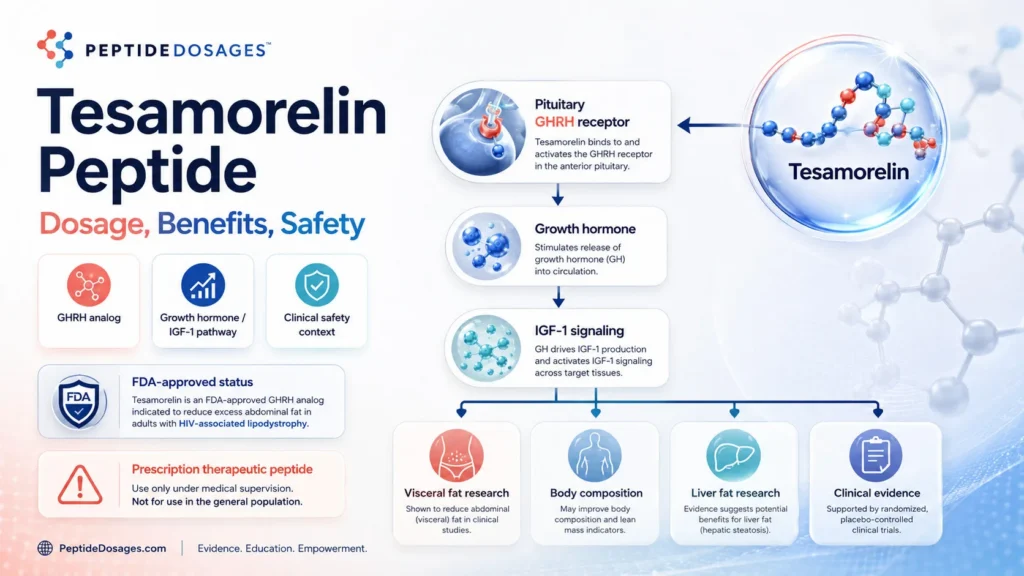
Tesamorelin peptide is a prescription growth hormone–releasing hormone analog approved in the United States to reduce excess abdominal fat in adults with HIV-associated lipodystrophy, according to FDA labeling and Drugs@FDA records 1, 2. This educational guide explains how tesamorelin works, what clinical research shows, what dosage information appears in labels and studies, and what safety limits matter. It does not provide personalized medical advice, injection instructions, purchasing guidance, or a self-treatment protocol.
- Tesamorelin is a synthetic peptide analog of growth hormone–releasing hormone, also called GHRH or growth hormone–releasing factor [1], 3.
- The strongest evidence is for FDA-approved use in reducing excess abdominal fat in adults with HIV-associated lipodystrophy [1], [2].
- Tesamorelin works by stimulating the pituitary gland through the GHRH receptor, increasing pulsatile growth hormone release and downstream IGF-1 signaling [1], 4.
- Clinical trials have measured changes in visceral adipose tissue, waist circumference, body composition, liver fat, IGF-1, glucose markers, and adverse effects 5, 8, 9.
- Potential benefits of tesamorelin are evidence-dependent; “fat loss,” “weight loss,” “anti-aging,” or “muscle gain” claims should not be treated as established general outcomes.
- Common safety issues include injection site reactions, joint or muscle symptoms, edema, hypersensitivity risk, glucose intolerance, and IGF-1 elevation, based on prescribing information [1].
- Tesamorelin dosage information should be interpreted from approved labeling or published study protocols only, not as personal dosing advice [1], [8], [9].
Related dosage pages: For vial-specific concentration, reconstitution, and measurement examples, see Tesamorelin (5 mg Vial) Dosage Protocol, Tesamorelin (10 mg Vial) Dosage Protocol, and Tesamorelin (20 mg Vial) Dosage Protocol. Each linked protocol remains a separate reference because vial strength changes concentration and syringe-unit calculations.
Fast Answer
Tesamorelin peptide is a synthetic growth hormone–releasing hormone analog that stimulates the pituitary gland to release growth hormone and is FDA-approved to reduce excess abdominal fat in adults with HIV-associated lipodystrophy [1], [2]. Human studies support effects on visceral fat in that specific population, while research into liver fat and fatty liver disease remains more limited and context-specific [5], [8], [9]. Safety, dosage, injection route, contraindications, and regulatory status require clinician oversight because tesamorelin is a prescription drug with labeled risks [1].
What Is the Tesamorelin Peptide?
Tesamorelin is a synthetic peptide drug designed to mimic growth hormone–releasing hormone, the hypothalamic hormone that signals the pituitary gland to release growth hormone [1], [3]. It is not direct growth hormone replacement therapy; rather, it acts upstream by stimulating endogenous growth hormone production [1], [4].
The drug is marketed in the United States as EGRIFTA SV, a prescription product with an approved indication for reducing excess abdominal fat in adults with HIV-associated lipodystrophy [1], [2]. That approval does not mean tesamorelin is approved for general weight loss, athletic performance, bodybuilding, anti-aging, or cosmetic body composition use [1], [2].
Is Tesamorelin a Synthetic Growth Hormone-Releasing Hormone Analog?
Yes. Tesamorelin is described in drug databases and prescribing information as a synthetic analog of growth hormone–releasing hormone, also known as growth hormone–releasing factor [1], [3], [4]. It binds to GHRH receptors on pituitary somatotroph cells, which can stimulate growth hormone release and downstream production of insulin-like growth factor-1, or IGF-1 [1], [4].
That mechanism places tesamorelin in the growth hormone axis, but it does not make it interchangeable with somatropin, direct growth hormone, or other peptide therapies such as CJC-1295 or ipamorelin 12, 13.
Why Is Tesamorelin Discussed for HIV-Associated Lipodystrophy?
HIV-associated lipodystrophy can involve abnormal fat distribution, including visceral abdominal fat accumulation, and has been described in the context of HIV infection and antiretroviral therapy 7, 11. Tesamorelin is discussed because randomized clinical trials evaluated whether a GHRH analog could reduce visceral adipose tissue in adults living with HIV who had excess abdominal fat [5].
The FDA-approved indication is narrow: reduction of excess abdominal fat in HIV-infected adult patients with lipodystrophy [1]. The label also states that tesamorelin’s effect and safety for cardiovascular outcomes have not been established [1].
How Does Tesamorelin Differ From General Peptide Therapies?
Many online discussions group tesamorelin with broad “peptide therapies,” but tesamorelin differs from many unapproved peptides because it has an FDA-approved prescription product, labeled dosage, contraindications, warnings, and manufacturing standards for the approved indication [1], [2]. That regulatory context matters because approved drugs are evaluated differently from compounded, research-use, or gray-market peptides 17.
Tesamorelin peptide therapy should therefore be interpreted through approved-label evidence, human trials, safety monitoring, and medical supervision, not through generalized wellness claims.
How Does Tesamorelin Peptide Work?
Tesamorelin works through the growth hormone axis. It activates GHRH receptors at the pituitary gland, leading to release of growth hormone, which can increase IGF-1 production and influence lipid metabolism, body composition, and visceral adipose tissue regulation [1], [4], [5].
The mechanism is biologically plausible for visceral fat reduction, but mechanism alone does not prove a clinical outcome for every person or every use. Human trial data are needed to understand which populations, endpoints, and safety issues apply [5], [8], [9].
How Does Tesamorelin Activate the GHRH Receptor at the Pituitary Gland?
Tesamorelin activates GHRH receptors on pituitary somatotroph cells, which are cells involved in growth hormone secretion [1], [4]. This receptor-mediated action differs from administering exogenous growth hormone directly, because tesamorelin stimulates the body’s regulated pathway for growth hormone release [1], [12].
Drug references describe tesamorelin as a growth hormone–releasing factor analogue, and prescribing information links its pharmacodynamic activity to increased growth hormone and IGF-1 [1], [4].
What Happens to Growth Hormone and IGF-1 Signaling?
After tesamorelin stimulates growth hormone release, growth hormone can act on tissues directly and can also stimulate hepatic and peripheral production of insulin-like growth factor-1 [1], [4]. IGF-1 is therefore a key monitoring marker in tesamorelin treatment, and the label recommends evaluating patients with persistently elevated IGF-1 levels [1].
This pathway explains why tesamorelin may have metabolic effects, but it also explains safety concerns involving glucose regulation, fluid retention, possible neoplasm-related concerns, and hormone-sensitive conditions [1].
Why Mechanism Does Not Guarantee Fat Loss Outcomes
Tesamorelin targets visceral fat in a specific studied population, but that does not make it a general fat loss or weight loss drug. Clinical trials focused on adults with HIV-associated abdominal fat accumulation, not the general population seeking weight reduction [1], [5].
A mechanism can support a research hypothesis, but clinical outcomes depend on study design, patient characteristics, baseline visceral adiposity, duration, adherence, monitoring, and adverse effects [5], [8], [9].
What Is Tesamorelin Used For?
Tesamorelin is used, in its FDA-approved context, to reduce excess abdominal fat in adults with HIV-associated lipodystrophy [1], [2]. Researchers have also studied tesamorelin in HIV-related liver fat and nonalcoholic fatty liver disease, but those uses should be separated from the labeled indication [8], [9].
The evidence base is not the same for every claimed use. Approved use, clinical evidence, early human research, preclinical rationale, and unsupported online claims should be kept distinct.
What Is the FDA-Labeled Use for Excess Abdominal Fat?
FDA labeling states that EGRIFTA SV is indicated for the reduction of excess abdominal fat in HIV-infected adult patients with lipodystrophy [1]. The label also notes limitations of use, including that tesamorelin is not indicated for weight loss management and that long-term cardiovascular safety and benefit have not been established [1].
This distinction is important for readers searching for tesamorelin dosage or fat reduction. The approved endpoint is reduction of excess abdominal fat in a defined HIV-associated lipodystrophy population, not general body fat reduction [1], [2].
Which Uses Have Been Studied Beyond HIV and Lipodystrophy?
Beyond the approved indication, human studies have examined tesamorelin for liver fat and nonalcoholic fatty liver disease in people with HIV [8], [9]. A randomized clinical trial published in JAMA reported that tesamorelin reduced hepatic fat in HIV-infected adults with abdominal fat accumulation, while later research in The Lancet HIV evaluated tesamorelin in HIV-associated NAFLD [8], [9].
These studies are important, but they do not automatically create a broad approved use for fatty liver disease, liver disease, metabolic syndrome, or general obesity. They are best interpreted as clinical research in specific populations [8], [9].
Which Uses Remain Unsupported or Off-Label?
Claims about anti-aging, bodybuilding, cosmetic fat loss, general weight loss, sleep enhancement, performance, or muscle mass gains are not established FDA-approved uses for tesamorelin [1], [2]. Some of these claims appear in online peptide discussions, but they require much stronger human evidence before they can be treated as reliable therapeutic claims.
Off-label use is a medical and regulatory issue that depends on jurisdiction, product status, diagnosis, patient history, and clinician judgment. This article does not recommend off-label use or provide a protocol.
Potential Benefits of Tesamorelin Peptide Therapy
The benefits of tesamorelin are strongest where they match approved labeling and clinical trial endpoints. The best-supported benefit is reduction in visceral abdominal fat among adults with HIV-associated lipodystrophy [1], [5].
Other potential benefits, such as changes in liver fat or metabolic markers, are more evidence-sensitive. They should be described according to study population, trial design, duration, and whether the outcome is approved, investigational, or exploratory [8], [9].
What Research Suggests About Visceral Fat Reduction
Randomized clinical trials showed that tesamorelin reduced visceral adipose tissue in adults with HIV and abdominal fat accumulation [5]. The pivotal trial literature and FDA labeling support tesamorelin’s effect on excess abdominal fat in HIV-associated lipodystrophy [1], [5].
However, visceral fat reduction is not identical to overall weight loss. A person can have changes in visceral adipose tissue without a proportional change in total body weight, subcutaneous fat, or long-term clinical outcomes [1], [5].
How Body Composition Outcomes Are Measured
Tesamorelin studies have used imaging-based measures such as computed tomography or magnetic resonance methods to assess visceral adipose tissue and liver fat [5], [8], [9]. These endpoints are more specific than a bathroom-scale weight measurement because they distinguish visceral fat, subcutaneous fat, and hepatic fat compartments [8], [9].
Body composition outcomes also need context. A statistically significant change in an imaging endpoint does not necessarily establish long-term reduction in cardiovascular events, diabetes outcomes, or mortality [1], [5].
What Is Known About Liver Fat and Fatty Liver Disease Research?
Clinical research has evaluated tesamorelin for liver fat in adults with HIV and abdominal fat accumulation, including a JAMA randomized clinical trial that reported reduced hepatic fat [8]. A later randomized trial in The Lancet HIV studied tesamorelin in HIV-associated nonalcoholic fatty liver disease and reported effects on liver fat and disease progression endpoints [9].
This research is promising but still narrower than a general fatty liver disease indication. Tesamorelin is not FDA-approved broadly for fatty liver disease or nonalcoholic fatty liver disease in the general population [1], [2].
What Tesamorelin May Not Improve
FDA labeling states that tesamorelin is not indicated for weight loss management and that there is no evidence supporting improved compliance with antiretroviral therapy [1]. The label also states that the effect on cardiovascular safety has not been established [1].
Claims about lean muscle, muscle mass, anti-aging, aesthetics, strength training, endurance, or general metabolism should be viewed cautiously unless tied to specific human evidence and clinically meaningful endpoints.
What Does Human Research Say About Tesamorelin?
Human research on tesamorelin is stronger than for many unapproved peptides because it includes randomized trials and FDA-reviewed labeling for a specific indication [1], [2], [5]. The main evidence base involves adults living with HIV who had excess abdominal fat or lipodystrophy-related visceral adiposity [1], [5].
Evidence outside that population is more limited and should not be generalized. Study participants, endpoints, duration, and safety monitoring all shape how findings should be interpreted.
What Randomized Trials Found in Adults Living With HIV?
A major randomized trial in The New England Journal of Medicine evaluated a growth hormone–releasing factor in HIV-infected patients with abdominal fat accumulation and found reductions in visceral fat measures compared with placebo [5]. FDA approval was based on clinical trial evidence and regulatory review for the HIV-associated lipodystrophy indication [1], [2].
Later clinical research also examined hepatic fat and NAFLD-related endpoints in HIV populations [8], [9]. These studies support continued research but do not remove the need for careful patient selection and monitoring.
Which Outcomes Were Measured: Visceral Adipose Tissue, Waist, and IGF-1?
Clinical trials commonly measured visceral adipose tissue, abdominal fat, waist-related outcomes, IGF-1, glucose markers, and adverse events [1], [5], [8]. Liver studies measured hepatic fat content and related metabolic or fibrosis endpoints [8], [9].
IGF-1 is especially relevant because tesamorelin increases growth hormone-axis signaling, and labeling includes recommendations related to elevated IGF-1 monitoring [1].
Do Effects Persist After Stopping Tesamorelin Treatment?
The label and clinical literature indicate that reductions in visceral fat may not persist after discontinuation [1]. This means tesamorelin treatment effects should not be interpreted as permanent fat redistribution without ongoing context, monitoring, and follow-up.
This is also why study findings should not be converted into casual personal-use plans. Long-term risk-benefit assessment requires a clinician familiar with HIV care, metabolic disease, endocrine risks, and the approved product label.
What Does Preclinical and Mechanistic Evidence Add?
Preclinical and mechanistic evidence helps explain how tesamorelin could affect growth hormone release, IGF-1, fat metabolism, and adipose tissue biology [3], [4]. However, human clinical evidence is more important than cell or animal evidence for deciding whether a therapeutic claim is clinically meaningful.
For tesamorelin, the key value of preclinical evidence is mechanistic support. It does not replace randomized trials, approved labeling, or post-marketing safety information.
What Animal and Cell Findings Suggest About Growth Hormone Release?
Mechanistic drug references describe tesamorelin as acting through GHRH receptor signaling to stimulate growth hormone release [4]. This aligns with endocrine physiology: growth hormone–releasing hormone stimulates the pituitary gland, which then releases growth hormone into circulation [1], [4].
Animal or in vitro findings can help clarify receptor activity and pharmacology, but they cannot establish that tesamorelin is effective or safe for unsupported human uses.
Why Translational Limits Matter for Tesamorelin Research
The body’s growth hormone axis differs across species, disease states, age groups, sex, baseline metabolic health, HIV status, and medication exposure. That makes translation from mechanistic or preclinical models to clinical outcomes uncertain without human trials.
For readers, the practical rule is simple: approved-label and well-designed human evidence should carry more weight than mechanistic plausibility or online anecdotes.
Evidence Limitations and Claim Strength
Tesamorelin has meaningful evidence for a specific approved use, but evidence quality varies sharply by claim. The strongest conclusions relate to labeled reduction of excess abdominal fat in adults with HIV-associated lipodystrophy [1], [2], [5].
| Evidence Area | What Has Been Studied | Evidence Level | What It Can and Cannot Show |
|---|---|---|---|
| HIV-associated excess abdominal fat | Visceral adipose tissue reduction in adults with HIV-associated lipodystrophy [1], [5] | Approved / Clinical | Supports the labeled indication; does not prove general weight loss benefit. |
| Liver fat in HIV | Hepatic fat and NAFLD-related outcomes in HIV populations [8], [9] | Clinical / Early human | Suggests potential liver-fat effects in studied groups; not a broad fatty liver approval. |
| Growth hormone-axis mechanism | GHRH receptor activation, growth hormone release, IGF-1 signaling [1], [4] | Mechanistic | Explains biological plausibility; does not guarantee outcomes. |
| Anti-aging or athletic claims | Common online claims without approved indication [1], [2] | Unsupported | Should not be treated as established medical benefit. |
| Compounded or unapproved products | Quality and regulatory concerns for non-approved products [17] | Regulatory concern | Approved and unapproved products are not equivalent. |
Approved Use Versus Investigational Tesamorelin Therapy
Approved use means a regulator reviewed evidence for a specific product, indication, labeling, dosage, and safety profile [1], [2]. Investigational tesamorelin therapy means a use is being studied or considered outside the approved label and may not have the same evidence base.
This distinction matters for liver fat, fatty liver disease, general obesity, aesthetics, and anti-aging claims. Evidence may exist for some research questions, but approval status still depends on product, indication, and jurisdiction [1], [2], [9].
Online Claims About Weight Loss, Anti-Aging, and Muscle Mass
Online claims often describe tesamorelin as a fat loss, anti-aging, or growth hormone production peptide. These claims are oversimplified if they ignore the approved indication, trial population, safety warnings, and lack of broad approval for general weight loss [1].
A safer framing is that tesamorelin has been shown to reduce visceral abdominal fat in a specific HIV-associated lipodystrophy population, while other claims require separate evidence review [1], [5].
Evidence-Grading Framework for Reader Interpretation
A useful hierarchy is: approved label first, randomized human trials second, observational or early human research third, preclinical mechanisms fourth, and anecdotes last. For tesamorelin, FDA labeling and randomized trial data provide the most reliable information for the approved indication [1], [2], [5].
This framework helps prevent mechanism-based overclaiming. A peptide can activate a pathway without proving broad therapeutic benefit.
Tesamorelin Dosage Information From Labels and Studies
Tesamorelin dosage should be discussed only as label or study context. Study doses should not be interpreted as personal dosing advice.
Approved labeling for EGRIFTA SV provides a labeled dose and administration route for the approved indication [1]. Published clinical studies used protocol-defined dosing under medical oversight, with monitoring for outcomes and adverse effects [5], [8], [9].
What Tesamorelin Dosage Appears in Approved Labels?
The EGRIFTA SV label lists a recommended dosage of 1.4 mg administered subcutaneously once daily for the approved indication [1]. The label also contains preparation, administration, storage, contraindication, and monitoring information intended for clinical and prescription use [1].
This article does not reproduce step-by-step injection or reconstitution instructions. Readers should not convert label or trial information into self-use guidance.
What Study Doses Appear in Fatty Liver and Metabolic Research?
Clinical studies evaluating liver fat in HIV populations have used protocol-defined tesamorelin treatment under investigator supervision [8], [9]. For example, trials assessing hepatic fat or NAFLD-related outcomes used structured inclusion criteria, imaging endpoints, laboratory monitoring, and adverse-event tracking [8], [9].
Study design matters. A tesamorelin dose in a published trial is not the same as a recommendation for an individual patient.
Why Tesamorelin Dose Decisions Require Medical Advice
Tesamorelin affects the growth hormone–IGF-1 axis and can influence glucose regulation, fluid retention, and hormone-sensitive safety concerns [1]. Dose decisions require review of medical history, contraindications, current medications, HIV status, metabolic risk, pregnancy status, cancer history, and monitoring needs [1].
The safer interpretation is that dosage information belongs in clinician-guided care, not self-directed peptide use.
Administration Routes Discussed in Medical Literature
Tesamorelin is discussed in labeling and trials as a subcutaneous injection medication [1], [5]. “Subcutaneous” means the medicine is delivered under the skin, but this article does not provide procedural instructions, needle guidance, mixing steps, or injection-site technique.
Administration route affects pharmacokinetics, patient monitoring, and adverse-event interpretation. It should be handled through the approved label, pharmacy instructions, and licensed clinical care [1].
Why Subcutaneous Injection Is the Labeled Route
The FDA label identifies subcutaneous administration as the route for EGRIFTA SV [1]. Clinical trials studying visceral fat and liver fat also used supervised medication administration protocols rather than informal self-experimentation [5], [8], [9].
Because tesamorelin is a prescription drug, injection decisions should be tied to medical evaluation, product labeling, and patient-specific safety considerations [1].
What Should Patients Discuss Before They Inject Tesamorelin Under Medical Care?
Before using tesamorelin under medical care, discussion topics may include HIV history, lipodystrophy assessment, abdominal fat distribution, diabetes risk, blood sugar level, HbA1c, cancer history, pituitary disease, pregnancy, breastfeeding, current medications, and prior hypersensitivity reactions [1]. Clinicians may also review IGF-1 monitoring because tesamorelin can elevate IGF-1 [1].
This checklist is not a self-administration guide. It is a framework for safer clinician-patient discussion.
Why This Section Is Not a Self-Injection Tutorial
Injection tutorials can create safety risks when they bypass prescribing information, sterility requirements, patient screening, and follow-up. FDA labeling includes instructions for approved-product use, but those details belong in clinical and pharmacy counseling, not in a general educational article [1].
This is especially important for compounded or unapproved peptide products, which may not have the same manufacturing, labeling, or quality controls as approved drugs [17].
Side Effects and Adverse Effects of Tesamorelin
Tesamorelin has documented adverse effects in labeling and clinical trials. Reported issues include injection site reactions, joint pain, extremity pain, muscle pain, edema, hypersensitivity reactions, glucose intolerance, and increased IGF-1 [1].
Side effects should be interpreted through medical context. A person’s HIV treatment, diabetes risk, cancer history, pituitary status, and medication list can change the risk-benefit discussion [1].
What Common Side Effects and Injection Site Reactions Are Reported?
The EGRIFTA SV label reports injection site reactions and systemic adverse reactions observed in clinical studies [1]. Injection site reactions can include redness, itching, pain, irritation, bruising, or swelling at the site, according to labeling [1].
Common side effects do not mean harmless side effects. Persistent, severe, allergic, or systemic symptoms require clinical evaluation.
Which Symptoms Suggest Fluid Retention, Edema, or Carpal Tunnel?
Growth hormone-axis therapies can be associated with fluid retention symptoms, and tesamorelin labeling includes warnings related to fluid retention, edema, arthralgia, and carpal tunnel syndrome [1]. Symptoms such as swelling, numbness, tingling, or worsening joint or hand symptoms should be reviewed by a clinician in the context of the label [1].
The presence of these possible effects is one reason tesamorelin should not be approached as a casual wellness peptide.
How Blood Sugar, Diabetes Risk, and Glycated Hemoglobin Fit In
Tesamorelin labeling warns that it may cause glucose intolerance and recommends evaluating glucose status before and during treatment [1]. HbA1c and blood sugar monitoring may be clinically relevant, especially in people with diabetes risk or metabolic disease [1].
This does not mean every patient will develop diabetes. It means glucose-related risk is important enough to appear in prescribing information and clinician monitoring decisions [1].
Safety Risks, Contraindications, and Monitoring
Tesamorelin safety depends on patient selection, contraindication screening, adverse-event monitoring, and product quality. FDA labeling provides the clearest source for contraindications and warnings [1].
Key safety domains include malignancy risk, pituitary-axis disruption, hypersensitivity, pregnancy, IGF-1 elevation, glucose intolerance, fluid retention, and injection site reactions [1].
Who Should Avoid Tesamorelin Based on Contraindications?
The EGRIFTA SV label lists contraindications including disruption of the hypothalamic-pituitary axis, active malignancy, known hypersensitivity to tesamorelin or product components, and pregnancy [1]. The label also indicates that tesamorelin should be discontinued if pregnancy occurs [1].
These are not minor cautions. They are label-based contraindications that require medical screening before use [1].
When IGF-1 Monitoring May Lead to Reassessment
Tesamorelin can increase IGF-1, and the label recommends monitoring IGF-1 levels during treatment [1]. Persistent elevation may prompt reassessment of whether treatment should continue, based on prescribing information and clinician judgment [1].
IGF-1 is not simply a “benefit marker.” Elevated IGF-1 can be part of the safety evaluation for growth hormone-axis therapies [1].
What Drug Interactions and Conditions Should Clinicians Review?
The label notes that growth hormone can affect the metabolism of drugs processed by CYP450 pathways and can alter glucocorticoid metabolism, so medication review is clinically relevant [1]. Conditions such as diabetes, cancer history, pituitary disorders, pregnancy, breastfeeding, and hypersensitivity risk should also be considered [1].
A practical clinician-discussion checklist may include:
- current HIV regimen and metabolic history;
- diabetes, HbA1c, fasting glucose, or blood sugar concerns;
- cancer history or current malignancy evaluation;
- pituitary disease, prior pituitary surgery, head trauma, or radiation;
- pregnancy or breastfeeding status;
- current prescription drugs, glucocorticoids, and supplements;
- prior allergic reaction to tesamorelin, mannitol, or related products;
- whether the product is FDA-approved, compounded, or unapproved [1], [17].
Is Tesamorelin Peptide FDA-Approved?
Yes, tesamorelin is FDA-approved in the United States as a prescription product for a specific indication: reduction of excess abdominal fat in adults with HIV-associated lipodystrophy [1], [2]. The approval does not extend to broad weight loss, anti-aging, cosmetic use, athletic performance, or general metabolic enhancement [1], [2].
Regulatory status matters because approved products are reviewed for manufacturing quality, labeling, dosing instructions, contraindications, warnings, and adverse reactions for the approved use [1], [2].
Prescription Status, Approved Products, and Legal Use
EGRIFTA SV is a prescription drug, and its FDA labeling describes indication, dosage, administration route, contraindications, warnings, adverse reactions, and storage [1]. Drugs@FDA provides the approval record for tesamorelin products under the EGRIFTA application [2].
Legal use depends on jurisdiction, approved product status, prescribing rules, and medical context. This article does not provide legal advice or sourcing guidance.
Why Compounded or Unapproved Tesamorelin Products Require Caution
Compounded drugs are not FDA-approved in the same way as approved prescription drugs, and FDA states that compounded drugs do not undergo FDA premarket review for safety, effectiveness, or quality [17]. This distinction is especially important for peptide products sold or represented outside approved prescription channels.
Unapproved products may differ in identity, purity, potency, sterility, storage, labeling, and clinical oversight. Readers should not assume that an unapproved peptide product is equivalent to FDA-approved tesamorelin [17].
Tesamorelin vs Related Growth Hormone Injection Therapies
Tesamorelin is best understood as one growth hormone-axis therapy among several different categories. It is a GHRH analog with an approved HIV-associated lipodystrophy indication, while somatropin is recombinant growth hormone with different indications and risks [1], [12].
CJC-1295 is also a GHRH analog studied for growth hormone and IGF-1 stimulation in human research, but it does not share tesamorelin’s FDA-approved indication for HIV-associated abdominal fat reduction [13]. Ipamorelin is a growth hormone secretagogue discussed in research contexts, but it acts through different receptor biology and lacks the same approved tesamorelin indication 14.
| Therapy or Peptide | Main Mechanism | Evidence / Status | Key Interpretation |
|---|---|---|---|
| Tesamorelin | GHRH receptor activation at the pituitary gland [1], [4] | FDA-approved for excess abdominal fat in adults with HIV-associated lipodystrophy [1], [2] | Strongest support is for the labeled indication. |
| Somatropin | Direct recombinant growth hormone [12] | FDA-approved products exist for specific indications [12] | Not interchangeable with tesamorelin; different dosing, risks, and indications. |
| CJC-1295 | Long-acting GHRH analog studied for GH/IGF-1 stimulation [13] | Human research exists, but no equivalent FDA-approved HIV lipodystrophy indication [13] | Mechanistically related but regulatory and evidence status differ. |
| Ipamorelin | Growth hormone secretagogue research pathway [14] | Research context; not equivalent to tesamorelin’s labeled use [14] | Related only broadly through GH-axis interest. |
How Does Tesamorelin Compare With Growth Hormone, CJC-1295, and Ipamorelin?
Tesamorelin stimulates the pituitary gland to release growth hormone, while direct growth hormone products provide recombinant hormone from outside the body [1], [12]. CJC-1295 is a research GHRH analog that has been studied for prolonged growth hormone and IGF-1 increases, but its evidence and regulatory status differ from tesamorelin [13].
Ipamorelin is a growth hormone secretagogue discussed in pharmacology literature, but it is not the same drug, does not have tesamorelin’s approved indication, and should not be treated as a substitute based on online peptide comparisons [14]. The safest way to interpret tesamorelin peptide is through evidence quality, regulatory status, safety data, and clinician-guided decision-making.
Related dosage protocols and research
Use the available links to move between research context, dosage pages or comparisons, and supporting guides. When vial-size variants exist, they remain separate because concentration and syringe-unit calculations change with vial strength. Comparisons do not imply that different compounds are interchangeable.
Matching dosage protocols
Related protocols and comparisons
Further research context
REFERENCES
- National Library of Medicine DailyMed. EGRIFTA SV prescribing information: tesamorelin for injection. DailyMed / U.S. prescribing information. Accessed 2026.
- U.S. Food and Drug Administration. Drugs@FDA: EGRIFTA application and approval information. FDA Drugs@FDA database. Accessed 2026.
- National Center for Biotechnology Information. Tesamorelin compound record. PubChem. Accessed 2026.
- DrugBank. Tesamorelin drug record. DrugBank Online. Accessed 2026.
- Falutz J, Allas S, Blot K, et al. Metabolic effects of a growth hormone-releasing factor in patients with HIV. New England Journal of Medicine. 2007. DOI: 10.1056/NEJMoa072375.
- Falutz J, et al. Tesamorelin studies in HIV-associated abdominal fat accumulation. PubMed-indexed clinical literature. Accessed 2026.
- Grinspoon S, Carr A. Cardiovascular risk and body-fat abnormalities in HIV-infected adults. New England Journal of Medicine. 2005. DOI: 10.1056/NEJMra041811.
- Stanley TL, et al. Effects of tesamorelin on hepatic fat in HIV-infected patients with abdominal fat accumulation. JAMA. 2014. DOI: 10.1001/jama.2014.8334.
- Stanley TL, et al. Effects of tesamorelin on non-alcoholic fatty liver disease in HIV. The Lancet HIV. 2019. DOI: 10.1016/S2352-3018(19)30338-8.
- ClinicalTrials.gov. Tesamorelin effects on liver fat and histology in HIV-associated NAFLD: NCT02196831. U.S. National Library of Medicine. Accessed 2026.
- National Center for Biotechnology Information. HIV-associated lipodystrophy and metabolic complications resources. NCBI Bookshelf. Accessed 2026.
- National Library of Medicine DailyMed. SEROSTIM prescribing information: somatropin for injection. DailyMed / U.S. prescribing information. Accessed 2026.
- Teichman SL, Neale A, Lawrence B, et al. Prolonged stimulation of growth hormone and IGF-I secretion by CJC-1295. Journal of Clinical Endocrinology & Metabolism. 2006. DOI: 10.1210/jc.2005-1536.
- National Library of Medicine PubMed. Ipamorelin and growth hormone secretagogue research records. PubMed database. Accessed 2026.
- ClinicalTrials.gov. Tesamorelin clinical trials search results. U.S. National Library of Medicine. Accessed 2026.
- U.S. Food and Drug Administration. Compounding and FDA: Questions and answers. FDA. Accessed 2026.
Researchers Cited in This Article
The researchers below authored or co-authored publications cited in this article. Listing them here identifies sources; it does not mean they wrote, independently reviewed, sponsored, or endorsed this PeptideDosages.com article. The site author is identified in the article byline.
Steven K. Grinspoon
Researcher profile: PubMed Author Search
Steven K. Grinspoon is a clinical research author whose published literature is closely connected to HIV-associated body-fat abnormalities, metabolic risk, and growth hormone–axis interventions. His work provides useful background for interpreting tesamorelin peptide in the specific clinical context of HIV-associated lipodystrophy, including why visceral adiposity, cardiovascular risk markers, and endocrine pathway effects need careful evidence-based framing. His publications are relevant to the article’s discussion of clinical evidence, pharmacology, and the limits of applying trial findings beyond studied populations.
Selected publications:
- Metabolic Effects of a Growth Hormone-Releasing Factor in Patients with HIV — New England Journal of Medicine, 2007. DOI: 10.1056/NEJMoa072375
- Cardiovascular Risk and Body-Fat Abnormalities in HIV-Infected Adults — New England Journal of Medicine, 2005. DOI: 10.1056/NEJMra041811
Takara L. Stanley
Researcher profile: PubMed Author Search
Takara L. Stanley is a clinical research author whose studies are directly relevant to tesamorelin research in people living with HIV, particularly liver fat, visceral adiposity, and metabolic outcomes. Her publications help frame the distinction between FDA-approved use for excess abdominal fat in HIV-associated lipodystrophy and investigational research into hepatic fat and nonalcoholic fatty liver disease in HIV populations. This work is useful for understanding evidence quality, study endpoints, and why clinical findings should be interpreted within the population and protocol studied.
Selected publications: