
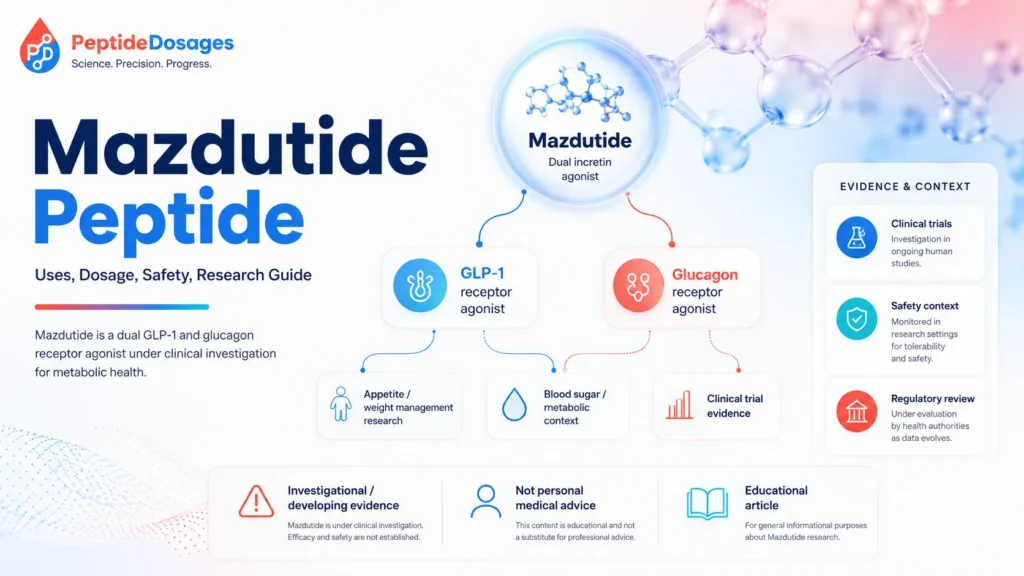
Mazdutide peptide is an investigational, long-acting peptide drug studied for obesity and type 2 diabetes because it activates both the GLP-1 receptor and the glucagon receptor in clinical research programs 1, 2, 3, 4. This educational guide reviews how mazdutide works, what clinical trials have reported, potential benefits, side effects, dosage information from studies, administration routes in medical literature, and regulatory caveats. It does not provide personalized medical advice, and readers should interpret peptide claims through published evidence, official registries, and clinician-guided decision-making rather than online peptide marketing [1], 5, 6.
Key points:
- Mazdutide, also known in research settings as IBI362, is studied as a once-weekly GLP-1 and glucagon receptor dual agonist in metabolic disease research [1], [2].
- The main therapeutic research areas are obesity, overweight, body weight reduction, type 2 diabetes, and related metabolic markers such as glycated hemoglobin and fasting glucose [2].
- Its mechanism is based on GLP-1 receptor activity, which is linked to appetite and glucose regulation, plus glucagon receptor activity, which may affect energy expenditure and liver metabolism [3], [4].
- Human evidence includes phase 2 and phase 3 clinical trial programs, including placebo-controlled obesity studies and type 2 diabetes studies, but long-term outcome evidence is still developing [1], [2].
- Potential benefits should be framed as clinical-trial outcomes, not guaranteed individual results; reported endpoints include change in body weight from baseline and glycemic measures in selected populations [2].
- Reported tolerability concerns overlap with incretin-based therapies, especially gastrointestinal adverse events, and safety interpretation should include hypoglycemia risk in diabetes contexts, gallbladder or pancreas considerations, and monitoring needs [2], 13.
- Dosage information in this article is limited to published or registered study contexts; study doses should not be interpreted as personal dosing advice [1], [2].
Related dosage pages: For vial-specific concentration, reconstitution, and measurement examples, see Mazdutide (5 mg Vial) Dosage Protocol and Mazdutide (10 mg Vial) Dosage Protocol. Each linked protocol remains a separate reference because vial strength changes concentration and syringe-unit calculations.
Fast Answer
Mazdutide peptide is a dual GLP-1 and glucagon receptor agonist being studied for obesity, overweight, type 2 diabetes, and weight management outcomes [1], [2]. People search for it because clinical trials have evaluated body weight reduction and metabolic endpoints, but evidence strength depends on the trial phase, population, comparator, dose, and follow-up length [1], [2]. Mazdutide should be interpreted through clinical evidence, safety data, and current regulatory status, not as an unsupervised peptide product or personal dosing protocol [5], [6].
What Is the Mazdutide Peptide?
Mazdutide is a synthetic peptide-based investigational drug designed to activate two hormone receptors involved in metabolic regulation: the glucagon-like peptide-1 receptor and the glucagon receptor [1], [2], [3], [4]. In clinical literature and trial registries, it may also appear as IBI362, a research code used in studies and sponsor documentation [1], [2].
The term Mazdutide peptide is often searched by readers who want to understand whether it is similar to GLP-1 receptor agonists used for obesity or type 2 diabetes. The key distinction is that mazdutide is not only a GLP-1 receptor agonist; it is studied as a GLP-1 and glucagon receptor dual agonist [1], [2], [4].
| Evidence Area | What Has Been Studied | Evidence Level | What It Can and Cannot Show |
|---|---|---|---|
| Obesity and overweight | Human trials have evaluated mazdutide and placebo in adults with obesity or overweight, including Chinese adult populations [1], [2], 7, 8. | Clinical evidence | Can show trial-level changes in body weight under defined conditions; cannot predict individual outcomes or substitute for medical advice. |
| Type 2 diabetes | Trials have evaluated glycemic and body weight endpoints, including studies comparing mazdutide versus dulaglutide in Chinese patients with type 2 diabetes [2], 9. | Clinical evidence | Can inform research interpretation; cannot establish universal treatment choice across all patients. |
| Mechanism | GLP-1 and glucagon receptor pathways have biologic roles in appetite, insulin secretion, glucose metabolism, and energy balance [3], [4]. | Mechanistic / clinical pharmacology | Explains why the drug is being studied; does not prove patient-level benefit by itself. |
| Liver, fat, and metabolism | Preclinical and mechanistic work has explored metabolic pathways relevant to liver, adipose tissue, and energy balance [4], 10. | Preclinical / mechanistic | Can generate hypotheses; human relevance must be confirmed in trials. |
| Regulatory status | Approval status depends on country, product, indication, and current official regulator records [5], 22, 23. | Regulatory evidence | Can clarify whether a product has reviewed labeling; does not validate unapproved online products. |
Mazdutide as a Once-Weekly GLP-1 and Glucagon Receptor Dual Agonist
Clinical studies describe mazdutide as a once-weekly therapy evaluated by subcutaneous administration in trial settings [1], [2]. “Dual agonist” means the compound is intended to stimulate two receptor systems rather than a single receptor, which is why it is often discussed alongside GLP-1 receptor agonists and newer multi-receptor metabolic drugs [3], [4].
GLP-1 receptor activation is associated with effects on appetite, gastric emptying, insulin secretion, and glucagon suppression in glucose-dependent contexts [3], 11. Glucagon receptor activation has a more complex role because glucagon can raise hepatic glucose output, yet glucagon biology is also linked to energy expenditure and lipid metabolism in experimental and physiologic research [4].
Why Is Mazdutide Discussed for Obesity and Type 2 Diabetes?
Mazdutide is discussed for obesity and type 2 diabetes because these conditions involve appetite regulation, insulin secretion, blood sugar control, body weight, adipose tissue, liver metabolism, and cardiometabolic risk [2], 18. Obesity pharmacotherapy guidelines also recognize that medications may be considered for selected patients when lifestyle therapy alone is insufficient, but drug choice depends on regulatory approval, indications, contraindications, and clinician assessment 19.
The mazdutide research program is especially relevant because incretin-based medicines have changed obesity and diabetes management. However, evidence for approved GLP-1 or GIP/GLP-1 therapies should not be automatically transferred to mazdutide unless mazdutide-specific trials support the same claim [2], [13], 15.
Peptide Classification, IBI362 Naming, and Development Context
Mazdutide is best classified in this article as a metabolic peptide drug candidate studied as a GLP-1 and glucagon receptor dual agonist [1], [2]. The IBI362 name is useful because older trial records, abstracts, and publications may use that code instead of the later generic name mazdutide [1], [2].
Development context matters for evidence review. Sponsor announcements can explain development history, but clinical claims should be based on registries, peer-reviewed trial reports, official regulator documents, and high-quality medical literature rather than company marketing alone [1], [2], [5].
How Does Mazdutide Peptide Work?
Mazdutide is designed to activate receptors that respond to gut and pancreatic hormone signals involved in metabolism [2], [3], [4]. The GLP-1 pathway is better established clinically than the glucagon co-agonist concept, but both pathways have biologic plausibility in obesity and diabetes research [3], [4], [11].
How GLP-1 Receptor Activity May Influence Appetite, Insulin, and Blood Sugar
GLP-1 receptor activity can reduce appetite, slow gastric emptying, enhance glucose-dependent insulin secretion, and reduce glucagon secretion when glucose is elevated [3], [11], 12. These effects help explain why GLP-1 receptor agonists have approved indications in type 2 diabetes and, at selected doses and products, chronic weight management [13], 14.
For mazdutide, the GLP-1 component is one part of the proposed mechanism, not a full explanation of clinical outcomes. Trial endpoints such as appetite-related weight change, body weight reduction, and glucose markers must be measured directly rather than inferred from receptor pharmacology [1], [2].
How Glucagon Receptor Activity May Affect Energy Expenditure
Glucagon is traditionally known for raising blood glucose by stimulating hepatic glucose production, but glucagon signaling also has roles in energy expenditure, amino acid metabolism, lipid handling, and liver metabolism [4]. Dual agonist development aims to pair GLP-1 effects on appetite and glucose regulation with glucagon-related metabolic effects while trying to preserve tolerability and safety [2], [4].
This balance is medically important. A glucagon receptor agonist component may create metabolic opportunities, but it also requires careful clinical testing because glucagon biology can affect blood sugar and liver pathways [4].
Mechanism of Action: Why Does Dual Agonist Biology Matter?
Dual agonist biology matters because obesity and type 2 diabetes are not controlled by one pathway. Appetite, insulin secretion, gastric emptying, hepatic glucose output, adipose tissue biology, energy expenditure, and physical activity all influence body weight and metabolic health [3], [4], [18].
GLP-1 and Glucagon Receptor Signaling in Body Weight Regulation
GLP-1 receptor signaling is strongly linked to appetite and satiety, which can reduce energy intake in clinical and physiologic contexts [3], [11]. Glucagon receptor signaling may affect energy expenditure and hepatic lipid metabolism, but its therapeutic use is more complex because glucagon can also increase blood glucose [4].
This is why mazdutide is not simply “another GLP-1.” The effect of mazdutide depends on the combined pharmacology of GLP-1 and glucagon receptor dual activation, the dose studied, and the patient population enrolled in clinical trials [1], [2].
Why Doesn’t Mechanism Guarantee Clinical Outcomes?
Mechanism is a hypothesis generator, not proof of benefit. A receptor agonist can look promising in laboratory models yet fail to show meaningful efficacy, acceptable tolerability, or long-term safety in human studies [2], [10].
For readers, the practical rule is simple: clinical outcomes require clinical evidence. Mazdutide’s mechanism helps explain why researchers evaluate it for weight management and type 2 diabetes, but claims should be graded by randomized trials, comparator data, adverse event reporting, and regulatory review [1], [2], [5].
What Is Mazdutide Peptide Used or Studied For?
Mazdutide is studied mainly in metabolic disease settings, especially obesity, overweight, and type 2 diabetes [1], [2]. It should not be described as a general wellness peptide, anti-aging peptide, bodybuilding peptide, or unsupervised weight-loss product because those uses are not established through approved labeling or high-quality clinical evidence [5], [6].
Obesity, Overweight, and Weight Management Research Contexts
Clinical trials have evaluated mazdutide for body weight reduction in adults with overweight or obesity, including Chinese adults with overweight and adults with obesity [1], [7], [8]. Study outcomes commonly include percentage change in body weight from baseline, categorical weight-loss thresholds, waist measures, and safety or tolerability endpoints [2], [7], [8].
Obesity is a chronic disease associated with metabolic, cardiovascular, kidney, liver, and quality-of-life burdens, but treatment decisions are individualized and should consider approved options, comorbidities, and safety risks [18], [19]. Mazdutide for weight management should therefore be interpreted as a clinical research topic unless and until a specific regulator-approved product and indication apply in the reader’s jurisdiction [5], [22], [23].
How Has Mazdutide Been Studied in Type 2 Diabetes?
Mazdutide has been studied in patients with type 2 diabetes, including research comparing mazdutide versus dulaglutide in Chinese patients with type 2 diabetes [2], [9]. Endpoints in diabetes trials may include glycated hemoglobin, fasting plasma glucose, body weight, adverse events, and hypoglycemia, but each study must be read in the context of its dose, duration, background medication rules, and inclusion criteria [2], [9], [18].
This distinction matters because people with type 2 diabetes may also have obesity or overweight. Evidence for diabetes and obesity overlap is clinically relevant, but it does not mean mazdutide is appropriate for every individual with either condition [18], [19].
Potential Benefits of Mazdutide Peptide
The potential benefits of mazdutide are best described as trial-reported outcomes, not promised effects. Human studies have evaluated body weight reduction, glycemic markers, and metabolic endpoints, while preclinical research has explored liver and fat pathways [2], [7], [8], [9], [10].
What Evidence Exists for Body Weight Reduction?
Human clinical trials have reported reductions in body weight among participants who received mazdutide compared with placebo in obesity or overweight research settings [2], [7], [8]. The clinical meaning of those results depends on the study population, baseline body weight, dose, treatment duration, lifestyle intervention background, adverse events, and discontinuation rates [2], [7], [8].
For SEO readers searching “mazdutide for weight,” the safest phrasing is: mazdutide has been studied for weight management and body weight reduction in controlled clinical trials. It should not be described as guaranteed weight loss or a self-directed treatment of obesity [5], [6], [19].
Which Metabolic Markers Have Researchers Measured?
In type 2 diabetes and metabolic studies, researchers may measure glycated hemoglobin, fasting glucose, insulin-related markers, body weight, waist circumference, blood pressure, lipids, and liver-related measures [2], [9], [18]. These markers help evaluate efficacy and safety, but surrogate markers do not always prove reduced heart attack, stroke, chronic kidney disease, or long-term mortality risk unless outcome trials specifically test those endpoints [18], [19].
Clinical trial results are most useful when they report both benefits and harms. A treatment that reduces body weight but causes unacceptable adverse events, discontinuation, or safety concerns would need a different risk-benefit interpretation than a well-tolerated therapy with durable outcomes [2], [13], [15].
What Does Human Research Say About Mazdutide?
Human research includes phase 1, phase 2, and phase 3 clinical research contexts listed in trial registries and indexed medical literature [1], [2]. The evidence is strongest when trials are randomized, blinded, placebo-controlled, adequately powered, and long enough to evaluate both efficacy and safety [1], [2], [19].
Randomised Controlled Trial Designs and Placebo Comparisons
Randomised controlled trial designs reduce bias by assigning participants to mazdutide, placebo, or active comparator groups under predefined rules [1], [2]. Placebo-controlled studies are especially useful for estimating the effect of mazdutide beyond lifestyle background, trial participation, and expectation effects [2], [7], [8].
Blinding and predefined endpoints also matter. If participants, investigators, or outcome assessors know treatment assignment, reported efficacy or side effects may be influenced by expectation or differential follow-up [19].
How Is the Effect of Mazdutide Measured in Clinical Trial Endpoints?
The effect of mazdutide is usually measured with endpoints such as change in body weight, percentage body weight reduction, HbA1c change in diabetes studies, fasting glucose, waist measures, and adverse event rates [2], [7], [8], [9]. In obesity trials, “body weight from baseline” is a common endpoint because it compares each participant’s weight at follow-up with their own starting value [7], [8].
A good article should not report only the largest weight-loss number. It should also describe the comparator, dropout rates, gastrointestinal tolerability, serious adverse events, discontinuations, and what is still unknown about long-term safety [2], [7], [8].
Phase 3 Clinical Trial Evidence for Mazdutide in Obesity
Phase 3 evidence is more clinically informative than early dose-finding research because phase 3 trials are typically larger and designed to evaluate efficacy and safety in a population closer to intended medical use [1], [8]. The selected title, “Efficacy and Safety of Mazdutide for Obesity: A Randomised Controlled Trial,” should therefore be read as part of the clinical evidence base rather than as a guarantee of individual results [8].
Efficacy and Safety of Mazdutide in Adults With Obesity
The phrase “efficacy and safety of mazdutide” signals that both benefit and harm are central to interpretation. Obesity trials should evaluate body weight reduction alongside adverse events, tolerability, laboratory signals, vital signs, and discontinuation due to side effects [2], [8], [19].
Adults with obesity are not all medically similar. Baseline BMI, type 2 diabetes status, cardiovascular disease, liver disease, kidney disease, medication use, and pregnancy potential can all affect risk-benefit decisions [18], [19].
What Did Phase 3 Results Suggest About Reductions in Body Weight?
Phase 3 results have been discussed in relation to reductions in body weight compared with placebo, but readers should look for the exact study design, duration, dose groups, and population before interpreting the clinical meaning [1], [8]. A result in Chinese adults with obesity, for example, may not fully answer questions about long-term outcomes, diverse populations, cardiovascular events, or use in patients with complex comorbidities [8], [18].
The safest interpretation is that phase 3 data can strengthen confidence in trial-level efficacy. It still cannot replace regulator-reviewed labeling, individualized medical judgment, or long-term post-marketing safety data [5], [19].
Phase 2 Clinical Evidence in Type 2 Diabetes and Metabolic Health
Phase 2 studies help identify dose-response, early efficacy, tolerability, and signals that justify larger trials [1], [2]. For mazdutide, phase 2 evidence includes obesity or overweight studies and studies in type 2 diabetes contexts [2], [7], [9].
Mazdutide Versus Dulaglutide in Chinese Patients With Type 2 Diabetes
Mazdutide versus dulaglutide in Chinese patients with type 2 diabetes is an important comparison because dulaglutide is an established GLP-1 receptor agonist with approved type 2 diabetes labeling in some jurisdictions [9], 17. Active-comparator studies can help contextualize glycemic and weight outcomes, but they still depend on dose, background therapies, and trial design [9].
Dulaglutide comparisons do not automatically prove superiority in all medical contexts. A clinician would also consider contraindications, prior medication response, access to approved products, cost, adverse effects, and patient-specific risks [17], [18].
What Do Studies Suggest for Diabetes and Obesity Overlap?
Type 2 diabetes and obesity overlap in many patients, and weight reduction can improve glycemic control and cardiometabolic risk factors in selected populations [18]. Studies of mazdutide in individuals with type 2 diabetes may therefore evaluate both HbA1c and body weight, but the presence of diabetes also changes safety considerations such as hypoglycemia risk when combined with insulin or insulin secretagogues [9], [13], [14].
This is one reason trial data should not be converted into self-treatment decisions. People with type 2 diabetes often take multiple medications, and changes in appetite, gastric emptying, or glucose levels may require clinician-supervised monitoring [13], [14], [18].
Preclinical and Mechanistic Evidence for Mazdutide
Preclinical evidence can explain why a drug candidate is interesting, but it is lower on the evidence ladder than well-conducted human trials. For mazdutide, preclinical and mechanistic literature explores receptor biology, liver metabolism, adipose tissue, glucose handling, and body weight pathways [4], [10].
What Animal and Laboratory Findings Explore Liver, Fat, and Metabolism?
Animal and laboratory studies can examine pathways that are difficult to isolate in humans, such as hepatic lipid handling, adipose tissue signaling, and receptor-specific metabolic effects [4], [10]. These findings may help researchers understand why a GLP-1 and glucagon receptor dual agonist could affect body weight, liver fat, or metabolic markers [4], [10].
However, preclinical findings do not establish that mazdutide treats fatty liver disease, metabolic dysfunction-associated steatotic liver disease, or obesity-associated morbidity in humans. Those claims require human clinical outcomes, not only mechanistic plausibility [10], [18].
Where Are the Translational Limits Between Models and Patients?
The main translational limit is that animals, cell models, and short-term biomarker studies do not fully reproduce human disease. Human obesity and type 2 diabetes involve behavior, diet, exercise, genetics, comorbidities, medication adherence, socioeconomic factors, and long-term disease biology [18], [19].
This is why evidence grading matters. Preclinical data can support a rationale for clinical trials, but only human studies can measure clinical efficacy, adverse events, discontinuations, and patient-centered outcomes in people [1], [2], [10].
What Side Effects Have Been Reported With Mazdutide?
Mazdutide safety data should be read from clinical trials, not from peptide forums or vendor claims. Reported tolerability concerns in mazdutide studies overlap with the broader incretin drug class, especially gastrointestinal adverse events, although mazdutide-specific risk requires mazdutide-specific data [2], [7], [8], [13].
Gastrointestinal Adverse Events and Dose-Related Tolerability
Gastrointestinal adverse events such as nausea, vomiting, diarrhea, constipation, abdominal discomfort, and decreased appetite are commonly discussed in GLP-1-based therapy labels and trials [13], [14], [15]. Mazdutide clinical studies should be examined for the frequency, severity, timing, dose relationship, and discontinuation impact of these adverse events [2], [7], [8].
Dose-related tolerability is especially important in obesity pharmacotherapy. A higher dose may show greater body weight reduction in a trial, but it may also increase side effects or discontinuations, so efficacy and safety must be evaluated together [2], [8], [19].
Which Hypoglycemia, Heart Rate, Gallbladder, Pancreas, and Liver Signals Matter?
Hypoglycemia risk is especially relevant when incretin-based therapies are used in people with type 2 diabetes who also take insulin or sulfonylureas, because approved GLP-1 labeling warns about increased hypoglycemia risk in such combinations [13], [14]. Mazdutide trial reports should therefore be reviewed for diabetes medication background, hypoglycemia definitions, and event rates [2], [9].
Approved GLP-1 and incretin-based drug labels also discuss warnings or precautions involving pancreatitis, gallbladder disease, heart rate, kidney injury in the setting of severe gastrointestinal reactions, and delayed gastric emptying [13], [14], [15]. These warnings should not be copied to mazdutide as if mazdutide has identical labeling, but they are relevant class-context topics for clinicians to consider while mazdutide-specific data matures [2], [13], [15].
Safety Risks, Contraindications, and Monitoring Considerations
For mazdutide, the most responsible approach is to separate known study safety findings from class-context concerns and unknown long-term risks. If a country-specific mazdutide label exists, that approved label should be considered the highest-priority safety document for that product and indication [5], [22], [23].
Who May Need Extra Caution Before Considering GLP-1-Based Therapy?
People with a history of pancreatitis, gallbladder disease, severe gastrointestinal disease, kidney disease, or complex diabetes regimens may need special caution with GLP-1-based therapy discussions, based on approved-label warnings for existing incretin medicines [13], [14], [15]. This does not mean mazdutide has the same label; it means that safety evaluation should actively look for these issues in mazdutide trials and any future prescribing information [2], [5].
Medical context is also important for patients with cardiovascular disease, chronic kidney disease, liver disease, or obesity-associated comorbidity. These patients may have higher potential benefit from effective obesity treatment, but also higher baseline risk and more complex medication decisions [18], [19].
Pregnancy, Breastfeeding, Kidney Disease, and Severe Gastrointestinal Disease
Pregnancy and breastfeeding require caution because weight-loss pharmacotherapy is generally not approached the same way during pregnancy, and approved incretin labels include pregnancy-related risk language or discontinuation considerations [13], [15]. Mazdutide-specific pregnancy and lactation evidence should not be assumed unless published human data or approved labeling clearly support it [2], [5].
Kidney disease and severe gastrointestinal disease also require careful interpretation. Incretin-based labels discuss acute kidney injury in relation to severe gastrointestinal adverse reactions and caution in certain gastrointestinal contexts, so mazdutide trial safety data should be assessed for dehydration, renal events, and tolerability [13], [14], [15].
Drug Interactions and Medical Contexts That Need Caution
Drug interaction discussions for mazdutide should be conservative unless there is a published label or dedicated interaction study. The most relevant issues are diabetes medication combinations, delayed gastric emptying, and the broader medical context of obesity pharmacotherapy [13], [14], [18].
How Could Insulin or Sulfonylureas Affect Hypoglycemia Risk?
In approved GLP-1 receptor agonist labeling, hypoglycemia risk can increase when these agents are used with insulin or insulin secretagogues such as sulfonylureas [13], [14]. For mazdutide in patients with type 2 diabetes, researchers and clinicians should therefore look at background insulin or sulfonylurea use, glucose monitoring, and hypoglycemia definitions in the trial design [2], [9].
This point is not a recommendation to adjust medication independently. Medication changes for diabetes can be dangerous without clinician oversight, especially when appetite, weight, and glucose levels are changing [18].
How Might Delayed Gastric Emptying Affect Oral Medication Absorption?
GLP-1 receptor agonism can slow gastric emptying, and approved incretin labels include language about possible effects on absorption of oral medications [13], [14], [15]. For mazdutide, this is a medically relevant question because the GLP-1 component may influence gastric emptying, but the exact interaction profile should be based on mazdutide-specific evidence when available [2], [3].
This matters most for oral drugs with narrow therapeutic windows or timing-sensitive absorption. A clinician may need to consider medication lists, symptoms, nutrition changes, and monitoring if a GLP-1-based therapy is being evaluated [13], [14].
What Dosage Has Been Used in Mazdutide Clinical Trials?
Mazdutide dosage information should be read only as study context unless an official approved label applies in the reader’s jurisdiction. Published and registered trial programs have evaluated once-weekly mazdutide dose arms, and indexed literature or registries include dose examples such as mazdutide 4 mg, mazdutide 6 mg, 9 mg, and 10 mg in defined clinical research settings [1], [2], [7], [8].
Published Study Doses Such as 4 mg, 6 mg, 9 mg, and 10 mg
Clinical trial doses such as 4 mg, 6 mg, 9 mg, and 10 mg are not “best doses” for readers; they are study arms used under inclusion criteria, exclusion criteria, dose-escalation rules, adverse event monitoring, and investigator oversight [1], [2], [7], [8]. A dose of mazdutide in a published trial may not match a future approved dosage, an off-label medical decision, or a product from an unregulated source [5], [6].
When reading a trial of mazdutide, dose should be interpreted alongside treatment duration, titration schedule, comparator, participant characteristics, and discontinuation rates. This is especially important when comparing mazdutide and placebo or comparing mazdutide with active therapies such as dulaglutide [7], [8], [9].
Why Isn’t Trial Dose Escalation Personal Dosage Advice?
Study doses should not be interpreted as personal dosing advice. Clinical trial protocols are designed for research and include screening, monitoring, adverse event management, and stopping rules that do not translate into self-use instructions [1], [2].
This article does not provide a mazdutide protocol, cycle, stack, reconstitution guide, or injection instructions. Readers considering peptide-related medical decisions should discuss evidence, risks, alternatives, and regulatory status with a qualified healthcare professional [18], [19].
Administration Routes Discussed in the Literature
Mazdutide is discussed in clinical research as a once-weekly subcutaneous administration therapy [1], [2]. Administration route matters for pharmacokinetics, tolerability, adherence, and comparison with other injectable metabolic medicines [13], [15].
Once-Weekly Subcutaneous Administration in Published Studies
Once-weekly mazdutide administration in studies means the drug was given under a research protocol, not that readers should self-administer it. Clinical trial administration includes product control, eligibility criteria, trained oversight, adverse event reporting, and predefined monitoring [1], [2].
Subcutaneous administration is also used by several approved incretin-based therapies, but the existence of injectable approved medicines does not validate unapproved peptide products or unsupervised use [13], [15], [6].
Why Shouldn’t This Section Be Read as Injection Instructions?
This section is literature context only. It does not explain how to inject, mix, reconstitute, store, or personally use mazdutide or any other peptide.
The FDA has specifically warned about risks with unapproved GLP-1 products used for weight loss, including concerns about compounded products, dosing errors, and products that have not gone through the same approval and quality review as FDA-approved drugs [6]. Those cautions are directly relevant to online “research peptide” claims, even when the marketing language sounds medical or scientific [6].
Regulatory and Legal Status: Is Mazdutide Peptide Approved?
Regulatory status depends on country, indication, product, and date. The FDA Drugs@FDA database, EMA medicines database, ClinicalTrials.gov, and the relevant national regulator, such as China’s National Medical Products Administration, are the appropriate sources for checking whether mazdutide has an approved label in a specific jurisdiction [5], [1], [22], [23].
FDA, China, ClinicalTrials.gov, and Country-Specific Verification
In the United States, FDA approval should be verified through Drugs@FDA or other official FDA resources rather than through peptide sellers or clinic marketing pages [5]. In Europe, the EMA medicines database is a key source for centrally authorized medicines, while China-specific status should be checked through NMPA or official Chinese regulatory records [22], [23].
ClinicalTrials.gov is useful for identifying studies, sponsors, locations, and trial status, but a trial listing is not the same as drug approval [1]. Likewise, a published clinical trial is not the same as an approved prescribing label [5], [19].
Why Do Compounded or Unapproved Peptide Products Require Caution?
Compounded or unapproved peptide products require caution because they may not have the same evidence, manufacturing controls, labeling, dosing instructions, or regulator-reviewed safety information as approved medicines [5], [6]. This is especially important for peptides marketed online for weight loss or “metabolic optimization,” where claims may outpace evidence and regulation [6].
The FDA has raised concerns about unapproved GLP-1 drugs used for weight loss, including dosing errors and the use of salt forms or compounded versions that are not the same as approved products [6]. Readers should not assume that an online mazdutide product is equivalent to a studied clinical-trial product or future approved medicine [5], [6].
Evidence Limitations, Comparisons, and Clinician Discussion Points
The mazdutide evidence base is promising enough to justify careful study, but it still has limitations. Key gaps include long-term safety, broader population diversity, cardiovascular outcomes, renal outcomes, liver disease outcomes, durability after discontinuation, real-world adherence, and regulatory-label differences [1], [2], [18].
Mazdutide Versus Semaglutide, Tirzepatide, and Dulaglutide
Mazdutide is most reasonably compared with related metabolic therapies by mechanism, evidence level, approved status, and safety profile. Semaglutide is a GLP-1 receptor agonist with FDA-approved products for type 2 diabetes and chronic weight management depending on brand and indication, while tirzepatide is a GIP and GLP-1 receptor agonist with approved diabetes and obesity products depending on brand and jurisdiction [13], [14], [15], [16].
| Therapy | Main Receptor Activity | Evidence / Status Context | Interpretation |
|---|---|---|---|
| Mazdutide | GLP-1 and glucagon receptor dual agonist [1], [2] | Clinical trials and regulatory programs; status must be verified by jurisdiction [1], [5], [22], [23] | Investigational or country-specific depending on official approval status; do not treat online products as equivalent. |
| Semaglutide | GLP-1 receptor agonist [13], [14] | Large obesity trials and FDA-approved products for specific indications [13], [14], 20 | Useful comparator for evidence quality, but not mechanistically identical to mazdutide. |
| Tirzepatide | GIP and GLP-1 receptor agonist [15], [16] | Large obesity trials and FDA-approved products for specific indications [15], [16], 21 | Multi-receptor comparator, but acts through GIP/GLP-1 rather than glucagon/GLP-1. |
| Dulaglutide | GLP-1 receptor agonist [17] | Approved type 2 diabetes therapy in some jurisdictions; used as an active comparator in mazdutide diabetes research [9], [17] | Helpful for diabetes trial context, not a direct obesity-drug equivalence claim. |
Systematic review and meta-analysis work may eventually clarify comparative efficacy and safety, but pooled results can be limited by study heterogeneity, short follow-up, and differences in trial populations 24. Head-to-head trials are more informative than indirect comparisons, but even head-to-head results should be applied only within the medical context studied [9], [19].
What Should Readers Discuss With a Clinician About Risks and Alternatives?
Readers can use the following checklist to guide a clinician discussion without turning this article into personal medical advice:
- Whether mazdutide has an approved indication in the reader’s country and whether an official label is available [5], [22], [23].
- Whether approved alternatives, such as semaglutide, tirzepatide, or other obesity and diabetes pharmacotherapies, are more appropriate based on diagnosis and medical history [13], [15], [18], [19].
- Current medications, especially insulin, sulfonylureas, oral drugs with narrow therapeutic windows, and therapies affected by gastrointestinal symptoms [13], [14], [15].
- Personal history of pancreatitis, gallbladder disease, kidney disease, severe gastrointestinal disease, liver disease, or cardiovascular disease [13], [14], [15], [18].
- Pregnancy plans, pregnancy status, or breastfeeding, because weight-loss pharmacotherapy and incretin-based drug exposure require clinician-specific risk assessment [13], [15].
- How to interpret trial dose information without treating it as a self-use protocol [1], [2].
- How to distinguish peer-reviewed clinical evidence from unsupported online claims or unapproved peptide sales pages [2], [6].
The safest way to interpret Mazdutide peptide is through evidence quality, regulatory status, safety data, and clinician-guided decision-making. The strongest conclusions come from official labeling and well-designed human studies; weaker claims, especially those based on preclinical findings or online anecdotes, should be treated cautiously.
Related dosage protocols and research
Use the available links to move between research context, dosage pages or comparisons, and supporting guides. When vial-size variants exist, they remain separate because concentration and syringe-unit calculations change with vial strength. Comparisons do not imply that different compounds are interchangeable.
Matching dosage protocols
Related protocols and comparisons
Further research context
REFERENCES
- ClinicalTrials.gov. Mazdutide search results. United States National Library of Medicine / ClinicalTrials.gov. Accessed for trial-registry context.
- PubMed. Mazdutide clinical trial indexed literature search. United States National Library of Medicine / PubMed. Accessed for peer-reviewed clinical literature context.
- Drucker DJ. Mechanisms of Action and Therapeutic Application of Glucagon-like Peptide-1. Cell Metabolism. 2018. DOI: 10.1016/j.cmet.2018.03.001.
- Habegger KM, Heppner KM, Geary N, Bartness TJ, DiMarchi R, Tschöp MH. The metabolic actions of glucagon revisited. Nature Reviews Endocrinology. 2010. DOI: 10.1038/nrendo.2010.187.
- U.S. Food and Drug Administration. Drugs@FDA: FDA-approved drug products database. FDA. Accessed for U.S. regulatory verification context.
- U.S. Food and Drug Administration. FDA’s Concerns with Unapproved GLP-1 Drugs Used for Weight Loss. FDA. Accessed for unapproved and compounded GLP-1 product safety context.
- PubMed. Mazdutide Chinese overweight obesity phase 2 literature search. United States National Library of Medicine / PubMed. Accessed for phase 2 obesity study context.
- PubMed. Efficacy and Safety of Mazdutide for Obesity search. United States National Library of Medicine / PubMed. Accessed for selected-title clinical trial context.
- PubMed. Mazdutide versus dulaglutide in Chinese patients with type 2 diabetes literature search. United States National Library of Medicine / PubMed. Accessed for active-comparator diabetes study context.
- PubMed. Mazdutide preclinical literature search. United States National Library of Medicine / PubMed. Accessed for preclinical and mechanistic research context.
- Holst JJ. The physiology of glucagon-like peptide 1. Physiological Reviews. 2007. DOI: 10.1152/physrev.00034.2006.
- Müller TD, Finan B, Bloom SR, et al. Glucagon-like peptide 1 (GLP-1). Molecular Metabolism. 2019. DOI: 10.1016/j.molmet.2019.09.010.
- U.S. Food and Drug Administration. Wegovy approval and label information. Drugs@FDA. FDA.
- U.S. Food and Drug Administration. Ozempic approval and label information. Drugs@FDA. FDA.
- U.S. Food and Drug Administration. Zepbound approval and label information. Drugs@FDA. FDA.
- U.S. Food and Drug Administration. Mounjaro approval and label information. Drugs@FDA. FDA.
- U.S. Food and Drug Administration. Trulicity approval and label information. Drugs@FDA. FDA.
- American Diabetes Association Professional Practice Committee. 8. Obesity and Weight Management for the Prevention and Treatment of Type 2 Diabetes: Standards of Care in Diabetes—2024. Diabetes Care. 2024. DOI: 10.2337/dc24-S008.
- Apovian CM, Aronne LJ, Bessesen DH, et al. Pharmacological Management of Obesity: An Endocrine Society Clinical Practice Guideline. The Journal of Clinical Endocrinology & Metabolism. 2015. DOI: 10.1210/jc.2014-3415.
- Wilding JPH, Batterham RL, Calanna S, et al. Once-Weekly Semaglutide in Adults with Overweight or Obesity. The New England Journal of Medicine. 2021. DOI: 10.1056/NEJMoa2032183.
- Jastreboff AM, Aronne LJ, Ahmad NN, et al. Tirzepatide Once Weekly for the Treatment of Obesity. The New England Journal of Medicine. 2022. DOI: 10.1056/NEJMoa2206038.
- European Medicines Agency. Medicines database. EMA. Accessed for EU regulatory verification context.
- National Medical Products Administration. NMPA official English website. China National Medical Products Administration. Accessed for China regulatory verification context.
- PubMed. Mazdutide systematic review and meta-analysis literature search. United States National Library of Medicine / PubMed. Accessed for secondary evidence context.
Researchers Cited in This Article
The researchers below authored or co-authored publications cited in this article. Listing them here identifies sources; it does not mean they wrote, independently reviewed, sponsored, or endorsed this PeptideDosages.com article. The site author is identified in the article byline.
Daniel J. Drucker
Researcher profile: Drucker Lab
Daniel J. Drucker’s published work is relevant to the incretin pathway, GLP-1 receptor pharmacology, and mechanism-of-action discussions that help frame Mazdutide peptide research. His publications provide useful context for understanding how GLP-1 receptor signaling is interpreted in metabolic clinical studies and why receptor biology must be separated from clinical evidence. This background is especially relevant for mazdutide because the article discusses a dual GLP-1 and glucagon receptor research lane, comparator incretin therapies, and evidence limitations around translating pharmacology into patient-level outcomes.
Selected publications:
- Mechanisms of Action and Therapeutic Application of Glucagon-like Peptide-1 — Cell Metabolism, 2018. DOI: 10.1016/j.cmet.2018.03.001
- The Biology of Incretin Hormones — Cell Metabolism, 2006. PMID: 16517403
Jens Juul Holst
Researcher profile: University of Copenhagen Research Profile
Jens Juul Holst’s research is central to the physiology of GLP-1 and broader incretin science, which supports the pharmacology context used to interpret mazdutide and related metabolic peptide research. His work helps explain the physiologic roles of GLP-1 in appetite, insulin secretion, glucose regulation, and clinical translation. That literature is useful for readers evaluating mazdutide’s dual-agonist rationale, because it clarifies why mechanistic plausibility and clinical-trial outcomes should be assessed separately in therapeutic peptide research.
Selected publications:
- The Physiology of Glucagon-like Peptide 1 — Physiological Reviews, 2007. DOI: 10.1152/physrev.00034.2006
- Glucagon-like peptide 1 (GLP-1) — Molecular Metabolism, 2019. DOI: 10.1016/j.molmet.2019.09.010