
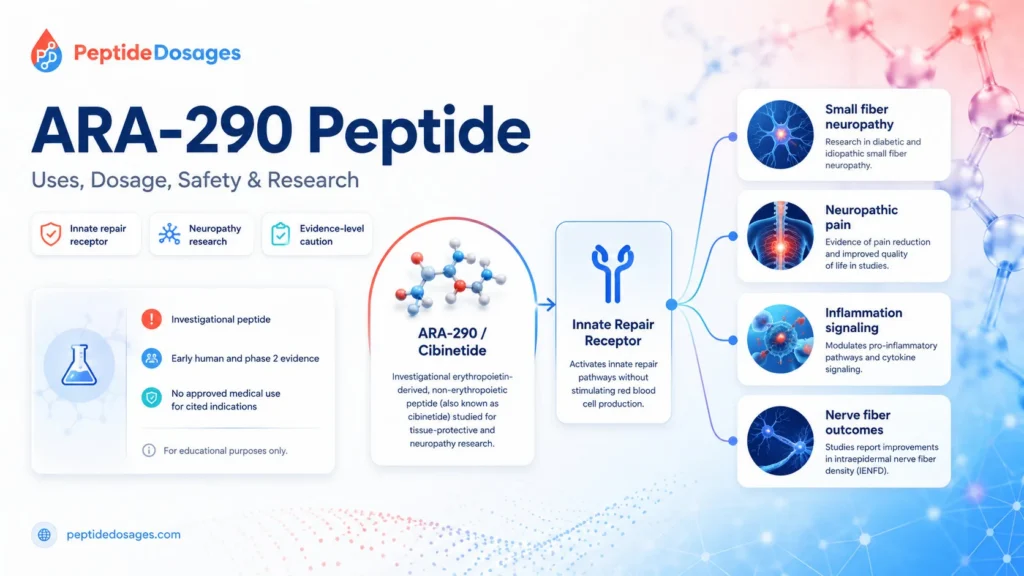
ARA-290 peptide, also called cibinetide, is an investigational erythropoietin-derived peptide studied for nerve-related and inflammatory conditions, especially small fiber neuropathy and neuropathic pain 1. This educational guide explains its proposed mechanism, human and preclinical research, potential benefits, side effects, published study doses, administration routes used in trials, and regulatory status. It does not provide personal medical advice, dosing instructions, purchasing guidance, or a substitute for clinician-led care.
- ARA-290, or cibinetide, is an engineered peptide related to the helix B surface domain of erythropoietin and is studied as a non-erythropoietic, tissue-protective compound [1].
- It has FDA orphan drug designations for neuropathic pain in sarcoidosis and for sarcoidosis, but those designations are not FDA approvals for clinical use 2 3.
- Human studies have mainly evaluated small fiber neuropathy, sarcoidosis-associated neuropathic symptoms, type 2 diabetes with painful neuropathy, and diabetic macular edema 4 5 6 7 8.
- Proposed benefits include improved neuropathic symptom scores and nerve-fiber measures in limited trials, but these findings are preliminary and should not be read as proof of broad treatment efficacy [4] [5] [6] [7].
- Preclinical research links ARA-290 with inflammation control, microglia modulation, and nerve injury models, but animal findings do not confirm human benefit 9 10.
- Published study doses include monitored intravenous and subcutaneous regimens, but study doses should not be interpreted as personal dosing advice [4] [6] [7] [8].
- Safety data are limited by small studies, short follow-up, and investigational use; questions about contraindications, drug interactions, pregnancy, breastfeeding, thrombosis, cancer, and immune disease should be discussed with a qualified clinician [4] [7] [8].
Related dosage pages: For vial-specific concentration, reconstitution, and measurement examples, see Ara-290 (16 mg Vial) Dosage Protocol. Each linked protocol remains a separate reference because vial strength changes concentration and syringe-unit calculations.
Fast Answer
ARA-290 peptide is an investigational, erythropoietin-derived peptide also known as cibinetide. It is searched most often for neuropathic pain, small fiber neuropathy, inflammation, and nerve-fiber research, but its evidence is mainly early human Phase 2 data and preclinical work, not approved therapeutic use [2] [3] 11. Published studies have used intravenous or subcutaneous dosing in monitored trial settings; those regimens are not personal dosing advice [4] [6] [7] [8].
What Is the ARA-290 Peptide?
ARA-290 is a synthetic peptide also known as cibinetide, PHBSP, and helix B surface peptide [1]. Scientific databases classify cibinetide as a peptide, and PubChem lists it under the molecular formula C51H84N16O21 12.
In therapeutic research, ARA-290 is discussed because it was designed to mimic tissue-protective signaling associated with erythropoietin while avoiding erythropoietin’s red-blood-cell-stimulating activity [1]. That distinction matters because approved erythropoiesis-stimulating agents have safety concerns that are not interchangeable with, but still relevant to, erythropoietin-derived research compounds 13.
ARA 290, Cibinetide, and Helix B Surface Peptide Names
The names ARA 290, ARA-290, cibinetide, PHBSP, and helix B surface peptide refer to the same investigational compound in much of the medical literature [1]. “Cibinetide” is the international nonproprietary-style name commonly used in later clinical and regulatory documents [1] [11].
The compound has also been described as an 11-amino acid peptide engineered from erythropoietin-related structure [7]. Naming differences can make the literature harder to follow, so search results should be interpreted across both ARA-290 and cibinetide.
How Is It Derived From the Tertiary Structure of Erythropoietin?
ARA-290 was designed to mimic the three-dimensional helix B surface region of erythropoietin rather than reproduce erythropoietin’s full hematopoietic effects [1]. In plain language, it is derived from the tertiary structure of erythropoietin in a way intended to preserve tissue-protective signaling while limiting red blood cell stimulation [1] [7].
This design is why ARA-290 is often described as an erythropoietin-derived peptide or an EPO-derived peptide [1]. It is not the same drug as epoetin alfa or other erythropoiesis-stimulating agents approved for anemia-related indications [13].
Why Is This Small Peptide Studied for Nerve Fibers?
Small fiber neuropathy affects small sensory and autonomic nerve fibers and can cause burning pain, altered temperature sensation, and autonomic symptoms [4] [5]. ARA-290 has been studied in this context because researchers have measured neuropathic symptoms, corneal nerve fibers, intraepidermal nerve fiber markers, and small fiber function in early human trials [5] [6] [7].
The strongest nerve-related evidence is not that ARA-290 “repairs nerves” in a proven clinical sense. A more accurate statement is that early studies have reported changes in symptom scales or nerve-fiber measures that require confirmation in larger, longer, independently replicated trials [5] [6].
How Does ARA-290 Peptide Work?
ARA-290 is proposed to work through tissue-protective signaling linked to the innate repair receptor, a receptor complex described in the literature as involving the erythropoietin receptor and the β-common receptor/CD131 [1] [9]. This proposed mechanism is biologically plausible, but mechanism alone cannot establish clinical effectiveness.
The key distinction is between receptor signaling and patient outcomes. A peptide can show receptor activity, anti-inflammatory effects, or changes in animal models without proving that it meaningfully improves disease outcomes in broad human populations.
Targeting the Innate Repair Receptor in ARA-290 Research
Targeting the innate repair receptor is central to ARA-290 research [1] [9]. The innate repair receptor has been described as a tissue-protective signaling complex activated under stress, injury, or inflammatory conditions [9].
ARA-290 is studied as a small peptide engineered to activate the innate repair receptor without driving classic erythropoietin-mediated hematopoiesis [1] [7]. This proposed separation between tissue-protective effects and red-blood-cell production is one reason researchers have explored it for peripheral neuropathies and inflammatory nerve injury models [9] [10].
Which EPO Receptor Pathways Are Being Studied?
Erythropoietin can signal through receptor pathways involved in red blood cell production, but ARA-290 research focuses on non-erythropoietic signaling associated with tissue protection and inflammatory regulation [1] [9]. The proposed receptor model involves signaling through an erythropoietin receptor and β-common receptor complex rather than the classical erythropoietic receptor pathway [1] [9].
This pathway is not simply “the EPO receptor” in the way anemia drugs are discussed. That difference is important because approved epoetin alfa labeling includes major warnings related to thrombosis, cardiovascular events, tumor progression or recurrence in certain cancer settings, and other risks [13].
Why Does Non-Erythropoietic Design Matter?
Non-erythropoietic design matters because erythropoietin’s red-blood-cell-stimulating activity can affect hemoglobin, blood viscosity, and thrombotic risk in approved anemia-drug contexts [13]. ARA-290 was engineered to avoid erythropoiesis-stimulating activity while retaining tissue-protective signaling hypotheses [1] [7].
That design does not mean ARA-290 is proven safe for all users. It means researchers are testing whether a narrower signaling profile can produce therapeutic effects with a different safety profile from erythropoietin [7] [9].
Mechanism of Action: Inflammation, Microglia, and Nerve Fibers
The proposed mechanism of action for ARA-290 includes modulation of inflammatory signaling, neuroimmune activity, and small nerve fiber outcomes [9] [10]. Human studies have focused more on symptom scales and nerve-fiber measures, while preclinical studies provide much of the microglia and inflammatory pathway detail [5] [6] [10].
This distinction matters for readers. Preclinical mechanisms can support a research hypothesis, but they cannot show that a treatment works in humans without well-designed clinical evidence.
How Might Anti-Inflammatory Effects Modulate the Innate Immune Response?
Research on ARA-290 and related erythropoietin-derived tissue-protective peptides has explored anti-inflammatory effects, innate immune response modulation, and tissue repair signaling [9]. These mechanisms may involve changes in cytokine activity, macrophage behavior, microglia activation, and injury-response pathways [9] [10].
For SEO and medical accuracy, “inflammation” should be interpreted as an evidence-sensitive term. ARA-290 may influence inflammatory pathways in models, but that does not prove it treats inflammatory diseases in general.
What Does Suppression of the Spinal Microglia Response Mean?
In a spared nerve injury rat model, ARA-290 reduced mechanical and cold allodynia and was associated with suppression of the spinal microglia response [10]. Microglia are immune-active cells in the nervous system that can contribute to neuroinflammation and pain sensitization after nerve injury [10].
This finding is preclinical. It supports a possible mechanism for neuropathic pain research, but it does not establish a clinical pain-management recommendation for humans.
Why Does Mechanism Not Equal Clinical Efficacy?
Mechanism does not equal clinical efficacy because receptor activity and animal-model improvements can fail to translate into meaningful human outcomes. ARA-290’s proposed activation of the innate repair receptor provides a research rationale, but clinical benefit must be judged through controlled human trials, validated endpoints, and safety follow-up [4] [5] [6] [9].
This is especially important for online claims about nerve repair, pain relief, recovery, mood, or anti-aging. Those claims should be separated from the much narrower body of published ARA-290 clinical research.
What Is ARA-290 Peptide Used For in Research?
ARA-290 has been studied for sarcoidosis-associated small fiber neuropathy, neuropathic pain symptoms, type 2 diabetes with painful neuropathy, and diabetic macular edema [4] [5] [6] [7] [8]. These are studied uses, not approved indications.
The FDA has granted orphan drug designations related to sarcoidosis and neuropathic pain in patients with sarcoidosis, but the FDA orphan database states that the drug is not FDA-approved for those orphan indications [2] [3]. The EMA similarly explains that orphan designation is not the same as marketing authorization [11].
Small Fiber Neuropathy and Neuropathic Pain
Small fiber neuropathy is one of the main clinical areas where ARA-290 has been studied. Published sarcoidosis studies used outcomes such as the Small Fiber Neuropathy Screening List, pain scores, quality-of-life measures, and corneal nerve fiber assessments [4] [5] [6].
Neuropathic pain is complex, and pain outcomes in ARA-290 studies have not been uniformly decisive. Some studies reported improvements in neuropathic symptom scores or subgroup pain findings, but the evidence remains early and does not establish ARA-290 as a standard neuropathic pain treatment [4] [6].
Sarcoidosis-Associated Small Nerve Fiber Loss and Chronic Neuropathic Pain
Sarcoidosis-associated small nerve fiber loss is a key research context for ARA-290 [4] [5] [6]. A double-blind pilot study evaluated sarcoidosis patients with symptoms of small fiber neuropathy and reported improvement in the Small Fiber Neuropathy Screening List in the ARA-290 group compared with placebo [4].
A later randomized Phase 2b trial in sarcoidosis-associated small nerve fiber loss studied cibinetide at multiple daily dose levels and reported increases in corneal nerve fiber area, especially in the 4 mg/day group, while pain outcomes were more mixed [6]. This suggests a possible structural or disease-modifying signal, but not a definitive clinical treatment conclusion.
Type 2 Diabetes, Diabetic Neuropathy, and Peripheral Neuropathy
ARA-290 has also been studied in patients with type 2 diabetes and painful neuropathy [7]. In a Phase 2 study, daily subcutaneous ARA-290 for 28 days was associated with changes in metabolic measures, neuropathic symptom scores, and corneal nerve fiber density in a subgroup with reduced baseline nerve fiber density [7].
These findings are early human evidence. They are not the same as an approved therapy for diabetic neuropathy or diabetic peripheral neuropathy.
Potential Benefits of ARA-290 Peptide
Potential benefits of ARA-290 peptide should be described by evidence level. The most relevant human findings involve neuropathic symptoms, small fiber neuropathy screening scores, corneal nerve fibers, and selected quality-of-life or functional outcomes in small trials [4] [5] [6] [7].
Claims about nerve repair, pain relief, inflammation control, tissue repair, or recovery should be framed as preliminary or preclinical unless supported by a specific human endpoint. The research is interesting, but it is not strong enough to support broad promises.
Can ARA-290 Improve Neuropathic Pain Symptoms?
Early studies suggest ARA-290 may improve some neuropathic symptom measures in selected populations, including patients with sarcoidosis-associated small fiber neuropathy and type 2 diabetes with painful neuropathy [4] [5] [7]. For example, the sarcoidosis pilot study reported reduced symptoms on the Small Fiber Neuropathy Screening List, while pain and fatigue measures improved in both placebo and active groups [4].
That mixed pattern is important. It means ARA-290 cannot be described as proven to produce relief of neuropathic pain for everyone.
Corneal Nerve Fibers, Corneal Nerve Fiber Area, and Nerve Fiber Density
Corneal confocal microscopy has been used in ARA-290 studies to assess small nerve fiber structure [5] [6] [7]. In the 2017 sarcoidosis Phase 2b trial, the 4 mg/day cibinetide group showed a statistically significant placebo-corrected increase in corneal nerve fiber area at 28 days [6].
In type 2 diabetes research, investigators reported that a subgroup with low baseline corneal nerve fiber density had an increase after ARA-290 compared with placebo [7]. These are objective nerve-fiber measures, but their long-term clinical meaning and relationship to durable symptom relief remain uncertain.
Tissue Repair, Inflammation, and Small Fiber Function
ARA-290 is often discussed in relation to tissue repair and inflammation because its proposed innate repair receptor signaling may influence inflammatory and injury-response pathways [9] [10]. In human studies, this research theme is reflected through small fiber function, corneal nerve fiber measures, and neuropathic symptom scales [5] [6] [7].
The cautious interpretation is that ARA-290 appears to have biologically plausible tissue-protective mechanisms. Whether those mechanisms translate into meaningful, lasting clinical outcomes remains a major evidence gap.
What Does Human Research Show About ARA-290?
Human research on ARA-290 includes small randomized studies, Phase 2 trials, and pilot studies in sarcoidosis-associated neuropathy, type 2 diabetes with neuropathy, and diabetic macular edema [4] [5] [6] [7] [8]. The evidence is stronger than anecdote but weaker than the evidence usually required for routine approved use.
| Evidence Area | What Has Been Studied | Evidence Level | What It Can and Cannot Show |
|---|---|---|---|
| Sarcoidosis with small fiber neuropathy symptoms | A double-blind pilot study used intravenous ARA-290 2 mg three times weekly for 4 weeks and assessed SFNSL, pain, fatigue, and quality-of-life measures [4]. | Early human clinical evidence | Can show preliminary symptom signals; cannot establish broad efficacy or long-term safety. |
| Sarcoidosis-associated small nerve fiber loss | A Phase 2b trial studied daily cibinetide 1, 4, or 8 mg versus placebo and measured corneal nerve fiber area and pain outcomes [6] 14. | Clinical Phase 2 evidence | Can show dose-related structural signals; cannot prove durable pain relief or approved use. |
| Type 2 diabetes with painful neuropathy | A 28-day Phase 2 study evaluated 4 mg daily subcutaneous ARA-290 and reported changes in PainDetect, metabolic measures, and corneal nerve fiber density in a subgroup [7]. | Early human clinical evidence | Can generate hypotheses for diabetic neuropathy; cannot establish standard diabetes care. |
| Diabetic macular edema | A 12-week open-label pilot evaluated daily subcutaneous cibinetide 4 mg and found no mean improvement in key visual outcomes, with exploratory subgroup findings [8]. | Early human pilot evidence | Can inform feasibility and safety monitoring; cannot prove eye-disease efficacy. |
| Animal neuropathic pain models | Spared nerve injury and β-common receptor knockout mouse studies examined allodynia, microglia response, and receptor involvement [10] 15. | Preclinical evidence | Can support mechanism hypotheses; cannot prove human benefit. |
| Online recovery or anti-aging claims | Broad claims often extend beyond the studied populations and endpoints. | Unsupported or anecdotal | Should not be treated as evidence-based therapeutic claims. |
What Did the Double-Blind Pilot Study in Patients With Sarcoidosis Examine?
The 2012 double-blind pilot study enrolled 22 patients with sarcoidosis and symptoms of small fiber neuropathy [4]. Participants received either ARA-290 2 mg intravenously three times weekly for 4 weeks or placebo, and researchers assessed neuropathic symptoms, pain, fatigue, depression, and quality-of-life measures [4].
The study reported no safety concerns in that small short-term trial and found improvement in the Small Fiber Neuropathy Screening List in the ARA-290 group compared with placebo [4]. Because the trial was exploratory and small, its findings should be considered hypothesis-generating.
Clinical Trial Endpoints: Small Fiber Neuropathy Screening List and Pain Scores
Clinical trial endpoints for ARA-290 have included symptom scales such as the Small Fiber Neuropathy Screening List, Brief Pain Inventory, PainDetect, fatigue scales, and quality-of-life measures [4] [7]. Later studies also used corneal nerve fiber area, corneal nerve fiber density, and intraepidermal nerve fiber markers as structural or functional endpoints [6] [7].
These endpoints do not all measure the same thing. A change in corneal nerve fibers may suggest small nerve fiber biology, while a change in pain scores reflects patient-reported symptoms that can be influenced by many factors.
What Was Studied in Patients With Type 2 Diabetes?
In patients with type 2 diabetes and painful neuropathy, researchers evaluated ARA-290 4 mg subcutaneously once daily for 28 days, with follow-up after treatment [7]. Reported outcomes included PainDetect scores, HbA1c, lipid measures, and corneal nerve fiber density in a subgroup with reduced baseline nerve fiber density [7].
This study does not establish ARA-290 as a diabetes treatment. It suggests that further research may be warranted in diabetic neuropathy, especially if future studies use larger samples, longer follow-up, and clinically meaningful endpoints.
How Should Safety and Efficacy of ARA 290 Findings Be Read?
The safety and efficacy of ARA 290 should be read through study size, duration, population, endpoints, and regulatory status. Small trials can miss uncommon adverse effects, and short trials cannot define long-term safety [4] [7] [8].
The strongest interpretation is cautious: ARA-290 appears to have early clinical signals in selected neuropathy-related contexts, but it does not have an approved label, established long-term safety profile, or confirmed therapeutic role in routine care [2] [3] [11].
What Does Preclinical Evidence Suggest About ARA-290?
Preclinical evidence suggests ARA-290 may affect inflammation, microglia signaling, nerve injury responses, and neurovascular injury models [9] [10] [15] 16. These studies are useful for mechanism building, not for personal treatment decisions.
Animal testing often uses controlled injury models, defined dosing schedules, and endpoints that do not map neatly onto human disease. Translation from rats or mice to patients with chronic neuropathic pain, sarcoidosis, or diabetic neuropathy remains uncertain.
Models of Neuropathy and Peripheral Nerve Injury
In spared nerve injury models, ARA-290 has been studied for mechanical allodynia, cold allodynia, and long-term pain-like behaviors [10] [15]. One rat study reported sustained reductions in allodynia and linked these effects with suppression of spinal microglia response [10].
Another experimental study examined neuropathic pain in mice lacking the β-common receptor and supported the idea that receptor signaling is important to ARA-290’s effects in animal models [15]. These findings support receptor-pathway hypotheses but do not prove efficacy in humans.
Nociceptors, TRPV1, and Sensory Nerve Fibers
Neuropathic pain involves nociceptors, sensory nerve fibers, peripheral nerve injury, spinal sensitization, and inflammatory signaling [9] [10]. ARA-290 research intersects with this biology because small fiber neuropathy affects sensory and autonomic fibers, and preclinical models examine allodynia and neuroimmune activation [5] [10].
TRPV1 and other nociceptor-related pathways are relevant to neuropathic pain biology, but ARA-290 should not be described as a proven TRPV1 therapy. The clinical literature is focused on broader nerve-fiber and symptom outcomes rather than a validated TRPV1-targeted indication.
Inflammatory Cytokines, Macrophages, and Microglia
Mechanistic reviews of innate repair receptor signaling describe anti-inflammatory and tissue-protective pathways involving immune and nervous-system cells [9]. Preclinical studies have examined microglia and astrocyte responses after nerve injury, and some models suggest ARA-290 can reduce neuroinflammatory signaling [10].
Other preclinical work has explored erythropoietin-derived peptides in diabetic retinopathy models, where neuroglial and vascular degeneration are relevant [16]. These findings add biological plausibility, but they are not a substitute for human clinical trials.
Evidence Limitations and Unsupported ARA 290 Claims
The main evidence limitation is that ARA-290 research is mostly early clinical and preclinical. There is no approved therapeutic label, no broadly accepted standard dosing, and no large confirmatory Phase 3 evidence establishing routine use for neuropathic pain, small fiber neuropathy, diabetes, sarcoidosis, or eye disease [2] [3] [6] [7] [8] [11].
Unsupported online claims often go beyond the literature. Claims about guaranteed pain relief, complete nerve damage reversal, anti-aging, cognitive enhancement, or general recovery should be treated as anecdotal unless tied to specific human evidence.
Where Is Clinical Evidence Stronger or Weaker?
Clinical evidence is stronger for the narrow question of whether ARA-290 has measurable effects in selected sarcoidosis-associated small fiber neuropathy and type 2 diabetes neuropathy study populations [4] [5] [6] [7]. It is weaker for broad claims about all neuropathic pain, all inflammatory diseases, or general nerve repair.
The evidence is also weaker for long-term outcomes. Most published human treatment periods were short, including 28-day designs or a 12-week pilot in diabetic macular edema [6] [7] [8].
Online Claims About Pain Relief, Nerve Damage, and Recovery
Online claims often compress complex research into simple promises about pain relief, nerve repair, recovery, or performance. Published studies do not justify those broad claims.
Mood and cognitive claims also need caution. A registered healthy-volunteer study examined a single 2 mg dose of ARA-290 in a neuropsychological model, but that type of study does not establish treatment for depression, cognition, or mental performance 17; a separate mouse stress-model study is preclinical and should not be translated into a human antidepressant claim 18.
Side Effects and Adverse Effects Reported With ARA-290
Reported adverse effects with ARA-290 are hard to summarize because the human evidence base is small and study populations differ. Several studies reported no major short-term safety signal or no serious drug-related reactions, but this should not be interpreted as proof of long-term safety [4] [7] [8].
The safest wording is that published trials have monitored adverse events in controlled settings and have not established a comprehensive safety profile. Unapproved or compounded peptide products may also differ in quality, purity, labeling, and oversight compared with approved medicines.
What Adverse Events Were Monitored in Clinical Studies?
The sarcoidosis pilot study reported no safety concerns during short-term intravenous treatment [4]. The type 2 diabetes study reported no clear potential safety issues overall, while also describing serious adverse events in the study context that require careful interpretation rather than oversimplified reassurance [7].
The diabetic macular edema pilot reported no serious adverse events, no serious adverse reactions, and no anti-cibinetide antibodies in the small open-label cohort [8]. These findings are useful, but they do not define rare risks or long-term safety.
Erythropoietin-Related Concerns and Non-Erythropoietic Differences
ARA-290 is designed to be non-erythropoietic, so it should not be assumed to have the same hematopoietic activity as epoetin alfa [1] [7]. However, erythropoietin-related safety concerns remain relevant background because approved epoetin alfa labeling includes boxed warnings about death, myocardial infarction, stroke, venous thromboembolism, vascular access thrombosis, and tumor progression or recurrence in some settings [13].
This comparison should be handled carefully. ARA-290 is not epoetin alfa, but its investigational status means long-term human safety is less defined than for approved medicines with formal labeling.
When Should Worsening Symptoms Prompt Medical Review?
Worsening neuropathic pain, new weakness, new autonomic symptoms, infection signs, chest pain, shortness of breath, allergic symptoms, or sudden neurologic changes require medical evaluation rather than peptide self-management. This is especially important because neuropathic symptoms can reflect diabetes complications, sarcoidosis activity, immune disease, vitamin deficiency, medication effects, infection, or other causes that require diagnosis.
Clinical studies of ARA-290 used defined inclusion criteria and monitoring procedures [4] [6] [7] [8]. Those conditions are different from unsupervised use.
Safety Considerations and Contraindications
There is no FDA-approved ARA-290 label that lists formal contraindications, warnings, or drug interactions [2] [3]. In practice, safety questions should be approached through clinical-trial exclusions, erythropoietin-related context, comorbid disease, current medications, and the limits of short-term investigational data [4] [7] [8] [13].
The absence of an approved label is not the same as absence of risk. It means the evidence base is not mature enough to support standard prescribing information.
Thrombosis, Cancer, Immune System, Pregnancy, and Breastfeeding Cautions
Thrombosis and cancer require caution because approved erythropoiesis-stimulating agents carry major warnings in those areas, even though ARA-290 was designed to avoid erythropoietic signaling [13]. People with active cancer, clotting disorders, cardiovascular disease, uncontrolled inflammatory disease, immune suppression, or complex autoimmune disease need clinician-led risk assessment.
Pregnancy and breastfeeding also require caution. Trials commonly exclude pregnancy or require contraception, and the diabetic macular edema pilot excluded pregnant or breastfeeding participants [8].
Why Does Medical Supervision Matter for Painful Neuropathy?
Medical supervision matters because painful neuropathy is a symptom category, not a single diagnosis. Small fiber neuropathy can be associated with diabetes, sarcoidosis, autoimmune disease, infection, medication exposures, genetic causes, and idiopathic disease.
A clinician may consider objective tests, medication review, diabetes control, inflammatory disease activity, autonomic symptoms, and approved treatment alternatives. ARA-290 research should be interpreted alongside, not instead of, standard diagnostic and treatment pathways.
Drug Interactions and Comorbidities to Discuss
Published ARA-290 studies do not provide a complete drug-interaction map. Because there is no approved label, interaction questions should be discussed in the context of trial exclusions, current medications, and underlying conditions.
Relevant medication categories include pain medicines, diabetes drugs, immunosuppressive therapies, erythropoiesis-stimulating agents, anticoagulants, antiplatelet drugs, and investigational biologics. This is a discussion framework, not a recommendation to combine or avoid any specific therapy.
Pain Medicines, Immunosuppressive Therapy, and Diabetes Drugs
People searching for ARA 290 for treatment of sarcoidosis-induced chronic neuropathic pain may already use pain medicines, corticosteroids, methotrexate, anti-TNF therapy, diabetes medications, or other immune-modifying drugs. Some ARA-290 studies excluded or controlled for certain therapies, which limits how confidently results can be generalized to people with more complex medication regimens [4] [7] [8].
Diabetes medications also matter because type 2 diabetes research included metabolic measures such as HbA1c and lipids [7]. Any interpretation of symptom changes in patients with type 2 diabetes should consider glucose control, neuropathy progression, kidney disease, retinopathy, and cardiovascular risk.
Infection, Inflammatory Disease, and Autonomic Nerve Symptoms
Infection, inflammatory disease activity, and autonomic nerve symptoms can complicate interpretation of neuropathic symptoms. Small fiber neuropathy may involve pain, altered temperature perception, sweating changes, gastrointestinal symptoms, or cardiovascular autonomic symptoms.
Because ARA-290 is studied in inflammatory and immune-related contexts, readers should not assume that symptom changes are peptide-specific. Disease activity, placebo response, medication changes, and natural symptom fluctuation can all influence outcomes.
What Dosage Has Been Used in Published ARA-290 Studies?
There is no approved-label dosage for ARA-290 because it is not FDA-approved for the orphan indications listed in FDA records [2] [3]. Published study doses should not be interpreted as personal dosing advice.
Human studies have used several monitored regimens. A sarcoidosis pilot used ARA-290 2 mg intravenously three times weekly for 4 weeks [4]. A sarcoidosis Phase 2b trial evaluated daily subcutaneous cibinetide 1, 4, or 8 mg for 28 days [6] [14]. A type 2 diabetes painful neuropathy study used 4 mg subcutaneously once daily for 28 days [7]. A diabetic macular edema pilot used 4 mg/day subcutaneously for 12 weeks [8].
Study Dose Ranges, Half-Life, and Patient Context
Study dosing must be interpreted through population, route, duration, endpoints, and monitoring. The type 2 diabetes study reported pharmacokinetic information for 4 mg subcutaneous ARA-290, including a short terminal half-life of about 20 minutes in that context [7].
A short half-life does not define a personal dosing schedule. It only helps interpret study pharmacokinetics and why researchers chose particular trial designs.
ARA 290 Administration Routes Discussed in the Literature
ARA 290 administration routes discussed in the literature include intravenous dosing in the early sarcoidosis pilot and subcutaneous dosing in later sarcoidosis, type 2 diabetes, and diabetic macular edema studies [4] [6] [7] [8]. These are study methods, not instructions for self-administration.
Route matters because intravenous and subcutaneous administration differ in absorption, monitoring, tolerability, and clinical context. The article does not provide injection technique, mixing, reconstitution, storage, or personal-use instructions.
Is ARA-290 Peptide FDA-Approved or Legal?
ARA-290 is not FDA-approved for the orphan indications listed in FDA’s orphan drug database, including neuropathic pain in patients with sarcoidosis and treatment of sarcoidosis [2] [3]. The EMA orphan-designation page also states that orphan designation is not marketing authorization and that quality, safety, and efficacy must be demonstrated before a medicine can be authorized [11].
Regulatory status matters because approved drug products are evaluated for specific indications, manufacturing quality, labeling, safety, and effectiveness 19. Legal status can vary by jurisdiction, but unapproved or compounded peptide products should not be assumed equivalent to approved medicines.
Investigational Status, Orphan Designation, and Compounded Peptide Risks
Orphan designation can support development for rare diseases, but it is not proof that a drug works, is safe for general use, or has an approved dose [2] [3] [11]. For ARA-290, the available regulatory documents support an investigational status rather than an approved therapeutic status.
Compounded or unapproved peptide products add quality and safety uncertainty because they do not carry the same FDA-approved labeling for ARA-290-specific indications, dosing, contraindications, adverse reactions, and interactions. This is why regulatory status should be part of any clinician discussion.
How ARA-290 Compares With Related Nerve Therapies
ARA-290 is best compared by mechanism, evidence level, regulatory status, and safety data. It is mechanistically related to erythropoietin-derived tissue-protective signaling, while standard neuropathic pain treatments are usually evaluated as analgesics, antidepressants, anticonvulsants, topical therapies, or disease-specific interventions.
Comparisons should not imply that ARA-290 is “better” than approved therapies. Approved medicines have defined labels, safety information, and regulatory review for specific uses, while ARA-290 remains investigational for the conditions discussed here [2] [3] [13] [19].
ARA-290 Versus Erythropoietin and Standard Neuropathic Pain Treatments
ARA-290 differs from erythropoietin because it is designed as a non-erythropoietic peptide that targets tissue-protective signaling rather than red blood cell production [1] [7]. Epoetin alfa, by contrast, is an approved erythropoiesis-stimulating agent with anemia-related indications and boxed warnings that reflect its specific pharmacology and clinical use [13].
Compared with standard neuropathic pain treatments, ARA-290 has a different evidence profile: promising early research signals, but no approved indication and no established place in guidelines. A practical clinician discussion checklist may include:
- the confirmed cause of neuropathic pain or small fiber neuropathy;
- current medications, including pain medicines, diabetes drugs, immune therapies, anticoagulants, and investigational agents;
- pregnancy, breastfeeding, cancer history, thrombosis risk, cardiovascular disease, infection risk, and immune disease;
- objective nerve testing, such as skin biopsy, autonomic testing, or corneal confocal microscopy when clinically appropriate;
- whether claims are supported by approved labeling, early human evidence, preclinical research, or anecdote;
- approved alternatives and non-drug strategies for neuropathic pain management;
- how adverse events would be monitored in a clinician-supervised setting.
The safest way to interpret ARA-290 peptide is through evidence quality, regulatory status, safety data, and clinician-guided decision-making. The strongest conclusions come from approved labeling and well-designed human studies; weaker claims should be treated cautiously.
Related dosage protocols and research
Use the available links to move between research context, dosage pages or comparisons, and supporting guides. When vial-size variants exist, they remain separate because concentration and syringe-unit calculations change with vial strength. Comparisons do not imply that different compounds are interchangeable.
Matching dosage protocols
Further research context
REFERENCES
- International Union of Basic and Clinical Pharmacology/British Pharmacological Society. Cibinetide ligand page. IUPHAR/BPS Guide to Pharmacology Database. Accessed 2026.
- U.S. Food and Drug Administration. Orphan Drug Designation: L-pyr-L-glu-L-gln-L-leu-L-glu-L-arg-L-ala-L-leu-L-asn-L-ser-L-ser for treatment of neuropathic pain in patients with sarcoidosis. FDA Orphan Drug Designations and Approvals. 2011.
- U.S. Food and Drug Administration. Orphan Drug Designation: L-pyr-L-glu-L-gln-L-leu-L-glu-L-arg-L-ala-L-leu-L-asn-L-ser-L-ser for treatment of sarcoidosis. FDA Orphan Drug Designations and Approvals. 2016.
- Heij L, Niesters M, Swartjes M, et al. Safety and efficacy of ARA 290 in sarcoidosis patients with symptoms of small fiber neuropathy: a randomized, double-blind pilot study. Molecular Medicine. 2012;18:1430–1436. doi:10.2119/molmed.2012.00332. PMID:23168581.
- Dahan A, Dunne A, Swartjes M, et al. ARA 290 improves symptoms in patients with sarcoidosis-associated small nerve fiber loss and increases corneal nerve fiber density. Molecular Medicine. 2013;19:334–345. doi:10.2119/molmed.2013.00122. PMID:24136731.
- Culver DA, Dahan A, Bajorunas D, et al. Cibinetide improves corneal nerve fiber abundance in patients with sarcoidosis-associated small nerve fiber loss and neuropathic pain. Investigative Ophthalmology & Visual Science. 2017;58(6):BIO52–BIO60. doi:10.1167/iovs.16-21291. PMID:28475703.
- Brines M, Dunne AN, van Velzen M, et al. ARA 290, a nonerythropoietic peptide engineered from erythropoietin, improves metabolic control and neuropathic symptoms in patients with type 2 diabetes. Molecular Medicine. 2014;20:658–666. doi:10.2119/molmed.2014.00215.
- Lois N, Gardner E, Waugh N, et al. A Phase 2 clinical trial on the use of cibinetide for treatment of diabetic macular edema. Journal of Clinical Medicine. 2020;9(7):2225. doi:10.3390/jcm9072225.
- Dahan A, Brines M, Niesters M, Cerami A, van Velzen M. Targeting the innate repair receptor to treat neuropathy. Pain Reports. 2016;1(1):e566. doi:10.1097/PR9.0000000000000566.
- Swartjes M, Morariu A, Niesters M, et al. ARA 290, a peptide derived from the tertiary structure of erythropoietin, produces long-term relief of neuropathic pain coupled to suppression of the spinal microglia response. Molecular Pain. 2014;10:13. doi:10.1186/1744-8069-10-13.
- European Medicines Agency. EU/3/13/1191: Orphan designation for treatment of sarcoidosis. EMA. 2013.
- National Center for Biotechnology Information. PubChem Compound Summary for Cibinetide, CID 91810664. PubChem. Accessed 2026.
- National Library of Medicine. EPOGEN—epoetin alfa prescribing information. DailyMed. Accessed 2026.
- ClinicalTrials.gov. Study of efficacy of ARA 290 on corneal nerve fiber density and neuropathic symptoms of subjects with sarcoidosis. NCT02039687. National Library of Medicine.
- Swartjes M, van Velzen M, Niesters M, et al. ARA290, a peptide derived from the tertiary structure of erythropoietin, produces long-term relief of neuropathic pain: an experimental study in rats and β-common receptor knockout mice. Anesthesiology. 2011;115(5):1084–1092. doi:10.1097/ALN.0b013e31822fcefd. PMID:21873879.
- McVicar CM, Ward M, Colhoun LM, et al. Intervention with an erythropoietin-derived peptide protects against neuroglial and vascular degeneration during diabetic retinopathy. Diabetes. 2011;60(11):2995–3005. doi:10.2337/db11-0026. PMID:21911748.
- ClinicalTrials.gov. Cognitive and neural effects of ARA290. NCT02070783. National Library of Medicine.
- Xu G, Zeng L, He S, et al. Nonerythropoietic erythropoietin mimetic peptide ARA290 ameliorates chronic stress-induced depression-like behavior and inflammation in mice. Frontiers in Pharmacology. 2022;13:896601. doi:10.3389/fphar.2022.896601.
- U.S. Food and Drug Administration. Approved Drug Products with Therapeutic Equivalence Evaluations: Orange Book. FDA. Content current 2026.
Researchers Cited in This Article
The researchers below authored or co-authored publications cited in this article. Listing them here identifies sources; it does not mean they wrote, independently reviewed, sponsored, or endorsed this PeptideDosages.com article. The site author is identified in the article byline.
Michael Brines
Researcher profile: ORCID
Michael Brines is recognized for published work on non-erythropoietic erythropoietin-derived peptides and innate repair receptor pharmacology. His publications are directly relevant to ARA-290 peptide because they connect cibinetide’s compound design with clinical studies in neuropathy-related settings and broader mechanism-of-action discussions. The diabetes neuropathy paper helps frame early human clinical evidence, while the pharmacology review provides background for interpreting pharmacokinetic and pharmacodynamic concepts without treating those mechanisms as proof of clinical benefit. This work is useful for understanding why ARA-290 is discussed as investigational peptide research rather than an approved therapy.
Selected publications:
- A Phase 2 study of ARA 290 in type 2 diabetes and painful neuropathy — Molecular Medicine, 2015. DOI: 10.2119/molmed.2014.00215
- A review of non-erythropoietic small peptide signaling in innate protection and tissue repair — Pharmacology & Therapeutics, 2015. DOI: 10.1016/j.pharmthera.2015.02.005
Albert Dahan
Researcher profile: Leiden University Profile
Albert Dahan is recognized for published clinical and translational pain research that appears in the ARA-290 literature. His ARA-290 publications are especially relevant to small fiber neuropathy, neuropathic pain, and the evidence limits that shape clinical evidence discussion in this article. The sarcoidosis-associated small nerve fiber study helps frame early human outcomes such as symptom scores and corneal nerve fiber density, while the Pain Reports review places those findings in the broader context of innate repair receptor biology. His work is useful for interpreting the gap between mechanism, early clinical data, and routine clinical use.
Selected publications:
- A clinical study of ARA 290 in sarcoidosis-associated small nerve fiber loss — Molecular Medicine, 2013. DOI: 10.2119/molmed.2013.00122
- A review of innate repair receptor research in neuropathy — Pain Reports, 2016. DOI: 10.1097/PR9.0000000000000566