
On this page
- Quick reference
- Dosage chart and four steps
- Supplies needed
- Peptide Reconstitution Simulator
- Vial and research context
- Protocol Overview
- Dosing Protocol
- Storage Instructions
- 5-Amino-1MQ 10 mg Vial Math
- Important Notes
- 5-Amino-1MQ Research Evidence and Dose Limits
- How This Works
- Potential Benefits & Side Effects
- Lifestyle Factors
- Injection Technique
- 5-Amino-1MQ 10 mg Dosage and Reconstitution FAQ
- Important Note
- Sources and Further Reading
- Related research, protocols, and guides
5-Amino-1MQ Quick Reference (10 mg Vial)
- Vial contents
- 10 mg 5-Amino-1MQ
- Final volume
- 2 mL
- Concentration
- 5 mg/mL
- One U-100 unit
- 50 mcg in 0.01 mL
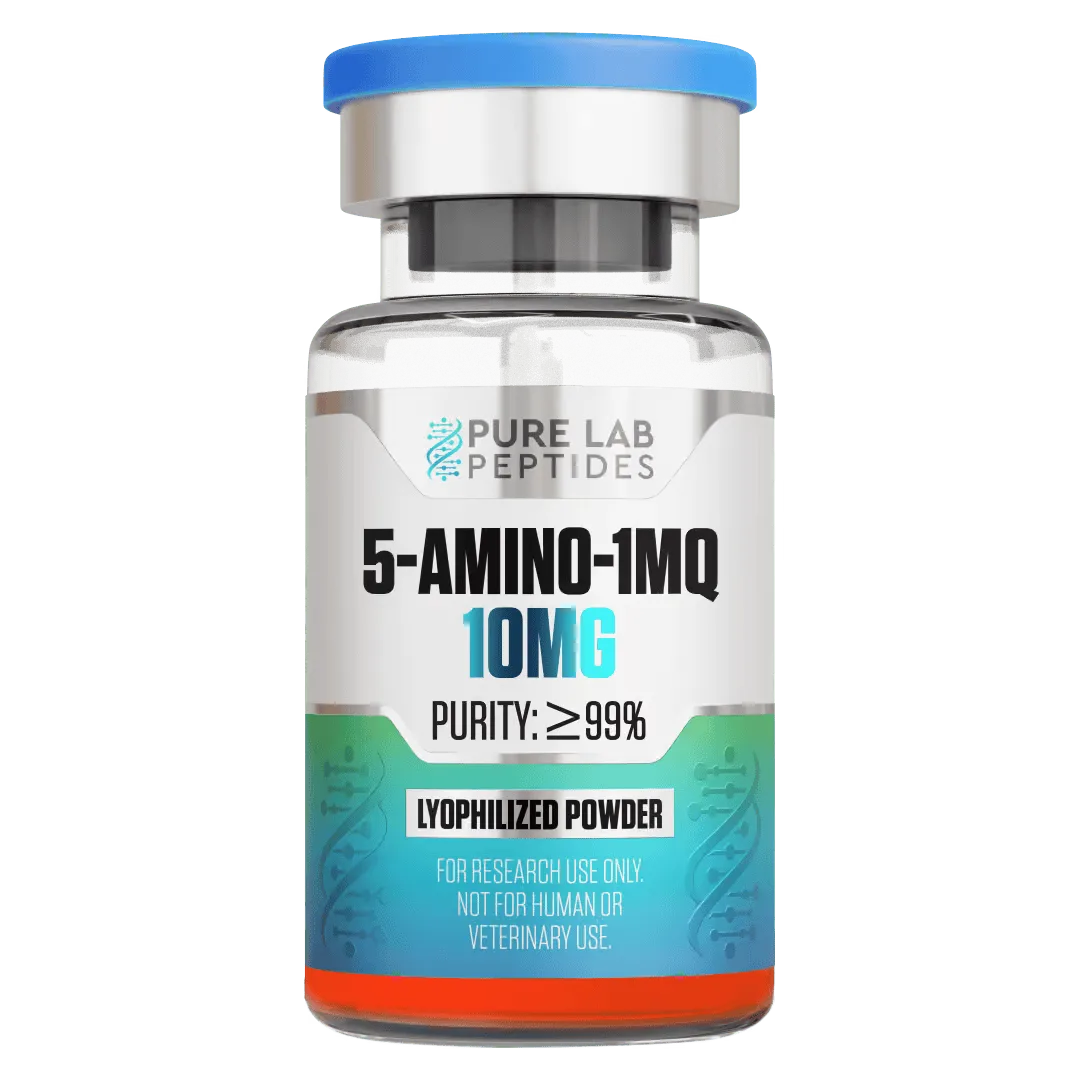
Research context: For evidence on mechanisms, human and preclinical research, limitations, and safety, read 5-Amino-1MQ Peptide: Benefits, Uses, Side Effects, Dosage, and Research.
5-Amino-1MQ 10 mg Dosage Chart
Dosing & Reconstitution Guide
Subcutaneous, once or twice daily
Subcutaneous Protocol (2 mL = 5 mg/mL)
| Phase | Daily Dose (mg) | Units (per injection) (mL) |
|---|---|---|
| Days 1–2 (Tolerance) | 2.5 mg (2500 mcg) | 50 units (0.50 mL) |
| Days 3+ (Standard) | 5 mg (5000 mcg) | 100 units (1.00 mL) |
| Alternative BID | 2.5 mg twice daily | 50 units (0.50 mL) × 2 |
Frequency: Inject once or twice daily subcutaneously. Due to the compound’s plasma half-life of approximately 3.8–6.9 hours[5], twice-daily (BID) dosing may provide more sustained NNMT inhibition. A single 10 mg vial provides 2–4 days of material at these doses.
Reconstitution Steps
- Remove the vial from freezer storage (−20 °C / −4 °F) and allow to equilibrate at room temperature for 15–20 minutes.
- Draw 2.0 mL bacteriostatic water with a sterile syringe.
- Inject slowly down the vial wall; avoid foaming.
- Gently swirl/roll until dissolved - solution should be clear (do not shake). Label and refrigerate at 2–8 °C (35.6–46.4 °F), protected from light; follow product-specific use-by instructions.
Supplies Needed
Plan based on protocol duration using the 10 mg vial format at 5 mg/day.
- 5-Amino-1MQ Vials (10 mg each):
- 1 week (5 mg/day = 35 mg total) - 4 vials required
- 2 weeks (5 mg/day = 70 mg total) - 7 vials required
- 4 weeks (5 mg/day = 140 mg total) - 14 vials required
- Insulin Syringes (U-100, 1 mL):
- 1 week (once daily): 7 syringes
- 2 weeks (once daily): 14 syringes
- 4 weeks (once daily): 28 syringes
- Bacteriostatic Water (10 mL bottles): Use 2.0 mL per vial for reconstitution.
- 1 week (8 mL total for 4 vials) - 1 bottle required (10 mL each)
- 2 weeks (14 mL total for 7 vials) - 2 bottles required (10 mL each)
- 4 weeks (28 mL total for 14 vials) - 3 bottles required (10 mL each)
- Alcohol Swabs: One for the vial stopper + one for the injection site each administration.
- 1 week (once daily): 14 swabs
- 2 weeks (once daily): 28 swabs
- 4 weeks (once daily): 56 swabs - 1 box required (100 swabs each)


Peptide Reconstitution Simulator
Practice preparing this vial with the verified strength and final volume from this protocol.
5-Amino-1MQ Vial and Research Context
- Reconstitute: Add 2.0 mL bacteriostatic water → 5 mg/mL concentration.
- Typical daily range: 2.5–5 mg once or twice daily (subcutaneous).
- Easy measuring: At 5 mg/mL, 1 unit = 0.01 mL = 50 mcg (0.05 mg) on a U-100 insulin syringe.
5-Amino-1MQ, or 5-amino-1-methylquinolinium, is a selective small-molecule inhibitor of nicotinamide N-methyltransferase (NNMT). Published dosage research is preclinical. Animal studies and rat pharmacokinetic work do not establish a human dose, clinical benefit, or safety profile.[1][5] The linked 10 mg product page is included for vial provenance and supplier documentation, not as scientific evidence.[15]
Protocol Overview
Concise summary of the subcutaneous regimen.
- Goal: Support metabolic efficiency through NNMT inhibition, potentially enhancing fat oxidation and NAD+ levels[1][2].
- Schedule: Daily subcutaneous injections; each 10 mg vial provides 2–4 days of material.
- Dose Range: 2.5–5 mg once or twice daily.
- Reconstitution: 2.0 mL per 10 mg vial (5 mg/mL) for accurate measurements.
- Storage: Lyophilized frozen at −20 °C (−4 °F); reconstituted refrigerated at 2–8 °C (35.6–46.4 °F).
Dosing Protocol
Suggested approach for the 10 mg vial format.
- Start: 2.5 mg once daily to assess tolerance.
- Target: 5 mg once daily or 2.5 mg twice daily (BID).
- Frequency: Once or twice per day (subcutaneous).
- Vial Duration: Single 10 mg vial lasts 2–4 days at standard doses.
- Timing: Morning administration preferred; BID dosing may be split AM/PM.
Storage Instructions
Proper storage preserves compound stability.
- Reconstituted: Refrigerate at 2–8 °C (35.6–46.4 °F); follow product-specific use-by instructions.
- Allow vials to reach room temperature before reconstitution to prevent condensation and pressure issues.
- Do not refreeze reconstituted solution.
5-Amino-1MQ 10 mg Vial Math
The 10 mg vial is prepared with 2.0 mL of bacteriostatic water, producing a 5 mg/mL concentration. A U-100 syringe measures volume rather than peptide potency: 1 unit equals 0.01 mL and contains 0.05 mg, or 50 mcg, at this concentration.
- 50 units: 0.50 mL, which contains 2.5 mg.
- 100 units: 1.00 mL, which contains 5 mg.
- Vial yield: Four 2.5 mg amounts or two 5 mg amounts per 10 mg vial.
- Strength distinction: The 10 mg vial changes concentration, syringe conversion, vial yield, and supplies. It does not establish a separate evidence-based regimen.
Important Notes
Practical considerations for consistency and safety.
- Use new sterile insulin syringes for each administration; dispose in a sharps container[6].
- Rotate injection sites (abdomen, thighs, upper arms) to reduce local irritation[7].
- Inject slowly; a mild stinging sensation may occur due to the quinolinium structure.
- Document daily dose and site rotation to maintain consistency.
- The 10 mg vial format requires multiple vials for extended protocols; plan supplies accordingly.
5-Amino-1MQ Research Evidence and Dose Limits
5-Amino-1MQ is an investigational small molecule that targets NNMT. The main compound studies use cells and animal models of obesity or metabolic dysfunction, while a separate rat study examined pharmacokinetics and oral bioavailability.[1][2][5]
In preclinical research, 5-Amino-1MQ is described as an NNMT inhibitor, and NNMT inhibition has been studied in fat-cell biology, adipose tissue, cellular metabolism, energy expenditure, fat oxidation, and fat mass. Those animal studies do not show that blocking NNMT produces fat loss, weight management, or a human benefit. No human clinical trials establish a 5-Amino-1MQ dosage, an mg-per-day amount, or a capsule-versus-injection comparison.[1][2][5]
The rat oral-bioavailability study does not establish a human oral capsule form, and the cited literature does not validate a clinical subcutaneous injection schedule. Research questions about metabolic effects, cellular energy, fat metabolism, and visceral fat remain preclinical rather than evidence of a human treatment outcome.[5]
Those studies help explain NNMT inhibition, adipose-tissue research, and animal exposure. They do not validate the amount, route, frequency, duration, vial preparation, or expected outcome shown in an online dosage chart for people. The unchanged schedule above is therefore presented as a transparent calculation reference, not a clinical recommendation.
The 10 mg strength is useful for exact vial math because its 2.0 mL preparation produces a 5 mg/mL concentration. That concentration determines U-100 markings and supply quantities, but it does not change the evidence ceiling or prove a human benefit.
How This Works
5-Amino-1MQ (5-amino-1-methylquinolinium) is a synthetic small molecule that selectively inhibits Nicotinamide N-methyltransferase (NNMT)[1]. NNMT is a cytosolic enzyme that methylates nicotinamide (vitamin B3) using S-adenosylmethionine (SAM) as a methyl donor. In states of obesity and metabolic dysfunction, NNMT is often overexpressed in adipose tissue, depleting nicotinamide and reducing NAD+ availability[2].
By inhibiting NNMT, 5-Amino-1MQ may spare nicotinamide for NAD+ synthesis via the salvage pathway, thereby activating SIRT1 (Sirtuin 1) pathways associated with mitochondrial biogenesis, fat oxidation, and metabolic flexibility[3]. Preclinical studies indicate that NNMT knockdown or inhibition can protect against diet-induced weight gain and improve metabolic parameters without reducing food intake[8][9].
Potential Benefits & Side Effects
Observations from preclinical and early research literature.
- May support reductions in fat mass while preserving lean muscle in animal models[8][9].
- Associated with elevated NAD+ levels and SIRT1 activation in preclinical studies[2][3].
- Generally well tolerated; occasional reports of mild headache, transient jitteriness, or injection-site reactions.
- Long-term human safety data not established; this compound remains investigational.
Lifestyle Factors
Complementary strategies for best outcomes.
- Pair with a balanced, protein-forward diet tailored to energy needs.
- Prioritize sleep and stress management to support metabolic adaptation.
Injection Technique
General subcutaneous guidance from clinical best-practice resources[6].
- Clean the vial stopper and skin with alcohol; allow to dry.
- Pinch a skinfold; insert the needle at 45–90° into subcutaneous tissue[12][13].
- Do not aspirate for subcutaneous injections; inject slowly and steadily[12].
- Rotate sites systematically (abdomen, thighs, upper arms) to avoid lipohypertrophy[7].
- Slow injection may minimize any stinging sensation associated with the compound.
5-Amino-1MQ 10 mg Dosage and Reconstitution FAQ
How is the 10 mg vial concentration calculated?
Dividing 10 mg by the 2.0 mL final volume gives 5 mg/mL. On a U-100 syringe, 1 unit is 0.01 mL, so each unit contains 0.05 mg, or 50 mcg.
How many U-100 units are in 0.50 mL?
There are 50 units in 0.50 mL. At the displayed 5 mg/mL concentration, that volume contains 2.5 mg.
How long does a 10 mg vial last in the displayed chart?
The vial contains four 2.5 mg amounts or two 5 mg amounts. The exact calendar yield depends on the unchanged row and frequency being interpreted.
Is there an established human 5-Amino-1MQ dose?
No. The cited evidence is preclinical. Animal findings and rat pharmacokinetic work do not establish a human dose, treatment duration, route, clinical benefit, or safety profile.
Is 5-Amino-1MQ a peptide or a GLP-1 agonist?
Published chemistry describes it as a small molecule that targets NNMT, not a peptide or GLP-1 receptor agonist. There is no clinical-trial evidence establishing a combined-use protocol.
Why is the 10 mg page separate from the 50 mg page?
The pages describe the same research compound at different vial strengths. Their concentrations, syringe conversions, vial yields, and supply calculations differ, so each strength needs its own measurement chart.
Important Note
This content is intended for therapeutic educational purposes only and does not constitute medical advice, diagnosis, or treatment.
Sources and Further Reading
- 1
Nature Medicine (2014)
- Nicotinamide N-methyltransferase knockdown protects against diet-induced obesity - 2
PMC (2024)
- Nicotinamide N-methyltransferase inhibition mitigates obesity-related metabolic dysfunctions - 3
Frontiers in Pharmacology (2024)
- NNMT: a novel therapeutic target for metabolic syndrome - 5
PubMed (2021)
- LC-MS/MS assay for 5-amino-1-methylquinolinium: pharmacokinetic and oral bioavailability study - 6
PMC
- Subcutaneous drug injection review: pharmacologic considerations - 7
NCBI Bookshelf
- Best practices for injection (asepsis, preparation, and administration) - 8
ResearchGate (2021)
- Combined NNMT inhibition and reduced-calorie diet normalizes body composition in obese mice - 9
PMC (2022)
- Reduced calorie diet combined with NNMT inhibition establishes a distinct microbiome in DIO mice - 12
CDC
- Vaccine administration: subcutaneous route (angle/site; no aspiration) - 13
CDC (Subcut Injection PDF)
- Technique diagram and site guidance for subcutaneous injections - 15
Pure Lab Peptides
- 5-Amino-1MQ (10 mg) product page (quality and batch documentation) - 12
Journal of Medicinal Chemistry (ACS)
- Bisubstrate inhibitors of NNMT with enhanced activity
Related research, protocols, and guides
Explore the available research context, protocol variants or comparisons, and practical guides. When vial-strength variants exist, they remain separate because vial strength, concentration, and syringe-unit calculations can differ. Related compounds and blends are comparisons only, not interchangeable.
Research overview
Other vial-strength protocols