
SNAP-8 Dosage Chart for a 10 mg Vial
SNAP-8 dosage is best expressed as the concentration of active acetyl octapeptide-3 in a finished topical research formulation. Human research has evaluated SNAP-8 in creams, multi-peptide serums, and purpose-built dissolving microneedle patches. The calculator below converts a 10 mg vial into actual active-peptide concentrations for topical cream, gel, or serum research.
- Best documented conventional cream reference: About 0.005% active SNAP-8, equal to 50 ppm.
- Developer reference range: About 0.0015% to 0.005% active peptide in the finished topical formula.
- Whole 10 mg vial at 0.005%: 200 g final batch weight.
- 50 g batch at 0.005%: 2.5 mg active peptide.
- Human schedule context: Twice-daily cream application for 28 days in manufacturer testing.
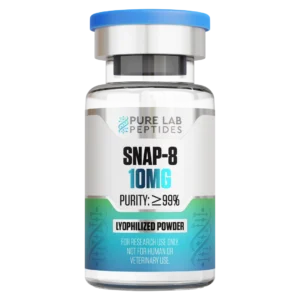
The widely quoted 3% to 10% use level refers to a supplier solution containing about 0.05% SNAP-8. It equals roughly 0.0015% to 0.005% active peptide in the finished formula, not 3% to 10% pure peptide[4][6].
Research context: For identity, mechanisms, human findings, limitations, and safety, read SNAP-8 Peptide: Benefits, Uses, Side Effects, Dosage, and Research.
Dosing & Topical Formulation Guide
Active-peptide concentration math for a SNAP-8 10 mg vial
Whole 10 mg Vial Concentration Calculator
These rows show the mathematical concentration produced when the complete 10 mg vial is distributed through a measured final batch weight. The 200 g to 666.7 g rows span the developer’s finished-active reference range. Smaller batches produce higher concentrations.
| Final Batch | Active Peptide | Active % w/w | ppm | Research Context |
|---|---|---|---|---|
| 30 g | 10 mg | 0.0333% w/w | 333 ppm | About 6.7 times the upper developer reference |
| 50 g | 10 mg | 0.0200% w/w | 200 ppm | 4 times the upper developer reference |
| 100 g | 10 mg | 0.0100% w/w | 100 ppm | 2 times the upper developer reference |
| 200 g | 10 mg | 0.0050% w/w | 50 ppm | Matches 10% of the nominal 0.05% supplier solution |
| 333.3 g | 10 mg | 0.0030% w/w | 30 ppm | Mid-range calculation |
| 666.7 g | 10 mg | 0.0015% w/w | 15 ppm | Matches 3% of the nominal 0.05% supplier solution |
Formula: Active percent w/w = peptide mg divided by final batch grams divided by 10. Parts per million = peptide mg divided by final batch grams multiplied by 1,000.
Small-Batch SNAP-8 Research Calculations
A typical 30 g or 50 g topical batch requires a measured portion of the vial to match the 0.0015% to 0.005% active reference range.
| Final Batch | 0.0015% Active | 0.0030% Active | 0.0050% Active |
|---|---|---|---|
| 30 g | 0.45 mg | 0.90 mg | 1.50 mg |
| 50 g | 0.75 mg | 1.50 mg | 2.50 mg |
| 100 g | 1.50 mg | 3.00 mg | 5.00 mg |
| 200 g | 3.00 mg | 6.00 mg | 10.00 mg |
Formula: Peptide mg needed = target percent multiplied by final batch grams multiplied by 10.
Worked 1 mg/mL Stock Measurement Example
If a validated formulation plan uses the complete 10 mg vial in a measured 10.0 mL final stock volume, the nominal stock concentration is 1 mg/mL. Each 1.0 mL contains 1.0 mg SNAP-8. The stock must use a compatible vehicle, and the transferred amount becomes part of the final batch.
| Final Batch | Stock for 0.0015% | Stock for 0.0030% | Stock for 0.0050% |
|---|---|---|---|
| 30 g | 0.45 mL | 0.90 mL | 1.50 mL |
| 50 g | 0.75 mL | 1.50 mL | 2.50 mL |
| 100 g | 1.50 mL | 3.00 mL | 5.00 mL |
Important: This is measurement math, not a shelf-life claim. A base must accept the added aqueous phase without losing homogeneity or preservation. An analytical standard remained stable for 96 hours at 4 degrees C, but this does not validate a multiweek topical stock or cream[5].
How to Read the 3% to 10% SNAP-8 Range
The ingredient developer supplied SNAP-8 as a preserved aqueous blend containing approximately 0.05% acetyl octapeptide-3. Adding 3% to 10% of that solution gives 0.0015% to 0.005% actual peptide in the final product[6]. A raw 10 mg vial and a preserved commercial premix are not operationally interchangeable.
| Trade Solution | Peptide in Stock | Final Active % | Equivalent ppm |
|---|---|---|---|
| 3% | 0.05% | 0.0015% | 15 ppm |
| 6% | 0.05% | 0.0030% | 30 ppm |
| 10% | 0.05% | 0.0050% | 50 ppm |
Human SNAP-8 Research Formulations
Human evidence is topical or device-assisted. Conventional cream data come from ingredient-developer testing. Peer-reviewed studies used multi-active serums or dissolving microneedle patches, so their outcomes cannot be assigned to SNAP-8 alone.
| Study | Formulation | Schedule | Design Context | Evidence Limit |
|---|---|---|---|---|
| Lipotec developer panel[6] | Cream with 10% of a nominal 0.05% SNAP-8 solution, equal to about 0.005% active peptide | Twice daily around the eye area for 28 days | 17 women; silicone replicas and profilometry; about 35% mean and 63% maximum wrinkle-depth reduction reported | Manufacturer-reported, not an independent peer-reviewed trial |
| Shin et al. (2024)[1] | 350 micrometer dissolving patch with 0.03% SNAP-8, 5% AA2G, 4% cyclic LPA, and 90% HA | Overnight nightly through day 14, then every third day through day 28 | 24 enrolled and 21 completed a split-face active-versus-placebo comparison | Combination device; SNAP-8’s independent contribution cannot be isolated |
| Avcil et al. (2020)[2] | HA microneedle patch with SNAP-8, other peptides, adenosine, and seaweed extracts | 12-week study | Fine lines, hydration, dermal density, thickness, and tolerability measures | Multi-active product; SNAP-8 concentration was not disclosed in the abstract |
| Draelos et al. (2016)[3] | Multi-peptide serum containing SNAP-8 within a supporting skincare regimen | Morning and evening for 12 weeks after a 2-week washout | 29 women; investigator grading and participant questionnaires | Open label, no control, multiple peptides and supporting products |
| Moy et al. (2023)[4] | Proprietary multi-peptide facial serum containing acetyl octapeptide-3 | Twice daily for 12 weeks | 31 women completed dermatologist grading, imaging, hydration, and questionnaires | Uncontrolled, multi-ingredient, and company funded |
Supplies Needed
Use a complete, measured formulation set for each SNAP-8 topical research batch.
- SNAP-8 10 mg research vial: Record lot number, identity, assay, purity, and certificate of analysis.
- Validated cosmetic research base: A compatible cream, gel, or serum base with a documented formula and preservation system.
- Compatible stock vehicle: Use only when a validated formulation plan requires a measured stock.
- Calibrated analytical balance: Needed for final batch weight and direct mass measurements within its validated range.
- Calibrated pipettes or positive-displacement tools: Needed when an accurately quantified liquid stock is used.
- Clean mixing and transfer tools: A suitable vessel, spatula, transfer tools, and validated homogenization method.
- pH measurement: A calibrated meter or validated narrow-range strips.
- Clean handling supplies: Clean gloves, alcohol preparation materials, and a disinfected work surface.
- Final container: A compatible opaque or airless container with a secure closure and measurable dispenser.
- Label and batch log: Record active mass, final weight, concentration, vehicle, pH, container, date, storage, and observations.
- Stability observation log: Track appearance, odor, separation, pH drift, container compatibility, and validated testing.
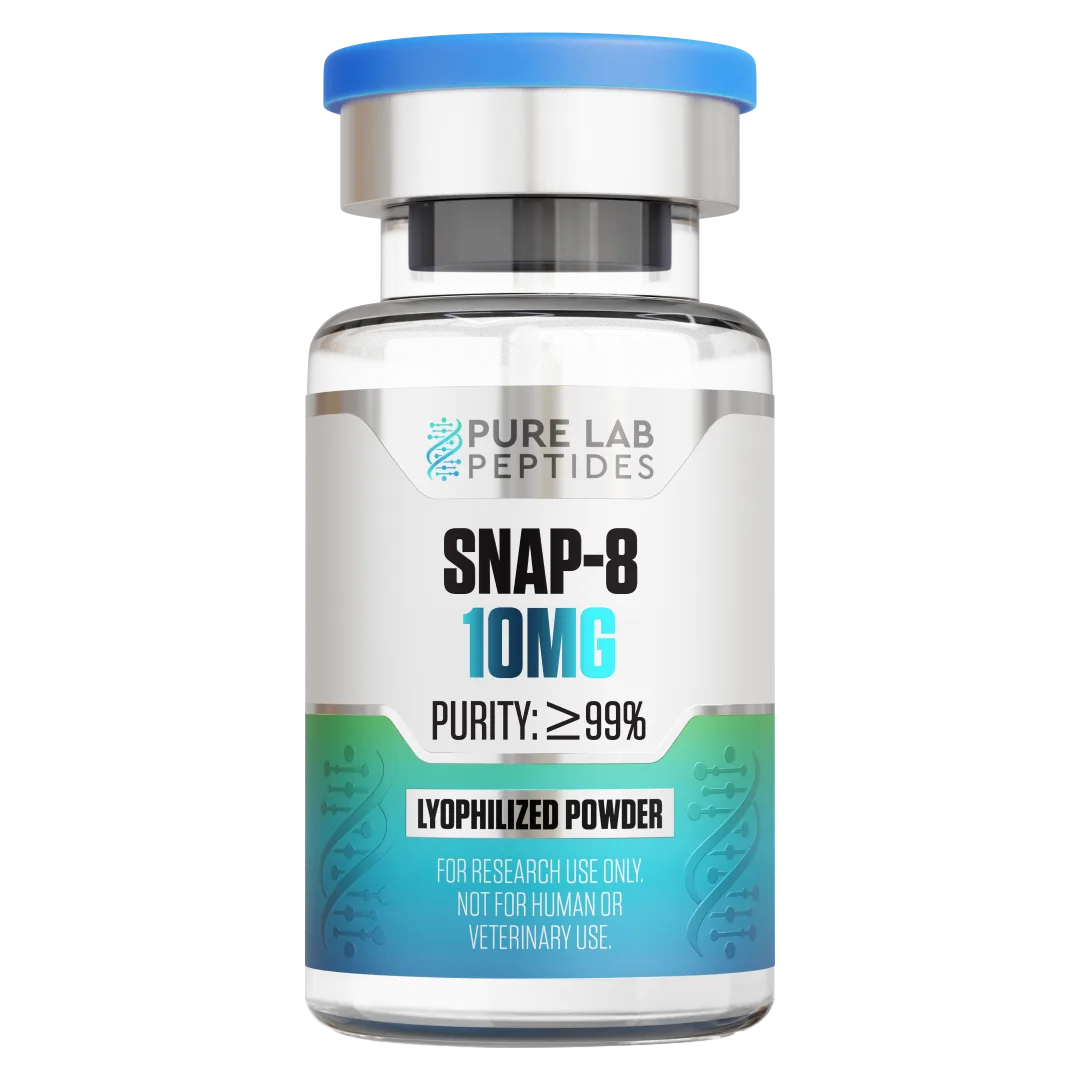
SNAP-8 Topical Research Protocol Overview
Concentration and Schedule
- Developer active reference: Approximately 0.0015% to 0.005% active SNAP-8.
- Best documented conventional cream example: Approximately 0.005% active peptide.
- Application context: Twice daily around the eye area for 28 days in manufacturer testing.
- Academic serum context: Morning and evening or twice-daily use for 12 weeks in multi-ingredient studies.
- Patch context: Overnight nightly through day 14, then every third day through day 28 in a manufactured multi-active patch.
Storage and Stability Controls
- Follow the vial supplier’s lot-specific storage documentation before formulation.
- Store the finished batch according to its validated base, preservative, pH, container, and stability plan.
- Do not transfer the trade solution’s published shelf life to a raw-vial formulation.
- An analytical standard remained stable for 96 hours at 4 degrees C, but that does not establish cosmetic-product shelf life[5].
Topical Preparation Planning
- Confirm active mass: Adjust the nominal 10 mg amount if the lot assay requires it.
- Select the research concentration: Keep the percentage attached to its source, vehicle, route, and schedule.
- Calculate peptide mass: Use the small-batch table for the selected final weight.
- Define the stock method: If the mass is below the balance’s reliable range, use an accurately quantified stock in a compatible vehicle under a validated plan.
- Transfer and mix: Include the complete measured stock in the final batch and use a validated method for uniform dispersion.
- Verify the batch: Record final weight, pH, appearance, packaging, dispensing amount, preservation controls, and testing.
- Label the study unit: Include concentration, batch ID, date, storage, and observation schedule.
Topical Research Quick Reference
- 10 mg in 200 g: 0.005% w/w or 50 ppm.
- 10 mg in 333.3 g: 0.003% w/w or 30 ppm.
- 10 mg in 666.7 g: 0.0015% w/w or 15 ppm.
- 50 g batch at 0.005%: 2.5 mg active peptide.
Read SNAP-8 Concentration Labels Carefully
Raw peptide concentration and supplier solution concentration describe different measurements. A formula containing a percentage of a premixed supplier solution should also state the calculated acetyl octapeptide-3 concentration in the finished batch.
How SNAP-8 Is Proposed to Work
SNAP-8 is acetyl octapeptide-3, an eight-amino-acid peptide modeled on part of SNAP-25. Its sequence is Ac-EEMQRRAD-NH2[7]. The proposed cosmetic mechanism is interference with SNARE-complex assembly and calcium-dependent exocytosis. Direct SNAP-8 mechanism data are primarily developer-generated, so biological plausibility is not equivalent to proof of clinical muscle relaxation.
SNAP-8 is distinct from acetyl hexapeptide-8, also called Argireline. Argireline studies are related-peptide background, not direct SNAP-8 evidence.
Research Outcomes and Tolerability
- Wrinkle measurements: Studies used silicone replicas, profilometry, three-dimensional imaging, or investigator grading.
- Combination patch: Shin and colleagues reported improvements in selected wrinkle and skin-quality measures versus an HA-only patch, with no adverse effects reported during 28 days[1].
- Multi-active patch: Avcil and colleagues reported product-level changes in fine lines, hydration, density, and thickness, with excellent tolerability[2].
- Serum studies: Multi-ingredient studies reported selected appearance and hydration improvements, but the effect of SNAP-8 cannot be isolated[3][4].
- Formulation safety: Tolerability of a commercial formula or manufactured patch does not establish preservation, uniformity, or safety of a new raw-vial formulation.
Study Design and Tracking
- Define target area, measured amount, frequency, duration, and primary endpoint before the first observation.
- Use consistent lighting, camera position, facial expression, and time of day for images.
- Keep other skincare products and cosmetic procedures consistent or document each change.
- Record dispensing mass or volume so each application is reproducible.
- Track redness, itching, burning, swelling, dryness, eye exposure, pH drift, and product separation.
Topical Application and Measurement Controls
- Measure the dispensed amount: Use a calibrated pump, positive-displacement tool, or before-and-after container weight.
- Keep the target area consistent: Apply to the predefined external skin area and prevent direct eye or mucosal contact.
- Control the vehicle: Record the base formula because it affects spread, stability, preservation, and delivery.
- Do not equate delivery systems: A 0.03% dissolving microneedle patch is not equivalent to a 0.03% intact-skin cream[1][5].
SNAP-8 Dosage FAQ
What is the SNAP-8 dosage from a 10 mg vial?
For topical research, dosage is a finished concentration. A complete 10 mg vial produces 0.005% active SNAP-8 in a final 200 g batch. A 50 g batch at the same concentration uses 2.5 mg.
Does 10% SNAP-8 mean 10% pure peptide?
No. In developer materials, 10% refers to a nominal 0.05% supplier solution. The finished active concentration is about 0.005%, equal to 50 ppm[6].
What conventional cream concentration has the clearest context?
The best documented example used about 0.005% active SNAP-8 twice daily for 28 days in a small manufacturer panel. It is a formulation reference, not an independently replicated treatment standard.
Can a 0.03% microneedle patch be copied as a 0.03% cream?
No direct equivalence has been established. The patch combined SNAP-8 with other actives and used 350 micrometer dissolving microneedles[1].
What route has been evaluated in human research?
Human studies and developer testing evaluated topical creams, multi-peptide serums, and purpose-built dissolving microneedle patches. This review identified no peer-reviewed human or animal injection dosing study for acetyl octapeptide-3, so topical data are not converted into an injection schedule.
Important Research Note
Published human SNAP-8 research uses complete topical products and localized dissolving patches. Interpret each result with its vehicle, co-ingredients, delivery system, application schedule, and measurement method.
References
- Annals of Dermatology (2024). Shin JY, et al. Split-face study of a dissolving multi-active microneedle patch containing 0.03% SNAP-8. PubMed record.
- Journal of Cosmetic Dermatology (2020). Avcil M, et al. Clinical study of a multi-active HA microneedle patch containing acetyl octapeptide-3. PubMed record.
- Journal of Drugs in Dermatology (2016). Draelos ZD, et al. Open-label topical multi-peptide serum and supporting regimen. Full article.
- Journal of Cosmetic Dermatology (2023). Moy M, et al. Proprietary peptide-pro complex serum study and discussion of a 3% SNAP-8 supplier-solution cream. PubMed record.
- Journal of Analytical Science and Technology (2020). Ji Y, et al. LC-MS/MS method for SNAP-8 in a biodegradable microneedle patch and analytical-standard stability observations. Full article.
- Lipotec SNAP-8 ingredient documentation. Composition of the approximately 0.05% supplier solution, 3% to 10% inclusion range, and manufacturer cream testing. Developer brochure and product dossier.
- U.S. FDA Global Substance Registration System. Validated identity and amino-acid sequence for acetyl octapeptide-3. FDA substance record.
Additional Research and Background
These sources provide related context and are not presented as support for a specific statement above.
- U.S. Food and Drug Administration. FDA authority over cosmetics and the distinction between cosmetic products and approved drugs. FDA cosmetics overview.
Related research, protocols, and guides
Explore the full SNAP-8 research overview and practical peptide storage guidance. These resources support the formulation-specific calculations on this page.
Research overview
Practical guides