
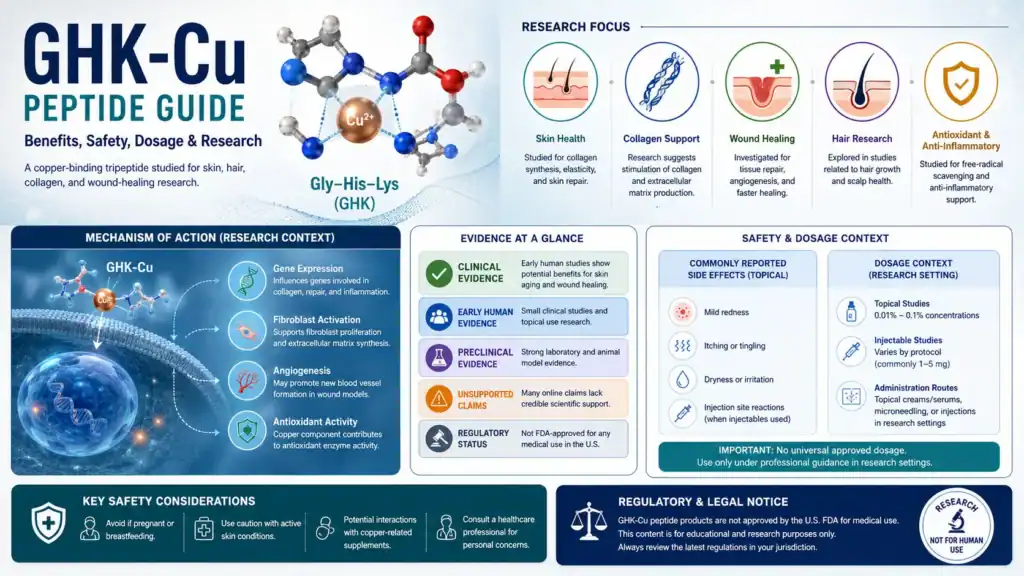
GHK-Cu peptide is a copper-binding tripeptide complex discussed in skin care, wound healing, collagen biology, hair research, and anti-aging conversations. This article is educational and explains the evidence behind GHK-Cu without giving personalized medical advice or telling readers what to take, inject, buy, or combine.
- GHK-Cu is the copper complex of glycyl-L-histidyl-L-lysine, often called GHK, GHK copper, copper peptide GHK-Cu, or copper tripeptide 1.
- The strongest human evidence is for topical dermatology and wound-related research, not systemic anti-aging or injectable peptide therapy 2, 3.
- GHK-Cu is studied for collagen synthesis, glycosaminoglycans, extracellular matrix remodeling, fibroblast activity, inflammation, and wound repair mechanisms 4, 5.
- Skin and hair claims vary widely in evidence quality. Skin aging and topical collagen-related outcomes have more human data than hair loss claims [2], 6.
- Published dosing context mainly involves topical clinical-study use, diabetic-ulcer wound studies, and newer registered topical wound-healing trials, not an FDA-approved injectable label [3], 7.
- FDA materials identify compounded injectable GHK-Cu as a safety concern because of potential immunogenicity, aggregation, peptide-related impurities, and limited human safety data 8.
- Readers should discuss medical history, allergies, current medications, pregnancy or breastfeeding, wound status, and regulatory status with a qualified clinician before making peptide-related medical decisions.
Related dosage pages: For vial-specific concentration, reconstitution, and measurement examples, see GHK-Cu (50 mg Vial) Dosage Protocol and GHK-Cu (100 mg Vial) Dosage Protocol. Each linked protocol remains a separate reference because vial strength changes concentration and syringe-unit calculations.
Fast Answer
GHK-Cu peptide is a copper-bound form of the tripeptide glycyl-L-histidyl-L-lysine that is studied mainly for skin biology, collagen synthesis, wound healing, and related dermatology uses [1], [2]. Human evidence is most relevant to topical skin and wound studies, while injectable and systemic anti-aging claims remain much less certain. FDA materials flag compounded injectable GHK-Cu as a safety concern because human safety data are limited [8].
This page draws from regulatory sources, clinical-trial registries, peer-reviewed studies, PubMed-indexed literature, and scientific databases. Claims with weak, preliminary, preclinical, or unsupported evidence are identified as such rather than presented as established medical benefit.
What Is the GHK-Cu Peptide?
GHK-Cu peptide is a copper-binding peptide complex formed from GHK, a tripeptide made from glycine, histidine, and lysine, and copper ions 1, 9. It is commonly discussed in therapeutic and cosmetic contexts because copper, collagen, fibroblasts, and extracellular matrix remodeling are central to skin repair biology.
Copper Tripeptide Structure and Basic Identity
GHK is glycyl-L-histidyl-L-lysine, a three-amino-acid peptide; Cu-GHK is listed by PubChem as a copper-containing compound with molecular formula C14H24CuN6O4 and molecular weight 403.92 g/mol [1]. The phrase copper tripeptide usually refers to this GHK-copper complex in skin care and research discussions.
GHK, Copper Ions, and the GHK-Cu Complex
GHK has affinity for copper ions, and many proposed biological effects are discussed in relation to copper binding, copper transport, redox biology, and cellular signaling 10. That mechanism is plausible, but a copper complex acting in cell models does not automatically prove the same outcome in human patients.
Why This Peptide Is Discussed for Skin and Hair
GHK-Cu is discussed for skin and hair because studies have examined collagen, glycosaminoglycans, fibroblast behavior, wound healing, skin elasticity, and hair follicle biology [2], [4], [6]. The evidence is uneven: topical skin research is more developed than injectable GHK-Cu or broad systemic regeneration claims.
GHK-Cu Copper Peptide Names and Forms
GHK-Cu copper peptide terminology can be confusing because the same topic appears under several names, including GHK, copper peptide, copper peptide GHK-Cu, GHK copper, copper tripeptide, Cu-GHK, and prezatide copper [1], [9]. These names do not always mean the same formulation, dose, route, or regulatory category.
Copper Peptide GHK-Cu, GHK Copper, and Copper-Binding Peptide
GHK copper and GHK-Cu usually point to the copper complex of glycyl-L-histidyl-L-lysine, while GHK alone refers to the peptide without necessarily specifying copper complexation [1], [9]. In clinical and cosmetic literature, this distinction matters because a topical serum, wound gel, liposomal formula, and injectable preparation may have very different safety and absorption profiles.
Topical GHK-Cu, Serums, Eye Creams, and Injectable GHK-Cu
Topical GHK-Cu appears in published skin-care studies, wound-healing research, and clinical-trial protocols, while injectable GHK-Cu is treated differently by FDA compounding-risk materials [2], [7], [8]. Cosmetic formulations also fall under a different regulatory framework than drugs, since most cosmetic ingredients do not require FDA premarket approval, except color additives 11.
How GHK-Cu Is Thought to Work
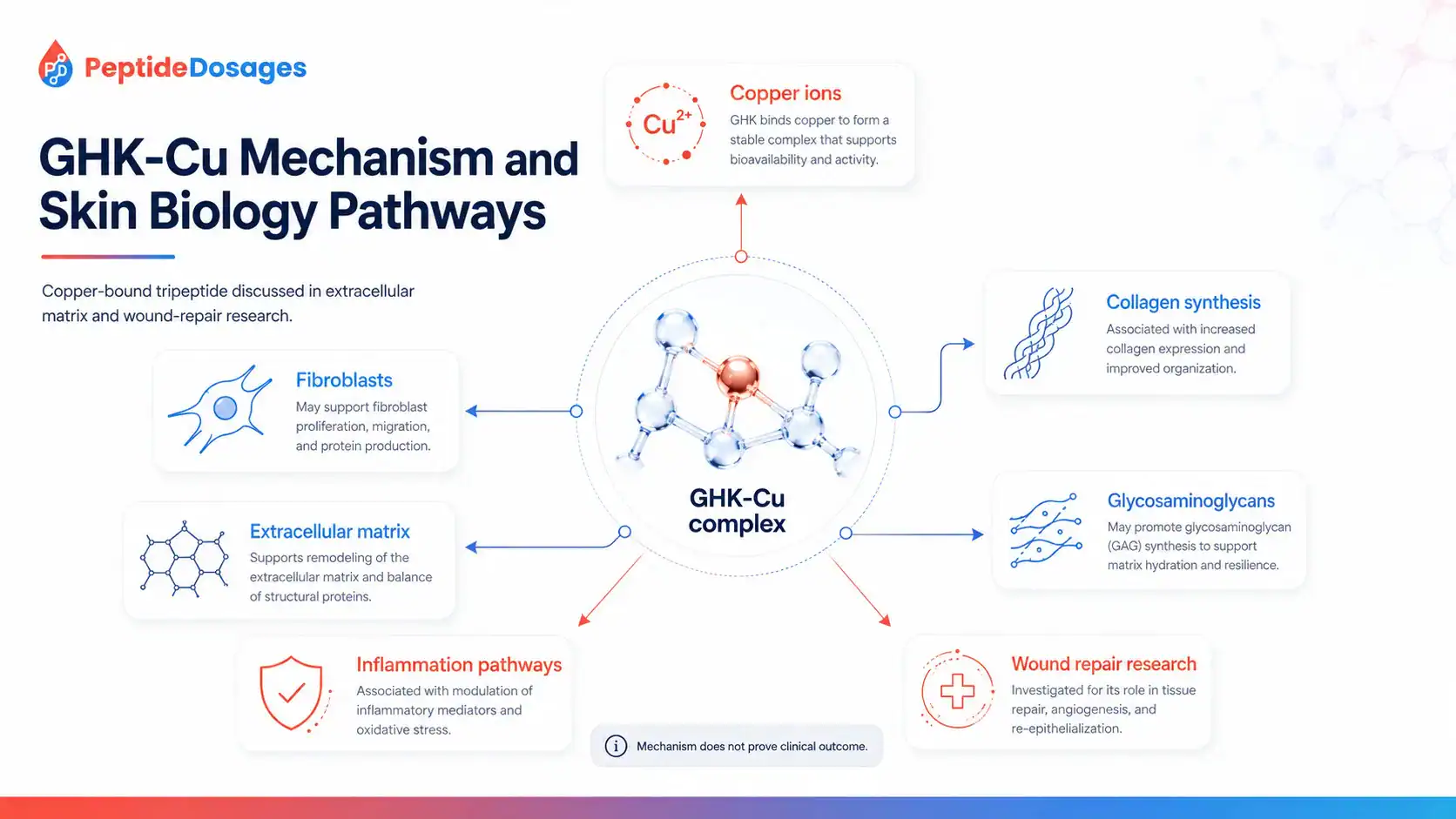
GHK-Cu is thought to work through copper binding, extracellular matrix signaling, fibroblast activity, collagen-related pathways, matrix metalloproteinase regulation, glycosaminoglycan synthesis, and inflammation-related pathways [4], [5], 12. These are mechanism findings, not proof that every claimed skin, hair, or anti-aging outcome occurs in humans.
Affinity for Copper and Copper Ion Signaling
Copper is biologically active and participates in enzymes involved in connective tissue and antioxidant systems, while GHK-Cu is studied as a way copper may be delivered or coordinated in tissue contexts [1], [10]. The phrase benefits of copper should be interpreted carefully because copper excess and copper deficiency are both medically relevant concerns.
Multiple Cellular Pathways in Skin Repair
Laboratory studies report effects on collagen synthesis, glycosaminoglycan production, MMP-2 expression, TIMP-1 and TIMP-2, and extracellular matrix remodeling in fibroblast or wound-related models [4], [5], [12]. These multiple cellular pathways explain why GHK-Cu attracts attention, but they also make it harder to reduce the peptide to one simple mechanism of action.
Why Mechanism Does Not Guarantee Clinical Results
Mechanistic findings are useful for hypothesis-building, but clinical outcomes require human studies with defined populations, formulations, controls, durations, and endpoints. For GHK-Cu, the best-supported claims come from topical and wound-related evidence, while injectable and systemic claims need more rigorous human data [2], [3], [8].
Potential Benefits of GHK-Cu Peptide
Potential benefits of GHK-Cu peptide are most responsibly grouped by evidence level: topical skin appearance and some wound-healing contexts have human data, while hair growth, systemic anti-aging, organ repair, and broad regeneration claims rely more heavily on preclinical, mechanistic, or indirect evidence [2], [3], [10].
Skin Health, Skin Elasticity, and Aging Skin Concerns
A review of topical anti-aging peptide studies reported that Cu-GHK formulations were associated with improved visible signs of aged and sun-damaged skin, including skin density, thickness, elasticity, humidity, and wrinkle appearance in 12-week studies involving 71 or 41 women [2]. Those findings support topical skin-care relevance, but they do not establish GHK-Cu as a treatment for systemic aging.
Collagen Synthesis and Extracellular Matrix Support
In vitro research reported that GHK-Cu stimulated collagen synthesis in fibroblast cultures, while other work linked GHK-Cu to glycosaminoglycan and extracellular matrix remodeling pathways [4], [5], [12]. This makes collagen synthesis a central research theme, although collagen-related cellular findings should not be translated into guaranteed skin tightening claims.
Wound Healing, Skin Repair, and Regeneration Research
A multicenter, randomized, evaluator-blinded, placebo-controlled study in diabetic neuropathic ulcers reported greater median plantar-ulcer closure with topical glycyl-L-histidyl-L-lysine copper gel compared with vehicle, 98.5% versus 60.8%, and lower ulcer infection incidence, 7% versus 34% [3]. That is clinically relevant wound-healing evidence, but it involved a specific topical wound-care protocol and should not be generalized to unsupervised use.
What Is GHK-Cu Peptide Used For or Studied For?
GHK-Cu peptide is studied mainly for dermatology, topical skin aging, collagen biology, wound healing, skin repair, and experimental tissue-remodeling mechanisms [2], [3], [10]. It is also widely discussed online for hair growth and injectable peptide therapy, but those claims vary substantially in evidence strength.
Dermatology, Skin Care, and Peptide for Skin Research
In skin care, GHK-Cu is usually discussed as a peptide for skin because topical studies and reviews focus on wrinkles, skin thickness, photoaging, collagen, skin elasticity, and overall skin appearance [2]. Cosmetic use should not be confused with approved drug treatment because cosmetics and drugs have different evidence and regulatory requirements [11].
Hair Growth, Hair Loss, and Hair Follicle Biology
Hair growth claims are less established than topical skin claims. A 1991 study described hair follicle-stimulating properties of peptide copper complexes in C3H mice, and a 2007 study investigated AHK-Cu, a related tripeptide-copper complex, in human hair follicle models [6], 13. Those findings are relevant to hair follicle biology, but they are not the same as high-quality clinical evidence for treating hair loss with GHK-Cu.
What Does Human Research Say About GHK-Cu?
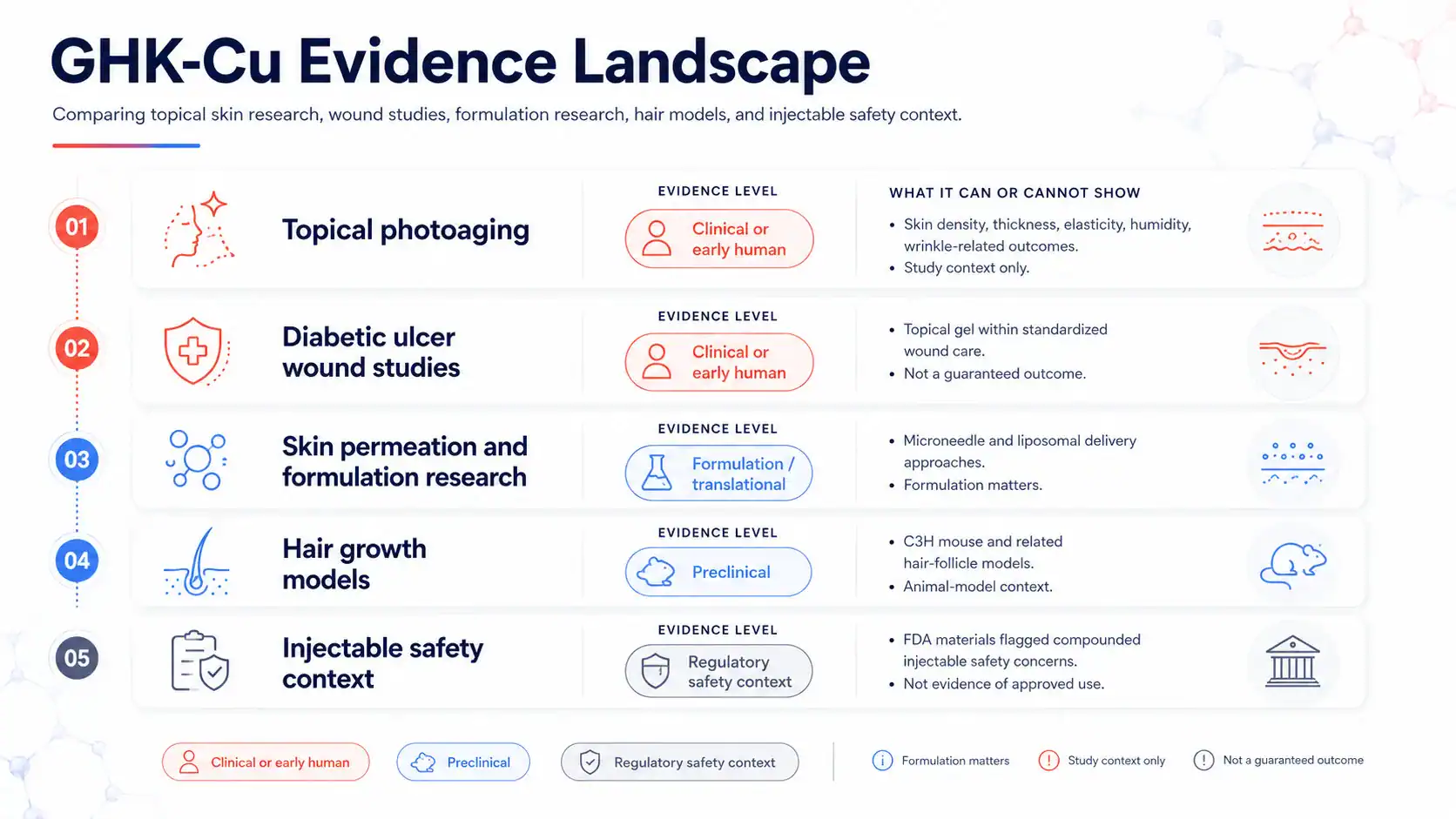
Human research on GHK-Cu is most meaningful in topical skin and wound-healing contexts, with fewer data for injectable use, systemic anti-aging, or hair-loss treatment [2], [3], [7], [8]. The strongest interpretation is that formulation, route, condition, and study design determine how much confidence a claim deserves.
Clinical Evidence for Effects on Skin
The topical peptide review by Schagen summarized placebo-controlled and comparative studies in which Cu-GHK products were associated with collagen production and visible skin-aging measures [2]. One cited study of 20 women found new collagen production in 70% of those treated with Cu-GHK after one month, compared with 50% for vitamin C and 40% for retinoic acid [2].
Early Human Evidence for Hair and Skin Outcomes
Skin outcomes have more direct human evidence than hair outcomes. For hair and skin, the evidence includes topical skin trials, wound studies, mouse hair-follicle data, and related copper-peptide hair follicle models rather than large, modern randomized trials for hair loss [2], [3], [6], [13].
Why Product Formulation Changes the Evidence
GHK-Cu evidence depends heavily on formulation because topical creams, gels, serums, liposomes, microneedle-assisted delivery, and injectable preparations do not behave the same way in skin or blood 14, 15. A result from one formulation cannot automatically be applied to a different product, concentration, route, or treatment goal.
| Evidence Area | What Has Been Studied | Evidence Level | What It Can and Cannot Show |
|---|---|---|---|
| Topical photoaging | Cu-GHK creams and eye creams in women over 12 weeks, with reported changes in density, thickness, elasticity, and wrinkles [2] | Clinical or early human | Supports topical skin research, but not systemic anti-aging claims |
| Diabetic neuropathic ulcers | Topical glycyl-L-histidyl-L-lysine copper gel within standardized wound care [3] | Clinical | Relevant to a specific wound-care protocol, not a general home-use recommendation |
| Skin permeation | Microneedle-assisted GHK-Cu delivery through skin and liposomal carrier research [14], [15] | Preclinical or formulation research | Shows delivery challenges and strategies, not broad clinical efficacy |
| Hair growth | Peptide copper complexes in C3H mice and related AHK-Cu hair follicle work [6], [13] | Preclinical or indirect | Supports biological plausibility, not established treatment for human hair loss |
| Injectable GHK-Cu | FDA compounding-risk materials for injectable routes [8] | Regulatory safety context | Flags risk and limited human safety data, not an approved use |
Preclinical Research on GHK-Cu and Cellular Regeneration
Preclinical research on GHK-Cu explores fibroblasts, collagen, glycosaminoglycans, angiogenesis, inflammation, matrix metalloproteinases, tissue inhibitors, and wound models [4], [5], [10], [12]. These findings are valuable for mechanism, but they cannot substitute for controlled human outcomes.
Fibroblasts, Dermal Fibroblasts, and Collagen Biology
Human dermal fibroblasts are central to GHK-Cu research because fibroblasts help produce collagen and extracellular matrix molecules. Maquart and colleagues reported stimulation of collagen synthesis in fibroblast cultures by GHK-Cu, while later work connected GHK-Cu to matrix remodeling enzymes and inhibitors [4], [5].
Angiogenesis, Endothelium, and Blood Vessel Findings
GHK-Cu reviews and wound-model studies discuss angiogenesis and blood vessel growth as part of tissue repair biology [10]. In a rat ischemic wound model, topical tripeptide-copper complex reduced wound area more than vehicle and was associated with lower TNF-alpha and MMP-2 and MMP-9 concentrations at measured time points 16.
What Animal and Cell Models Cannot Prove
Animal and cell models can show biological signals, dose-response patterns, and mechanistic hypotheses, but they cannot prove that a peptide produces the same benefit in people. For GHK-Cu, animal wound and hair-follicle findings should be read as preclinical evidence unless matched by human clinical data [6], [16].
Anti-Aging Claims and Evidence Quality
Anti-aging claims for GHK-Cu should be split into skin-aging claims, which have some topical human evidence, and systemic anti-aging claims, which remain much less established [2], [10]. This distinction prevents a cosmetic or dermatologic finding from being overstated as whole-body rejuvenation.
What Anti-Aging Effects Are Biologically Plausible?
Topical anti-aging effects are biologically plausible because collagen, glycosaminoglycans, skin elasticity, fibroblasts, and extracellular matrix remodeling are all directly relevant to skin aging [2], [4], [12]. Plausibility, however, is not the same as proof that GHK-Cu reverses aging or prevents disease.
Skin Aging Claims Versus Systemic Anti-Aging Claims
Skin aging claims can point to topical studies on photoaging and wrinkle parameters, but systemic anti-aging claims often rely on gene expression, oxidative stress, inflammation, or animal data [2], [10], 17. The evidence is stronger for topical effects on skin appearance than for broad claims about longevity, cognition, liver repair, or chronic disease.
How Online Claims Compare With Published Evidence
Online claims often combine skin repair, hair growth, wound healing, anti-inflammatory, antioxidant, and injectable peptide therapy language into one broad promise. Published evidence is narrower: topical skin and wound studies exist, hair claims are more indirect, and FDA materials caution that injectable GHK-Cu has limited human safety data [2], [3], [8].
Side Effects and Safety Concerns
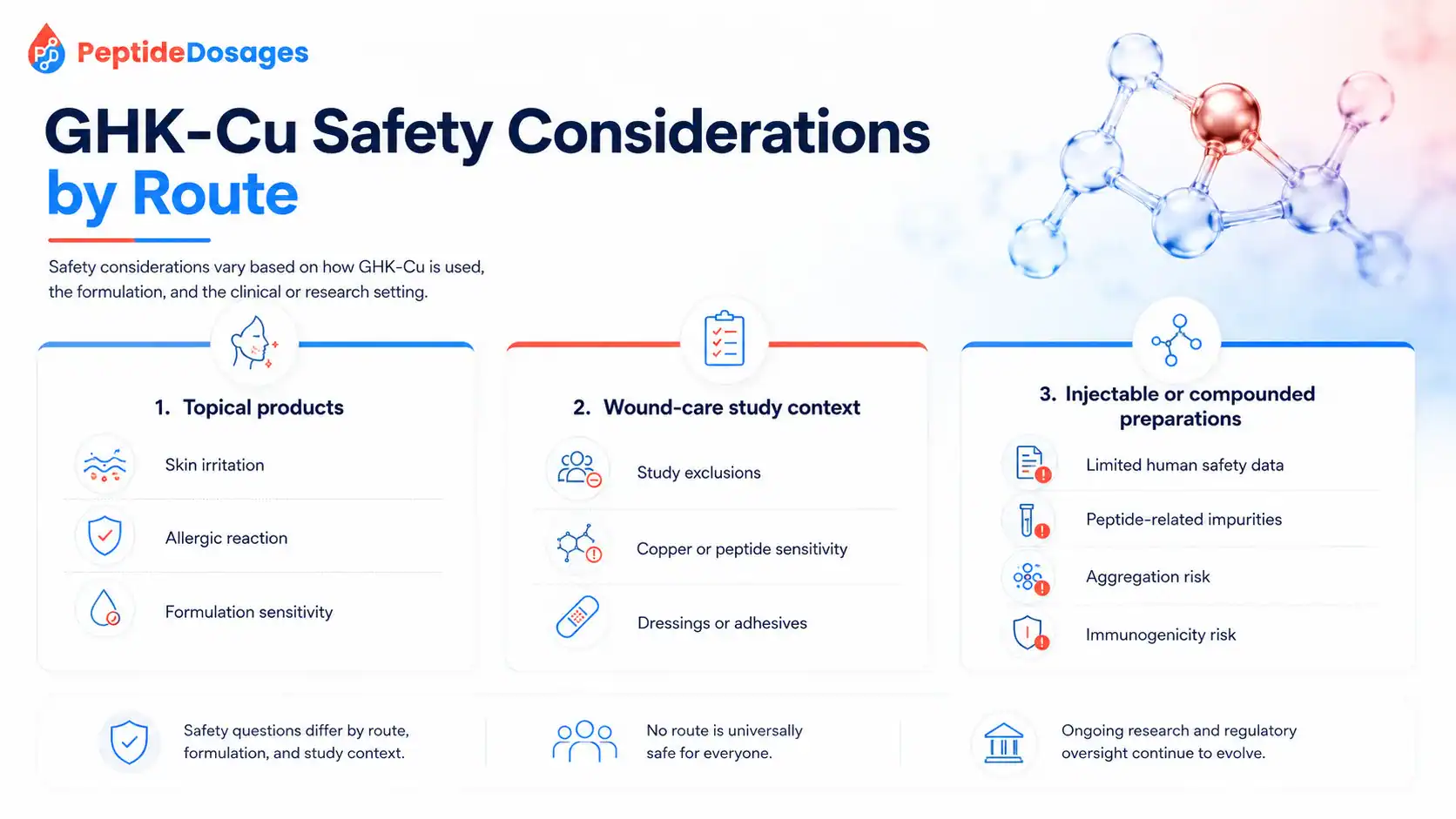
GHK-Cu safety depends on route, formulation, dose, product quality, population, and whether the use is cosmetic, clinical, compounded, or investigational [8], [11]. Topical skin irritation and allergy are different safety questions than sterile injectable compounding, immunogenicity, or systemic copper exposure.
Reported Skin Irritation and Allergic Reactions to GHK-Cu
Topical products can cause irritation, dermatitis, or allergic reactions in sensitive individuals, especially when combined with acids, retinoids, adhesives, dressings, or other active skin-care ingredients. The registered CuHeal trial excludes people with known allergy or sensitivity to copper, peptides, gel excipients, adhesives, or study dressings, reflecting practical safety concerns in topical research [7].
Injection-Related Risks With Injectable GHK-Cu
FDA identifies compounded injectable drugs containing GHK-Cu as a potential immunogenicity risk because of aggregation and peptide-related impurities, and FDA notes limited human data to inform safety considerations [8]. That regulatory warning should be weighed heavily when evaluating injectable GHK-Cu claims.
Copper Exposure, Sensitivity, and Long-Term Safety Gaps
Copper is biologically essential, but copper exposure is not automatically harmless, especially if a formulation changes systemic exposure or bypasses normal skin barriers. Long-term safety for injectable or systemic GHK-Cu has not been established through an FDA-approved prescribing label [8].
Contraindications, Interactions, and Higher-Risk Groups
Contraindications and interactions for GHK-Cu are not as well characterized as they are for approved prescription drugs with detailed labels. Risk assessment should therefore focus on route, allergy history, skin conditions, wound status, immune status, medications, pregnancy, breastfeeding, and whether the product is cosmetic, compounded, or investigational [7], [8], [11].
Medication, Prescription Drug, and Topical Product Interactions
Topical GHK-Cu may interact practically with other skin products by increasing irritation risk, especially in people using retinoids, acids, exfoliants, medicated creams, or post-procedure regimens. In CuHeal, participants are asked to avoid non-study topical products, including medicated creams, retinoids, and acids, on the wound area during the study period [7].
Cancer, Diabetes, Chronic Disease, and Immune Considerations
People with diabetes, peripheral vascular disease, immunodeficiency, abnormal wound healing, active infection, or chronic skin disease may not respond like healthy volunteers in a topical wound model. CuHeal excludes diabetes, peripheral vascular disease, immunodeficiency, pregnancy, breastfeeding, recent immunosuppressant or cytotoxic medication use, and several wound-healing risk factors [7].
Why Medical Supervision and Informed Consent Matter
Medical supervision matters because GHK-Cu is discussed across cosmetics, wound care, compounded drugs, and investigational protocols, each with different risk assumptions [7], [8], [11]. Informed consent should include what is known, what is unknown, whether the formulation is approved, and what alternatives have stronger evidence.
GHK-Cu Dosage Information From Studies and Protocols
GHK-Cu dosage information should be interpreted as study context, not personal dosing advice. Published human evidence includes topical applications over defined periods, diabetic-ulcer wound protocols, and a registered topical acute-wound trial, while there is no FDA-approved injectable GHK-Cu label that establishes a standard dose [2], [3], [7], [8].
What Dosage Has Been Studied in Published Research?
Published topical skin studies summarized by Schagen included one month of daily thigh application in 20 women, 12-week facial or eye-cream studies in 71 or 41 women, and a 12-week twice-daily Cu-GHK cream study in 67 women [2]. The diabetic-ulcer study used daily application of a metered dose within a standardized wound-care protocol, including debridement, footwear, and diabetes-related education [3].
Commonly Cited Protocol Ranges Versus Personalized Dosing
Commonly cited protocol ranges online should not be treated as equivalent to approved labeling or individualized medical care. For GHK-Cu, the most defensible dosage discussion comes from published topical study designs and clinical-trial protocols, not from unsourced injectable peptide therapy schedules [2], [3], [7], [8].
Molar Concentration, Formulation Strength, and Study Context
Molar concentration, formulation strength, and vehicle matter because GHK-Cu delivery depends on solubility, skin permeation, carrier systems, and route of administration [14], [15], 18. A concentration used in a serum, liposome, gel, or trial dressing cannot be converted into a personal dose without clinical context.
Reconstitution and Administration Routes Discussed in Literature
GHK-Cu administration in literature includes topical creams, gels, wound dressings, microneedle-assisted delivery models, liposomal formulations, and injectable-route regulatory discussion [2], [7], [8], [14], [15]. This section explains route context only and does not provide vial-specific preparation or injection instructions.
How Reconstitution Changes Concentration Calculations
Reconstitution changes concentration because the amount of peptide is distributed into a chosen volume of diluent, but sterile preparation and injectable use raise safety, sterility, dosing, and regulatory issues. Because FDA materials flag compounded injectable GHK-Cu concerns, this article does not provide step-by-step reconstitution instructions or a personal dosing protocol [8].
Topical and Injectable GHK-Cu Routes Compared
Topical GHK-Cu has published cosmetic, wound, and trial-context evidence, while injectable GHK-Cu lacks an FDA-approved dosing label and is specifically discussed by FDA in relation to compounded injectable safety concerns [2], [3], [7], [8]. Route is not a minor detail; it changes exposure, safety, and evidence interpretation.
Why Administration Information Is Educational, Not a Personal Protocol
Administration information is included to help readers interpret studies, not to instruct self-use. A study protocol, cosmetic product label, or registered trial design describes research conditions, while personal medical decisions require clinician review of risks, diagnosis, alternatives, and regulatory status [7], [8].
FDA and Regulatory Status of GHK-Cu Peptide
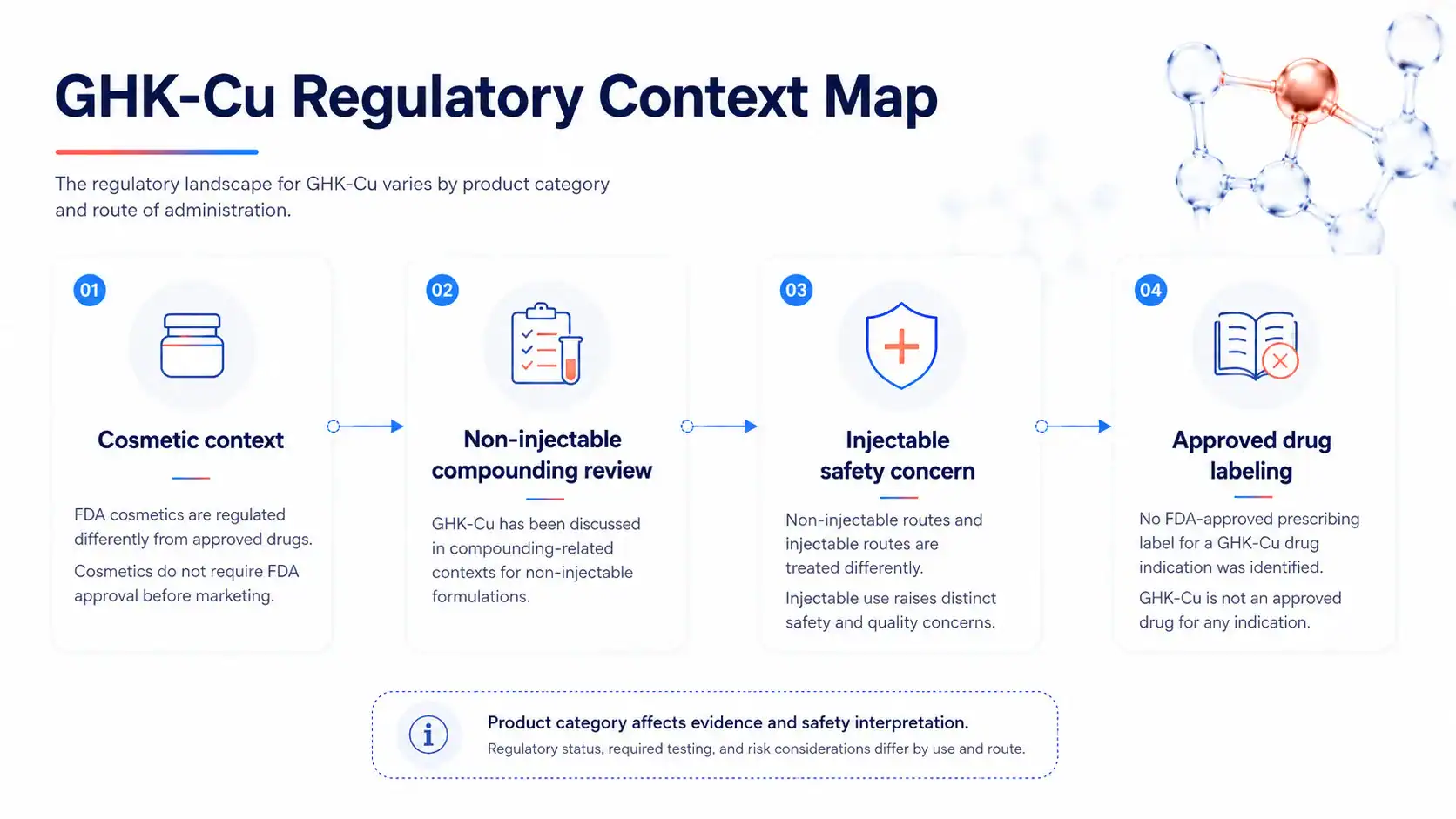
GHK-Cu regulatory status depends on whether it is discussed as a cosmetic ingredient, a compounded bulk drug substance, an injectable preparation, or an investigational product. FDA does not treat cosmetics the same way it treats prescription drugs, and FDA has specifically flagged compounded injectable GHK-Cu as a safety concern [8], [11].
Is GHK-Cu Peptide FDA-Approved?
No FDA-approved prescribing label establishing GHK-Cu as a drug for a labeled medical indication was identified in the regulatory sources reviewed for this article. FDA materials instead discuss GHK-Cu in compounding contexts, including category updates for non-injectable routes and safety concerns for injectable routes [8], 19.
Cosmetic, Dietary Supplement, Medication, and Prescription Drug Distinctions
A cosmetic GHK-Cu serum is not regulated like an FDA-approved drug, and a compounded injectable preparation is not the same as a cosmetic product. FDA states that cosmetic products and ingredients generally do not require premarket approval, except color additives, but companies remain responsible for safety and labeling [11].
United States Legal Status and Compounded Peptide Considerations
FDA’s May 2026 bulk-substance document lists GHK-Cu except for injectable routes of administration as a 503A category 1 substance under evaluation and says FDA intends to consult the Pharmacy Compounding Advisory Committee before the end of February 2027 about potential inclusion on the 503A bulks list [19]. Separately, FDA lists GHK-Cu for injectable routes under safety concerns, citing immunogenicity risk and limited human safety data [8].
How GHK-Cu Compares With Related Skin and Hair Therapies
GHK-Cu compares with related therapies most fairly by route, evidence level, mechanism, regulatory status, and safety profile. It should not be framed as the best peptide or best treatment for everyone.
Copper Peptide Products Versus Retinoids and Cosmetic Actives
Cu-GHK has been compared with vitamin C and retinoic acid in a small collagen-production context summarized in a topical peptide review, where collagen increased in 70% of Cu-GHK-treated participants versus 50% with vitamin C and 40% with retinoic acid after one month [2]. That comparison is interesting, but retinoids have their own large evidence base and regulatory categories that differ from copper peptide products.
Growth Factors, Collagen Support, and Mechanism-Based Comparisons
GHK-Cu is often discussed alongside growth factors, collagen-supporting ingredients, hyaluronic acid, retinoids, antioxidants, and other cosmetic actives because many target visible skin aging or repair biology. Mechanism-based comparisons are helpful, but outcome-based evidence, safety data, and formulation quality matter more than marketing categories [2], [11].
Why Outcome Evidence Matters More Than Marketing Categories
A label such as peptide therapy, copper peptide product, regenerative ingredient, or anti-aging serum does not prove clinical benefit. Outcome evidence requires controlled studies, defined endpoints, adverse-event reporting, and clear comparison groups [2], [3], [7].
Evidence Limitations and Unanswered Questions
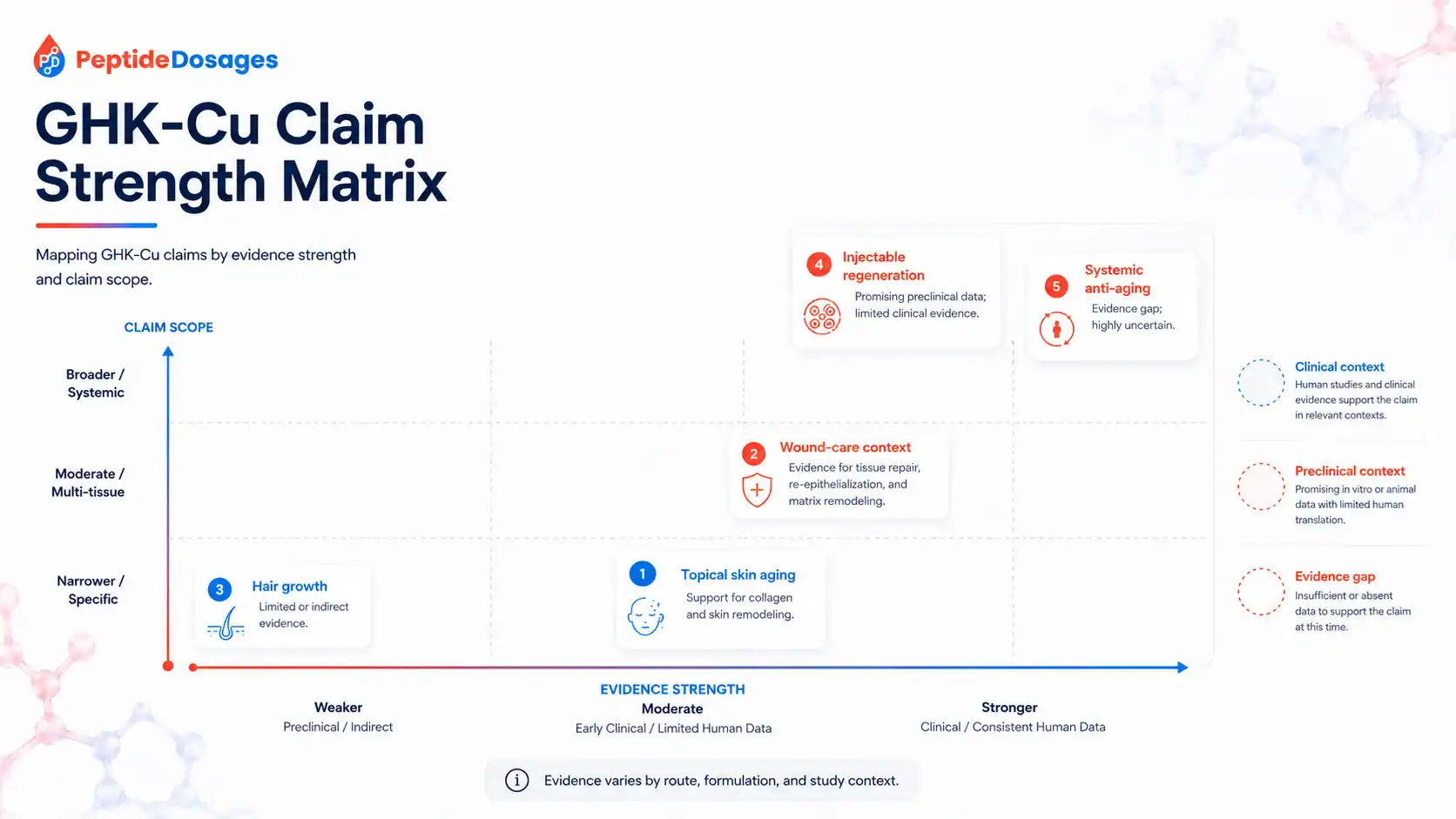
The main evidence limitations for GHK-Cu are uneven human data, formulation differences, limited injectable safety information, small topical skin studies, indirect hair evidence, and uncertain long-term outcomes [2], [6], [7], [8]. The evidence is not empty, but it is narrower than many online claims suggest.
Where Human Evidence Is Still Limited
Human evidence is limited for injectable GHK-Cu, systemic anti-aging, hair loss treatment, chronic disease treatment, liver repair, cognitive benefit, and broad regenerative medicine claims. The most concrete human evidence is concentrated in topical skin and specific wound-study contexts [2], [3], [8].
What Remains Unknown About Long-Term Use
Long-term safety remains unclear for systemic and injectable GHK-Cu, especially repeated use, off-label use, compounded preparations, and use in higher-risk populations. FDA’s injectable-route concern highlights limited human safety data, aggregation risk, and peptide-related impurity concerns [8].
Claim Strength Matrix for Skin, Hair, and Healing Claims
Skin aging claims are moderate when limited to topical cosmetic outcomes, wound-healing claims are context-dependent because evidence includes both human diabetic-ulcer research and animal models, and hair growth claims remain preliminary or indirect [2], [3], [6], [13]. Systemic anti-aging and injectable regeneration claims are weakest because they lack strong human confirmation and face regulatory safety concerns [8], [17].
Key Takeaways and Clinician Discussion Points
The safest way to interpret GHK-Cu peptide is through route, evidence quality, regulatory status, safety data, and clinician-guided decision-making. Stronger conclusions can be drawn from topical and wound-related studies than from injectable or systemic anti-aging claims.
Questions to Ask About Evidence Quality and Safety
Readers can ask a licensed clinician whether the claim is based on topical human data, wound-care research, animal models, cell studies, cosmetic marketing, or unsourced online protocols. Useful discussion topics include allergies, active skin disease, medications, pregnancy or breastfeeding, diabetes, abnormal wound healing, infection risk, immune status, and whether approved alternatives are available [7], [8], [11].
When to Discuss Alternatives With a Clinician
Alternatives should be discussed when the goal involves a medical condition such as diabetic ulcers, hair loss, chronic wounds, inflammatory disease, scarring, or post-procedure recovery. GHK-Cu may be scientifically interesting, but medical decisions should be based on diagnosis, evidence strength, safety, regulatory status, and comparison with better-studied options.
Related dosage protocols and research
Use the available links to move between research context, dosage pages or comparisons, and supporting guides. When vial-size variants exist, they remain separate because concentration and syringe-unit calculations change with vial strength. Comparisons do not imply that different compounds are interchangeable.
Matching dosage protocols
Related protocols and comparisons
Further research context
REFERENCES
- National Center for Biotechnology Information. Cu-GHK | PubChem Compound Summary. PubChem. Updated database entry.
- Schagen SK. Topical Peptide Treatments with Effective Anti-Aging Results. Cosmetics. 2017;4(2):16.
- Mulder GD, Patt LM, Sanders L, Rosenstock J, Altman MI, Hanley ME, Duncan GW. Enhanced healing of ulcers in patients with diabetes by topical treatment with glycyl-L-histidyl-L-lysine copper. Wound Repair and Regeneration. 1994;2(4):259-269. DOI: 10.1046/j.1524-475X.1994.20406.x. PMID: 17147644.
- Maquart FX, Pickart L, Laurent M, Gillery P, Monboisse JC, Borel JP. Stimulation of collagen synthesis in fibroblast cultures by the tripeptide-copper complex glycyl-L-histidyl-L-lysine-Cu2+. FEBS Letters. 1988;238(2):343-346. PMID: 3169264.
- Siméon A, Emonard H, Hornebeck W, Maquart FX. The tripeptide-copper complex glycyl-L-histidyl-L-lysine-Cu2+ stimulates matrix metalloproteinase-2 expression by fibroblast cultures. Life Sciences. 2000;67(18):2257-2265. DOI: 10.1016/S0024-3205(00)00803-1. PMID: 11045606.
- Trachy RE, Fors TD, Pickart L, Uno H. The hair follicle-stimulating properties of peptide copper complexes. Results in C3H mice. Annals of the New York Academy of Sciences. 1991;642:468-469. DOI: 10.1111/j.1749-6632.1991.tb24420.x. PMID: 1809108.
- ClinicalTrials.gov. Topical GHK-Cu Gel for Acute Skin Wound Healing. NCT07437586. U.S. National Library of Medicine. 2026.
- U.S. Food and Drug Administration. Certain Bulk Drug Substances for Use in Compounding that May Present Significant Safety Risks. FDA. Content current as of April 22, 2026.
- National Center for Biotechnology Information. Glycyl-L-histidyl-L-lysine | PubChem Compound Summary. PubChem. Updated database entry.
- Pickart L, Vasquez-Soltero JM, Margolina A. Regenerative and Protective Actions of the GHK-Cu Peptide in the Light of the New Gene Data. International Journal of Molecular Sciences. 2018;19(7):1987. PMID: 29986520.
- U.S. Food and Drug Administration. FDA Authority Over Cosmetics: How Cosmetics Are Not FDA-Approved, but Are FDA-Regulated. FDA. 2025.
- Wegrowski Y, Maquart FX, Borel JP. Stimulation of sulfated glycosaminoglycan synthesis by the tripeptide-copper complex glycyl-L-histidyl-L-lysine-Cu2+. Life Sciences. 1992;51(13):1049-1056. PMID: 1522753.
- Pyo HK, Yoo HG, Won CH, et al. The effect of tripeptide-copper complex on human hair growth in vitro. Archives of Pharmacal Research. 2007. PMID: 17703734.
- Li H, Low YS, Chong HP, et al. Microneedle-mediated delivery of copper peptide through skin. Pharmaceutical Research. 2015;32:2678-2689. PMID: 25690343.
- Dymek M, Sikora E, et al. Liposomes as Carriers of GHK-Cu Tripeptide for Cosmetic Applications. Pharmaceutics. 2023.
- Canapp SO Jr, Farese JP, Schultz GS, et al. The effect of topical tripeptide-copper complex on healing of ischemic open wounds. Veterinary Surgery. 2003;32(6):515-523. DOI: 10.1111/j.1532-950x.2003.00515.x. PMID: 14648529.
- Dou Y, Lee K, et al. The potential of GHK as an anti-aging peptide. Aging Pathobiology and Therapeutics. 2020. PMID: 35083444.
- Badenhorst T, Svirskis D, Merrilees M, et al. Physicochemical characterization of native glycyl-L-histidyl-L-lysine tripeptide for wound healing and anti-aging: a preformulation study for dermal delivery. Drug Development and Industrial Pharmacy. 2016. PMID: 25384620.
- U.S. Food and Drug Administration. Bulk Drug Substances Nominated for Use in Compounding Under Section 503A of the Federal Food, Drug, and Cosmetic Act. FDA. Updated May 14, 2026. :::
FAQs
What is GHK-Cu peptide?
GHK-Cu peptide is a copper-bound form of the tripeptide glycyl-L-histidyl-L-lysine, also called GHK, Cu-GHK, GHK copper, or copper tripeptide [1], [9]. It is discussed mainly as a copper peptide for skin, collagen biology, wound healing, and hair-related research. GHK itself has been identified in human biological contexts, but the evidence for GHK-Cu depends heavily on route, formulation, and study design.
What are the benefits of GHK-Cu peptide for skin and hair?
Potential benefits of GHK-Cu peptide are stronger for topical skin research than for hair loss claims. Human skin studies have examined collagen production, skin elasticity, wrinkles, density, and topical photoaging outcomes [2]. Hair growth evidence is more indirect, with mouse and hair-follicle model studies rather than large clinical trials for hair loss [6], [13]. Claims about benefits for the skin are more defensible when limited to topical, evidence-graded contexts.
Is GHK-Cu peptide effective and worth the hype?
GHK-Cu peptide may be worth scientific attention, but not every online claim is supported equally. Studies on GHK-Cu include topical skin research, diabetic wound-healing research, cell studies, animal models, and formulation studies [2], [3], [14], [15]. The evidence is most relevant to specific topical and wound-care contexts. Systemic anti-aging, injectable regeneration, and broad hair restoration claims remain much less established.
What are the potential risks or side effects of using GHK-Cu peptide?
Potential risks of using GHK-Cu peptide include topical irritation, allergic reaction, formulation sensitivity, incomplete long-term safety data, and route-specific concerns. FDA materials flag compounded injectable GHK-Cu as a safety concern because of limited human safety data, aggregation risk, peptide-related impurities, and possible immunogenicity [8]. Side effects and adverse events may differ between cosmetics, wound gels, compounded preparations, and investigational products.
How is GHK-Cu peptide typically used or administered?
GHK-Cu peptide is most commonly discussed in topical forms, including serums, creams, gels, wound-care preparations, and trial-based topical applications. Literature also discusses microneedle-assisted delivery, liposomal formulations, and injectable-route safety concerns [7], [8], [14], [15]. Administration information should be interpreted as research or formulation context, not a self-use protocol. Injectable use raises different sterility, dosing, safety, and regulatory concerns than topical use.
Is GHK-Cu peptide FDA-approved?
GHK-Cu peptide does not have an FDA-approved prescribing label establishing it as a drug for a labeled medical indication in the sources reviewed. FDA materials discuss GHK-Cu in cosmetic and compounding-related contexts, including different treatment of non-injectable and injectable routes [8], [11], [19]. Regulatory status matters because cosmetics, compounded peptides, investigational products, and approved prescription drugs are not evaluated under the same standards.
Researchers Cited in This Article
The researchers below authored or co-authored publications cited in this article. Listing them here identifies sources; it does not mean they wrote, independently reviewed, sponsored, or endorsed this PeptideDosages.com article. The site author is identified in the article byline.
Loren Pickart
Researcher profile: Google Scholar
Loren Pickart’s publications are closely connected to the GHK and GHK-Cu literature reviewed in this article, especially discussions of copper peptide biology, skin remodeling, extracellular matrix activity, wound-model research, and gene-expression hypotheses. His review work is useful for understanding why GHK-Cu peptide is discussed across dermatology, tissue-repair, and anti-aging research while also requiring careful interpretation of mechanistic and preclinical findings. These publications help frame GHK-Cu as a biologically active copper-binding peptide rather than as an established treatment for every claimed use.
Selected publications:
- GHK Peptide as a Natural Modulator of Multiple Cellular Pathways in Skin Regeneration � BioMed Research International, 2015. PMID: 26236730.
- Regenerative and Protective Actions of the GHK-Cu Peptide in the Light of the New Gene Data � International Journal of Molecular Sciences, 2018. DOI: 10.3390/ijms19071987. PMID: 29986520.
François-Xavier Maquart
Researcher profile: ResearchGate
François-Xavier Maquart’s published work is relevant to the mechanistic foundation of GHK-Cu research, particularly collagen synthesis, fibroblast activity, extracellular matrix remodeling, and matrix metalloproteinase signaling. The article’s discussion of collagen biology and preclinical mechanism relies on this research lane to distinguish cellular and tissue-model findings from broader human therapeutic claims. Maquart’s publications are especially useful for interpreting GHK-Cu as a compound studied in fibroblast and wound-repair biology, while keeping clinical claims limited to the evidence available.
Selected publications:
- Stimulation of collagen synthesis in fibroblast cultures by the tripeptide-copper complex glycyl-L-histidyl-L-lysine-Cu2+ � FEBS Letters, 1988. PMID: 3169264.
- The tripeptide-copper complex glycyl-L-histidyl-L-lysine-Cu2+ stimulates matrix metalloproteinase-2 expression by fibroblast cultures � Life Sciences, 2000. DOI: 10.1016/S0024-3205(00)00803-1. PMID: 11045606.