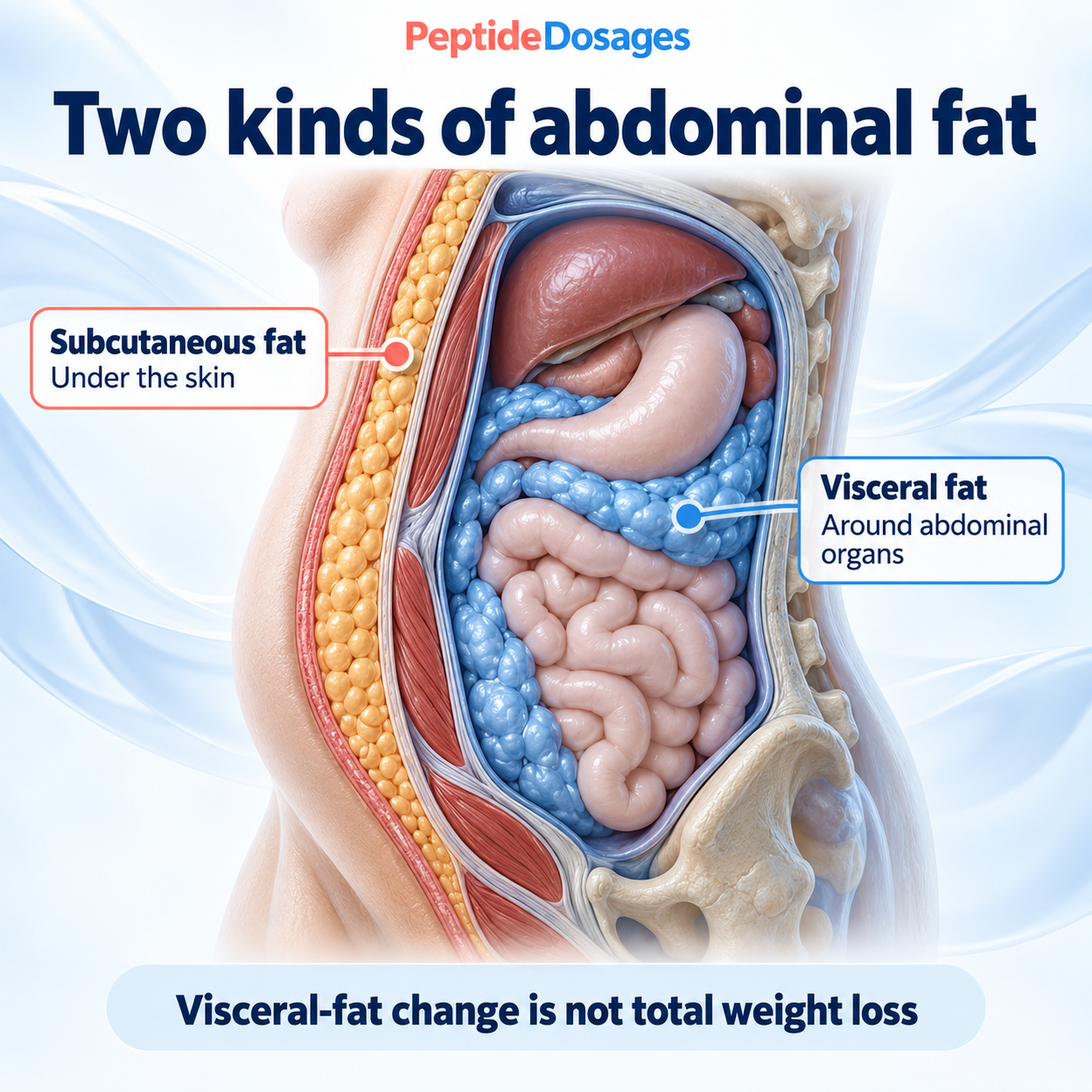

If you’re searching “What is Tesamorelin,” you’re probably seeing it described as a “belly fat peptide.” The reality is more specific: tesamorelin is a prescription therapy created to target visceral (deep) abdominal fat in a defined medical context. This guide explains what tesamorelin is, what it actually does, what the evidence shows, and how to think about it safely (education only, not medical advice). [1]

Fast Answer / Executive Summary

Tesamorelin is a synthetic growth hormone–releasing hormone (GHRH) analog that stimulates your pituitary gland to release growth hormone, raising IGF‑1 and preferentially reducing visceral abdominal fat. In the United States, it’s FDA‑approved (as Egrifta formulations) for reducing excess abdominal fat in adults with HIV and lipodystrophy, and it is not approved for general weight loss. [2]

Core Concepts & Key Entities

Tesamorelin is best understood as an upstream signal in the growth-hormone axis. Instead of giving you growth hormone directly, it mimics GHRH, prompting the pituitary gland to release growth hormone in a way that supports endogenous signaling. [3]

That “axis” matters because a lot of online explanations skip the key point: tesamorelin’s most proven clinical effect is selective visceral fat reduction in people with HIV-associated lipodystrophy—not broad, scale-driven weight loss. [4]

What tesamorelin is in one sentence

Tesamorelin is a GHRH analog that increases growth hormone secretion and downstream IGF‑1, with clinical evidence for reducing visceral abdominal fat in adults with HIV and lipodystrophy. [5]

Key terms you’ll see on high-quality sources

Term Plain-English meaning Why it matters for tesamorelin
GHRH Growth hormone–releasing hormone Tesamorelin is a synthetic analog of this upstream signal. [6]
GH Growth hormone GH goes up when tesamorelin stimulates the pituitary. [7]
IGF‑1 Insulin-like growth factor‑1 A downstream growth factor that rises with GH; it’s central to monitoring and safety discussions. [8]
VAT Visceral adipose tissue Deep abdominal fat around organs; tesamorelin’s strongest evidence is VAT reduction. [9]
SAT Subcutaneous adipose tissue Fat under the skin; studies show VAT falls more than SAT, explaining why scale weight may not change much. [10]
HIV lipodystrophy Fat redistribution syndrome in some people with HIV/ART This is the FDA-approved use case for tesamorelin. [11]

Why “visceral fat” is the center of the tesamorelin conversation

Visceral fat is not the same as “stubborn lower belly fat” in the mirror. VAT is inside the abdominal cavity, wrapped around organs, and is more strongly linked to cardiometabolic risk than many subcutaneous fat patterns. [12]

This is why tesamorelin is often described as “targeting deep belly fat”: the approval and trial endpoints focused on VAT quantified by imaging, not cosmetic fat loss. [13]

The real, FDA-approved indication

In the U.S., the tesamorelin injection products are indicated for reduction of excess abdominal fat in HIV-infected adults with lipodystrophy, with explicit limitations (including that long-term cardiovascular safety is not established and it’s not for weight loss management). [14]

That “not for weight loss” line is not a technicality—it’s a major intent-match for people arriving from Google expecting a generic fat-loss peptide. [4]

How it works mechanistically

Tesamorelin stimulates growth hormone secretion and subsequently increases IGF‑1 and IGF binding proteins. This matters because GH/IGF‑1 signaling shifts fat metabolism (including lipolysis) and helps explain why VAT can decrease while scale weight changes are modest. [15]

A useful mental model is the “three-link chain”:

GHRH signal → pituitary GH output → IGF‑1 + downstream metabolic effects

Tesamorelin acts at the first link. [3]

What the best clinical evidence actually shows

Clinical trials in HIV-associated abdominal fat accumulation repeatedly show that tesamorelin reduces VAT and can improve certain lipid measures, with effects maintained during continued treatment and diminishing after discontinuation. [16]

A few high-signal datapoints that are commonly searched:

  • Phase III results summarized in peer-reviewed analyses report ~15% VAT area reduction over 26 weeks without meaningful reductions in subcutaneous fat. [17]
  • The FDA pre-defined a ≥8% VAT reduction as clinically meaningful, and pooled data show 69% of tesamorelin-treated participants achieved that threshold vs 33% on placebo. [18]
  • Extension data show VAT reductions can be sustained to ~52 weeks with continued therapy, and discontinuation is associated with VAT regain toward baseline. [19]

Newer “information gain” angle most competitors skip: liver fat and fibrosis signals in HIV-associated NAFLD

Many pages stop at “belly fat.” But there is clinically meaningful research connecting tesamorelin to liver fat outcomes in people with HIV and NAFLD.

In a randomized, placebo-controlled trial in people with HIV and NAFLD, tesamorelin reduced hepatic fat fraction compared with placebo (absolute treatment effect around −4.1%, and ~−37% relative reduction from baseline) and more participants reached hepatic fat fraction <5% at 12 months (35% vs 4%). [20]

The same trial reported that tesamorelin prevented fibrosis progression over one year (progression in 10.5% on tesamorelin vs 37.5% on placebo). [21]

That does not mean tesamorelin is an approved NAFLD drug. It does mean serious researchers view GH-axis modulation as a plausible mechanistic lever for liver fat and fibrosis risk in this specific population—and it’s an area where “what is tesamorelin” content can add real information gain. [22]

The most confusing topic online: tesamorelin dosing depends on the formulation

If you’ve seen “2 mg daily” and “1.4 mg daily” both described as “FDA-approved,” you’re not imagining it. The labeling history and formulation changes create confusion.

Here’s the clean version:

  • Egrifta SV labeling lists a 4 mg subcutaneous daily dose (0.35 mL of reconstituted solution). [23]
  • Egrifta WR labeling lists a 28 mg subcutaneous daily dose (0.16 mL of reconstituted solution). [24]
  • The formulations are not substitutable, and the labeling explicitly warns that dosage/reconstitution/storage differ by formulation. [25]
  • Pharmacokinetic language in labeling explains part of the shift: systemic exposure for 4 mg (SV) is described as similar to 2 mg of an older formulation. [7]

Key takeaway: If a source doesn’t specify which tesamorelin formulation it’s referencing, treat its dosing claims as unreliable. [25]

What about “side effects” and safety monitoring?

Tesamorelin labeling highlights several safety categories that should shape expectations:

  • Elevated IGF‑1: monitoring is recommended; discontinuation is suggested if IGF‑1 remains persistently elevated (e.g., >3 standard deviation scores, “SDS”), especially if efficacy isn’t robust. [8]
  • Glucose intolerance/diabetes risk: clinical trial data show higher percentages of elevated HbA1c in tesamorelin groups vs placebo and a higher relative risk signal for developing diabetes by HbA1c criteria. [26]
  • Fluid retention-related effects: edema, arthralgia, and carpal tunnel-type symptoms are described as possible manifestations. [26]
  • Common adverse reactions include arthralgia and injection site reactions, among others. [27]

Patient-facing medication references like MedlinePlus[28] also list injection-site reactions, swelling, numbness/tingling sensations, and joint or muscle pain among commonly reported effects, and describe symptoms that should trigger urgent medical attention (e.g., allergic reaction signs). [29]

Step-by-Step / How-To

The safest “how-to” for a topic like tesamorelin is not “how to self-administer peptides,” but how to evaluate tesamorelin realistically and reduce avoidable misunderstandings.

Step One: Clarify the use case you’re actually asking about

Tesamorelin’s primary, FDA-approved use case is HIV-associated lipodystrophy with excess abdominal fat, so confirm whether your question is about that medical indication or about general body composition “optimization.” [25]

If your intent is general weight loss, note that tesamorelin is not indicated for weight loss management and is described as weight neutral in labeling. [4]

Step Two: Name the exact formulation before you discuss dose

The dose language differs across formulations (e.g., Egrifta SV vs Egrifta WR), and labeling states they are not substitutable. [25]

A simple rule: if someone says “2 mg/day is FDA-approved” without specifying formulation history, ask for the source and the version date. [30]

Step Three: Anchor your expectations to the right outcome metric

Tesamorelin trials emphasize visceral fat change (VAT) rather than scale weight, and clinical significance thresholds were defined around VAT reduction (e.g., ≥8%). [31]

If you track only body weight, you can miss the main outcome tesamorelin is designed to affect. citeturn7search1turn0 Color

Step Four: Identify the “red flags” before anything else

Tesamorelin labeling includes contraindications and warnings that prioritize safety—such as avoiding use in active malignancy and considering the growth-factor implications of increased GH/IGF‑1.

Pregnancy-related warnings are also explicit because modifying visceral adipose tissue provides no benefit in pregnancy and could risk fetal harm. [32]

Step Five: Build a monitoring plan around IGF‑1 and glucose

Tesamorelin can raise IGF‑1 substantially, and labeling recommends monitoring and considering discontinuation if IGF‑1 remains persistently high (e.g., >3 SDS). [8]

Labeling also advises evaluating glucose status before therapy and periodic monitoring, reflecting trial signals related to glucose intolerance and HbA1c shifts. [26]

Step Six: Decide in advance how you’ll judge “continue vs stop”

Long-term cardiovascular safety is not established in labeling, and continuation should be weighed against benefit—especially if VAT reduction is not seen. [4]

Also set expectations that discontinuation can lead to VAT regain toward baseline, which is documented in long-term data. [19]

Comparison / Alternatives

Tesamorelin is not “the best peptide for fat loss” in a general sense; it’s a targeted tool for a specific type of fat (VAT) in a specific clinical setting (HIV-associated lipodystrophy) where endogenous GH signaling is part of the therapeutic strategy. [33]

When people ask for alternatives, they usually mean one of two things: 1) alternatives to reduce visceral fat and metabolic risk, or
2) alternatives for overall weight loss.

Here’s a practical comparison that keeps those intents separate.

Option What it targets best Primary mechanism Evidence signal relevant to VAT Biggest tradeoffs
Tesamorelin Visceral abdominal fat in HIV lipodystrophy GHRH analog → ↑GH → ↑IGF‑1 ~15% VAT reduction over ~26 weeks in phase III analyses; durability requires continued use. [34] Requires monitoring (IGF‑1, glucose); not indicated for weight loss; effects fade after stopping. [35]
Recombinant human growth hormone GH deficiency states (clinical endocrinology) Direct GH administration (exogenous) GH axis manipulation can reduce fat but side effects are linked to supraphysiologic GH/IGF‑1 exposure. [36] Higher risk of glucose intolerance, edema/carpal tunnel-type effects when GH/IGF‑1 overshoot physiologic range. [37]
Lifestyle intervention Whole-body fat + cardiometabolic risk Energy balance, resistance training, sleep Improves cardiometabolic risk and body composition broadly; not VAT-specific but foundational. [38] Requires consistency; results vary; slower than pharmacologic options for some. [38]
FDA-approved weight-loss medications Total body weight and appetite regulation Multiple mechanisms (including some injectable agents) One-year use can produce clinically meaningful additional total body weight loss vs lifestyle alone (range varies by drug). [38] Must be prescribed and monitored; weight regain can occur after stopping; unapproved versions raise safety concerns. [38]

Decisive comparison point: Tesamorelin is “VAT-first,” while most weight-loss strategies are “total-weight-first.” If your goal is overall weight loss, tesamorelin is often the wrong primary tool because it is not indicated for weight-loss management and is described as weight neutral. [4]

Templates / Checklist / Example

A lot of tesamorelin confusion disappears when you use a repeatable framework. Here’s a copy-ready checklist you can use before you trust any claim (including claims on forum posts, influencer threads, or peptide shop pages).

Tesamorelin “FIT” checklist

  • Boldly define your goal as visceral fat reduction vs overall scale weight loss. [1]
  • Identify the exact product/formulation discussed (Egrifta SV vs Egrifta WR) before you interpret any dosing statement. [25]
  • Translate expectations into the right metric: waist measures and imaging-based VAT endpoints were central in trials, not just body weight. [39]
  • Flag contraindications and high-risk history first (especially active malignancy; pregnancy-related warnings).
  • Track IGF‑1 and glucose status as primary monitoring concepts, not afterthoughts. [8]
  • Inspect any promise of “permanent results” as a red flag; discontinuation has been associated with VAT return toward baseline. [19]

Example: the one-paragraph “question script” that saves you time

“What I’m trying to solve is visceral abdominal fat and associated metabolic risk. I understand tesamorelin is a GHRH analog approved to reduce excess abdominal fat in adults with HIV and lipodystrophy, and that it’s not indicated for weight-loss management. If we discuss it, I want to confirm the exact formulation, how we’d monitor IGF‑1 and glucose, and what success would look like at a clear checkpoint.” [40]

FAQs

What is tesamorelin used for?

What is tesamorelin used for? Tesamorelin is used to reduce excess abdominal fat in adults with HIV who have lipodystrophy, according to U.S. product labeling for Egrifta formulations. It is not indicated for general weight-loss management, and long-term cardiovascular safety is not established in labeling, which is why continued use should be evaluated against benefit. [25]

Is tesamorelin the same as HGH?

Is tesamorelin the same as HGH? Tesamorelin is not the same as HGH (human growth hormone). Tesamorelin is a GHRH analog that signals your pituitary gland to increase growth hormone secretion, which then raises IGF‑1. HGH therapy delivers growth hormone directly, which can more easily overshoot physiologic signaling and is associated with glucose and fluid-retention side effects when exposure is excessive. [41]

Does tesamorelin help with belly fat in people without HIV?

Does tesamorelin help with belly fat in people without HIV? Tesamorelin has its strongest evidence and FDA approval in HIV-associated lipodystrophy, not general cosmetic belly fat. Trials and labeling emphasize visceral fat reduction in that population and state it is not indicated for weight loss. If you’re considering it outside that context, the evidence is less direct and the safety-monitoring concepts (IGF‑1, glucose) still apply. [42]

What are the most common tesamorelin side effects?

What are the most common tesamorelin side effects? Commonly reported side effects include injection-site reactions and joint or muscle-related symptoms, and labeling also describes fluid-retention manifestations such as edema and carpal tunnel-type symptoms. Patient drug information sources also highlight swelling, tingling/numbness sensations, and warning signs of hypersensitivity reactions that require urgent care. [43]

How long does tesamorelin take to work, and do results last?

How long does tesamorelin take to work, and do results last? Clinical trials typically evaluated visceral fat changes over months (for example, 26-week primary phases), and benefits can persist with continued treatment. Evidence from longer follow-up suggests that when tesamorelin is discontinued, visceral fat tends to reaccumulate toward baseline over time, which is why “maintenance” expectations matter. [44]

Can tesamorelin be bought over the counter?

Can tesamorelin be bought over the counter? Tesamorelin is a prescription medication in the U.S. (Egrifta formulations) for a defined indication, and reputable medical sources emphasize obtaining prescription therapies through appropriate clinician oversight and state-licensed pharmacies rather than unapproved versions. If you see “OTC tesamorelin,” treat it as a major credibility warning sign. [45]

Next Steps

Tesamorelin is best viewed as a prescription, evidence-backed VAT-reduction therapy for a specific clinical context—not a generic “fat loss peptide.” [1]

If you want to go deeper in a practical way, explore PeptideDosages.com’s educational dosage-protocol resources for common vial formats used in research discussion and measurement planning:

Education note: This article is for informational purposes only and does not provide medical advice, diagnosis, or treatment decisions. For any therapeutic use of prescription tesamorelin, involve a qualified clinician and appropriate monitoring.


[1] [2] [3] [4] [5] [7] [8] [11] [14] [15] [23] [25] [26] [27] [30] [32] [33] [35] [40] [41] [42] [43] [45] https://www.accessdata.fda.gov/drugsatfda_docs/label/2024/022505s018lbl.pdf

https://www.accessdata.fda.gov/drugsatfda_docs/label/2024/022505s018lbl.pdf

[6] https://journals.plos.org/plosone/article?id=10.1371%2Fjournal.pone.0179538

https://journals.plos.org/plosone/article?id=10.1371%2Fjournal.pone.0179538

[9] [10] [17] [18] [31] [34] [44] Visceral Fat Reduction with Tesamorelin Is Associated … – PMC

https://pmc.ncbi.nlm.nih.gov/articles/PMC5633509/?utm_source=chatgpt.com

[12] https://www.hopkinsguides.com/hopkins/view/Johns_Hopkins_HIV_Guide/545121/all/Lipodystrophy

https://www.hopkinsguides.com/hopkins/view/Johns_Hopkins_HIV_Guide/545121/all/Lipodystrophy

[13] [39] https://www.ncbi.nlm.nih.gov/books/NBK539127/

https://www.ncbi.nlm.nih.gov/books/NBK539127/

[16] Metabolic Effects of a Growth Hormone–Releasing Factor …

https://www.nejm.org/doi/full/10.1056/NEJMoa072375?utm_source=chatgpt.com

[19] Long-term safety and effects of tesamorelin, a growth …

https://pubmed.ncbi.nlm.nih.gov/18690162/?utm_source=chatgpt.com

[20] [21] https://pmc.ncbi.nlm.nih.gov/articles/PMC6981288/

https://pmc.ncbi.nlm.nih.gov/articles/PMC6981288/

[22] https://insight.jci.org/articles/view/140134

https://insight.jci.org/articles/view/140134

[24] https://www.accessdata.fda.gov/drugsatfda_docs/label/2025/022505s020lbl.pdf

https://www.accessdata.fda.gov/drugsatfda_docs/label/2025/022505s020lbl.pdf

[28] [46] Tesamorelin 5mg Dosage Protocol | PeptideDosages.com

https://peptidedosages.com/single-peptide-dosages/tesamorelin-5-mg-vial-dosage-protocol/

[29] https://medlineplus.gov/druginfo/meds/a611035.html

https://medlineplus.gov/druginfo/meds/a611035.html

[36] [37] Safety and metabolic effects of tesamorelin, a growth hormone …

https://pmc.ncbi.nlm.nih.gov/articles/PMC5472315/?utm_source=chatgpt.com

[38] https://www.mayoclinic.org/healthy-lifestyle/weight-loss/in-depth/weight-loss-drugs/art-20044832

https://www.mayoclinic.org/healthy-lifestyle/weight-loss/in-depth/weight-loss-drugs/art-20044832

[47] Tesamorelin 10mg Dosage Protocol | PeptideDosages.com

https://peptidedosages.com/single-peptide-dosages/tesamorelin-10-mg-vial-dosage-protocol/

[48] Tesamorelin 20mg Dosage Protocol | PeptideDosages.com

https://peptidedosages.com/single-peptide-dosages/tesamorelin-20-mg-vial-dosage-protocol/