
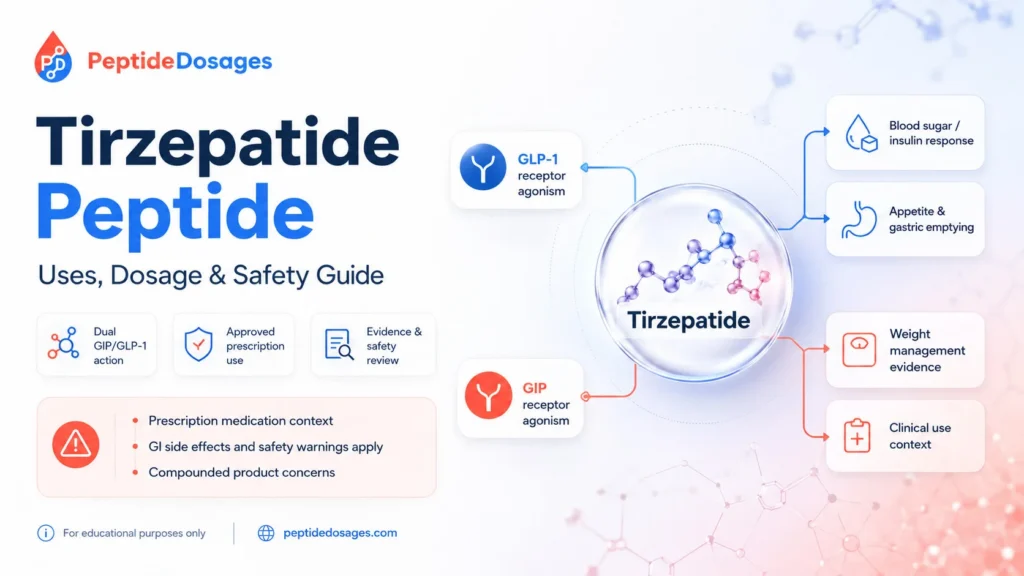
Tirzepatide peptide is a prescription incretin-based medication designed to activate both glucose-dependent insulinotropic polypeptide and glucagon-like peptide-1 pathways, and it is approved in the United States under specific brand-name products for type 2 diabetes, chronic weight management, and certain obstructive sleep apnea contexts 1 2 3. This educational article reviews how tirzepatide works, what clinical trials have studied, where evidence is strongest, and where claims remain uncertain. It does not provide personalized medical advice, dosing instructions, or product-sourcing guidance.
- Tirzepatide is a synthetic peptide medication and dual GIP and GLP-1 receptor agonist studied for metabolic disease, especially type 2 diabetes and obesity-related indications 4 5.
- The FDA-approved brand name Mounjaro is indicated as an adjunct to diet and exercise to improve glycemic control in adults with type 2 diabetes mellitus [1].
- Zepbound is FDA-approved for chronic weight management in adults with obesity or overweight with at least one weight-related condition, and FDA has also approved it for moderate-to-severe obstructive sleep apnea in adults with obesity [2] [3].
- Tirzepatide’s mechanism of action involves activation of GIP and GLP-1 receptors, which can influence insulin secretion, glucagon regulation, appetite signaling, and gastric emptying [1] [5].
- Clinical trials have reported reductions in A1C and body weight, but results depend on population, dose, comparator, adherence, tolerability, and study design 6 7.
- Common adverse effects are mainly gastrointestinal, while serious warnings include thyroid C-cell tumor risk language, pancreatitis, gallbladder disease, hypoglycemia risk with some diabetes drugs, kidney injury related to dehydration, hypersensitivity, and aspiration risk around anesthesia or procedures [1] [2].
- Dosage information in this article is limited to approved labels and published studies; study doses should not be interpreted as personal dosing advice [1] [2].
Fast Answer
Tirzepatide peptide is a synthetic, once-weekly injectable medication that acts as a dual GIP and GLP-1 receptor agonist and is approved in specific brand-name forms for type 2 diabetes, chronic weight management, and obesity-related obstructive sleep apnea contexts [1] [2] [3]. People search for it because clinical trials have reported effects on blood sugar and body weight, but benefits must be weighed against side effects, contraindications, drug interactions, and regulatory status [6] [7]. Compounded tirzepatide also raises quality and safety questions 8.
What Is the Tirzepatide Peptide?
Tirzepatide is an incretin-based prescription drug. In scientific terms, tirzepatide is a synthetic peptide engineered to activate two incretin receptors: the GIP receptor and the GLP-1 receptor [4] [5]. The “tirzepatide peptide” search phrase often reflects public interest in peptide therapeutics, but tirzepatide is not just a research peptide; approved products are regulated prescription medications with labeled indications, warnings, and dosing schedules [1] [2].
The compound belongs to a newer class of metabolic therapies sometimes described as dual incretin receptor agonists. Incretin hormones are gut-derived signals that help coordinate insulin secretion, appetite, and glucose handling after meals 9.
Peptide Classification and Basic Structure
Tirzepatide is a synthetic peptide modified for prolonged activity after subcutaneous administration [4] [5]. PubChem lists tirzepatide as a peptide therapeutic, and preclinical pharmacology work describes it as a dual GIP and GLP-1 receptor agonist with biased activity at the GLP-1 receptor compared with native GLP-1 signaling [4] [5].
Its structure is designed to support once-weekly use in approved products, rather than rapid breakdown like many native peptide hormones [1] [2]. That longer activity is clinically relevant because the approved labels describe once-weekly subcutaneous administration [1] [2].
Why Tirzepatide Is Discussed in Therapeutic Contexts?
Tirzepatide is discussed therapeutically because randomized clinical trials have evaluated it in patients with type 2 diabetes and adults with obesity or overweight [6] [7]. The medication also has approved uses, which places it in a different evidence category than many unapproved peptides discussed online [1] [2].
The strongest evidence comes from FDA labeling and large human trials. Claims outside those settings should be judged by evidence quality, not by popularity on social media or wellness websites.
How It Differs From Traditional GLP-1 Receptor Agonist Drugs?
Traditional GLP-1 receptor agonist drugs, such as semaglutide, primarily activate the glucagon-like peptide-1 receptor 10. Tirzepatide is a dual GIP and GLP-1 receptor agonist, meaning its pharmacology includes activity at both the glucose-dependent insulinotropic polypeptide receptor and the glucagon-like peptide-1 receptor [5] [6].
This distinction matters mechanistically, but it does not mean tirzepatide is automatically better for every individual. Comparative trial results must be interpreted within the exact population, dose, endpoint, and safety context studied [6].
Brand Name and Regulatory Status: Mounjaro and Zepbound
Tirzepatide is marketed in the United States under different brand-name products with different labeled uses. Mounjaro is approved for glycemic control in adults with type 2 diabetes mellitus, while Zepbound is approved for chronic weight management in adults with obesity or overweight with at least one weight-related condition [1] [2].
The FDA also announced approval of Zepbound for moderate-to-severe obstructive sleep apnea in adults with obesity, making it the first medication approved by the FDA for that sleep apnea indication [3]. Regulatory status may differ by country; the European Medicines Agency maintains product information for Mounjaro in the European Union 11.
Is Tirzepatide Approved by the FDA?
Yes, specific tirzepatide products are approved by the FDA for specific indications. FDA approval applies to reviewed products, manufacturing standards, labeling, dosage forms, and indications—not to every product advertised online as tirzepatide [1] [2].
That distinction is important for safety. Approved products have prescribing information that describes indications, contraindications, warnings, adverse effects, and storage requirements [1] [2].
How Compounded Tirzepatide Changes Quality and Safety Questions
Compounded tirzepatide is not the same regulatory category as an FDA-approved product. FDA has warned that unapproved GLP-1 drug products used for weight loss may pose risks, including dosing errors, quality concerns, and products that have not undergone FDA review for safety, effectiveness, or quality [8].
Compounding may be legally allowed in limited circumstances, but it does not create FDA approval for a compounded product. Readers should treat compounded tirzepatide claims cautiously and discuss regulatory, quality, and medical issues with a licensed healthcare provider.
How Does Tirzepatide Peptide Work?
Tirzepatide works through incretin signaling. Its dual receptor activity is intended to influence glucose metabolism, insulin secretion, appetite regulation, and body weight-related pathways [1] [5].
In plain language, incretin pathways help the pancreas and brain respond to food intake. Tirzepatide uses those pathways pharmacologically, but clinical effects vary among individuals and must be monitored in a medical context [1] [2].
Dual Agonist Activity at GIP and GLP-1 Receptors
Tirzepatide is often called a dual agonist because it activates both GIP and GLP-1 receptors [5]. GIP stands for glucose-dependent insulinotropic polypeptide, and GLP-1 stands for glucagon-like peptide-1 [9].
Preclinical receptor studies suggest tirzepatide has strong activity at the GIP receptor and modified activity at the GLP-1 receptor [5]. Human clinical outcomes, however, are measured through endpoints such as A1C, fasting glucose, body weight, and adverse effects—not receptor activity alone [6] [7].
What Happens at the GIP Receptor and GLP-1 Receptor?
At the GLP-1 receptor, incretin-based therapies can increase glucose-dependent insulin secretion, reduce glucagon secretion, slow gastric emptying, and affect appetite pathways [1] [9]. At the GIP receptor, tirzepatide may add complementary metabolic effects, though the exact contribution of GIP agonism to clinical outcomes remains an active research topic [5] 12.
The term “dual receptor” should not be interpreted as a guarantee of greater benefit for every person. It describes pharmacology, not an individualized treatment prediction.
How Are Gastric Emptying, Appetite, and Blood Sugar Affected?
The approved labels describe delayed gastric emptying, which can affect the absorption of some oral medications [1] [2]. Tirzepatide may reduce appetite and food intake in some patients, and clinical trials have reported changes in body weight and glycemic outcomes [6] [7].
Blood sugar effects are partly related to glucose-dependent insulin secretion and changes in glucagon regulation [1]. Low blood sugar is more likely when tirzepatide is used with insulin or insulin secretagogues, such as sulfonylureas, according to labeling [1] [2].
Mechanism of Action: From Receptor Signaling to Clinical Effects
The mechanism of action links receptor activation to metabolic outcomes. Tirzepatide’s dual GIP and GLP-1 receptor agonist activity is biologically plausible for diabetes and obesity-related outcomes because incretin signaling affects glucose, appetite, and weight regulation [5] [9].
Still, a mechanism is not the same as proof of clinical benefit for every claim. The most reliable conclusions come from approved labeling and well-controlled human studies [1] [2] [6] [7].
How Does Tirzepatide Affect Insulin Secretion and Glucose Regulation?
Tirzepatide improves glycemic control through mechanisms that include increased glucose-dependent insulin secretion and reduced glucagon concentrations, according to FDA labeling [1]. In patients with type 2 diabetes, SURPASS-2 found greater reductions in glycated hemoglobin with tirzepatide than with semaglutide 1 mg over 40 weeks, though the study’s findings apply to its specific trial design and comparators [6].
Glucose-dependent insulin secretion means insulin release is more tied to elevated glucose levels than constant stimulation. This helps explain why hypoglycemia risk is especially important when tirzepatide is combined with insulin or insulin secretagogues [1].
Why Mechanism Does Not Always Predict Individual Outcomes
Mechanistic data can explain why a therapy may work, but individual outcomes also depend on baseline A1C, body weight, kidney function, gastrointestinal tolerability, medications, adherence, and medical history. Clinical trials report group averages, not personal guarantees [6] [7].
This is why label information, trial evidence, and clinician judgment all matter. A biological mechanism can support a hypothesis, but only human outcome data can show whether a proposed benefit appears in a studied population.
What Is Tirzepatide Peptide Used For?
Tirzepatide has approved medical uses and is also being studied in related metabolic conditions. The key safety point is that approved use depends on product, indication, country, and medical context [1] [2] [11].
Uses discussed online may extend beyond evidence. Those claims should be separated into approved, clinical, early human, preclinical, and unsupported categories.
Treatment of Type 2 Diabetes Mellitus in Adults
Mounjaro is approved as an adjunct to diet and exercise to improve glycemic control in adults with type 2 diabetes mellitus [1]. Clinical trials in the SURPASS program evaluated tirzepatide across several type 2 diabetes populations, including comparisons with semaglutide and insulin-based regimens [6] 13 14.
For patients with type 2 diabetes, outcomes such as A1C, fasting glucose, body weight, and adverse events are clinically relevant. Treatment decisions require individualized medical assessment.
Chronic Weight Management in Adults With Obesity or Overweight
Zepbound is approved for chronic weight management in adults with obesity or adults with overweight who have at least one weight-related condition, in conjunction with reduced-calorie diet and increased physical activity [2]. SURMOUNT-1 reported substantial mean body weight reductions in adults with obesity or overweight without diabetes over 72 weeks, but trial results should not be treated as guaranteed individual outcomes [7].
SURMOUNT-2 also evaluated tirzepatide in adults with obesity and type 2 diabetes, a population in which weight management and glycemic control overlap clinically 15. The evidence is strongest for studied populations and labeled indications.
Zepbound for Obstructive Sleep Apnea in Adults With Obesity
FDA announced approval of Zepbound for moderate-to-severe obstructive sleep apnea in adults with obesity [3]. The approval was supported by trials evaluating apnea-hypopnea index changes in people with obesity and moderate-to-severe obstructive sleep apnea [3] 16.
This does not mean tirzepatide is a universal sleep apnea therapy. Obstructive sleep apnea can require diagnostic testing, airway-focused treatment, cardiometabolic assessment, and ongoing clinician management.
Potential Benefits of Tirzepatide Peptide
Potential benefits should be discussed by evidence level. For tirzepatide, the best-supported benefits relate to glycemic control in type 2 diabetes and weight management in studied obesity or overweight populations [1] [2] [6] [7].
Other claims, such as anti-aging, performance enhancement, or general inflammation reduction, are not established approved uses. Those claims require caution unless supported by high-quality human evidence.
Blood Sugar and A1C Outcomes in Patients With Type 2 Diabetes
In SURPASS-2, tirzepatide produced larger A1C reductions than semaglutide 1 mg in patients with type 2 diabetes, with gastrointestinal adverse events commonly reported in both groups [6]. Other SURPASS trials evaluated tirzepatide against basal insulin comparators and reported improvements in glycemic endpoints in the populations studied [13] [14].
A1C reduction is a clinical endpoint, but it is not the only factor in therapy selection. Safety, contraindications, cardiovascular risk, kidney function, other medications, cost, access, and patient preference can matter in real-world care.
Body Weight, Appetite, and Metabolic Health Outcomes
SURMOUNT-1 reported dose-related body weight reductions with tirzepatide in adults with obesity or overweight without diabetes [7]. In SURMOUNT-2, tirzepatide was also studied for weight management in adults with obesity and type 2 diabetes [15].
Appetite and hunger effects are consistent with incretin biology and delayed gastric emptying, but individual tolerability varies [1] [2]. Claims about “fat loss,” “metabolic optimization,” or “body transformation” should be replaced with evidence-based language about trial-measured body weight and cardiometabolic endpoints.
What Does Human Research Say About Tirzepatide?
Human evidence for tirzepatide is stronger than for many peptides discussed on the internet because large randomized clinical trials and regulatory reviews exist [1] [2] [6] [7]. Still, trial evidence has boundaries.
The table below separates evidence areas by strength and interpretation.
| Evidence Area | What Has Been Studied | Evidence Level | What It Can and Cannot Show |
|---|---|---|---|
| Type 2 diabetes | A1C and metabolic outcomes in patients with type 2 diabetes, including comparisons with semaglutide and insulin regimens [6] [13] [14] | Approved / Clinical | Supports labeled glycemic-control use; does not replace individualized medical care. |
| Chronic weight management | Body weight outcomes in adults with obesity or overweight in SURMOUNT trials [7] [15] | Approved / Clinical | Supports studied weight management outcomes; does not guarantee personal results. |
| Obstructive sleep apnea | Moderate-to-severe obstructive sleep apnea in adults with obesity [3] [16] | Approved / Clinical | Supports the specific approved indication; does not apply to all sleep apnea causes or populations. |
| Mechanism | Dual GIP and GLP-1 receptor activity in pharmacology studies [5] [12] | Preclinical / Mechanistic | Explains biological plausibility; does not prove every claimed benefit. |
| Anti-aging, inflammation, performance | Common online claims without strong indication-specific trial support | Unsupported / Evidence-limited | Should not be presented as established therapeutic benefit. |
What Do SURPASS Trials Suggest for Type 2 Diabetes?
The SURPASS clinical trial program evaluated tirzepatide in type 2 diabetes across multiple treatment backgrounds. SURPASS-2 compared tirzepatide with semaglutide 1 mg and reported greater A1C and body weight reductions with tirzepatide at the studied doses [6].
SURPASS-3 compared tirzepatide with insulin degludec, while SURPASS-4 compared tirzepatide with insulin glargine in patients with type 2 diabetes and increased cardiovascular risk [13] [14]. These studies support clinical efficacy in specific trial settings, but they do not determine the best therapy for every person.
What Do SURMOUNT Trials Suggest for Obesity and Weight Management?
SURMOUNT-1 evaluated adults with obesity or overweight without diabetes and reported significant body weight reductions over 72 weeks [7]. SURMOUNT-2 evaluated adults with obesity and type 2 diabetes, a population where weight management and glucose control intersect [15].
SURMOUNT-4 studied continued treatment versus withdrawal after an initial open-label tirzepatide period and reported weight regain after switching to placebo, highlighting that long-term management is a key clinical question 17. These findings should be interpreted as clinical trial evidence, not a promise of permanent weight loss.
How Does Tirzepatide Compare With Semaglutide in Studies?
In SURPASS-2, tirzepatide was compared with semaglutide 1 mg in adults with type 2 diabetes and showed greater reductions in A1C and body weight at 40 weeks [6]. That comparison does not cover every semaglutide product, dose, indication, or patient population.
Semaglutide is a GLP-1 receptor agonist, while tirzepatide is a GIP and GLP-1 receptor agonist [5] [10]. Choosing between therapies requires considering approved indication, tolerability, contraindications, medication history, access, and clinician assessment.
What Safety Findings Appeared in Clinical Trials?
Across trials and labels, gastrointestinal adverse effects such as nausea, diarrhea, vomiting, constipation, and abdominal discomfort were common [1] [2] [6] [7]. Discontinuation due to adverse effects occurred in some participants, and risk can vary by dose escalation, background medications, and individual tolerability [1] [2].
Clinical trials are essential, but they may not capture every rare or long-term adverse event. Postmarketing surveillance and label updates remain important after approval.
Preclinical Evidence and Translational Limits
Preclinical evidence helps explain receptor pharmacology and biological plausibility. Tirzepatide was characterized in preclinical models as a dual glucose-dependent insulinotropic polypeptide and glucagon-like peptide-1 receptor agonist with metabolic effects in animal models [5].
However, preclinical findings cannot be converted directly into human therapeutic claims. Animal models and receptor assays are useful for mechanism, not for personal treatment decisions.
Why Animal and Cell Findings Need Human Confirmation
Cells, receptor systems, and animal models simplify human biology. They cannot fully model human appetite behavior, diabetes progression, cardiovascular risk, pregnancy, medication interactions, or long-term adverse effects.
For tirzepatide, the human evidence base is substantial for approved metabolic indications, but claims outside those indications still need appropriate clinical testing. A mechanism may be interesting without being clinically established.
Evidence Limitations and Unsupported Online Claims
Evidence limitations matter because tirzepatide is widely discussed beyond its labeled uses. Claims about anti-aging, generalized inflammation reduction, performance, cosmetic fat loss, or “metabolic repair” are not the same as FDA-approved indications or trial-tested endpoints.
A practical evidence filter is simple: ask whether the claim is supported by approved labeling, randomized human trials, early clinical research, preclinical evidence, or only anecdotal reports. The weaker the evidence category, the more cautious the language should be.
Where Is the Evidence Stronger or Weaker?
Evidence is stronger for approved uses and large randomized clinical trials in type 2 diabetes, obesity-related chronic weight management, and obesity-related obstructive sleep apnea [1] [2] [3] [6] [7] [16]. Evidence is weaker for broad wellness claims that do not match trial endpoints.
Long-term questions remain important. These include durability of weight effects, long-term safety, comparative effectiveness across populations, and outcomes after discontinuation [17].
Which Claims Need Caution: Anti-Aging, Inflammation, or Performance?
Anti-aging, inflammation, and performance claims should be treated as unsupported unless tied to specific human clinical evidence. Weight loss and glucose effects may improve some cardiometabolic markers in studied populations, but that does not prove generalized anti-aging or performance enhancement [7] [15].
Readers should be especially cautious when claims appear in sales-focused content. Marketing language often blurs the line between approved medicine, off-label use, compounded products, and unapproved peptide promotion.
Side Effects and Adverse Effects of Tirzepatide
Tirzepatide can cause side effects, and approved labels provide the most important baseline safety information. Common adverse effects include nausea, diarrhea, decreased appetite, vomiting, constipation, dyspepsia, and abdominal pain [1] [2].
Serious risks and warnings also appear in labeling. These include thyroid C-cell tumor warning language, pancreatitis, gallbladder disease, hypoglycemia with some diabetes drugs, acute kidney injury, hypersensitivity reactions, and pulmonary aspiration concerns around anesthesia or deep sedation [1] [2].
What Gastrointestinal Side Effects Are Commonly Reported?
Gastrointestinal adverse effects are among the most common issues reported in labeling and clinical trials [1] [2] [6] [7]. Nausea, vomiting, diarrhea, constipation, abdominal pain, and indigestion can affect tolerability and may be more noticeable during dose escalation [1] [2].
Severe or persistent gastrointestinal symptoms require medical assessment. Dehydration from vomiting or diarrhea can contribute to kidney-related complications, which are described in labeling [1] [2].
Injection Site Reactions and Hypersensitivity Signals
Injection site reactions and hypersensitivity reactions are reported in tirzepatide labeling [1] [2]. Serious hypersensitivity reactions, including anaphylaxis and angioedema, have been reported with tirzepatide products [1] [2].
This article does not provide injection technique or self-administration instructions. Administration decisions and training belong in a licensed clinical setting.
Low Blood Sugar Risk With Insulin or Insulin Secretagogues
Tirzepatide can increase the risk of low blood sugar when used with insulin or insulin secretagogues such as sulfonylureas [1] [2]. Labeling notes that reducing the dose of the insulin or insulin secretagogue may be considered to reduce hypoglycemia risk, but those decisions require clinician oversight [1] [2].
Symptoms of hypoglycemia can include shakiness, sweating, confusion, hunger, and weakness, but symptom patterns vary. People using diabetes medications need individualized monitoring plans from a healthcare provider.
Safety Risks, Warnings, and Monitoring
Safety monitoring depends on the indication, comorbidities, medications, and risk factors. Tirzepatide is a prescription drug, and labeling provides warnings that should be reviewed with a clinician [1] [2].
Key safety categories include endocrine warnings, gastrointestinal complications, gallbladder disease, kidney issues related to dehydration, hypersensitivity, pregnancy considerations, medication absorption, and procedure-related aspiration risk [1] [2].
Thyroid Tumor Warning, Medullary Thyroid Carcinoma, and MEN2
Tirzepatide labels carry a boxed warning about thyroid C-cell tumors observed in rodents, and labeling states that it is unknown whether tirzepatide causes thyroid C-cell tumors, including medullary thyroid carcinoma, in humans [1] [2]. Tirzepatide is contraindicated in people with a personal or family history of medullary thyroid carcinoma or in people with multiple endocrine neoplasia syndrome type 2 [1] [2].
Warning symptoms discussed in labeling include a lump or swelling in your neck, hoarseness, trouble swallowing, or shortness of breath [1] [2]. These symptoms require medical evaluation rather than self-interpretation.
Pancreatitis, Gallbladder Disease, Kidney Injury, and Dehydration
Acute pancreatitis has been reported with incretin-based therapies, and tirzepatide labels instruct clinicians to discontinue the drug if pancreatitis is suspected [1] [2]. Gallbladder disease, including cholelithiasis and cholecystitis, is also described in labeling [1] [2].
Kidney injury can occur in the setting of severe gastrointestinal reactions that cause dehydration [1] [2]. People with kidney disease, significant vomiting, or dehydration risk need careful medical assessment.
Pregnancy, Birth Control Pills, Surgery, and Pulmonary Aspiration
Tirzepatide labeling states that weight loss offers no benefit during pregnancy and may cause fetal harm, and pregnancy-related decisions should be handled by a clinician [2]. Tirzepatide can reduce exposure to oral hormonal contraceptives after initiation and after dose escalation because it delays gastric emptying, so labeling recommends alternative or additional contraceptive approaches for specified periods [1] [2].
Labels also include warnings about pulmonary aspiration during general anesthesia or deep sedation because delayed gastric emptying may leave residual gastric contents [1] [2]. Anyone planning surgery or a procedure should inform the clinical team about relevant medications.
Contraindications and Who Should Not Use Tirzepatide
Contraindications are not optional safety details. FDA labeling contraindicates tirzepatide in people with a personal or family history of medullary thyroid carcinoma, in people with multiple endocrine neoplasia syndrome type 2, and in people with serious hypersensitivity to tirzepatide or product components [1] [2].
This section is informational, not a screening tool. A healthcare provider should evaluate medical history, family history, medication list, pregnancy status, and risk factors.
Who Should Avoid Tirzepatide Based on Approved Labels?
Based on approved labels, tirzepatide should not be used by people with the contraindications listed above [1] [2]. The labels also describe special warnings for pancreatitis, gallbladder disease, hypoglycemia with insulin or insulin secretagogues, kidney injury, hypersensitivity, diabetic retinopathy complications in some diabetes contexts, and aspiration risk [1] [2].
People with complex medical histories should not rely on online summaries to determine eligibility. Labeling is a starting point for clinician-led risk review.
Warning Symptoms: Lump or Swelling in Your Neck, Severe Pain, or Allergy
Labels advise patients to report possible thyroid tumor symptoms such as a lump or swelling in the neck, hoarseness, difficulty swallowing, or shortness of breath [1] [2]. Severe abdominal pain may raise concern for pancreatitis or gallbladder disease, while swelling of the face, lips, tongue, or throat can indicate serious allergic reaction [1] [2].
These symptoms require prompt medical attention. They should not be managed through peptide forums, self-adjusted dosing, or product switching.
Drug Interactions and Clinical Considerations
Drug interaction questions are clinically important because tirzepatide affects glucose and gastric emptying. The label highlights concerns with insulin, insulin secretagogues, and oral medications whose absorption could be affected by delayed gastric emptying [1] [2].
Medication review should include prescription drugs, over-the-counter products, supplements, alcohol use, and planned procedures. This is especially relevant for people with diabetes, gastrointestinal disease, kidney disease, or pregnancy considerations.
How Tirzepatide May Affect Insulin, Sulfonylureas, and Oral Medications
When tirzepatide is used with insulin or sulfonylureas, hypoglycemia risk may increase [1] [2]. Dose changes to background diabetes drugs, if needed, are clinician decisions and should not be made from general web content.
Because tirzepatide delays gastric emptying, it may affect oral medication absorption [1] [2]. Birth control pills are specifically addressed in labeling because oral contraceptive exposure may be reduced after initiation and dose escalation [1] [2].
Dosage Information From Approved Labels and Published Studies
Approved labels describe tirzepatide as a once-weekly subcutaneous injection with gradual dose escalation [1] [2]. For both Mounjaro and Zepbound, labeling describes an initial 2.5 mg once-weekly dose for 4 weeks, followed by escalation based on the labeled product schedule, with higher maintenance doses up to 15 mg depending on indication and tolerability [1] [2].
Study doses should not be interpreted as personal dosing advice. Dosage decisions depend on diagnosis, treatment goals, tolerability, drug interactions, contraindications, and clinician oversight.
Once-Weekly Dose Escalation and the 4 Weeks Titration Pattern
The approved labels use a 4 weeks titration pattern to reduce gastrointestinal adverse effects while reaching therapeutic maintenance doses [1] [2]. Clinical trials also evaluated once-weekly tirzepatide at several dose levels, commonly including 5 mg, 10 mg, and 15 mg arms [6] [7].
A published study dose is not a recommendation for an individual reader. It is a research or label context that requires medical interpretation.
Why Dosage Information Is Not Personal Medical Advice
Dosage information can help readers understand labels and studies, but it cannot account for individual medical history. Factors such as kidney function, gastrointestinal tolerability, diabetes medications, pregnancy plans, prior pancreatitis, gallbladder disease, and surgery plans can affect clinical decisions [1] [2].
No article can determine whether a person should start, stop, increase, decrease, or combine tirzepatide with another medication. Those choices require a licensed healthcare provider.
Administration Routes and Subcutaneous Injection Context
Approved tirzepatide products are administered by subcutaneous injection once weekly according to prescribing information [1] [2]. “Subcutaneous” means the medication is delivered under the skin, but this article does not provide procedural injection instructions.
Administration route matters for pharmacokinetics, tolerability, labeling, storage, and medical training. It should not be converted into a self-use protocol from an online article.
What Should Readers Discuss With a Healthcare Provider Before They Use Tirzepatide?
A clinician discussion should focus on evidence, risks, and fit for the individual medical context. Useful topics include:
- Whether the intended use matches an approved indication or is off-label.
- Personal or family history of medullary thyroid carcinoma or multiple endocrine neoplasia syndrome type 2 [1] [2].
- Current diabetes medications, especially insulin or sulfonylureas [1] [2].
- History of pancreatitis, gallbladder disease, severe gastrointestinal disease, kidney disease, or dehydration risk [1] [2].
- Pregnancy, breastfeeding, fertility planning, and birth control pills [1] [2].
- Upcoming surgery, anesthesia, or procedures involving deep sedation [1] [2].
- Whether a product is FDA-approved, compounded, or otherwise unapproved [8].
- How benefits will be monitored and what side effects should prompt medical review.
The safest way to interpret tirzepatide peptide is through evidence quality, regulatory status, safety data, and clinician-guided decision-making. The strongest conclusions come from approved labeling and well-designed human studies; weaker claims should be treated cautiously.
REFERENCES
- U.S. Food and Drug Administration. Mounjaro drug approval package and prescribing information. Drugs@FDA. 2022–present label updates.
- U.S. Food and Drug Administration. Zepbound drug approval package and prescribing information. Drugs@FDA. 2023–present label updates.
- U.S. Food and Drug Administration. FDA approves first medication for obstructive sleep apnea. FDA Press Announcement. 2024.
- National Center for Biotechnology Information. Tirzepatide compound summary. PubChem.
- Coskun T, Sloop KW, Loghin C, et al. LY3298176, a novel dual GIP and GLP-1 receptor agonist for the treatment of type 2 diabetes mellitus. Molecular Metabolism. 2018. PMID: 29477409.
- Frías JP, Davies MJ, Rosenstock J, et al. Tirzepatide versus semaglutide once weekly in patients with type 2 diabetes. New England Journal of Medicine. 2021. PMID: 34170647.
- Jastreboff AM, Aronne LJ, Ahmad NN, et al. Tirzepatide once weekly for the treatment of obesity. New England Journal of Medicine. 2022. PMID: 35658024.
- U.S. Food and Drug Administration. FDA’s concerns with unapproved GLP-1 drugs used for weight loss. FDA Drug Safety Information. Updated 2024–2025.
- Drucker DJ. The biology of incretin hormones. Cell Metabolism. 2006. PMID: 18375409.
- U.S. Food and Drug Administration. Ozempic drug approval package and prescribing information. Drugs@FDA. 2017–present label updates.
- European Medicines Agency. Mounjaro EPAR. EMA. 2022–present.
- Frias JP, Nauck MA, Van J, et al. Efficacy and safety of LY3298176, a novel dual GIP and GLP-1 receptor agonist, in patients with type 2 diabetes. The Lancet. 2018. PMID: 30293770.
- Ludvik B, Giorgino F, Jódar E, et al. Once-weekly tirzepatide versus once-daily insulin degludec as add-on to metformin with or without SGLT2 inhibitors in patients with type 2 diabetes. The Lancet. 2021. PMID: 34370970.
- Del Prato S, Kahn SE, Pavo I, et al. Tirzepatide versus insulin glargine in type 2 diabetes and increased cardiovascular risk. The Lancet. 2021. PMID: 34672967.
- Garvey WT, Frias JP, Jastreboff AM, et al. Tirzepatide once weekly for the treatment of obesity in people with type 2 diabetes. The Lancet. 2023. PMID: 37385275.
- Malhotra A, Grunstein RR, Fietze I, et al. Tirzepatide for the treatment of obstructive sleep apnea and obesity. New England Journal of Medicine. 2024. DOI: 10.1056/NEJMoa2404881.
- Aronne LJ, Sattar N, Horn DB, et al. Continued treatment with tirzepatide for maintenance of weight reduction in adults with obesity: The SURMOUNT-4 randomized clinical trial. JAMA. 2024. DOI: 10.1001/jama.2023.24945.
Contributing Authors
The following authors are recognized for published research that helped shape the scientific and clinical context discussed in this article.
Ania M. Jastreboff
Author profile: Yale Medicine Profile
Dr. Ania M. Jastreboff is recognized for clinical research relevant to tirzepatide and obesity medicine. Her published work helps frame how randomized trials evaluate body-weight outcomes, maintenance of treatment effects, and evidence limitations in incretin-based therapies. These publications are especially relevant to the clinical evidence discussed in this article because they examine tirzepatide in adults with obesity or overweight and help distinguish trial-based findings from broader claims about long-term metabolic treatment.
Selected publications:
- Tirzepatide Once Weekly for the Treatment of Obesity — New England Journal of Medicine, 2022. PMID: 35658024
- Continued Treatment With Tirzepatide for Maintenance of Weight Reduction in Adults With Obesity — JAMA, 2024. DOI: 10.1001/jama.2023.24945
Juan P. Frias
Author profile: PubMed Author Search
Dr. Juan P. Frias is recognized for published clinical and pharmacology research involving tirzepatide and dual incretin receptor agonism. His work is relevant to the article’s discussion of mechanism, clinical studies, and comparative evidence because it includes both early clinical investigation of LY3298176, the compound later known as tirzepatide, and randomized trial evidence comparing tirzepatide with semaglutide in type 2 diabetes. These studies provide useful context for interpreting efficacy, tolerability, and trial-specific limitations.
Selected publications:
- Efficacy and Safety of LY3298176, a Novel Dual GIP and GLP-1 Receptor Agonist, in Patients With Type 2 Diabetes — The Lancet, 2018. PMID: 30293770
- Tirzepatide Versus Semaglutide Once Weekly in Patients With Type 2 Diabetes — New England Journal of Medicine, 2021. PMID: 34170647