If you’ve been searching “what is sermorelin,” you’ve probably noticed two extremes: hype that promises “anti‑aging,” and medical descriptions that feel too abstract to be useful. Sermorelin is a real, studied peptide, but its modern use is often off‑label and easy to misunderstand. This guide explains what sermorelin is, how it works in the growth hormone (GH) axis, what benefits are supported by evidence, what risks matter most, and how it compares to common alternatives. [1]

Fast Answer / Executive Summary

Sermorelin is a synthetic fragment of human growth hormone–releasing hormone (GHRH 1–29) that signals the pituitary to release growth hormone in pulses. It was approved by the U.S. Food and Drug Administration[2] (FDA) as Geref, then discontinued (not for safety/effectiveness). Today, it’s mainly obtained through prescription compounding, with limited evidence in healthy adults. [3]

Core Concepts & Key Entities

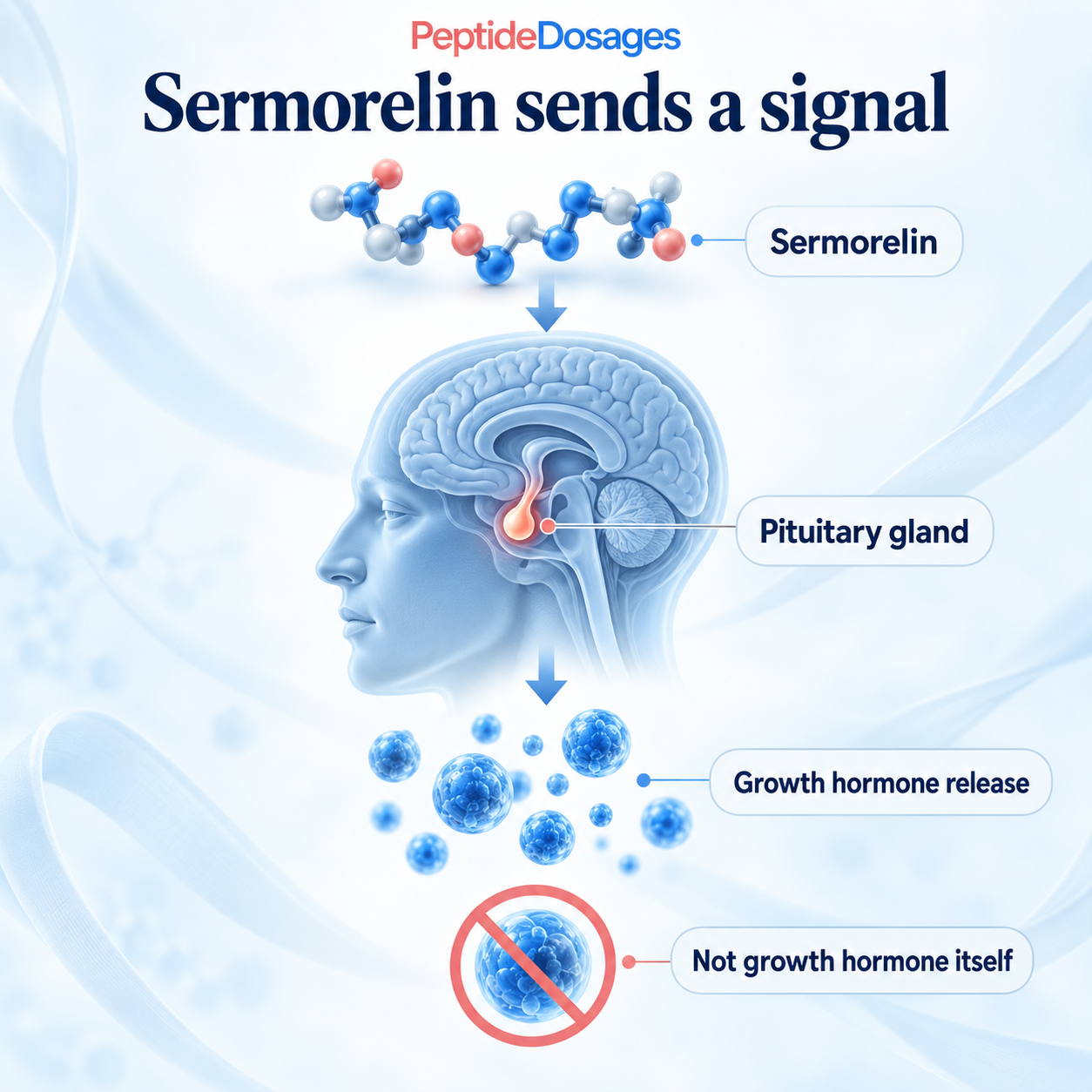
Sermorelin (often written as sermorelin acetate) is a peptide designed to mimic the biologically active part of natural human growth hormone–releasing hormone. In plain terms, sermorelin is a “signal” peptide—its job is to prompt the pituitary to release growth hormone, rather than supplying growth hormone directly. [4]

What sermorelin is, chemically and clinically

Medical reviews describe sermorelin as a 29‑amino‑acid analogue of human GHRH and often characterize it as the shortest synthetic fragment that retains full biological activity of GHRH. When used clinically (historically IV or subcutaneous), it stimulates growth hormone secretion from the anterior pituitary. [5]

In the U.S., sermorelin was marketed as Geref with two labeled roles: – treating idiopathic growth hormone deficiency (GHD) in children with growth failure
– evaluating the ability of pituitary somatotrophs to secrete GH (diagnostic testing) [6]

The GH axis in one picture

The GH axis is regulated by multiple “push‑pull” signals: – GHRH (growth hormone–releasing hormone): stimulates GH synthesis and release
Somatostatin: inhibits GH release and helps shape GH pulse timing
Ghrelin: a stomach‑derived hormone that can stimulate GH release via the growth hormone secretagogue receptor [7]

GH is secreted in pulses. Those pulses drive downstream effects such as stimulating insulin‑like growth factor 1 (IGF‑1) production (mainly in the liver, but also in peripheral tissues). [8]

Key implication: sermorelin acts upstream. If the pituitary can respond, GH pulses can increase. If the pituitary cannot respond, ringing the “GHRH bell” doesn’t reliably create GH output. [9]

Pulsatile GH changes how you measure “results”

Because GH secretion is pulsatile, random single GH blood tests are usually not a reliable way to diagnose GH problems or judge treatment response. Clinical practice guidelines from the Endocrine Society[10] and other endocrine groups emphasize structured diagnostic testing (often stimulation tests) and clinical context rather than one‑off GH levels. [11]

IGF‑1 is commonly used as a more stable downstream marker of GH axis activity (though it has limitations and must be interpreted clinically). When people say “sermorelin raised my GH,” the more meaningful question is whether the GH–IGF‑1 axis changed in a measurable, clinically relevant way. [12]

If you want a concrete example of “why testing is tricky,” look at adult GHD diagnostics: there are multiple stimulation tests described in endocrine references (including oral macimorelin as an FDA‑approved diagnostic test for adult GHD), and each has context, cutoffs, and limitations. That complexity exists because random GH numbers are not enough. [13]

Why bedtime and sleep keep coming up

There is a genuine physiological link between sleep and GH secretion. Research describes sleep‑onset GH secretion as strongly influenced by hypothalamic GHRH stimulation during times of relative somatostatin withdrawal. [14]

This doesn’t prove that bedtime dosing is “always best” for everyone, but it explains why timing is emphasized in GH‑axis discussions and why poor sleep can blunt the outcomes people hope a GH‑stimulating peptide will fix. [15]

Age-related decline and the real reason people get interested in sermorelin

A major National Institutes of Health[16] (NIH) endocrinology reference reports that after the third decade of life, GH secretion declines about 15% per decade, driven largely by reduced nocturnal GH pulse amplitude. [17]

This decline is associated with changes that look similar to adult GH deficiency—such as increased visceral fat and reduced lean mass—but “associated” does not mean “caused by” in a way that makes replacement simple or risk‑free. The same reference notes GH‑raising interventions in older adults tend to produce consistent body composition changes, but inconsistent changes in physical and cognitive function; and long‑term risks (fractures, cancer, cardiovascular events, mortality) are not well defined. [17]

Information gain: many sermorelin pages talk about “anti‑aging” as if dialing GH up is a one‑variable solution. In reality, GH is one input in a network that includes sleep, nutrition, sex hormones, stress physiology, and metabolic status. [8]

Regulatory history that matters for buying, safety, and expectations

Sermorelin’s status is often summarized incorrectly as “banned” or “removed for safety.” A Federal Register[18] determination documents that Geref (sermorelin acetate) had approvals dating to 1990 (diagnostic) and 1997 (pediatric treatment). The manufacturer discontinued Geref in 2008 and requested withdrawal; FDA approvals were withdrawn effective June 18, 2009. Importantly, the agency determined the products were not withdrawn for reasons of safety or effectiveness. [6]

Modern medical and consumer references therefore commonly describe sermorelin as no longer available in the U.S. as an FDA‑approved commercially marketed medication, while noting it may still be obtained via prescription channels such as individualized compounding. [19]

Evidence: what sermorelin is best supported for

Sermorelin’s strongest evidence base is in pediatric idiopathic GHD and in GH stimulation testing. A clinical review reports that IV sermorelin can be a relatively specific provocative test for GHD diagnostic evaluation (with caveats), and that once‑daily bedtime subcutaneous sermorelin has promoted growth in some prepubertal children with idiopathic GHD, with sustained height‑velocity improvements over 12 months in available studies. [20]

That same review also states important limits: a normal GH response to IV sermorelin does not exclude hypothalamic causes of GHD, final adult height impact is uncertain, and available comparisons to somatropin are limited. [21]

Evidence in adults: what the research suggests and what it does not prove

Adult growth hormone deficiency (AGHD) is a defined endocrine disorder associated with abnormal body composition, metabolic changes, and impaired quality of life, and it is typically treated with recombinant GH under specialist supervision. [22]

That’s different from “normal aging.” Still, some studies have tested GHRH(1–29) analogues (closely related to sermorelin) in older adults. For example, a randomized placebo‑controlled trial in age‑advanced men and women concluded that nightly GHRH analogue administration for months activated the somatotropic axis; it also reported select changes such as increased skin thickness and noted improvements in some measures in men more than women. [23]

Another clinical trial in older men examined twice‑daily GHRH(1–29) to assess whether it could reverse age‑related decreases in GH and IGF‑1 compared with younger men. [24]

Both lines of evidence support a narrow statement: in some adults, GHRH(1–29) analogues can stimulate GH/IGF‑1 biology. They do not, by themselves, establish long‑term benefits like lower cardiovascular events, reduced cancer risk, or longer life. Major endocrine references are explicit that long‑term outcome data for GH‑raising interventions in older adults are limited. [25]

The nuance competitors skip: dosing frequency and measurement strategy can change IGF‑1 outcomes

If you’ve seen conflicting anecdotes (“my IGF‑1 didn’t change” vs “my IGF‑1 shot up”), part of the explanation may be timeline, frequency, and measurement context. A review discussing GH secretagogues notes that some nightly treatment did not significantly increase IGF‑1 at early time points, while other studies observed IGF‑1 increases with more frequent dosing—suggesting timing/frequency and lab collection context can affect conclusions. [26]

This is not a reason to self‑experiment. It’s a reason to interpret “lab‑based proof” carefully and to understand why endocrine practice emphasizes standardized monitoring and clinical interpretation. [27]

Benefits: what is plausible vs what is marketing

People usually ask about sermorelin benefits in four categories. Here is the evidence-informed framing:

Body composition: Age-related GH decline is associated with more visceral fat and less lean mass, and GH‑raising interventions can show consistent effects on body composition in older adults, even when functional outcomes are inconsistent. [28]

Sleep and recovery: GH secretion is linked to sleep physiology, which is why sleep improvements are sometimes reported. However, controlled evidence of sleep quality changes is mixed, and sleep is also a confounder—improving sleep hygiene can improve how people feel regardless of peptides. [29]

Energy and well‑being: Some controlled GHRH analogue studies reported improvements in certain quality‑of‑life measures. That’s interesting but not definitive—and not a substitute for diagnosing other causes of low energy (thyroid issues, sleep apnea, anemia, depression, medication effects). [30]

Growth (pediatric): This is where sermorelin has the clearest therapeutic evidence—improving height velocity in some children with idiopathic GHD during sustained treatment, within studied contexts. [21]

Dosing and administration: what you will commonly see described

Sermorelin is typically discussed as an injected therapy and is described in mainstream medical references as available by prescription. [31]

Because sermorelin is no longer widely marketed as an FDA‑approved commercial product, “typical dosing” varies by source and context. Some drug references list an adult once‑daily bedtime subcutaneous dose range in the 0.2–0.3 mg range, while educational peptide protocol sites describe titration ranges in the hundreds of micrograms (µg) nightly. [32]

Important: dosing information on the internet is not a prescription. If a clinician is involved, they should individualize any protocol based on diagnosis, contraindications, and monitoring—especially because the GH/IGF‑1 axis interacts with glucose metabolism, thyroid status, and other hormones. [33]

Sourcing and “where to buy”: the safety triangle most pages ignore

Sermorelin today is commonly discussed in two very different sourcing worlds: prescription compounding and “research‑only” vendors. Consumer medical references and anti‑doping sources both raise a similar point: unregulated sources can be contaminated, mislabeled, or simply not what they claim to be. [34]

A useful mental model is the identity–purity–sterility triangle: – Identity: is it actually sermorelin (correct peptide / sequence)?
– Purity: what percentage is intended peptide vs impurities?
– Sterility/practical safety: if something is injectable or introduced into the body, does it meet appropriate sterile preparation standards?

Many COAs mainly address identity/purity, while prescription pathways are designed to address clinical safety standards in a way research vendors explicitly do not. That difference is why some “research‑only” product pages can show a purity spec and peptide sequence and still state the product is intended solely for laboratory use and not for human or animal consumption. [35]

Risks and safety: what to watch and what to ask a clinician

Most patient-facing drug summaries list injection‑site reactions as the most common adverse event, with less common events like headache, flushing, dizziness, or hives. [36]

Some summaries note anti‑GRF antibody formation during treatment, while stating the significance is unclear in available trial summaries. [37]

Metabolic caution is also part of the GH story. Anti‑doping medical guidance warns that GH excess can contribute to insulin resistance and related risks, and that unregulated sources may be contaminated or mislabeled. [38]

Cancer caution should be handled carefully (no fear‑mongering, no false reassurance). For GH replacement therapy (somatropin), prescribing information commonly states it is contraindicated in the presence of active malignancy and discusses malignancy progression risk; this is one reason clinicians are cautious about GH/IGF‑1‑raising strategies in patients with current tumors or cancer predisposition. [39]

Drug interactions and why “stacking” can backfire

At least one drug reference notes that concomitant glucocorticoid therapy may inhibit the response to sermorelin. In practice, systemic steroids (like prednisone) can reduce GH-axis responsiveness and complicate interpretation. [40]

Clinical references also describe a broader interaction landscape for GH‑axis signaling (for example, drugs affecting somatostatin tone, thyroid status, and insulin/glucose). That’s another reason endocrine evaluation is usually safer than “try a peptide and guess.” [41]

Sport and compliance

If you compete in tested sports, this is simple: sermorelin is prohibited. The U.S. Anti-Doping Agency[42] lists sermorelin among prohibited substances and warns about additional health risks from unregulated sources. [43]

Step-by-Step How to Approach Sermorelin Without Getting Misled

Clarify your goal in one sentence

Write one sentence: “I want to improve X.” If X is “treat confirmed growth hormone deficiency,” you’re immediately in a medical pathway. If X is “feel younger,” you’re in a high‑uncertainty pathway where lifestyle, expectations, and placebo can dominate. [44]

Separate symptoms from a diagnosis

Fatigue, more body fat, and worse sleep are common and non‑specific. Adult GHD is a defined medical condition; guidelines emphasize appropriate testing and clinical context rather than symptom-based diagnosis. [45]

Confirm the axis can respond

Because sermorelin is a GHRH signal, it generally requires GH reserve and responsive pituitary somatotroph function. Structured diagnostic testing exists precisely because “trialing” GH‑axis peptides is not a reliable diagnostic method. [46]

Pick your baseline before you “start”

At minimum, establish a baseline: sleep schedule, training volume, nutrition, and the symptoms you care about with simple scoring (for example, sleep quality 1–10, training performance markers, waist measurement, morning energy 1–10). Without a baseline, “it worked” usually means “time passed.” [47]

If a clinician is involved, they may use labs like IGF‑1 and other endocrine markers as part of baseline assessment; endocrine guidelines emphasize clinician‑interpreted testing and follow‑up in true GHD pathways. [27]

Choose the access route before you choose the molecule

If sermorelin is considered, legitimate access typically involves prescription-only channels and, where appropriate, regulated compounding. Public health references warn about unregulated online sources and the increased risk of contamination or mislabeling. [48]

Decide what you will measure—and when

Match your measurements to physiology: GH is pulsatile; IGF‑1 is more stable. If you do lab-based monitoring, do it consistently (same lab, same approximate time, similar pre-test conditions) and interpret it with a clinician rather than “chasing a number.” [49]

Set a stop rule before you start

Stop rules protect you from harm and sunk-cost bias: stop for adverse effects, abnormal labs, or lack of meaningful objective improvement after an appropriate clinical window. Then reassess—sometimes the right answer is: treat sleep apnea, review medications, or address nutrition and training first. [50]

Comparison and Alternatives

Sermorelin is one option in a larger GH‑axis ecosystem. The most important comparison is upstream stimulation vs direct hormone replacement vs doing the fundamentals well. [51]

Sermorelin vs somatropin

Sermorelin stimulates pituitary GH release. Somatropin is recombinant human GH (rhGH) and directly replaces GH. For confirmed adult GHD, major endocrine guidelines focus on specialist evaluation and carefully dosed GH replacement therapy adjusted with clinical monitoring, including interpreting IGF‑1 in context. [52]

A simple analogy: sermorelin is the doorbell; somatropin is delivering the package yourself. If the doorbell wiring is damaged (the axis can’t respond), ringing harder won’t help. [53]

Sermorelin vs tesamorelin

Tesamorelin is also a synthetic GHRH analogue, but it has a specific FDA‑approved indication: reduction of excess abdominal fat in HIV‑associated lipodystrophy. Reviews describe tesamorelin as a GHRH analogue that stimulates endogenous GH and note labeling that it is not indicated for weight loss. [54]

Sermorelin vs CJC‑1295 and ipamorelin

CJC‑1295 is a long‑acting GHRH analogue discussed in controlled human research. A clinical study in healthy adults reported dose‑dependent increases in GH and IGF‑1 lasting multiple days after a single injection, with an estimated half‑life of roughly 6–8 days. [55]

Ipamorelin is described in peer‑reviewed literature as a selective GH secretagogue (a ghrelin/secretagogue receptor agonist) with early evidence suggesting a relatively selective GH effect. [56]

Quick comparison table

Option Primary mechanism Strongest evidence / status Typical “why people consider it” Key limitations / risks
Sermorelin (GHRH 1–29) GHRH receptor agonism → pituitary GH pulses Historical FDA approval (Geref) for pediatric GHD + diagnostic use; later discontinued “More physiologic” GH stimulation; interest in sleep/recovery/body composition Limited adult outcome trials; injection‑site reactions; prohibited in sport
Somatropin (rhGH) Direct GH replacement Guideline-standard for confirmed GHD under specialist care Stronger, more predictable GH/IGF‑1 increases Requires careful dosing/monitoring; contraindicated in active malignancy; side effects in some contexts
Tesamorelin GHRH analogue → GH stimulation FDA‑approved for reduction of excess abdominal fat in HIV lipodystrophy Targeting visceral fat (specific population) Not indicated for weight loss; different population and endpoints
CJC‑1295 Long‑acting GHRH analogue Controlled human trial data show prolonged GH/IGF‑1 stimulation “Longer lasting” stimulation in theory Research status; variable sourcing; anti‑doping concerns
Ipamorelin Ghrelin/GHS receptor agonist → GH release Early literature supports selective GH secretagogue effects Often discussed for “gentler” secretagogue profile Research status; anti‑doping concerns
Lifestyle levers Sleep, training, nutrition → supports GH rhythm Strong physiology base; low risk Foundational support of GH axis Requires consistency; effects aren’t “instant,” but can be meaningful

This table is not a recommendation; it’s a map. If you have confirmed GHD, evidence‑based care usually begins with specialist evaluation and guideline‑driven treatment rather than peptide shopping. [57]

Templates Checklist and Example

If you’re new to peptides, the most common mistake is treating sermorelin like a supplement. The GH axis is regulated by multiple hormones and influenced by sleep, nutrition, medications, and training stress—so you need a structured process. [58]

Sermorelin decision checklist

  • Confirm whether you’re dealing with a diagnosed condition (like GHD) or non‑specific symptoms.
  • Request appropriate endocrine evaluation if you suspect true hormone deficiency.
  • Prioritize sleep quality and consistency before attributing “low GH” to a peptide problem.
  • Review medications that can blunt responses (for example, glucocorticoids in some contexts).
  • Verify source legitimacy; avoid unregulated sources where contamination/mislabeling risk is a known concern.
  • Define what success looks like (objective markers plus symptom tracking).
  • Track adverse effects and stop if you develop concerning symptoms or allergic reactions.
  • Avoid use if you are a tested athlete; sermorelin is prohibited under anti‑doping rules. [59]

A copy-ready “questions to ask” template

If you’re discussing sermorelin with a clinician, ask questions that force clarity: – What diagnosis are we treating (confirmed GHD vs symptom cluster)?
– What outcomes should change first (IGF‑1, body composition, quality of life), and by when?
– What would make us stop (side effects, labs, lack of benefit)?
– How does this interact with my medications (especially steroids, thyroid meds, diabetes meds)?
– What is the safest way to access and prepare the medication? [60]

Reading a Certificate of Analysis the fast way

A Certificate of Analysis (COA) often focuses on identity and purity. That can be relevant for research, but it does not automatically address sterility or real‑world handling. A practical rule: purity data is necessary, but it is not sufficient for anything intended for clinical use. [38]

Some vendors state batches are verified via MS (mass spectrometry) and HPLC (high‑performance liquid chromatography) and provide a purity target, while also stating the product is intended solely for laboratory research and explicitly not for human or animal consumption (and that bodily introduction is prohibited). That is an important intent signal about how the product is regulated and what safety assumptions you can and cannot make. [61]

FAQs

Is sermorelin FDA-approved

Is sermorelin FDA‑approved? Sermorelin was FDA‑approved historically as Geref for pediatric GHD treatment and pituitary function testing, but it was later discontinued and FDA approvals were withdrawn effective June 18, 2009. The agency also determined the discontinued products were not withdrawn for safety or effectiveness reasons. [62]

What is the difference between sermorelin and HGH

What is the difference between sermorelin and HGH? Sermorelin is a GHRH analogue that stimulates your pituitary gland to release GH, while HGH therapy (somatropin) supplies GH directly. Adult GHD diagnosis and treatment are guideline‑driven; true deficiency is evaluated with structured testing and specialist supervision. [63]

Does sermorelin increase IGF-1

Does sermorelin increase IGF‑1? Sermorelin can increase GH secretion, which can raise IGF‑1 downstream, but changes depend on physiology, dosing strategy, and lab timing. GHRH(1–29) analogue studies in older adults show activation of the GH/IGF‑1 axis, and reviews note dosing frequency can affect observed IGF‑1 changes. [64]

How long does sermorelin take to work

How long does sermorelin take to work? Sermorelin can trigger GH release acutely, but meaningful downstream changes (like IGF‑1 shifts or functional outcomes) are evaluated over weeks to months, not days. Pediatric growth studies track height velocity over months, and adult endocrine studies evaluate endocrine shifts over weeks to months. [65]

What are the side effects of sermorelin

What are the side effects of sermorelin? The most commonly reported side effect is an injection‑site reaction (pain, redness, swelling), with less common effects such as headache or flushing; severe allergic reactions are possible. Some summaries also report antibody formation during treatment, with unclear clinical significance in available trial summaries. [36]

Is sermorelin banned in sports

Is sermorelin banned in sports? Sermorelin is prohibited in sport under anti‑doping rules because it can stimulate endogenous GH production and may enhance performance-related traits like recovery. Anti‑doping sources explicitly include GHRH analogues (including sermorelin) among prohibited substances. [43]

Next Steps

If your goal was simply to answer “what is sermorelin,” here’s the clean takeaway: sermorelin is a GHRH(1–29) analogue that stimulates pituitary GH release, with historic FDA approvals but limited modern adult outcome evidence and important safety/regulatory context. [66]

If you’re a beginner, your “best next step” is usually not a peptide—it’s clarity. Confirm your baseline (sleep, training, diet), rule out obvious confounders, and decide whether you’re in a medical pathway (suspected GHD) or an optimization pathway. Then use objective markers and a stop rule so you don’t confuse hope with physiology. [67]

On PeptideDosages.com[68], you can use these internal guides for vial‑specific educational protocol math: – Sermorelin 5 mg vial dosage protocol
Sermorelin 10 mg vial dosage protocol [69]

If you are evaluating “research‑only” product listings, Pure Lab Peptides[70] lists: – Sermorelin 5 mg listing
Sermorelin 10 mg listing [61]

If you compete in tested sport, treat this as a hard stop: sermorelin is prohibited, and anti‑doping agencies also warn about additional health risks from unregulated products. Rules can change year to year, so verify the current list with your governing body before using any substance. [71]

Educational note: sermorelin and related peptides are medical/biological agents. This article is for education, not medical advice or prescriptions. If you’re considering any GH‑axis intervention, the safest path is diagnosis‑level clarity, professional supervision, and decisions driven by objective markers plus a defined stop rule. [72]


[1] [31] [48] Sermorelin (injection route) – Side effects & dosage – Mayo Clinic

https://www.mayoclinic.org/drugs-supplements/sermorelin-injection-route/description/drg-20065923

[2] [35] [61] https://purelabpeptides.com/buy-peptides/buy-sermorelin-5mg/

https://purelabpeptides.com/buy-peptides/buy-sermorelin-5mg/

[3] [4] [5] [9] [20] [21] [42] [46] [53] [63] [65] [66] [70] Sermorelin: a review of its use in the diagnosis and treatment of children with idiopathic growth hormone deficiency – PubMed

https://pubmed.ncbi.nlm.nih.gov/18031173/

[6] [18] [62]  Federal Register :: Determination That GEREF (Sermorelin Acetate) Injection, 0.5 Milligrams Base/Vial and 1.0 Milligrams Base/Vial, and GEREF (Sermorelin Acetate) Injection, 0.05 Milligrams Base/Amp, Were Not Withdrawn From Sale for Reasons of Safety or Effectiveness

https://www.federalregister.gov/documents/2013/03/04/2013-04827/determination-that-geref-sermorelin-acetate-injection-05-milligrams-basevial-and-10-milligrams?53061b3a_page=1&srsltid=AfmBOorNmZQLKM0mV2dw8y5-_gqGoYh7gaOcq5jCvY22FF9xPCioDLie

[7] [8] [10] [15] [17] [25] [28] [29] [47] [51] [58] [67] [68] Growth Hormone and Aging – Endotext – NCBI Bookshelf

https://www.ncbi.nlm.nih.gov/books/NBK279163/

[11] [16] [27] [33] [45] [49] [52] [57] [59] [60] [72] https://www.endocrine.org/clinical-practice-guidelines/adult-growth-hormone-deficiency

https://www.endocrine.org/clinical-practice-guidelines/adult-growth-hormone-deficiency

[12] https://pmc.ncbi.nlm.nih.gov/articles/PMC7386113/

https://pmc.ncbi.nlm.nih.gov/articles/PMC7386113/

[13] https://www.ncbi.nlm.nih.gov/books/NBK395585/

https://www.ncbi.nlm.nih.gov/books/NBK395585/

[14] Morning vs. evening growth hormone injections and their …

https://www.frontiersin.org/journals/endocrinology/articles/10.3389/fendo.2025.1483199/full?utm_source=chatgpt.com

[19] [34] https://www.healthline.com/health/sermorelin

https://www.healthline.com/health/sermorelin

[22] [44] https://www.frontiersin.org/journals/endocrinology/articles/10.3389/fendo.2022.1040046/full

https://www.frontiersin.org/journals/endocrinology/articles/10.3389/fendo.2022.1040046/full

[23] [30] [64] https://pubmed.ncbi.nlm.nih.gov/9141536/

https://pubmed.ncbi.nlm.nih.gov/9141536/

[24] https://pubmed.ncbi.nlm.nih.gov/1379256/

https://pubmed.ncbi.nlm.nih.gov/1379256/

[26] Beyond the androgen receptor: the role of growth hormone …

https://pmc.ncbi.nlm.nih.gov/articles/PMC7108996/?utm_source=chatgpt.com

[32] [36] [37] [40] https://www.rxlist.com/sermorelin-acetate-drug.htm

https://www.rxlist.com/sermorelin-acetate-drug.htm

[38] [43] [71] What Should Athletes Know About Sermorelin? | USADA

https://www.usada.org/spirit-of-sport/athletes-know-sermorelin/

[39] https://labeling.pfizer.com/showlabeling.aspx?id=577

https://labeling.pfizer.com/showlabeling.aspx?id=577

[41] https://www.sciencedirect.com/topics/medicine-and-dentistry/sermorelin

https://www.sciencedirect.com/topics/medicine-and-dentistry/sermorelin

[50] Sermorelin acetate: Indications, Side Effects, Warnings – Drugs.com

https://www.drugs.com/cdi/sermorelin-acetate.html

[54] https://pubmed.ncbi.nlm.nih.gov/21668043/

https://pubmed.ncbi.nlm.nih.gov/21668043/

[55] https://pubmed.ncbi.nlm.nih.gov/16352683/

https://pubmed.ncbi.nlm.nih.gov/16352683/

[56] https://pubmed.ncbi.nlm.nih.gov/9849822/

https://pubmed.ncbi.nlm.nih.gov/9849822/

[69] Sermorelin 5mg Dosage Protocol | PeptideDosages.com

https://peptidedosages.com/single-peptide-dosages/sermorelin-5-mg-vial-dosage-protocol/