
Semaglutide is one of the most talked-about “peptides” in health circles—and also one of the easiest to misunderstand. If you’re asking what is semaglutide, the clean definition is that it’s a prescription medicine that mimics GLP‑1 (sometimes typed “GLP1”), a natural gut hormone involved in blood-sugar regulation and satiety. This article explains how semaglutide works, what benefits the evidence supports, and what safety realities matter most. You’ll also get clear comparisons to tirzepatide, liraglutide, and DPP‑4 inhibitors, plus a copy‑ready checklist and FAQs. (Educational content only—no medical advice.) [1]

Fast Answer / Executive Summary

Semaglutide is a long‑acting GLP‑1 (glucagon-like peptide‑1) receptor agonist prescription drug used to improve glycemic control in type 2 diabetes and, in eligible patients, support long‑term weight reduction and cardiovascular risk reduction. It works by increasing glucose‑dependent insulin, decreasing glucagon, slowing gastric emptying, and reducing hunger signals—so many people naturally eat less over time. [2]

Core Concepts & Key Entities

What semaglutide is (definition that matches search intent)

Semaglutide is a synthetic GLP‑1 analog designed to activate the body’s GLP‑1 receptor for much longer than native GLP‑1 lasts after a meal. In prescribing information, semaglutide is described as a GLP‑1 analogue that “selectively binds to and activates the GLP‑1 receptor,” which is the same biological target as native GLP‑1. [3]

For peptide beginners, the simplest translation is: semaglutide is a “signal mimicker,” not a supplement and not a stimulant. It’s engineered to deliver a GLP‑1–like message repeatedly across days, not minutes. [4]

GLP explained simply and why incretins matter

GLP‑1 stands for glucagon-like peptide‑1, a hormone released from intestinal cells after eating. It’s part of the incretin system, meaning it helps the body mount an appropriate insulin response to food intake and supports glucose regulation after meals. Reviews of GLP‑1 physiology also emphasize GLP‑1’s roles in gastric motility and satiety pathways. [5]

“Incretin” is not a marketing word. It’s a physiology label for food-triggered hormones that shape post‑meal metabolism—especially how insulin and glucagon behave when glucose rises. [6]

Why native GLP signals fade fast

Native GLP‑1 is broken down extremely fast—often within 1–2 minutes—primarily because the enzyme DPP‑4 (dipeptidyl peptidase‑4) rapidly degrades it. This short half‑life is consistently described in GLP‑1 reviews and in historical summaries of GLP‑1 drug development. [7]

That short lifespan is why “just take GLP‑1” doesn’t work as a sustained therapy. Semaglutide exists because the biology demanded a way to keep GLP‑1 receptor signaling present long enough to matter clinically. [8]

How semaglutide lasts so long (albumin binding + stability)

Semaglutide is engineered for persistence. In prescribing information, the “principal mechanism of protraction” responsible for its long half‑life is described as albumin binding, which reduces clearance and keeps the molecule in circulation longer. [3]

Rybelsus prescribing information states semaglutide has an elimination half‑life of approximately 1 week and can be present in circulation for about 5 weeks after the last dose. The European Medicines Agency (EMA)[9] includes the same pharmacokinetic framing in product information, reinforcing that the long washout is not anecdotal—it’s built into the molecule. [10]

Information gain insight: Think of semaglutide as GLP‑1 plus “time-extension hardware.” Native GLP‑1 is a short-lived signal; semaglutide is that signal category engineered to “stick” by binding albumin and resisting rapid enzymatic breakdown. [4]

What semaglutide does in the body (the “effect stack”)

Semaglutide’s effects are easiest to understand as an “effect stack.” Each layer is supported by labeling and mechanistic research.

Glucose layer (pancreas/liver messaging): Semaglutide increases insulin secretion and decreases glucagon secretion in a glucose‑dependent manner. That’s a key reason GLP‑1 receptor agonists can improve glycemic control with a lower intrinsic hypoglycemia risk than some older diabetes drugs—though hypoglycemia risk can rise when combined with insulin or sulfonylureas. [11]

Gastro layer (meal timing and absorption): Semaglutide can delay gastric emptying, which helps blunt post‑meal glucose excursions and contributes to fullness. Ozempic prescribing information notes delayed gastric emptying may influence absorption of concomitantly administered oral medications (even if many interactions were not clinically significant in studied cases). [12]

Brain/appetite layer (satiety + craving control): Controlled studies in adults with overweight/obesity report semaglutide suppresses appetite, improves control of eating, lowers food cravings, and reduces ad libitum energy intake. That’s the behavioral bridge between biology (GLP‑1 signaling) and outcomes (weight reduction). [13]

Key takeaway: Semaglutide is not “only appetite suppression.” It combines glucose regulation, meal-processing changes, and satiety signaling into one long‑acting GLP‑1 message. [14]

Semaglutide and blood sugar in plain language

Semaglutide helps blood sugar because it strengthens the “eat → signal → insulin when needed” pathway and reduces excess glucagon signaling when glucose is elevated. That glucose-dependent design is central to why semaglutide is used for type 2 diabetes and why labeling warns hypoglycemia risk increases mainly when semaglutide is combined with insulin or sulfonylureas. [15]

If you’re a peptide beginner, this is the simplest practical point: semaglutide doesn’t replace nutrition choices, but it can make “normal portions” easier and post‑meal glucose spikes smaller for many people. [16]

What semaglutide is approved for (and why product names matter)

Semaglutide is the active ingredient in multiple FDA-approved products with different labeled uses and formats, so “what semaglutide is for” depends on the product and indication.

Ozempic (semaglutide injection) is labeled for improving glycemic control in adults with type 2 diabetes and for reducing risk of major adverse cardiovascular events in adults with type 2 diabetes and established cardiovascular disease. [17]

Rybelsus (oral semaglutide tablets) is labeled as an adjunct to diet and exercise to improve glycemic control in adults with type 2 diabetes. [18]

Wegovy (semaglutide for chronic weight management) labeling and FDA communications describe use with reduced-calorie diet and increased physical activity for weight reduction in eligible patients. The U.S. Food and Drug Administration (FDA)[19] also announced approval of Wegovy to reduce the risk of major cardiovascular events in certain adults with established cardiovascular disease and either obesity or overweight. [20]

Semaglutide also exists in both injectable and oral forms, and the route matters for schedules and instructions. Ozempic and Wegovy are injector-pen products in FDA labeling, while Rybelsus is oral semaglutide; newer FDA labeling also describes Wegovy tablets in addition to Wegovy injection, with its own titration schedule. Always verify the exact product’s prescribing information before assuming “semaglutide” means one dosing format. [21]

Evidence-backed benefits people actually care about

Because your search intent is “what is semaglutide,” the dominant next question is usually “what does it do?” These are the benefits supported by the best available evidence.

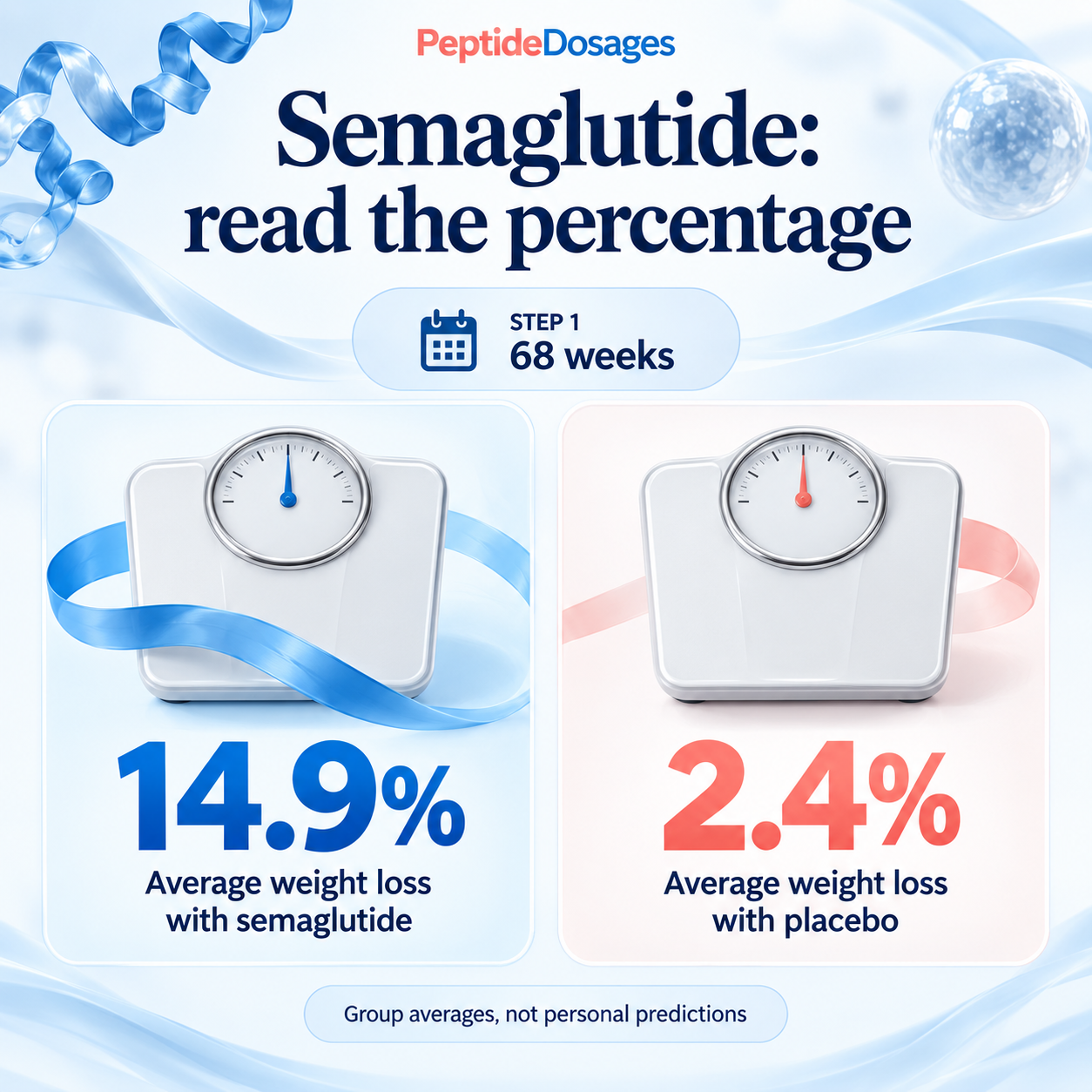
Semaglutide supports clinically meaningful weight reduction in people with overweight/obesity when used alongside lifestyle intervention. In the STEP 1 trial published in The New England Journal of Medicine[22], once-weekly semaglutide 2.4 mg was associated with a mean body-weight change of −14.9% at 68 weeks versus −2.4% with placebo. [23]

Semaglutide’s weight reduction tends to accumulate over time, not overnight. A JAMA Network Open analysis summarizing large randomized trials notes that semaglutide 2.4 mg trials showed roughly ~6% mean loss by week 12 and ~12% by week 28, emphasizing that early weeks are “setup,” while later months are where outcomes compound. [24]

Semaglutide can also deliver cardiovascular risk reduction in specific populations. In the SELECT trial, major adverse cardiovascular events occurred in 6.5% of the semaglutide group and 8.0% of the placebo group (hazard ratio 0.80) among people with established cardiovascular disease and overweight/obesity without diabetes. The FDA press announcement describes this result as the basis for the approved cardiovascular risk reduction indication for Wegovy in that population. [25]

In type 2 diabetes with elevated cardiovascular risk, semaglutide has shown cardiovascular safety and benefit signals in cardiovascular outcomes trials. The SUSTAIN‑6 trial reported a lower rate of the composite primary outcome with semaglutide versus placebo (hazard ratio 0.74). [26]

In real-world clinical practice, persistence matters. In a JAMA Network Open cohort study of patients receiving injectable semaglutide or liraglutide for obesity, outcomes at one year were strongly tied to persistent coverage; among semaglutide recipients with persistent coverage at one year, 61.0% achieved at least 10% weight loss. [27]

What happens when you stop semaglutide (the “rebound” reality)

Stopping semaglutide commonly leads to partial weight regain, and this has been studied—not just observed on social media.

In an extension of the STEP 1 trial, participants who discontinued semaglutide regained a substantial portion of lost weight over the following year; the published analysis reports semaglutide participants regained 11.6 percentage points of lost weight versus 1.9 in placebo participants, with many cardiometabolic improvements trending back toward baseline. [28]

A related randomized trial (STEP 4) found that continuing semaglutide after an initial run-in period led to further weight loss, while switching to placebo led to weight regain over the subsequent months. [29]

Key takeaway: Semaglutide works while it’s on board because it modifies appetite and intake behavior; when you remove the signal, biology tends to drift back. [30]

The safety baseline (you should know this before any “peptide” discussions)

Semaglutide products carry serious warnings and contraindications. Ozempic and Wegovy include a boxed warning about risk of thyroid C‑cell tumors observed in rodents, and both are contraindicated in patients with a personal or family history of medullary thyroid carcinoma (MTC) or in patients with Multiple Endocrine Neoplasia syndrome type 2 (MEN 2). [31]

Because semaglutide persists for weeks, labeling also emphasizes longer washout planning in certain scenarios. Ozempic labeling advises discontinuing in women at least 2 months before a planned pregnancy due to the long washout period for semaglutide. [32]

Semaglutide labels and safety pages also highlight clinically important risks: pancreatitis warning language, acute kidney injury risk in the setting of severe gastrointestinal symptoms and dehydration, and increased hypoglycemia risk when combined with insulin or sulfonylureas. [33]

In people with diabetes, another nuance matters: semaglutide’s trial program observed diabetic retinopathy complications more often in certain settings (notably SUSTAIN‑6), and subsequent analyses have explored whether rapid improvements in glucose control may contribute to early worsening in susceptible individuals. This is the kind of personalized risk that only a clinician can contextualize. [34]

“Who is semaglutide for?” in guideline language

Semaglutide is not “the answer for everyone,” but it is anchored in mainstream medical guidance for specific populations.

The American Diabetes Association[35] notes GLP‑1 receptor agonists and dual GIP/GLP‑1 agents are recommended options for people with type 2 diabetes, and the organization has publicly addressed concerns about compounded incretin products marketed directly to consumers during shortages. [36]

Obesity-focused guidance also emphasizes GLP‑1 therapies as part of a guideline-directed approach in eligible adults, reflecting that semaglutide is treated as a serious therapeutic tool—not a fringe trend. [37]

The “peptide community” misconception to drop immediately

A lot of online content treats semaglutide like a supplement-grade peptide you can source and self-direct. That framing is risky.

The FDA has published safety communications raising concerns about non‑FDA‑approved GLP‑1 drugs marketed for weight loss—emphasizing it cannot verify quality, safety, or efficacy of those products. It has also issued warnings about counterfeit Ozempic appearing in the U.S. drug supply chain. [38]

If your goal is health, the only defensible baseline is clinician supervision and a legitimate pharmacy supply chain—not “research-only” shortcuts. [39]

Step‑by‑Step / How‑To

Step One: Clarify the outcome you want (glucose, weight, or cardiovascular risk)

Semaglutide is used for multiple labeled outcomes, so define the goal first: type 2 diabetes glycemic control, chronic weight management, or cardiovascular risk reduction in specific populations. The product choice, monitoring priorities, and risk–benefit conversation change based on that goal. [40]

Step Two: Identify the exact semaglutide product (names are not interchangeable)

Semaglutide appears in different FDA-approved forms, and “semaglutide” alone is not a sufficient instruction set. Ozempic is labeled for type 2 diabetes (with certain cardiovascular risk reduction language), Rybelsus is oral semaglutide for type 2 diabetes, and Wegovy is labeled for chronic weight management (and cardiovascular risk reduction in certain adults). [41]

Step Three: Set expectations for timing (why “fast” isn’t the right yardstick)

Semaglutide’s most noticeable early change is often appetite and meal-size tolerance, but “headline outcomes” are measured over months. Trial summaries report steady weight reduction building from early weeks (e.g., mean losses around 6% by week 12 and 12% by week 28 in major semaglutide 2.4 mg trials), with the landmark STEP 1 outcome at week 68. [24]

If someone expects the end result in two weeks, they’ll either overcorrect behavior or declare “it doesn’t work” before the protocol has even unfolded. [42]

Step Four: Respect titration (it’s the built‑in side‑effect strategy)

Dose escalation schedules exist because gastrointestinal adverse reactions are common. Wegovy labeling includes multi-step escalation designed to reduce GI adverse reactions, and similar titration logic appears across semaglutide products. [43]

Skipping escalation is one of the most reliable ways to increase nausea and reduce adherence—an outcome that undermines the very benefit people are chasing. [44]

Step Five: Build a basic side-effect plan (GI first, hydration always)

The most frequent side effects across GLP‑1 receptor agonists—including semaglutide—are gastrointestinal (nausea, vomiting, diarrhea, constipation, abdominal discomfort). Reviews and labeling repeatedly emphasize GI effects as the dominant tolerability issue, which is why food pacing and hydration matter so much. [45]

If symptoms are severe, persistent, or escalating—especially severe abdominal pain—treat that as an urgent clinician conversation. Semaglutide labeling includes guidance tied to pancreatitis risk and other serious adverse events. [46]

Step Six: Check the interaction category that surprises people: oral meds + gastric emptying

Semaglutide can delay gastric emptying, and Ozempic prescribing information notes this may influence absorption of concomitantly administered oral medications. This doesn’t mean semaglutide “interacts with everything,” but it does mean people on narrow-therapeutic-index oral drugs should proactively discuss timing and monitoring with their clinician. [47]

Surgery and anesthesia are another scenario where delayed gastric emptying has become a practical consideration, and medical societies have issued guidance on perioperative management of GLP‑1 receptor agonists. [48]

Step Seven: Apply a supply-chain filter (counterfeit and non‑approved risk is documented)

The FDA has documented counterfeit Ozempic in the U.S. drug supply chain and has published repeated statements about risks from non‑FDA‑approved GLP‑1 products marketed directly to consumers. If a source cannot be verified through a licensed prescriber and pharmacy, you’re no longer evaluating “semaglutide”—you’re evaluating an unknown product. [49]

Step Eight: Plan for “maintenance thinking,” not a short sprint

Semaglutide outcomes are strongest when people can stay on therapy long enough to reach and hold a tolerable maintenance dose, and trial extensions show meaningful weight regain after discontinuation. Treat semaglutide as a long-term strategy discussion—like blood pressure medication—rather than a 30-day experiment. [50]

If you want a practical summary of the main trials, American College of Cardiology[51] provides clinician-facing writeups of STEP 1 and SELECT that match the key numbers above. [52]

Comparison / Alternatives (“Semaglutide vs X”)

Semaglutide vs tirzepatide: what’s the defining difference?

Semaglutide is a GLP‑1 receptor agonist, while tirzepatide is a dual GIP + GLP‑1 receptor agonist, meaning it activates two incretin pathways instead of one. That mechanism difference is the cleanest “one-sentence” comparison. [53]

In trials, both produce substantial weight loss, but published outcomes often show higher average weight reduction with tirzepatide in obesity populations. For example, a 2025 NEJM trial reported about 20.2% weight reduction at 72 weeks with tirzepatide in adults with obesity without diabetes, while semaglutide’s STEP 1 trial reported −14.9% mean change at 68 weeks for semaglutide 2.4 mg versus placebo. [54]

Semaglutide vs liraglutide: weekly vs daily and the outcome gap

Semaglutide and liraglutide are both GLP‑1 receptor agonists, but semaglutide is longer acting, while liraglutide is typically dosed daily. In the STEP 8 randomized clinical trial published in JAMA[55], mean weight change at 68 weeks was −15.8% with semaglutide versus −6.4% with liraglutide. [56]

For many people, daily dosing also creates an adherence tax. Even a “great” drug underperforms when the cadence doesn’t match the patient’s routine. [57]

Semaglutide vs DPP inhibitors: why incretin isn’t always the same

DPP‑4 inhibitors increase endogenous incretin hormone levels by reducing incretin breakdown, but they do not produce the same weight-loss magnitude as GLP‑1 receptor agonists. Reviews describe DPP‑4 inhibitors as generally weight neutral and more modest in effect compared to GLP‑1 receptor agonists. [58]

Semaglutide vs lifestyle-only: the most overlooked denominator

Semaglutide works best when lifestyle is treated as the platform, not the opponent. Trials like STEP 1 paired semaglutide with lifestyle intervention, and guidelines still place diet, activity, sleep, and behavior as foundational—even when pharmacotherapy is used. [59]

Comparison table (quick scan)

Option Mechanism Typical cadence Evidence signal (headline) Practical notes
Semaglutide GLP‑1 receptor agonist Weekly injection or daily tablet (product-dependent) STEP 1: −14.9% mean change at 68 wks Strong satiety/craving effects; GI effects common; long washout
Tirzepatide Dual GIP + GLP‑1 receptor agonist Weekly injection NEJM 2025: ~20.2% reduction at 72 wks Often higher mean loss; similar GI class themes
Liraglutide GLP‑1 receptor agonist Daily injection STEP 8: −6.4% at 68 wks Daily routine; generally less loss vs semaglutide
DPP‑4 inhibitors Reduce incretin breakdown Daily tablet Generally weight neutral Useful in T2D, not comparable for weight reduction
Lifestyle-first Nutrition/activity/sleep/behavior Daily habits Valuable, variable Foundation that supports every option

(Trial outcomes and mechanistic distinctions are drawn from primary trial publications and reviews.) [60]

Templates / Checklist / Example

The Label‑First Framework (copy‑ready checklist)

Use this checklist to keep your semaglutide research grounded in reality, especially if you’re coming from “peptide community” culture.

  • Clarify your goal: glucose control, weight reduction, or cardiovascular risk reduction (labels differ). [61]
  • Confirm the exact product name and FDA indication (Ozempic vs Rybelsus vs Wegovy). [62]
  • Recognize the long washout (half-life ~1 week; ~5 weeks present in circulation). [10]
  • Respect titration schedules to reduce GI adverse reactions. [63]
  • Prepare for common GI effects with meal pacing and hydration. [64]
  • Review boxed warnings and contraindications (MTC/MEN 2, hypersensitivity). [65]
  • Discuss hypoglycemia risk if combined with insulin or sulfonylureas. [66]
  • Watch for severe abdominal pain red flags tied to pancreatitis warnings. [67]
  • Check oral medication considerations tied to delayed gastric emptying. [68]
  • Verify supply chain legitimacy; counterfeit and non‑approved GLP‑1 products are a documented risk. [49]

The Three‑Metric Tracking Template (simple, non-clinical)

If you want to track progress like a pro (without obsessing), track these three metrics consistently.

A weekly average body weight trend captures the signal better than day-to-day noise. Long-term trials use week‑level outcomes (e.g., week 68) because weight changes are gradual and cumulative. [69]

A monthly waist measurement helps distinguish true fat loss from scale fluctuation. Obesity-trial reports include anthropometric and cardiometabolic changes, not just scale weight, reinforcing the value of multi-metric tracking. [70]

For people with diabetes or prediabetes, glucose-related tracking should be clinician-directed, but semaglutide’s mechanism and labeling make it clear that blood glucose monitoring can be relevant—especially when other glucose-lowering agents are involved. [71]

Mini example: why “units” talk causes chaos (information gain)

Many beginners come from peptide communities where doses are discussed in “units,” often tied to insulin syringes. Semaglutide labeling and trials describe doses in milligrams, while nonstandard or compounded products may vary in concentration—creating a conversion trap that can lead to dosing errors. That risk is part of why FDA communications emphasize concerns about non‑FDA‑approved GLP‑1 products marketed directly to consumers. [72]

If you’re learning semaglutide, anchor to the labeled product, labeled concentration, and clinician guidance—then translate into whatever measuring system your tools use. [65]

FAQs

Is semaglutide a peptide?

Semaglutide is a peptide-based drug because semaglutide is a GLP‑1 analogue designed to activate the GLP‑1 receptor. It is chemically modified to last far longer than native GLP‑1, which is rapidly degraded (about 1–2 minutes) by enzymes such as DPP‑4. That long-acting engineering supports weekly dosing in some semaglutide products. [73]

Is semaglutide the same thing as Ozempic?

Semaglutide is not the same thing as Ozempic because semaglutide is the active ingredient, while Ozempic is a specific branded injectable product containing semaglutide. Ozempic labeling includes use for type 2 diabetes glycemic control and cardiovascular risk reduction in certain adults with type 2 diabetes and established cardiovascular disease, while other semaglutide products (Wegovy, Rybelsus) have different labeled uses and forms. [74]

How does semaglutide work for weight loss?

Semaglutide works for weight loss because semaglutide activates GLP‑1 receptors that influence appetite, satiety, and eating behavior, leading many people to reduce energy intake. Controlled studies report reduced hunger, fewer cravings, improved control of eating, and lower ad libitum intake, and large trials such as STEP 1 show substantial average weight reduction over time when semaglutide is combined with lifestyle intervention. [75]

How long does semaglutide stay in your system?

Semaglutide stays in your system for weeks because semaglutide has an elimination half‑life of about one week, and prescribing information notes it can remain in circulation for around five weeks after the last dose. This long washout period shows up in planning—Ozempic labeling advises stopping at least two months before planned pregnancy due to the long washout period. [76]

What are the most common side effects of semaglutide?

The most common side effects of semaglutide are gastrointestinal because GLP‑1 receptor agonists commonly cause nausea, vomiting, diarrhea, constipation, and abdominal discomfort. That’s why product labels use gradual titration, and why clinicians often counsel meal pacing and hydration to improve tolerability. Severe or persistent symptoms—especially severe abdominal pain—require prompt medical evaluation. [77]

Are “non‑FDA‑approved” or compounded semaglutide products safe?

Non‑FDA‑approved or compounded semaglutide products are not automatically safe because the FDA has published concerns about non‑approved GLP‑1 drugs marketed for weight loss and has stated it cannot verify their quality, safety, or efficacy. The FDA has also warned about counterfeit Ozempic in the supply chain, reinforcing that sourcing and verification matter as much as the molecule name. [38]

Next Steps

Semaglutide is best understood as a long‑acting GLP‑1 signal that supports glucose control and appetite regulation—when used as a prescription medication under proper medical supervision. [78]

If you want to keep learning with a peptide‑friendly lens, PeptideDosages.com[79] publishes practical, educational breakdowns of semaglutide vial formats and measurement concepts (for education only—not medical instructions):

If you’re considering semaglutide for personal health, the safest next step is a clinician conversation that covers indication, contraindications, side effects, and legitimate sourcing through a licensed pharmacy. [80]


[1] [2] [3] [4] [11] [14] [15] [73] [78] highlights of prescribing – accessdata.fda.gov

https://www.accessdata.fda.gov/drugsatfda_docs/label/2025/213051Orig1s020%2C213051Orig1s021lbl.pdf?utm_source=chatgpt.com

[5] [6] [7] Glucagon-like peptide-1 and glucagon-like peptide-1 receptor …

https://pmc.ncbi.nlm.nih.gov/articles/PMC5401818/?utm_source=chatgpt.com

[8] The discovery and development of GLP-1 based drugs that …

https://www.pnas.org/doi/10.1073/pnas.2415550121?utm_source=chatgpt.com

[9] [45] [64] [77] GLP‐1RA‐induced delays in gastrointestinal motility – PMC

https://pmc.ncbi.nlm.nih.gov/articles/PMC11998891/?utm_source=chatgpt.com

[10] [18] [76] RYBELSUS tablets – accessdata.fda.gov

https://www.accessdata.fda.gov/drugsatfda_docs/label/2024/213051s018lbl.pdf?utm_source=chatgpt.com

[12] [47] [68] OZEMPIC (semaglutide) injection, for subcutaneous use

https://www.accessdata.fda.gov/drugsatfda_docs/label/2017/209637lbl.pdf?utm_source=chatgpt.com

[13] [75] The effect of semaglutide 2.4 mg once weekly on energy …

https://pmc.ncbi.nlm.nih.gov/articles/PMC7898914/?utm_source=chatgpt.com

[16] Clinical Consequences of Delayed Gastric Emptying With GLP …

https://academic.oup.com/jcem/article/110/1/1/7824836?utm_source=chatgpt.com

[17] [21] [31] [32] [40] [41] [61] [62] [65] [74] [80] Reference ID: 5676363 – accessdata.fda.gov

https://www.accessdata.fda.gov/drugsatfda_docs/label/2025/209637s035%2C209637s037lbl.pdf?utm_source=chatgpt.com

[19] [53] [54] [79] Tirzepatide as Compared with Semaglutide for the …

https://www.nejm.org/doi/full/10.1056/NEJMoa2416394?utm_source=chatgpt.com

[20] [46] https://www.accessdata.fda.gov/drugsatfda_docs/label/2025/215256s024lbl.pdf

https://www.accessdata.fda.gov/drugsatfda_docs/label/2025/215256s024lbl.pdf

[22] [38] [39] [51] [72] https://www.fda.gov/drugs/postmarket-drug-safety-information-patients-and-providers/fdas-concerns-unapproved-glp-1-drugs-used-weight-loss

https://www.fda.gov/drugs/postmarket-drug-safety-information-patients-and-providers/fdas-concerns-unapproved-glp-1-drugs-used-weight-loss

[23] [42] [59] [60] [69] [70] Once-Weekly Semaglutide in Adults with Overweight or Obesity

https://pubmed.ncbi.nlm.nih.gov/33567185/?utm_source=chatgpt.com

[24] Weight Loss Outcomes Associated With Semaglutide Treatment for …

https://pmc.ncbi.nlm.nih.gov/articles/PMC9486455/?utm_source=chatgpt.com

[25] Semaglutide and Cardiovascular Outcomes in Obesity …

https://pubmed.ncbi.nlm.nih.gov/37952131/?utm_source=chatgpt.com

[26] Semaglutide and Cardiovascular Outcomes in Patients …

https://www.nejm.org/doi/full/10.1056/NEJMoa1607141?utm_source=chatgpt.com

[27] [57] https://jamanetwork.com/journals/jamanetworkopen/fullarticle/2823644

https://jamanetwork.com/journals/jamanetworkopen/fullarticle/2823644

[28] [30] [50] https://pmc.ncbi.nlm.nih.gov/articles/PMC9542252/

https://pmc.ncbi.nlm.nih.gov/articles/PMC9542252/

[29] https://jamanetwork.com/journals/jama/fullarticle/2777886

https://jamanetwork.com/journals/jama/fullarticle/2777886

[33] [66] https://www.accessdata.fda.gov/drugsatfda_docs/label/2025/209637s025lbl.pdf

https://www.accessdata.fda.gov/drugsatfda_docs/label/2025/209637s025lbl.pdf

[34] https://pmc.ncbi.nlm.nih.gov/articles/PMC5888154/

https://pmc.ncbi.nlm.nih.gov/articles/PMC5888154/

[35] [49] https://www.fda.gov/drugs/drug-safety-and-availability/fda-warns-consumers-not-use-counterfeit-ozempic-semaglutide-found-us-drug-supply-chain

https://www.fda.gov/drugs/drug-safety-and-availability/fda-warns-consumers-not-use-counterfeit-ozempic-semaglutide-found-us-drug-supply-chain

[36] https://diabetes.org/newsroom/press-releases/american-diabetes-association-announces-statement-compounded-incretin

https://diabetes.org/newsroom/press-releases/american-diabetes-association-announces-statement-compounded-incretin

[37] https://pmc.ncbi.nlm.nih.gov/articles/PMC11623039/

https://pmc.ncbi.nlm.nih.gov/articles/PMC11623039/

[43] [63] HIGHLIGHTS OF PRESCRIBING INFORMATION These …

https://www.accessdata.fda.gov/drugsatfda_docs/label/2025/218316Orig1s000lbl.pdf?utm_source=chatgpt.com

[44] https://www.endocrinepractice.org/article/S1530-891X%2825%2900977-2/fulltext

https://www.endocrinepractice.org/article/S1530-891X%2825%2900977-2/fulltext

[48] https://www.asahq.org/about-asa/newsroom/news-releases/2024/10/new-multi-society-glp-1-guidance

https://www.asahq.org/about-asa/newsroom/news-releases/2024/10/new-multi-society-glp-1-guidance

[52] Semaglutide Treatment Effect in People With Obesity – STEP 1

https://www.acc.org/latest-in-cardiology/clinical-trials/2021/02/18/19/23/step-1?utm_source=chatgpt.com

[55] [56] https://pubmed.ncbi.nlm.nih.gov/35015037/

https://pubmed.ncbi.nlm.nih.gov/35015037/

[58] https://www.frontiersin.org/journals/endocrinology/articles/10.3389/fendo.2020.00178/full

https://www.frontiersin.org/journals/endocrinology/articles/10.3389/fendo.2020.00178/full

[67] https://www.ozempic.com/important-safety-information.html

https://www.ozempic.com/important-safety-information.html

[71] https://www.accessdata.fda.gov/drugsatfda_docs/label/2023/215256s007lbl.pdf

https://www.accessdata.fda.gov/drugsatfda_docs/label/2023/215256s007lbl.pdf