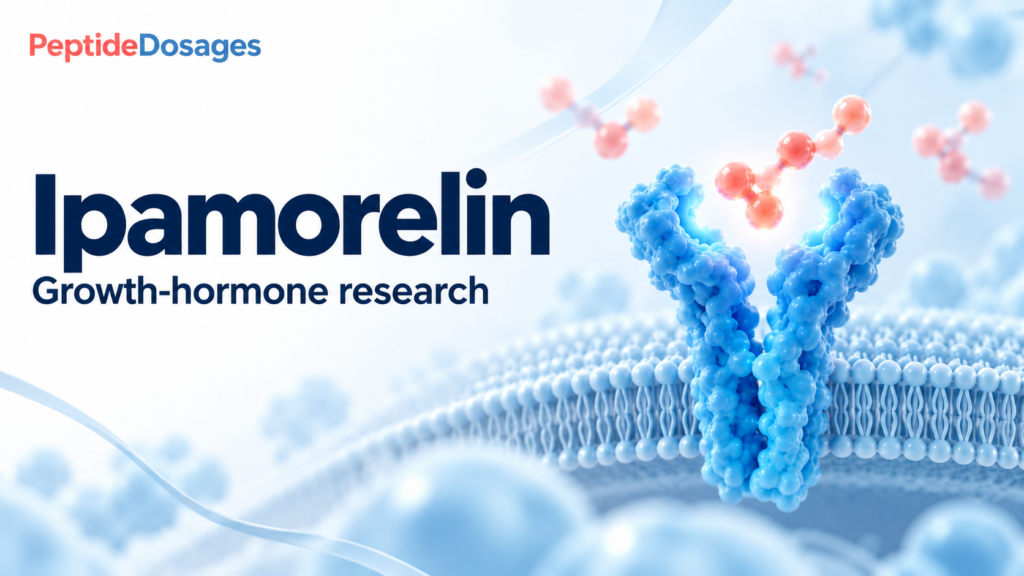
Ipamorelin peptide is an investigational growth hormone secretagogue discussed for its effects on growth hormone release, GH-axis signaling, body composition claims, and postoperative gastrointestinal research. This educational article reviews what published literature and regulatory sources say about ipamorelin, without giving personalized medical advice or recommending use.
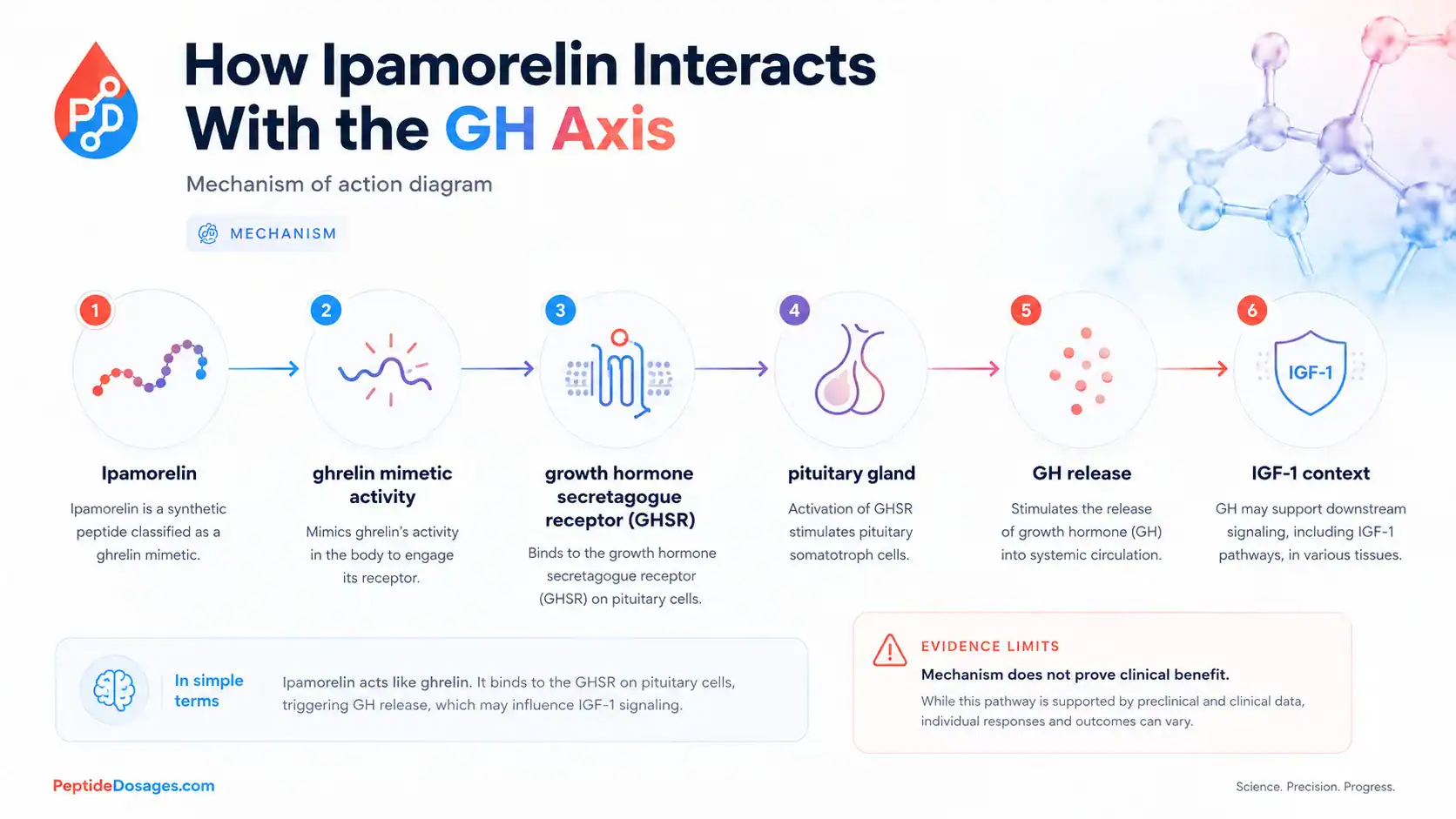
- Ipamorelin is a synthetic pentapeptide described by the National Cancer Institute as a ghrelin mimetic that binds the growth hormone secretagogue receptor and stimulates growth hormone release from the pituitary gland 1. citeturn553458view0
- Ipamorelin is discussed as a selective growth hormone secretagogue because early pharmacology work found GH release without the same cortisol and ACTH stimulation seen with some older growth hormone releasing peptides 2. citeturn267562view5
- Human research includes pharmacokinetic and pharmacodynamic studies in healthy volunteers and a phase 2 postoperative ileus trial, but these studies do not establish broad wellness, anti-aging, fat loss, or muscle growth benefits 3, 4. citeturn434591search2turn618793view0
- Ipamorelin has no FDA-approved drug product or approved labeled indication in the United States, and FDA compounding reviews have raised concerns about immunogenicity, aggregation, peptide impurities, and limited safety data for proposed injectable routes 5, 6. citeturn124515view0turn517549view0
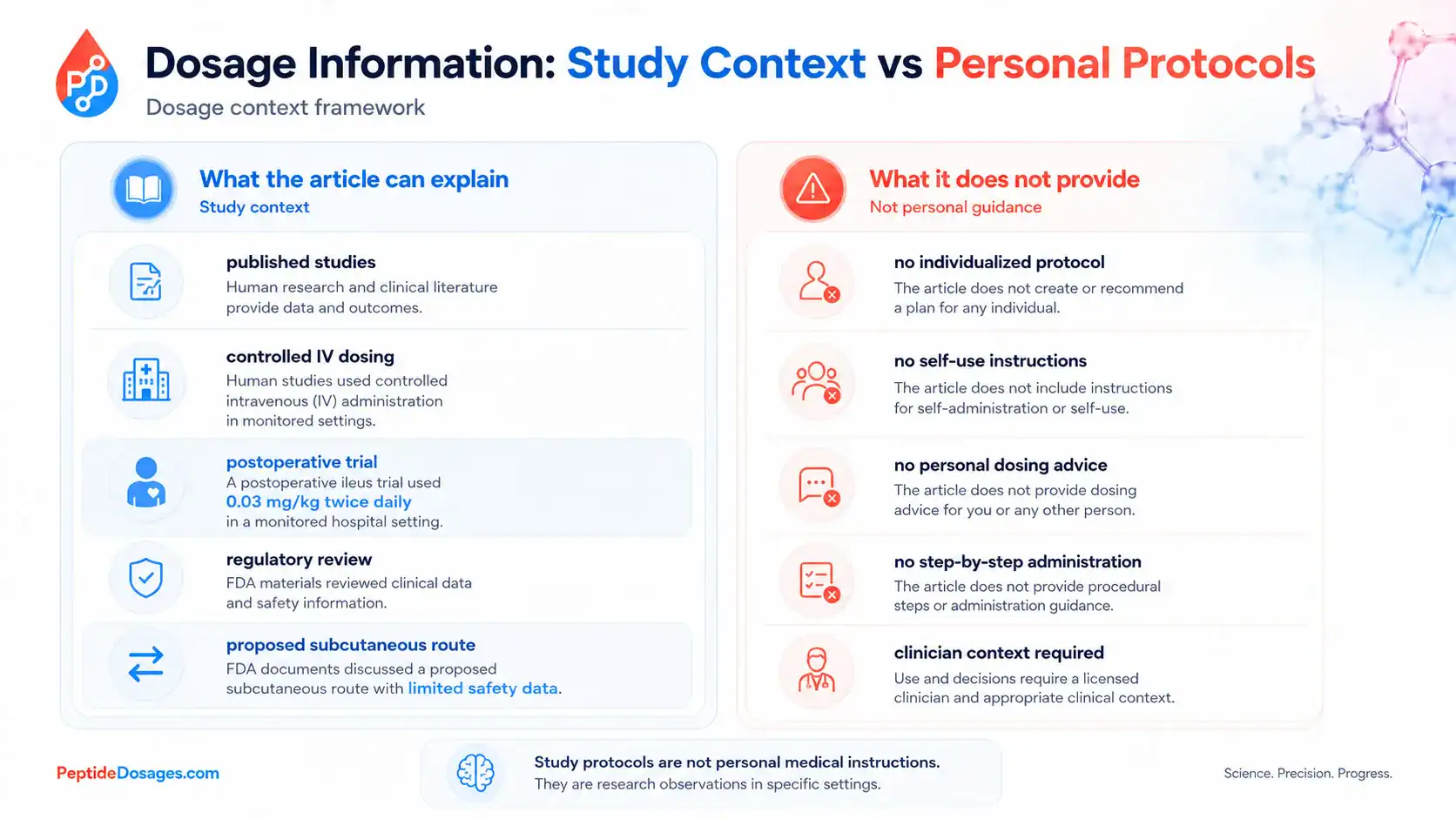
- Dosage information for ipamorelin should be interpreted as study context, not personal medical guidance. Published studies used controlled protocols such as intravenous infusion in healthy volunteers and postoperative dosing in a monitored clinical trial [3], [4]. citeturn434591search2turn618793view0
- Claims about better sleep, lean muscle, fat loss, tissue repair, energy, or healthy aging are evidence-sensitive. Some are biologically plausible through the GH and IGF-1 axis, but strong ipamorelin-specific human outcome data are limited 10, 12. citeturn607023view3turn819614search4
Fast Answer
Ipamorelin peptide is a synthetic growth hormone secretagogue that mimics ghrelin signaling and stimulates growth hormone release through the growth hormone secretagogue receptor [1], [2]. It is often searched for body composition, fat loss, muscle growth, sleep, recovery, and anti-aging claims, but published human evidence is limited. Ipamorelin is not FDA-approved, and FDA compounding reviews cite safety uncertainties, including peptide-related impurities, aggregation, immunogenicity, and limited data for proposed injectable use [5], [6]. citeturn553458view0turn267562view5turn124515view0turn517549view0
Evidence basis note: This page uses regulatory documents, drug labels, clinical studies, clinical-trial registry information, and peer-reviewed literature as its evidence base. Claims that are common online but not supported by reliable human data are treated as preliminary, unsupported, or unverified rather than established benefits.
What Is the Ipamorelin Peptide?
Ipamorelin is a synthetic pentapeptide growth hormone secretagogue studied for its ability to stimulate GH release through ghrelin-receptor signaling, rather than as an approved medication for wellness, body composition, or anti-aging use [1], [2]. citeturn553458view0turn267562view5
Peptide Classification as a Selective Growth Hormone Secretagogue
Ipamorelin belongs to the growth hormone secretagogue category, a class of compounds that stimulate growth hormone secretion through mechanisms distinct from administering synthetic human growth hormone directly. The National Cancer Institute describes ipamorelin as a pentapeptide and ghrelin mimetic that binds the growth hormone secretagogue receptor, also called GHSR [1]. citeturn553458view0
The word “selective” is important. In early pharmacology research, ipamorelin stimulated GH release in vitro and in vivo while showing less ACTH and cortisol activity than some earlier GHRP compounds at tested doses [2]. citeturn267562view5
How Ipamorelin Relates to Ghrelin and the Pituitary Gland
Ipamorelin relates to ghrelin because ghrelin is an endogenous hormone that activates the growth hormone secretagogue receptor, and ipamorelin was developed to mimic parts of that signaling pathway [1]. The pituitary gland is central because GH is released from pituitary somatotroph cells after upstream hypothalamic and receptor-mediated signals. citeturn553458view0
This GH-axis context explains why ipamorelin is often discussed alongside GHRH, IGF-1, CJC-1295, tesamorelin, and other growth hormone secretagogues. Those comparisons are useful for understanding mechanisms, but they do not prove that ipamorelin has the same clinical evidence or regulatory status as approved peptide drugs.
Why Ipamorelin Is Discussed in Peptide Therapy
Ipamorelin is discussed in peptide therapy because it can increase growth hormone release in controlled research settings, and growth hormone biology is linked to body composition, metabolism, bone, muscle, and quality-of-life outcomes in true adult growth hormone deficiency [10], 11. citeturn607023view3turn607023view4
That discussion requires caution. Evidence for diagnosing and treating adult GH deficiency comes from formal endocrine evaluation and approved therapies, not from online wellness protocols using unapproved peptides [10]. citeturn607023view3
How Does Ipamorelin Peptide Work?
Ipamorelin peptide works by activating the growth hormone secretagogue receptor, which can trigger pituitary growth hormone release and downstream IGF-1 signaling under studied conditions [1], [2]. citeturn553458view0turn267562view5
Ghrelin Receptor Agonist Activity
Ipamorelin acts as a ghrelin mimetic at the growth hormone secretagogue receptor, a receptor involved in GH release and expressed in the brain and other tissues [1]. This receptor-level activity is the pharmacologic reason ipamorelin is classified as a growth hormone secretagogue rather than as synthetic HGH. citeturn553458view0
A human pharmacokinetic-pharmacodynamic study modeled ipamorelin exposure and GH response after intravenous infusion in healthy male volunteers, showing that GH response was measurable in a controlled dose-escalation setting [3]. citeturn434591search2
Growth Hormone Pulses, GH Release, and IGF-1
Ipamorelin stimulates GH release rather than replacing GH directly [1], [2]. GH then influences IGF-1 production, especially through hepatic signaling, although GH and IGF-1 responses depend on dose, route, timing, age, endocrine status, and study population. citeturn553458view0turn267562view5
A review of growth hormone secretagogues notes that this drug class can promote pulsatile GH release, but also emphasizes that long-term, rigorously controlled studies remain limited for many secretagogues [12]. citeturn819614search4
Mechanism of Action: GH, GHRH, and Hormone Selectivity
Ipamorelin’s mechanism is best understood as GHSR-mediated GH stimulation that intersects with the broader GHRH and somatostatin-regulated growth hormone axis [1], [2]. citeturn553458view0turn267562view5
Growth Hormone Secretagogue Receptor Signaling
Growth hormone secretagogue receptor signaling is a receptor-mediated pathway that can increase pituitary GH secretion after activation by ghrelin-like compounds [1]. Ipamorelin was developed as an oligopeptide agonist in this pathway, with early evidence showing GH release in animal and laboratory models [2]. citeturn553458view0turn267562view5
Mechanism is not the same as clinical benefit. A compound can change a hormone biomarker, such as GH or IGF-1, without proving durable improvement in body composition, sleep quality, tissue repair, or energy levels.
Cortisol or Prolactin Effects Compared With Older GHRPs
Ipamorelin was described in early literature as more selective for GH release than some older growth hormone releasing peptides, including GHRP-6, because tested doses did not show the same ACTH or cortisol stimulation [2]. citeturn267562view5
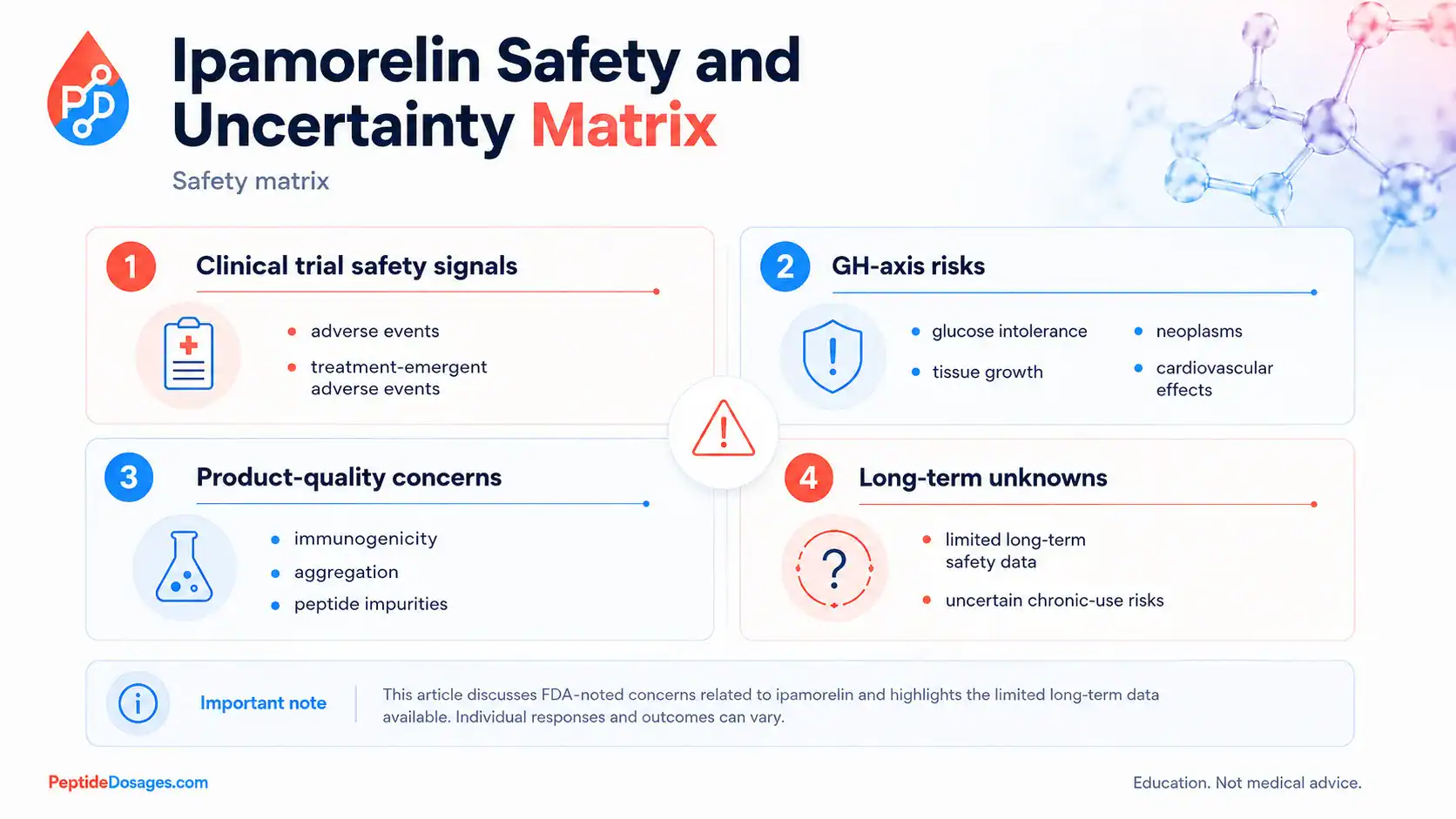
This selectivity does not mean ipamorelin has no endocrine risks. FDA reviewers have noted that products stimulating GH release can raise concerns related to glucose intolerance, diabetes risk, cardiovascular effects, tissue growth, neoplasms, and immune responses [5]. citeturn431355view2
What Is Ipamorelin Peptide Used For or Studied For?
Ipamorelin has been studied for GH release and postoperative ileus, but it is not FDA-approved for growth hormone deficiency, fat loss, muscle growth, anti-aging, sleep, or wellness use [4], [5], [6]. citeturn618793view0turn124515view0turn517549view0
Growth Hormone Deficiency and Clinical Research Context
Ipamorelin has been evaluated in the context of growth hormone stimulation, but adult growth hormone deficiency is a medical diagnosis that usually requires appropriate clinical context and GH stimulation testing unless there is a proven genetic or structural lesion [10]. citeturn607023view3
Guidelines on adult GH deficiency describe potential benefits of approved GH therapy in severe deficiency, including body composition and quality-of-life outcomes, but those recommendations do not establish ipamorelin as an approved treatment [10], [11]. citeturn607023view3turn607023view4
Body Composition, Visceral Fat, and Metabolic Endpoints
Ipamorelin is commonly discussed for body composition, visceral fat, lean muscle mass, and fat loss because GH and IGF-1 biology intersect with metabolism and tissue remodeling. The limitation is that ipamorelin-specific human outcome evidence for these endpoints is not comparable to approved-drug data.
Tesamorelin is a useful contrast. FDA labeling describes tesamorelin as a growth hormone releasing factor analog approved to reduce excess abdominal fat in adults with HIV and lipodystrophy, while also stating that it is not indicated for weight loss management 7. citeturn607023view0
Potential Benefits of Ipamorelin Peptide
Potential benefits of ipamorelin peptide are mostly inferred from GH-axis biology, early human hormone-response data, preclinical work, and online claims, not from strong long-term trials proving broad therapeutic outcomes [3], [4], [12]. citeturn434591search2turn618793view0turn819614search4
Benefits of Ipamorelin Commonly Discussed Online
Commonly discussed benefits of ipamorelin include fat loss, lean muscle, muscle growth, better sleep, recovery, tissue repair, energy, and anti-aging effects. These claims should be separated from the narrower published evidence showing GH release and limited clinical trial testing.
A practical evidence filter is helpful:
| Claim Area | What Has Been Studied | Evidence Level | What It Can and Cannot Show |
|---|---|---|---|
| GH release | Human volunteer PK/PD studies measured GH response after controlled infusion [3]. | Early human | Shows hormone response, not long-term clinical benefit. |
| Postoperative ileus | Phase 2 trial tested IV ipamorelin after bowel resection [4]. | Clinical, limited | Did not show statistically significant improvement in primary recovery endpoints. |
| Body composition | GH biology and approved GH-related therapies affect body composition in specific diagnosed conditions [10], [11]. | Indirect clinical | Does not prove ipamorelin improves body composition in general wellness use. |
| Fat loss and visceral fat | Tesamorelin has an approved visceral-fat indication in HIV lipodystrophy [7]. | Approved for tesamorelin, not ipamorelin | Useful comparison, but not transferable proof for ipamorelin. |
| Anti-aging and wellness | GH secretagogue claims appear in wellness contexts; long-term evidence is limited [11], [12]. | Unsupported or preliminary | Does not establish anti-aging benefit. |
Lean Muscle, Muscle Mass, and Muscle Growth Claims
Ipamorelin is often linked to lean muscle and muscle growth because GH and IGF-1 participate in anabolic signaling. That mechanism is biologically plausible, but ipamorelin-specific human trials have not established a reliable muscle-building outcome for healthy adults.
Adult GH deficiency literature shows that approved GH replacement can affect body composition in confirmed severe deficiency, but the Endocrine Society guideline is not an endorsement of ipamorelin for healthy people or non-diagnosed wellness use [10]. citeturn607023view3
Fat Loss, Body Weight, and Body Composition Changes
Ipamorelin fat loss claims remain evidence-limited. The strongest approved-drug comparison in this lane is tesamorelin for excess abdominal fat in HIV-associated lipodystrophy, not ipamorelin for general fat loss or body weight management [7]. citeturn607023view0
This distinction matters for readers. A related peptide drug can have an approved indication while ipamorelin remains unapproved and less studied for the same general outcome category.
What Sleep, Recovery, Wellness, and Healthy Aging Claims Are Made?
Sleep, recovery, wellness, and healthy aging claims around ipamorelin are common but not strongly established by long-term ipamorelin-specific human trials [11], [12]. citeturn607023view4turn819614search4
Better Sleep, Sleep Quality, and Energy Levels
Growth hormone secretagogues have been discussed in relation to sleep and GH pulsatility, but class-level discussion is not the same as proof that ipamorelin improves sleep quality or energy levels in typical users [12]. citeturn819614search4
Sleep and energy are also nonspecific outcomes. They can be affected by endocrine disease, medications, nutrition, sleep disorders, stress, and other medical conditions that require diagnosis rather than peptide self-experimentation.
Tissue Repair and Regenerative Medicine Claims
Tissue repair and regenerative medicine claims for ipamorelin are largely mechanistic or extrapolated from GH biology. Preclinical work can help explain pathways, but it cannot establish human tissue-repair benefit by itself.
The same caution applies to “recovery” claims. A measurable GH pulse does not automatically translate into faster healing, improved injury recovery, or better clinical outcomes.
Why Anti-Aging Benefits Need Evidence Grading
Ipamorelin anti-aging claims should be treated as unsupported unless tied to specific, high-quality human outcomes. Endotext explicitly notes that GH use for sports enhancement and anti-aging is strongly discouraged in adult GH deficiency management discussions [11]. citeturn607023view4
Healthy aging is not the same as hormone elevation. The safest evidence-based question is whether a claim is supported by approved labeling, controlled human studies, or only mechanistic reasoning.
What Does Human Research Say About Ipamorelin?
Human research shows that ipamorelin can stimulate GH release in controlled study settings and has been tested in postoperative ileus, but the clinical evidence base remains narrow [3], [4], 16. citeturn434591search2turn618793view0turn553458view3
Early Human Studies and Clinical Trial Endpoints
A pharmacokinetic-pharmacodynamic study in healthy male volunteers examined 15-minute intravenous infusions across five dose levels: 4.21, 14.02, 42.13, 84.27, and 140.45 nmol/kg [3]. That study supports GH-response modeling, not claims about fat loss, muscle growth, sleep, or anti-aging. citeturn434591search2
A later multicenter, randomized, double-blind, placebo-controlled proof-of-concept trial studied ipamorelin for postoperative ileus after bowel resection [4]. DrugBank also lists a completed phase 2 trial for ipamorelin in postoperative ileus, identified as NCT00672074 [16]. citeturn618793view0turn553458view3
GH Levels, IGF-1, and Dose-Response Findings
Human volunteer modeling showed that ipamorelin exposure could be linked to GH response after controlled IV infusion [3]. The study design supports dose-response interpretation for a hormone biomarker, not a general therapeutic dosing protocol. citeturn434591search2
GH and IGF-1 also have safety implications. FDA reviewers have noted class-related concerns for products that stimulate GH release, including glucose intolerance, tissue growth, neoplasms, cardiovascular effects, and immunogenicity [5]. citeturn431355view2
Study Size, Duration, and Outcome Limitations
The postoperative ileus study enrolled 117 patients, with 114 analyzed, and used IV ipamorelin 0.03 mg/kg twice daily after surgery until the first tolerated meal, hospital discharge, or postoperative day 7 [4]. The median time to first tolerated meal was 25.3 hours with ipamorelin and 32.6 hours with placebo, but the difference was not statistically significant [4]. citeturn618793view0
The study reported treatment-emergent adverse events in 87.5% of ipamorelin patients and 94.8% of placebo patients, which suggests tolerability in that specific inpatient trial but does not establish safety for long-term outpatient peptide therapy [4]. citeturn618793view0
What Does Preclinical Evidence Suggest?
Preclinical evidence suggests that ipamorelin can influence GH secretion, gastric motility, and growth-related endpoints in animal models, but animal findings cannot be treated as established human benefits 13, 14. citeturn425543search15turn948100search11
Animal and In Vitro Findings Related to GH Secretion
Early pharmacology research found that ipamorelin had GH-releasing activity in vitro and in vivo and acted through a GHRP-like receptor pathway [2]. Rat research also evaluated subcutaneous ipamorelin over 15 days and reported effects on growth hormone release and longitudinal bone growth endpoints [14]. citeturn267562view5turn948100search11
A rodent postoperative ileus model reported that ipamorelin, described as a ghrelin mimetic, accelerated gastric emptying in that model [13]. This was one rationale for later clinical testing in postoperative ileus. citeturn425543search15
Translational Limits From Models to Human Outcomes
Preclinical models are useful for mechanism and hypothesis generation. They are weaker for predicting human wellness outcomes because dose scaling, route of administration, disease model, species biology, and endpoint selection can all change how results translate.
For ipamorelin, the gap is clear: animal and receptor data support biological activity, while human outcome data remain limited and do not establish broad use for fat loss, anti-aging, muscle growth, or tissue repair.
What Dosage Has Been Studied or Commonly Cited?
Ipamorelin dosage information should be limited to published research protocols and regulatory review context because there is no FDA-approved ipamorelin label that defines an approved dose [5], [6]. citeturn124515view0turn517549view0
What Dosage Has Been Used in Published Studies?
Published human research has used controlled doses under study supervision. In healthy volunteers, ipamorelin was given by 15-minute IV infusion at 4.21 to 140.45 nmol/kg in a pharmacokinetic-pharmacodynamic study [3]. In the postoperative ileus trial, ipamorelin was given intravenously at 0.03 mg/kg twice daily after bowel resection until a defined recovery or stopping point [4]. citeturn434591search2turn618793view0
FDA’s compounding review also discussed a nominated proposed concentration of 2000 mcg/mL for subcutaneous injection, while noting the absence of adequate safety data for the proposed route and broader peptide-related concerns [5]. citeturn124515view0
Commonly Cited Protocol Ranges and Their Limits
Commonly cited ipamorelin protocol ranges in wellness settings should not be treated as approved or evidence-based personal dosing. Many such ranges are derived from clinic or internet practice patterns, not FDA-approved labeling or strong human outcome trials.
The most defensible educational approach is to distinguish published study dosing from personal medical instructions. Study protocols describe what researchers tested; they do not tell an individual reader what to take.
Body Weight, Frequency, and Timing Considerations
Body weight, frequency, timing, route, renal and hepatic status, endocrine diagnosis, glucose metabolism, and concurrent therapies can all affect interpretation of GH-axis interventions. Published ipamorelin studies used defined schedules in monitored populations, not generalized self-directed protocols [3], [4]. citeturn434591search2turn618793view0
For personal decisions, readers should discuss endocrine history, goals, alternatives, risks, and monitoring with a licensed clinician rather than applying study doses outside their original context.
How Are Reconstitution and Administration Discussed?
Reconstitution and administration are best discussed as educational concepts for understanding study protocols, not as step-by-step instructions for personal peptide use [5], [6]. citeturn124515view0turn517549view0
Subcutaneous Injection as a Studied Route
Ipamorelin has been studied intravenously in key human studies, while FDA’s compounding review described proposed subcutaneous use and specifically noted limited safety data for that proposed route [3], [4], [5]. citeturn434591search2turn618793view0turn124515view0
Subcutaneous administration is relevant because many peptide discussions involve injection routes, but route matters. IV inpatient dosing, subcutaneous outpatient use, and animal-model dosing are not interchangeable.
Reconstitution, Concentration, and Calculation Concepts
Reconstitution changes concentration, and concentration determines how much solution corresponds to a given mass of peptide. For safety reasons, this article does not provide step-by-step preparation instructions or personal dosing calculations.
The medically responsible point is that concentration, sterility, stability, vial contents, excipients, route, and dose accuracy all affect risk. FDA reviewers specifically identified peptide impurities, aggregation, and immunogenicity as concerns in compounding evaluations [5], [6]. citeturn124515view0turn517549view0
Why Administration Information Is Not Personal Medical Advice
Administration details from literature explain how a study was conducted. They do not create a safe personal protocol.
This distinction is especially important for unapproved peptides. FDA’s Category 2 list notes significant safety concerns for ipamorelin acetate, including immunogenicity, aggregation, peptide-related impurities, unnatural amino acids, serious adverse events reported with IV use for gastric motility, and lack of safety information for other injectable routes [6]. citeturn517549view0
What Side Effects and Safety Issues Are Reported?
Ipamorelin safety information includes clinical-trial adverse events, FDA-reviewed reports, and theoretical GH-axis concerns, but long-term safety for unapproved outpatient use is not established [4], [5], [6]. citeturn618793view0turn124515view0turn517549view0
Reported Adverse Effects and Tolerability Signals
In the postoperative ileus trial, treatment-emergent adverse events occurred in 87.5% of ipamorelin patients and 94.8% of placebo patients, and the authors did not report a statistically significant primary efficacy advantage [4]. This safety signal applies to that monitored surgical population and IV protocol only. citeturn618793view0
FDA’s review of ipamorelin-related substances listed adverse events reported in submitted or reviewed materials, including hypokalemia, insomnia, hyperglycemia, nausea, vomiting, abdominal distention, and deaths for which causality was unclear [5]. citeturn431355view2
Hormone-Related Risks From Increasing GH Levels
Increasing GH levels can have metabolic and tissue-growth implications. FDA reviewers noted concerns for GH-release stimulators that include glucose intolerance, diabetes, tissue growth, neoplasms, cardiovascular effects, and immunogenicity [5]. citeturn431355view2
Approved somatropin labeling also illustrates why GH-axis therapies require medical caution. GENOTROPIN labeling lists contraindications such as acute critical illness, active malignancy, diabetic retinopathy, hypersensitivity, and other specific high-risk settings 8. citeturn607023view2
Injection-Site and Allergic-Reaction Considerations
Injection-related risks can include local reactions, contamination risk, hypersensitivity, dose error, and problems from product quality. Ipamorelin-specific long-term injection-site safety is not established by an FDA-approved label.
FDA’s compounding risk language is relevant here because compounded peptide preparations may vary in purity, aggregation, stability, and immune response risk [5], [6]. citeturn124515view0turn517549view0
What Contraindications, Cautions, and Interactions Matter?
Ipamorelin has no FDA-approved label defining formal contraindications or drug interactions, so caution should be guided by GH-axis risks, endocrine history, pregnancy status, cancer history, glucose metabolism, and concurrent medications [5], [8], [10]. citeturn124515view0turn607023view2turn607023view3
Endocrine, Metabolic, Cancer-History, and Pregnancy Considerations
People with endocrine disorders, diabetes risk, active or prior malignancy, pituitary disease, pregnancy, breastfeeding, or unexplained symptoms should not interpret ipamorelin content as a substitute for medical evaluation. Approved GH labels and endocrine guidelines show that GH-axis interventions are not casual wellness tools [8], [10]. citeturn607023view2turn607023view3
Because ipamorelin lacks an approved label, special populations are not well characterized. That absence of labeling is itself a safety limitation.
Drugs or Therapies That May Affect Growth Hormone and IGF-1
Concurrent use of growth hormone, secretagogues, GHRH analogs, glucocorticoids, diabetes medications, sex-hormone therapies, and other endocrine treatments can change risk interpretation. Ipamorelin-specific interaction data are limited, so medication review with a clinician is part of responsible evaluation.
This is not just theoretical. FDA reviewers specifically noted concern for GH-release stimulators in relation to metabolic and tissue-growth effects [5]. citeturn431355view2
How Does Ipamorelin Compare With CJC-1295, Tesamorelin, and Related Peptides?
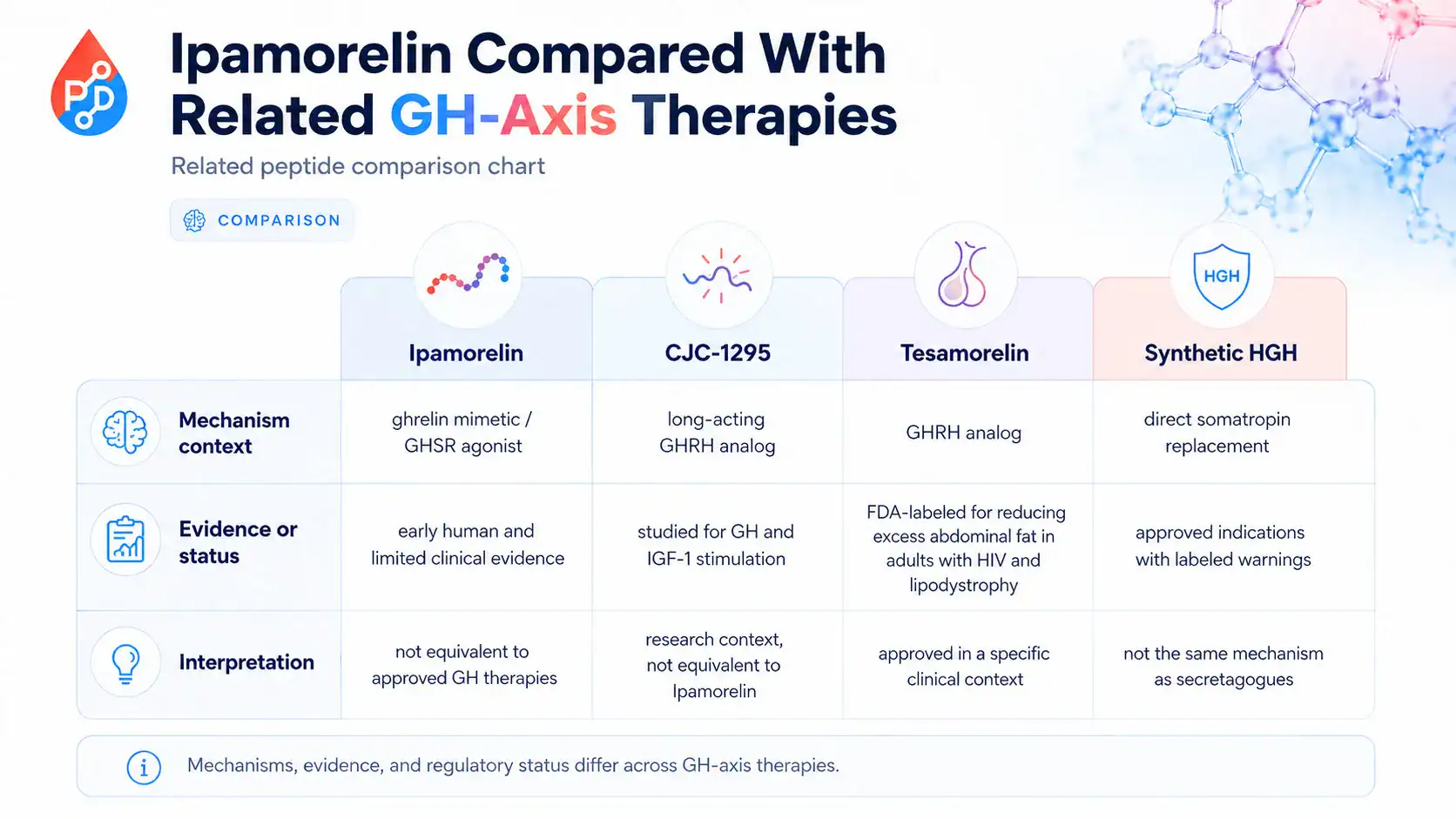
Ipamorelin differs from CJC-1295, tesamorelin, GHRP-6, and synthetic HGH by mechanism, evidence level, approval status, and clinical context [7], 15. citeturn607023view0turn475520search1
| Therapy or Peptide | Mechanism Context | Evidence or Status | Key Interpretation |
|---|---|---|---|
| Ipamorelin | Ghrelin mimetic and GHSR agonist [1]. | Early human GH-response data and limited phase 2 clinical testing [3], [4]. | Not FDA-approved; broad wellness claims are not established. |
| CJC-1295 | Long-acting GHRH analog that stimulates GH and IGF-1 [15]. | Human studies reported prolonged GH and IGF-1 stimulation after subcutaneous dosing [15]. | Mechanistically related but not equivalent to ipamorelin. |
| Tesamorelin | GHRF analog [7]. | FDA-labeled for reducing excess abdominal fat in adults with HIV and lipodystrophy [7]. | Approved for a specific indication, not general weight loss. |
| Synthetic HGH | Direct somatropin replacement [8]. | Approved for specific pediatric and adult indications, with contraindications and warnings [8]. | Different mechanism and regulatory status from secretagogues. |
CJC-1295 and Ipamorelin as a Peptide Combination
CJC-1295 and ipamorelin are often discussed as a peptide combination because CJC-1295 acts through the GHRH side of the axis, while ipamorelin acts through GHSR signaling. A controlled study of CJC-1295 reported sustained dose-dependent GH and IGF-1 increases after subcutaneous administration in healthy adults [15]. citeturn475520search1
Combination logic is mechanistic, not proof of clinical benefit. Combining two GH-axis agents could also increase monitoring complexity and risk.
Tesamorelin and Approved-Drug Comparison Points
Tesamorelin is a GHRF analog with FDA-labeled use for reduction of excess abdominal fat in adults with HIV and lipodystrophy [7]. Its label also states that long-term cardiovascular safety has not been established and that tesamorelin is not indicated for weight loss management [7]. citeturn607023view0
This comparison helps readers understand regulatory evidence. Tesamorelin has approved labeling for a specific population and indication; ipamorelin does not.
Synthetic HGH Versus Secretagogue Approaches
Synthetic HGH, such as somatropin, provides exogenous growth hormone. Secretagogues such as ipamorelin stimulate endogenous GH release through receptor-mediated signaling [1], [8]. citeturn553458view0turn607023view2
The safety frameworks differ, but both involve the GH and IGF-1 axis. That is why contraindications, glucose effects, malignancy history, and endocrine diagnosis matter.
What Is the FDA, Compounding, and Regulatory Status?
Ipamorelin is not an FDA-approved drug in the United States, and FDA compounding materials identify ipamorelin acetate among bulk substances with significant safety concerns [5], [6]. citeturn124515view0turn517549view0
Is Ipamorelin Peptide FDA-Approved?
Ipamorelin peptide is not FDA-approved for growth hormone deficiency, postoperative ileus, body composition, fat loss, anti-aging, muscle growth, sleep, or wellness use. FDA PCAC materials state that neither ipamorelin acetate nor ipamorelin free base is a component of an FDA-approved drug and that there is no USP or NF monograph for the substances [5]. citeturn124515view0
For athletes, regulatory context extends beyond FDA status. The World Anti-Doping Agency’s 2026 Prohibited List includes growth hormone secretagogues such as ipamorelin under prohibited substances 17. citeturn606588search2
Compounding Pharmacies and Unapproved Peptide Concerns
FDA’s Category 2 compounding page lists ipamorelin acetate under substances that may present significant safety risks, citing immunogenicity, aggregation, peptide-related impurities, unnatural amino acids, serious adverse events including death with IV use for gastric motility, and lack of safety information for other injectable routes [6]. citeturn517549view0
Regulatory status matters because approved medicines are evaluated for a specific indication, dose, route, label, manufacturing quality, and risk profile. Unapproved peptide use does not have the same evidentiary or regulatory foundation.
What Evidence Gaps and Clinician Discussion Points Remain?
The biggest evidence gaps for ipamorelin involve long-term safety, outpatient use, body composition outcomes, anti-aging claims, product quality, dose standardization, and comparative benefit versus approved alternatives [5], [6], [12]. citeturn124515view0turn517549view0turn819614search4
What Remains Unknown About Long-Term Safety?
Long-term safety of ipamorelin remains unclear because the available human evidence is narrow, and FDA reviewers noted a lack of clinical studies adequately assessing immunogenicity, aggregation-related risk, and proposed subcutaneous administration [5]. citeturn431355view1
Unknowns include repeated-use effects on IGF-1, glucose metabolism, edema, tissue growth, malignancy risk, cardiovascular outcomes, fertility-related hormones, and interactions with other endocrine therapies. These gaps should weigh heavily in any clinical discussion.
Questions to Discuss Before Any Peptide Therapy
A clinician discussion about ipamorelin should focus on diagnosis, evidence, risks, alternatives, monitoring, and regulatory status rather than on internet protocols.
Practical checklist for a clinician conversation:
- Is there a confirmed endocrine diagnosis, such as adult growth hormone deficiency, that warrants formal evaluation?
- Are symptoms being attributed to low GH actually explained by sleep disorders, medications, thyroid disease, nutrition, depression, stress, or another condition?
- What is the evidence level for the intended outcome: approved use, clinical evidence, early human evidence, preclinical evidence, or unsupported claim?
- What are the risks related to glucose metabolism, cancer history, pituitary disease, cardiovascular history, pregnancy, breastfeeding, or current medications?
- Are approved alternatives, such as labeled GH therapies or tesamorelin for its specific indication, more appropriate to discuss?
- What monitoring would be needed for IGF-1, glucose, adverse effects, and clinical response?
- How does regulatory status affect product quality, sterility, dose accuracy, and legal risk?
The safest way to interpret ipamorelin peptide is through evidence quality, regulatory status, safety data, and clinician-guided decision-making. The strongest conclusions come from approved labeling and controlled human studies; weaker claims about fat loss, muscle growth, sleep, recovery, and anti-aging should be treated cautiously.
REFERENCES
- National Cancer Institute. Ipamorelin. NCI Drug Dictionary.
- Raun K, Hansen BS, Johansen NL, et al. Ipamorelin, the first selective growth hormone secretagogue. European Journal of Endocrinology. 1998. PMID: 9849822.
- Gobburu JVS, Agersø H, Jusko WJ, Ynddal L. Pharmacokinetic-Pharmacodynamic Modeling of Ipamorelin, a Growth Hormone Releasing Peptide, in Human Volunteers. Pharmaceutical Research. 1999;16:1412–1416. DOI: 10.1023/A:1018955126402.
- Beck DE, Sweeney WB, McCarter MD; Ipamorelin 201 Study Group. Prospective, randomized, controlled, proof-of-concept study of the ghrelin mimetic ipamorelin for the management of postoperative ileus in bowel resection patients. International Journal of Colorectal Disease. 2014;29:1527–1534. DOI: 10.1007/s00384-014-2030-8. PMID: 25331030.
- U.S. Food and Drug Administration. October 29, 2024 Meeting of the Pharmacy Compounding Advisory Committee: Ipamorelin-related bulk drug substances. FDA. 2024.
- U.S. Food and Drug Administration. Certain Bulk Drug Substances for Use in Compounding that May Present Significant Safety Risks. FDA. Current as of April 22, 2026.
- DailyMed. EGRIFTA SV—tesamorelin kit. U.S. National Library of Medicine.
- DailyMed. GENOTROPIN—somatropin kit. U.S. National Library of Medicine.
- DailyMed. ALVIMOPAN capsule. U.S. National Library of Medicine.
- Endocrine Society. Evaluation and Treatment of Adult Growth Hormone Deficiency. Clinical Practice Guideline. 2011.
- Feldt-Rasmussen U, Klose M. Adult Growth Hormone Deficiency—Clinical Management. Endotext. 2022.
- Sigalos JT, Pastuszak AW. The Safety and Efficacy of Growth Hormone Secretagogues. Sexual Medicine Reviews. 2018;6(1):45–53. PMID: 28400207.
- Greenwood-Van Meerveld B, et al. Efficacy of ipamorelin, a ghrelin mimetic, on gastric dysmotility in a rodent model of postoperative ileus. Journal of Experimental Pharmacology. 2012;4:149–155. PMID: 27186127.
- Johansen PB, et al. Ipamorelin, a new growth-hormone-releasing peptide, induces longitudinal bone growth in rats. PubMed-indexed article. 1999. PMID: 10373343.
- Teichman SL, Neale A, Lawrence B, et al. Prolonged Stimulation of Growth Hormone and Insulin-Like Growth Factor I Secretion by CJC-1295, a Long-Acting Analog of Growth Hormone-Releasing Hormone, in Healthy Adults. Journal of Clinical Endocrinology & Metabolism. 2006;91(3):799–805. DOI: 10.1210/jc.2005-1536.
- DrugBank. Ipamorelin Completed Phase 2 Trials for Ileus Treatment. DrugBank clinical trials database.
- World Anti-Doping Agency. 2026 Prohibited List. WADA. 2026.
FAQs
What is Ipamorelin peptide used for?
Ipamorelin peptide is mainly discussed as an investigational growth hormone secretagogue, not as an FDA-approved treatment. Published research has examined its ability to stimulate growth hormone release and its possible role in postoperative ileus, but it is not approved for wellness, anti-aging, fat loss, muscle growth, or sleep improvement [1], [4], [5]. Therapeutic use should be interpreted through clinical evidence, regulatory status, and clinician-guided evaluation.
How does Ipamorelin work?
Ipamorelin works by mimicking ghrelin signaling at the growth hormone secretagogue receptor, which can stimulate growth hormone release from the pituitary gland [1], [2]. This mechanism may affect GH and IGF-1 signaling, but a hormone response does not automatically prove improved patient outcomes. Claims about natural growth hormone production, body composition, recovery, or metabolism need evidence grading rather than assumption.
What are the potential benefits of Ipamorelin therapy?
Potential benefits of Ipamorelin therapy are usually described around GH release, body composition, recovery, sleep, metabolism, and healthy aging, but most broad benefit claims remain evidence-limited. Early human studies measured GH response, while a postoperative ileus trial tested a specific clinical setting [3], [4]. Claims that it can improve body composition, healing, or sleep should be treated as preliminary unless supported by stronger human studies.
What side effects or downsides can Ipamorelin cause?
Side effects and downsides of Ipamorelin may include study-reported adverse events, hormone-related risks, and uncertainty around unapproved or compounded products. FDA review materials discussed concerns such as glucose intolerance, tissue growth, neoplasms, cardiovascular effects, immunogenicity, aggregation, and peptide impurities [5], [6]. Injection-site reactions, allergic reaction risk, and incomplete long-term safety data should be discussed with a licensed clinician.
How is Ipamorelin administered, and what dosage information exists?
Ipamorelin administration and dosage information should be understood from published studies, not as a personal protocol. Human research has used monitored intravenous dosing, including a postoperative ileus study using 0.03 mg/kg twice daily in a hospital setting [4]. FDA materials also discussed proposed subcutaneous injection but noted limited safety data for that route [5]. Dose, route of administration, and monitoring depend on clinical context.
Is Ipamorelin safe and FDA-approved?
Ipamorelin is not FDA-approved, and its safety is not established for general peptide therapy, body composition, anti-aging, or wellness use [5], [6]. Regulatory status matters because approved and unapproved peptides are evaluated differently for indication, manufacturing quality, dosing, labeling, and safety. Readers should ask a clinician about contraindications, drug interactions, diagnosis, approved alternatives, and whether the evidence supports the intended clinical use.
Contributing Authors
The following authors are recognized for published research that helped shape the scientific and clinical context discussed in this article.
Kirsten Raun
Author profile: Google Scholar
Kirsten Raun is a scientific author whose published work is directly relevant to the pharmacology of Ipamorelin peptide and related growth hormone secretagogue research. Her publications help frame the article’s discussion of ghrelin-receptor activity, GH release, selectivity, and the distinction between early pharmacology findings and broader therapeutic claims. The selected studies are useful for understanding Ipamorelin’s original characterization and the wider development of related GH secretagogue compounds.
Selected publications:
- Ipamorelin, the first selective growth hormone secretagogue — European Journal of Endocrinology, 1998. PMID: 9849822
- Pharmacological characterisation of a new oral GH secretagogue, NN703 — European Journal of Endocrinology, 1999. PMID: 10427162
Joga Gobburu
Author profile: University of Maryland School of Pharmacy
Joga Gobburu is a published pharmacometrics and clinical pharmacology author whose work is relevant to the article’s interpretation of Ipamorelin pharmacokinetics, pharmacodynamics, dose-response context, and evidence limitations. His Ipamorelin publication directly examined PK/PD modeling in human volunteers, while his broader modeling work provides context for interpreting drug, dose, and trial evidence without converting study protocols into personal medical recommendations.
Selected publications:
- Pharmacokinetic-pharmacodynamic modeling of ipamorelin, a growth hormone releasing peptide, in human volunteers — Pharmaceutical Research, 1999. PMID: 10496658
- Quantitative disease, drug, and trial models — Annual Review of Pharmacology and Toxicology, 2009. PMID: 18851702
PUBLISHING FIELDS
- SEO Title: Ipamorelin Peptide: Benefits, Dosage, Safety
- Meta Description: Ipamorelin peptide guide to uses, GH release, dosage context, side effects, safety, FDA status, and evidence limits.
- Suggested URL Slug: /ipamorelin-peptide
- Page Type: Therapeutic Peptide Educational Article
- ArticleFormat: Therapeutic Peptide Educational Guide
- TargetPeptide: Ipamorelin
- MainKeyword: ipamorelin peptide
- CanonicalKeyword: Ipamorelin peptide
- ExactKeywordVariant: ipamorelin peptide
- AliasTerms: ipamorelin, growth hormone releasing peptide, selective growth hormone secretagogue
- PeptideCategory: Growth Hormone Secretagogue
- Primary Search Intent: Therapeutic informational
- Secondary Keywords: Ipamorelin benefits, Ipamorelin dosage, Ipamorelin side effects, Ipamorelin safety, growth hormone secretagogue, GH release, Ipamorelin and IGF-1, Ipamorelin FDA approval, CJC-1295 and Ipamorelin, tesamorelin comparison, Ipamorelin administration, Ipamorelin clinical studies
- Evidence Levels Covered: approved context for related therapies, clinical, early human, preclinical, unsupported claims
- Excerpt: Ipamorelin peptide is an investigational growth hormone secretagogue studied for GH release and limited clinical contexts. This guide explains its mechanism, potential benefits, dosage information from studies, side effects, regulatory status, and evidence gaps.
- Suggested Tags: Ipamorelin, growth hormone secretagogues, peptide therapy, GH release, IGF-1, peptide safety, clinical evidence, FDA status
- Featured Image Concept: Clinical evidence map showing Ipamorelin peptide across mechanism, early human evidence, preclinical evidence, safety, and regulatory status.
- Featured Image Alt Text: Clinical evidence map for Ipamorelin peptide showing GH release, safety, dosage context, and regulatory status.
- Suggested Schema: Article schema only.
INFOGRAPHIC BRIEFS
Infographic Brief 1
- Placement: After
## How Does Ipamorelin Peptide Work? - Title: How Ipamorelin Interacts With the GH Axis
- Purpose: Explain the article’s mechanism discussion by showing how Ipamorelin is described as a ghrelin mimetic that acts through the growth hormone secretagogue receptor and connects to GH and IGF-1 signaling.
- Visual Format: Mechanism of action diagram
- Key Labels: Ipamorelin, ghrelin mimetic, GHSR, pituitary gland, GH release, IGF-1, mechanism, evidence limits
- Suggested Layout: Left-to-right pathway diagram beginning with Ipamorelin, moving to ghrelin receptor activity, pituitary GH release, and downstream IGF-1 context. Add a small note box that says “Mechanism does not prove clinical benefit.”
- Data or Concepts to Include: Ipamorelin is described as a ghrelin mimetic, binds the growth hormone secretagogue receptor, stimulates GH release from the pituitary gland, and may affect GH/IGF-1 signaling. The article states that hormone response does not automatically prove clinical outcomes.
- Visual Style: Clean clinical editorial style with simple icons, thin connecting lines, neutral colors, and no decorative clutter.
- Compliance Restrictions: No injection imagery, no self-use instructions, no dosing amounts, no reconstitution visuals, no before-and-after imagery, no bodybuilding or anti-aging transformation visuals, no product vials, no vendor branding, no guaranteed outcome language.
- Alt Text: Mechanism diagram showing how Ipamorelin peptide relates to ghrelin receptor signaling, GH release, and IGF-1 context.
- Full AI Image Prompt: Create a clean clinical mechanism diagram for an educational article about Ipamorelin peptide. Show a left-to-right pathway: “Ipamorelin” → “ghrelin mimetic activity” → “growth hormone secretagogue receptor (GHSR)” → “pituitary gland” → “GH release” → “IGF-1 context.” Add a small evidence note reading “Mechanism does not prove clinical benefit.” Use a polished medical editorial style, soft neutral background, thin line connectors, simple abstract icons, and clear readable labels. Do not show syringes, vials, injection steps, reconstitution, dosing numbers, people transforming, bodybuilding imagery, product branding, sales language, or guaranteed outcomes.
Infographic Brief 2
- Placement: After
## Potential Benefits of Ipamorelin Peptide - Title: Ipamorelin Evidence by Claim Type
- Purpose: Help readers distinguish between GH-response evidence, limited clinical testing, indirect approved-drug comparisons, and unsupported wellness claims.
- Visual Format: Evidence ladder or evidence matrix
- Key Labels: GH release, postoperative ileus, body composition, fat loss, sleep, anti-aging, early human evidence, unsupported claims
- Suggested Layout: Vertical ladder with stronger evidence context at the top and weaker or unsupported claims lower down. Use separate rows for GH release, postoperative ileus, body composition, fat loss, sleep, and anti-aging.
- Data or Concepts to Include: Human volunteer research measured GH response. A postoperative ileus trial tested a specific clinical setting. Body composition and visceral fat discussion relies partly on related GH-axis and tesamorelin context. Sleep, anti-aging, recovery, and broad wellness claims remain evidence-limited or unsupported.
- Visual Style: Editorial evidence chart with restrained medical colors, clear row labels, and concise evidence-level tags.
- Compliance Restrictions: No “proven benefits” language, no guaranteed fat loss or muscle-growth imagery, no before-and-after visuals, no anti-aging transformation graphics, no sales-style claims, no product imagery, no personal-use recommendations.
- Alt Text: Evidence ladder for Ipamorelin peptide showing early human GH-response data, limited clinical testing, and unsupported wellness claims.
- Full AI Image Prompt: Create a clean evidence ladder infographic for an educational article about Ipamorelin peptide. Use rows labeled “GH release,” “postoperative ileus,” “body composition,” “fat loss,” “sleep,” and “anti-aging.” Add evidence tags such as “early human,” “limited clinical,” “indirect context,” and “unsupported or evidence-limited.” Keep the language neutral and evidence-focused. Use a clinical editorial design with simple typography and no decorative clutter. Do not include before-and-after bodies, fat-loss imagery, muscle-growth imagery, anti-aging transformation visuals, syringes, vials, product branding, vendor language, dosing instructions, or guaranteed outcome claims.
Infographic Brief 3
- Placement: After
## What Dosage Has Been Studied or Commonly Cited? - Title: Dosage Information: Study Context vs Personal Protocols
- Purpose: Clarify that article dosage discussion is based on published study protocols and regulatory review context, not personalized dosing instructions.
- Visual Format: Dosage context framework
- Key Labels: published studies, IV infusion, postoperative trial, proposed subcutaneous route, regulatory review, not personal advice, clinician context
- Suggested Layout: Two-column comparison. Left column: “What the article can explain” with study-dose context and route context. Right column: “What it does not provide” with personal protocols, self-use instructions, or individualized dosing.
- Data or Concepts to Include: Human research used controlled IV dosing. A postoperative ileus trial used 0.03 mg/kg twice daily in a hospital setting. FDA materials discussed proposed subcutaneous injection and noted limited safety data for that route. Study protocols are not personal medical instructions.
- Visual Style: Clinical educational chart with neutral iconography and clear caution labels.
- Compliance Restrictions: No step-by-step dosing visuals, no syringe measurements, no vial-volume math, no reconstitution tutorial, no injection-site diagram, no “how to use” framing, no protocol recommendations, no vendor branding.
- Alt Text: Dosage context framework for Ipamorelin peptide explaining study-dose information versus personal medical protocols.
- Full AI Image Prompt: Create a clean clinical two-column infographic titled “Dosage Information: Study Context vs Personal Protocols” for an educational article about Ipamorelin peptide. Left column: “Study context” with labels “published studies,” “controlled IV dosing,” “postoperative trial,” and “regulatory review.” Right column: “Not personal guidance” with labels “no individualized protocol,” “no self-use instructions,” and “clinician context required.” Include the article-supported study context that postoperative research used 0.03 mg/kg twice daily in a monitored hospital setting. Use simple abstract icons and readable typography. Do not show syringes, injection steps, vial measurements, reconstitution math, self-administration diagrams, product packaging, vendor branding, or personal dosing recommendations.
Infographic Brief 4
- Placement: After
## What Side Effects and Safety Issues Are Reported? - Title: Ipamorelin Safety and Uncertainty Matrix
- Purpose: Summarize the safety areas discussed in the article, including reported adverse events, hormone-related risks, injection-related cautions, and compounded or unapproved product concerns.
- Visual Format: Safety matrix
- Key Labels: adverse events, glucose intolerance, tissue growth, neoplasms, cardiovascular effects, immunogenicity, peptide impurities, long-term unknowns
- Suggested Layout: Four-quadrant matrix: “Clinical trial safety signals,” “GH-axis risks,” “Product-quality concerns,” and “Long-term unknowns.” Each quadrant contains 2-3 short labels.
- Data or Concepts to Include: The article discusses treatment-emergent adverse events from the postoperative ileus trial, FDA-noted concerns such as glucose intolerance, tissue growth, neoplasms, cardiovascular effects, immunogenicity, aggregation, and peptide impurities, plus limited long-term safety data.
- Visual Style: Clean medical safety matrix with subdued colors, caution icons, and no alarmist imagery.
- Compliance Restrictions: No graphic harm imagery, no injection tutorial visuals, no scare tactics, no product imagery, no claims that Ipamorelin is safe or unsafe for everyone, no personalized risk assessment, no vendor branding.
- Alt Text: Safety matrix for Ipamorelin peptide showing adverse events, GH-axis risks, product-quality concerns, and long-term unknowns.
- Full AI Image Prompt: Create a clean clinical safety matrix infographic for an educational article about Ipamorelin peptide. Use four quadrants labeled “Clinical trial safety signals,” “GH-axis risks,” “Product-quality concerns,” and “Long-term unknowns.” Include concise labels: adverse events, glucose intolerance, tissue growth, neoplasms, cardiovascular effects, immunogenicity, aggregation, peptide impurities, and limited long-term safety data. Use subdued medical colors, clean typography, and simple caution icons. Do not include syringes, injection instructions, product vials, sales branding, graphic harm imagery, scare tactics, personal medical advice, or claims that the peptide is safe for everyone.
Infographic Brief 5
- Placement: After
## How Does Ipamorelin Compare With CJC-1295, Tesamorelin, and Related Peptides? - Title: Ipamorelin Compared With Related GH-Axis Therapies
- Purpose: Help readers compare mechanism, evidence level, and regulatory context across Ipamorelin, CJC-1295, tesamorelin, and synthetic HGH without implying one option is best.
- Visual Format: Related peptide comparison chart
- Key Labels: Ipamorelin, CJC-1295, tesamorelin, synthetic HGH, mechanism, evidence level, FDA status, clinical context
- Suggested Layout: Four-column comparison chart with rows for mechanism context, evidence/status, and interpretation. Use neutral “not equivalent” language.
- Data or Concepts to Include: Ipamorelin is a ghrelin mimetic and GHSR agonist with early human and limited clinical testing. CJC-1295 is a long-acting GHRH analog studied for GH and IGF-1 stimulation. Tesamorelin is FDA-labeled for reducing excess abdominal fat in adults with HIV and lipodystrophy. Synthetic HGH is direct somatropin replacement with approved indications and labeled warnings.
- Visual Style: Clean editorial comparison chart with balanced columns and no ranking emphasis.
- Compliance Restrictions: No “best peptide” ranking, no stack recommendations, no personal-use advice, no injection imagery, no product imagery, no body-transformation visuals, no sales claims, no vendor branding.
- Alt Text: Comparison chart for Ipamorelin peptide, CJC-1295, tesamorelin, and synthetic HGH showing mechanism, evidence, and regulatory context.
- Full AI Image Prompt: Create a clean clinical comparison chart for an educational article about Ipamorelin peptide. Compare four columns: “Ipamorelin,” “CJC-1295,” “Tesamorelin,” and “Synthetic HGH.” Include rows for “mechanism context,” “evidence or status,” and “interpretation.” Use neutral labels: Ipamorelin as ghrelin mimetic/GHSR agonist with early human and limited clinical evidence; CJC-1295 as long-acting GHRH analog studied for GH and IGF-1 stimulation; tesamorelin as FDA-labeled for excess abdominal fat in adults with HIV and lipodystrophy; synthetic HGH as direct somatropin replacement with approved indications and warnings. Use a balanced editorial layout with no ranking. Do not include “best peptide” language, stack recommendations, syringes, dosing instructions, product branding, before-and-after imagery, or sales claims.