Poor sleep is a common problem, and some turn to advanced peptides like DSIP for help. DSIP (Delta Sleep-Inducing Peptide) is a short peptide studied for its sleep-promoting effects. This guide will explain what DSIP is, how it works, its benefits and safety profile, and how it compares to other sleep aids. We’ll cover dosage protocols, usage steps, and answer key FAQs so you leave with a thorough understanding of DSIP.

Fast Answer

DSIP (Delta Sleep-Inducing Peptide) is a peptide that promotes deep (slow-wave) sleep. First isolated from rabbit brain in 1977, DSIP appears to modulate sleep architecture (especially the duration of delta-wave sleep) via GABAergic and endocrine pathways[1][2]. In small human trials, DSIP has shown modest improvements in sleep efficiency (shorter sleep onset and longer deep sleep)[2][3]. Its exact biological mechanisms are still unclear, and more research is needed.

Core Concepts & Key Entities

DSIP stands for Delta Sleep-Inducing Peptide. It is a nonapeptide (9 amino acids: Trp-Ala-Gly-Gly-Asp-Ala-Ser-Gly-Glu) that was first discovered in the brain of electrically stimulated rabbits[1][4]. DSIP has been shown in animal studies to increase slow-wave (delta) sleep, the deepest, most restorative sleep stage[1][4]. In other words, DSIP seems to help the brain enter and maintain deep sleep, rather than affecting REM sleep. Unlike classic sleeping pills, DSIP does not sedate the brain in a general way – it specifically boosts the delta-wave portion of sleep.

DSIP’s mechanism is not fully mapped, but current research offers clues. The peptide appears to influence GABAergic signaling (GABA is the brain’s main inhibitory neurotransmitter) and may interact with certain opioid or endocrine (hormone) systems[4][5]. For example, some evidence suggests DSIP can stimulate the release of somatoliberin (growth hormone–releasing hormone), which is known to support deep sleep[5]. DSIP has also been linked to modulation of the hypothalamic–pituitary–adrenal (HPA) axis, giving it possible stress-protective or anxiolytic (anti-anxiety) effects[6][7]. In short, DSIP is thought to work through multiple brain and hormone pathways to enhance natural sleep patterns.

Importantly, although DSIP was originally found in rabbits, it (or a very similar peptide) is present in humans too[8]. Traces of DSIP have been detected in human brain tissue, blood, and even breast milk[8]. In humans, DSIP levels tend to rise later in the day, suggesting it might help trigger sleepiness at night. One remarkable finding is that DSIP or a related peptide is found in human breast milk, possibly to help newborns nap after feeding[8]. This human connection makes DSIP more than just a rabbit curiosity – it may play a role in human sleep regulation. (However, no DSIP “gene” or dedicated receptor has been identified in humans, so some scientists speculate that DSIP might even originate from gut microbes rather than brain cells[9].)

Potential Benefits

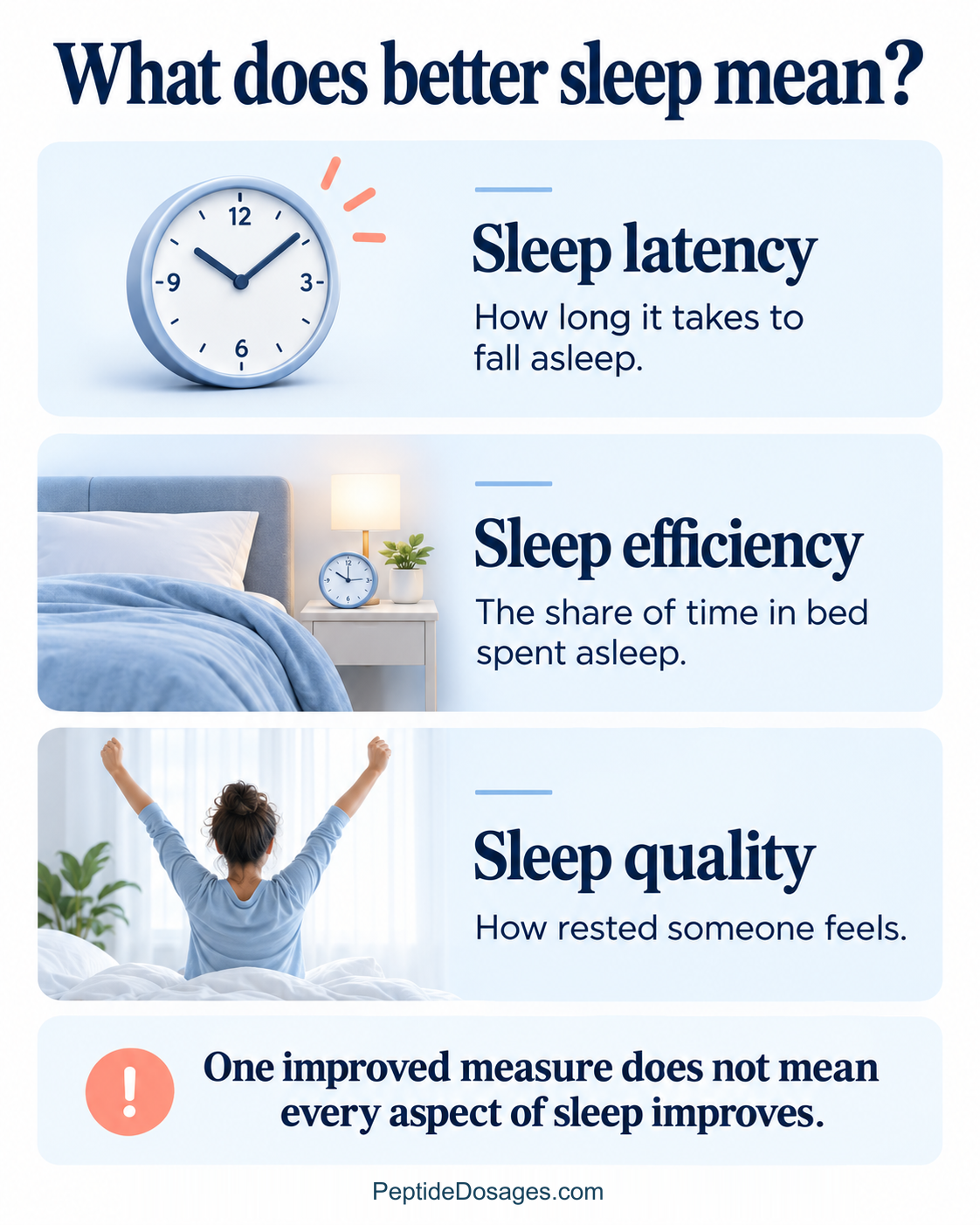
DSIP is mainly of interest for improving sleep quality. Animal studies consistently show it increases slow-wave sleep, and one small human trial reported that DSIP infusion in adults significantly increased total sleep time and efficiency[2]. Early insomnia studies in the 1980s found mixed but sometimes positive results: some noted fewer awakenings and more deep sleep with DSIP[10][2], though other trials saw only modest changes[3]. Users and some researchers also report that DSIP can be adaptogenic – helping the body handle stress. For example, in rodents DSIP raised levels of substance P (a mood-related neuropeptide) and led to less anxiety-like behavior[11]. Small human case series from the 1980s described subjects feeling more relaxed and better able to cope with stress after DSIP[11]. In practice, many people take DSIP for insomnia, jet lag, or stress-related sleep issues.

Safety & Side Effects

DSIP appears to be generally well-tolerated. In the human studies conducted so far, researchers have not found serious adverse effects[2][7]. In the 1981 study of six volunteers, for example, participants had no significant psychological or physiologic side effects from DSIP infusion[2]. A 2001 review even described DSIP as “incredibly safe,” noting no lethal dose had been found and only rare mild symptoms (like transient headache or nausea) were reported[7]. Likewise, PeptideDosages.com notes that human use of DSIP is “generally well tolerated,” with just occasional mild injection-site discomfort[12]. Notably, DSIP does not seem to produce tolerance with repeated use[12] – unlike many sleep medications, its efficacy does not appear to wane quickly.

That said, long-term data is limited. Because DSIP is typically used experimentally, we lack large trials on chronic use. As a precaution, many protocols suggest taking breaks after a few weeks of continuous dosing[13]. Also, regulatory agencies treat DSIP as a compound with unknown risks: the FDA lists DSIP on its bulk drug substances list and warns that research-grade DSIP could trigger immune reactions[14]. In other words, only high-purity, pharmaceutical-grade DSIP (typically obtained via prescription compounding) should be used in humans. Overall, if side effects occur, they are usually mild: users might feel slight drowsiness the next day or minor injection irritation. Key safety points: use sterile technique for injections, rotate sites to avoid irritation, and obtain DSIP from reputable sources (see Next Steps).

How to Use DSIP Safely

When using DSIP, proper preparation and administration are important. Below is a step-by-step outline of a typical DSIP dosing routine. (Always follow detailed protocols and consult a professional for personalized guidance.)

Step 1: Reconstitute the Peptide

Reconstitute the DSIP powder according to instructions. A common approach is to add 3.0 mL of bacteriostatic water to a 5 mg vial, yielding a concentration of about 1.67 mg/mL[15]. To do this, withdraw the water into a sterile syringe, inject it gently along the vial wall (to avoid foam), and swirl (don’t shake) until the powder fully dissolves[15]. Label and refrigerate the vial after mixing. This step ensures your DSIP is ready in liquid form for dosing.

Step 2: Prepare the Dose

Once reconstituted, draw up the correct dose into an insulin syringe. DSIP doses are measured in micrograms (µg). A typical regimen starts around 100 µg per day and can be titrated up to 250–300 µg daily[16]. Use an insulin (U-100) syringe for accuracy. For example, if 5 mg was diluted in 3 mL, 100 µg corresponds to ~0.06 mL (6 units on the syringe)[17]. Always double-check your math. Plan for gradual increases: many protocols recommend bumping the dose by 50 µg every 1–2 weeks as tolerated, targeting around 250–300 µg by week 4[17][16].

Step 3: Clean and Inject

Prepare a clean injection area and supplies. Wipe the DSIP vial’s rubber top and your skin injection site with an alcohol swab, and let them dry[18]. Common injection sites are the abdomen, thigh, or upper arm (avoiding areas with irritation or scars). Inject the dose subcutaneously (just under the skin) using the insulin syringe. Pinch a fold of skin, insert the needle at a shallow angle (about 45°–90°), then push the plunger steadily to inject the DSIP[18]. Wait a moment before withdrawing the needle to prevent leakage. Dispose of the syringe safely. Rotating sites each day can minimize local irritation.

Step 4: Schedule and Monitor

DSIP is usually taken once daily, in the evening before bedtime[19]. Many users find evening dosing best, as it aligns with DSIP’s role in sleep. After dosing, record your sleep quality and any symptoms. Keep notes on sleep duration, how rested you feel, and any side effects. This daily tracking helps you see patterns and decide if dose adjustments are needed. Cycle length: Research protocols often run 4–8 weeks of daily DSIP, then take a break[16]. After the break, you may resume for another cycle if needed. Always use the lowest effective dose and consult up-to-date guides on DSIP cycles for more detail.

DSIP vs. Other Sleep Aids

Feature DSIP (Sleep Peptide) Melatonin (Hormone) Prescription Sleep Aid (e.g. Zolpidem)
Type Nonapeptide (research peptide) Endogenous hormone (supplement) Small-molecule drug (sedative-hypnotic)
Primary effect Enhances deep (delta) sleep[4] Regulates circadian rhythm and sleep onset[20][21] Sedation; helps initiate sleep quickly
Mechanism Unknown (likely GABA/endocrine) Activates MT1/MT2 melatonin receptors[21] Potentiates GABA<sub>A</sub> receptors (brain inhibitory neurotransmitter)
Evidence Limited research (small trials) Extensive evidence; well-known effects Extensive clinical data; FDA-approved
Tolerance risk Low (no known tolerance)[12] Low (non-habit forming) Moderate (can develop tolerance/dependence)
Onset of action Gradual (effects observed on next sleep)[2] ~30–60 minutes for sleep onset ~30 minutes (with quick sleep induction)
Administration Daily injection (typically SC)[19] Oral (pill or liquid) Oral (pill)
Availability Research-only (not FDA-approved)[14] Over-the-counter supplement (widely available) Prescription-only (controlled medication)

This comparison shows that DSIP is quite different from other sleep aids. Unlike melatonin (a hormone) and sedatives (drugs that directly depress the CNS), DSIP works more subtly through brain peptides and hormones. It specifically targets sleep quality rather than immediate sedation. Melatonin is easy to take orally and is FDA-approved as a supplement, while DSIP requires injections and is not an approved medication[14]. This table highlights the unique niche DSIP occupies in sleep support, as well as its limitations (experimental use, limited evidence).

Checklist: Key Points for Using DSIP

  • Obtain high-quality DSIP. Use pharmaceutical-grade or research-grade DSIP from a reputable supplier; avoid unknown sources.
  • Measure doses precisely using insulin syringes. Double-check that you are withdrawing the correct volume for your target microgram dose.
  • Follow sterile technique. Clean vial tops and skin with alcohol swabs before drawing or injecting peptide.
  • Rotate injection sites. Change the injection location (abdomen, thigh, arm) each dose to prevent tissue irritation.
  • Schedule Inject DSIP once daily, ideally at the same time (often in the evening) to establish a routine.
  • Monitor Keep a sleep diary noting sleep duration, sleep quality, and any side effects (e.g., headache, injection pain).
  • Adjust Titrate your dose slowly based on response; most people increase by ~50 µg every 1–2 weeks until optimal effect.
  • Store Keep lyophilized DSIP frozen until use. After reconstitution, refrigerate and use within ~4 weeks[22].
  • Consult Refer to detailed protocols (e.g. PeptideDosages dosage guides) and be aware this is for research/educational purposes only, not medical treatment.

FAQs

What is DSIP? DSIP (Delta Sleep-Inducing Peptide) is a naturally occurring 9-amino-acid peptide first found in rabbit brain that promotes deep sleep[1]. In humans, trace amounts of DSIP-like peptide are present in the brain, blood, and breast milk[8]. DSIP is believed to regulate sleep architecture, especially increasing slow-wave (delta) sleep, rather than causing general sedation.

How does DSIP work? The exact mechanism is still being studied, but DSIP likely works through multiple pathways. It may enhance GABAergic signaling (the brain’s main “calming” system) and influence hormonal systems that control sleep[4][5]. For instance, some research suggests DSIP can trigger release of growth-hormone–releasing hormone, which naturally boosts deep sleep[5]. In short, DSIP seems to gently nudge the brain and body toward more restorative sleep.

What are the benefits of DSIP? DSIP’s main benefit is improved slow-wave sleep. In practice, users often report deeper, more refreshing sleep with DSIP. Small studies have shown reduced time to fall asleep and longer deep-sleep duration[2][10]. Some evidence also points to reduced awakenings and better sleep efficiency in insomniacs[2][3]. Beyond sleep, DSIP is thought to have stress-relief (adaptogenic) properties – for example, animal studies found DSIP reduces anxiety-like responses, and small human reports describe feeling more relaxed under stress[11]. However, these benefits are still being validated by research.

Are there side effects of DSIP? DSIP appears to be generally safe in the short term. Clinical reports from the 1980s and later describe almost no significant side effects[2][7]. At typical research doses, users rarely experience anything more than mild, transient effects (headache or nausea are the most cited[7]). Importantly, DSIP does not seem to cause tolerance, meaning its effects do not diminish quickly with use[12]. Nevertheless, because DSIP use is largely experimental, it is wise to take regular breaks and monitor health. Always use DSIP under guidance and with high-quality material.

How is DSIP administered and dosed? DSIP is usually given as a subcutaneous injection. A typical protocol (for a 5 mg vial) reconstitutes the powder with 3 mL water, allowing precise microgram doses drawn into an insulin syringe[15]. Common dosing starts at about 100–150 µg once daily (often before bed) and is increased gradually by ~50 µg each week up to ~250–300 µg[17]. Many protocols run 4–8 week cycles. Because DSIP is experimental, exact dosing can vary; it’s best to follow a detailed guide and track your response.

Is DSIP better than melatonin for sleep? DSIP and melatonin both influence sleep but in different ways. Melatonin is a well-known hormone that regulates the body’s circadian rhythm (the sleep–wake cycle). It helps you feel sleepy at night via its MT1/MT2 receptors[21]. In contrast, DSIP is not a hormone and has no identified human receptor[4]. DSIP specifically promotes deep, slow-wave sleep rather than affecting the timing of sleep onset[20]. Many people use melatonin to adjust their sleep schedule (for jet lag or shift work), whereas DSIP is more about improving sleep quality once you’re asleep. They could be used together, but they work through different pathways.

Is DSIP approved or legal? DSIP is not an FDA-approved drug for sleep or any other condition[14]. In many countries it is only available as a research peptide. The FDA has placed DSIP on its list of bulk substances lacking safety data[14]. This means DSIP use should be strictly research-oriented. Some telemedicine clinics and compounding pharmacies do offer prescription (pharmaceutical-grade) DSIP, but these are the exception. If using DSIP, ensure it comes from a high-quality source to avoid unregulated, low-purity products[23].

Next Steps

DSIP is a unique peptide for deep sleep enhancement that appears both promising and safe when used judiciously. If you’re interested in trying DSIP, start by researching reputable sources and protocols. Visit PeptideDosages.com for detailed DSIP dosage guides, reconstitution tips, and safety checklists. We offer step-by-step protocols and a dosing calculator to help you get started safely. Remember, DSIP is intended for research use, so prioritize evidence and caution. With correct use, DSIP could be a valuable part of a healthy sleep strategy, complementing good sleep hygiene and other therapies.

Learn more about DSIP at PeptideDosages.com and consult our experts’ resources for dosing and administration. By following reliable, science-based guidance, you can harness DSIP’s benefits for better sleep while minimizing risks.


[1] [4] [9] Delta Sleep-Inducing Peptide – an overview | ScienceDirect Topics

https://www.sciencedirect.com/topics/biochemistry-genetics-and-molecular-biology/delta-sleep-inducing-peptide

[2] Acute and delayed effects of DSIP (delta sleep-inducing peptide) on human sleep behavior – PubMed

https://pubmed.ncbi.nlm.nih.gov/6895513/

[3] Effects of delta sleep-inducing peptide on sleep of chronic insomniac patients. A double-blind study – PubMed

https://pubmed.ncbi.nlm.nih.gov/1299794/

[5] [7] [8] [10] [11] [14] [23] DSIP (Delta Sleep-Inducing Peptide) | Full Rundown [2026]

https://www.innerbody.com/dsip-delta-sleep-inducing-peptide

[6] [12] [13] [15] [16] [17] [18] [19] [22] DSIP 5mg Dosage Protocol | PeptideDosages.com

https://peptidedosages.com/single-peptide-dosages/dsip-5-mg-vial-dosage-protocol/

[20] Peptides Similar to DSIP | Peptide Protocol Wiki

https://www.peptideprotocolwiki.com/peptides/dsip/similar

[21]  MT1 and MT2 Melatonin Receptors: A Therapeutic Perspective – PMC

https://pmc.ncbi.nlm.nih.gov/articles/PMC5091650/