If you’ve been Googling “What is Kisspeptin”, you’re probably trying to understand why one small peptide shows up in conversations about fertility, libido, puberty, and hormone “reset” protocols. Kisspeptin is real physiology—not a trend—but most online explanations skip the parts that matter: where it sits in the hormone cascade, what human studies actually show, and what it can’t do.

This guide is educational only. It does not provide medical advice or prescribe treatment. [1]

Fast Answer / Executive Summary

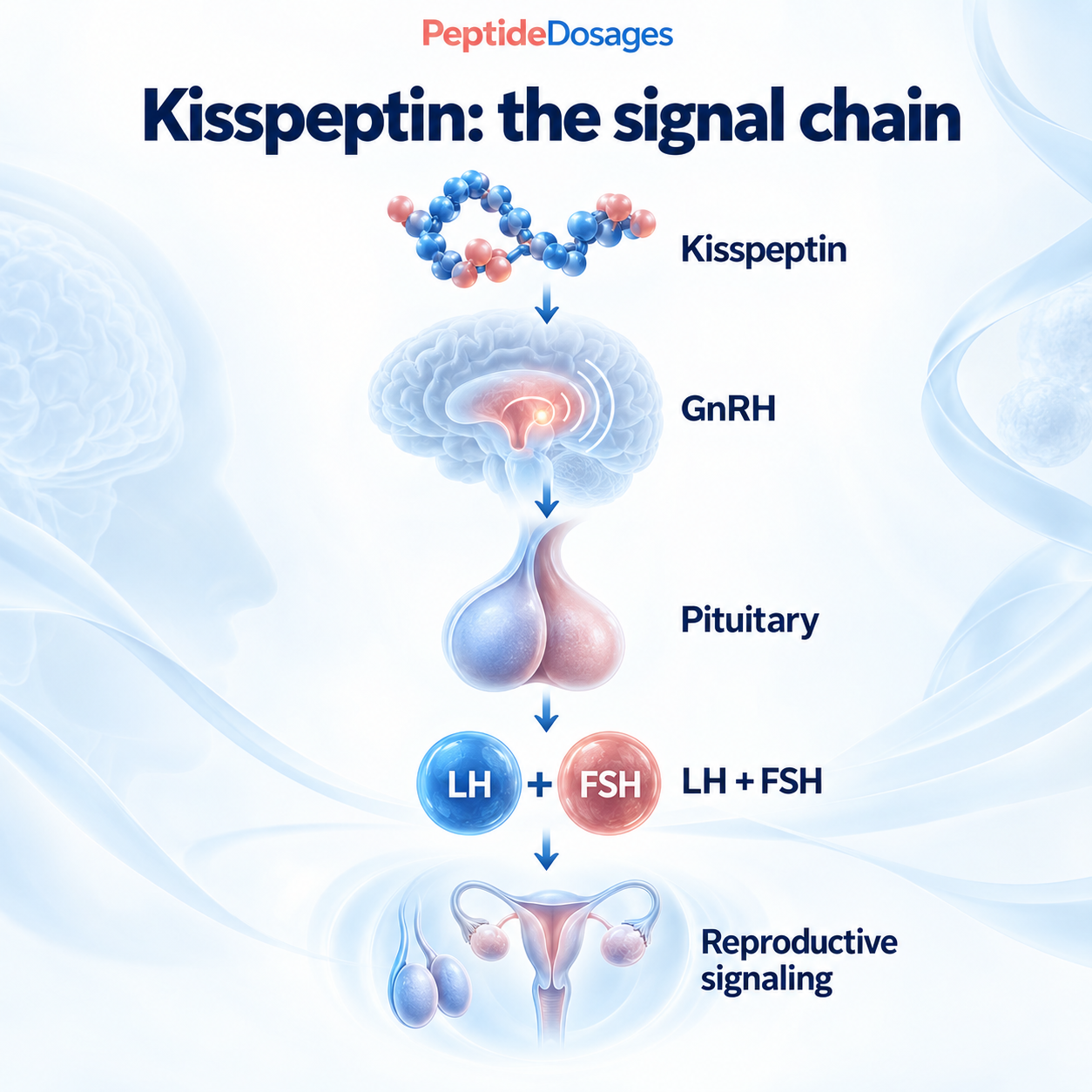
Kisspeptin is a naturally occurring signaling peptide that switches on the brain’s reproductive hormone axis by stimulating gonadotropin‑releasing hormone (GnRH) release from the hypothalamus. That GnRH signal drives luteinizing hormone (LH) and follicle‑stimulating hormone (FSH) from the pituitary, which then influences testosterone, estradiol, ovulation, and sperm production. [2]

Core Concepts & Key Entities

What is kisspeptin in plain English?

Kisspeptin is a family of peptides your body makes to control reproduction, mainly by activating GnRH neurons in the brain. Think of kisspeptin as the “go signal” that lets GnRH pulses happen, and those pulses are what keep the hypothalamic‑pituitary‑gonadal (HPG) axis working. [2]

If GnRH is the “metronome” that sets reproductive rhythm, kisspeptin is the finger that taps the metronome into motion. That upstream position is why kisspeptin is studied both as a diagnostic tool (how responsive is the axis?) and as a potential therapeutic trigger (can we restart pulsatility?). [3]

The key biology you need to know

Kisspeptin is encoded by the KISS1 gene. The gene produces a 145‑amino‑acid precursor protein that is cleaved into shorter active peptides (for example kisspeptin‑54 and kisspeptin‑10). All these peptides share a common C‑terminal sequence that activates the same receptor. [4]

Kisspeptin binds to KISS1R (formerly called GPR54). KISS1R is a G‑protein‑coupled receptor; when activated, it triggers intracellular signaling (commonly described as phospholipase C → IP3/DAG → calcium signaling), which contributes to GnRH neuron activation. [4]

Loss of kisspeptin signaling can cause failure of puberty and fertility. Inactivating mutations affecting this pathway were a landmark clue that kisspeptin is essential for normal reproductive axis function. [5]

Kisspeptin’s “cascade” in one minute

Kisspeptin’s main known role is upstream:

  1. Kisspeptin activates GnRH neurons in the hypothalamus.
  2. GnRH is released in pulses into the pituitary portal circulation.
  3. The pituitary releases LH and FSH.
  4. LH/FSH act on the gonads (testes/ovaries).
  5. Downstream sex steroids and gamete production change (testosterone, estradiol, progesterone; spermatogenesis; follicle maturation/ovulation). [6]

That’s why you’ll often see kisspeptin described as an “upstream trigger” of the reproductive hormone cascade. [7]

Kisspeptin‑10 vs kisspeptin‑54: why the number matters

The “‑10” and “‑54” labels refer to amino‑acid length (10 vs 54). In human circulation, kisspeptin‑54 is often described as the major circulating form. [8]

A practical difference is half‑life: reviews and clinical reports commonly cite a kisspeptin‑54 half‑life around ~27–28 minutes after IV administration, while kisspeptin‑10 is much shorter (about ~4 minutes). A shorter half‑life can matter if you’re trying to produce a sustained downstream response. [9]

Information gain (why this is often misunderstood): beginners often assume “KP‑10 is stronger because it’s the ‘active’ core.” In receptor terms, KP‑10 is the core sequence shared across kisspeptins—but in the real body, exposure time is part of potency. A peptide that binds well but disappears quickly can feel “weak” in practice, because the endocrine system responds to duration, not just binding. [10]

Why kisspeptin is called “metastin” and why that matters

Kisspeptin’s story started in cancer biology: the KISS1 gene was first described in the 1990s as a metastasis suppressor in melanoma models, and the longer kisspeptin peptide was nicknamed “metastin.” That history matters because it explains why earlier literature talks about “KiSS‑1/metastin” and why people sometimes think kisspeptin is a “new” hormone—when it’s actually been studied for decades. [11]

The modern consensus is simpler: in humans, kisspeptin is best known for its upstream regulation of GnRH and fertility, even though it may have additional roles in peripheral tissues. [12]

Where else is kisspeptin found?

Kisspeptin signaling is best established in the brain’s reproductive network, but expression is also reported in peripheral tissues—including placenta and gonads—and it’s been investigated in pregnancy biology. [13]

One striking pregnancy fact: circulating kisspeptin levels rise dramatically during normal pregnancy (reports describe ~7,000‑fold higher than non‑pregnant levels). That doesn’t automatically mean you should add kisspeptin exogenously, but it does help explain why researchers view it as a “physiologic” peptide rather than a foreign drug. [14]

A second nuance: researchers have explored kisspeptin’s role in placentation and trophoblast invasion, which helps explain why pregnancy and vascular studies appear in kisspeptin literature alongside fertility studies. [15]

Kisspeptin, neurokinin B, dynorphin: the KNDy control panel

In many models, kisspeptin does not act alone. A major conceptual advance is the “KNDy” neuron framework: neurons (especially in the arcuate/infundibular region) that co‑express kisspeptin, neurokinin B, and dynorphin, and help shape GnRH pulse generation. [16]

A simple way to remember the model:

  • kisspeptin is generally stimulatory to GnRH output,
  • dynorphin is generally inhibitory,
  • neurokinin B is often discussed as a key modulator within the pulse generator network. [1]

The details are still being refined, but the big picture is stable: kisspeptin is not just “one hormone”; it’s part of the brain’s pulse‑making infrastructure. [1]

Why response varies by sex, cycle phase, and hormone context

Kisspeptin signaling is not “one-size-fits-all.” Human research consistently emphasizes that the sex‑steroid environment can shape responsiveness to exogenous kisspeptin. In plain English: the same dose can look powerful in one hormonal context and underwhelming in another. [3]

This is one reason you’ll see researchers speak about “physiologic LH surges” and why newer agonists aim to mimic normal mid‑cycle surge patterns more closely. For example, MVT‑602 was discussed as inducing LH patterns of similar amplitude/duration to the physiologic mid‑cycle surge in clinical trial reporting. [17]

For peptide beginners, the takeaway is simple: don’t treat “dose” as a universal knob when the system is heavily dependent on feedback loops and baseline hormone status. [18]

Kisspeptin and “why my hormones shut down under stress”

Kisspeptin is one of the bridges between “life context” and reproductive hormones. Multiple reviews highlight that kisspeptin signaling is influenced by nutrition, stress, and metabolic cues—because reproduction is energy‑expensive and the brain will down‑prioritize it when resources are low. [19]

Functional hypothalamic amenorrhea (FHA/HA) is a real‑world example. FHA is often described as a stress‑ and/or energy‑availability‑driven suppression of GnRH pulsatility, leading to low or disrupted LH pulses and menstrual disruption. In a 2020 study of FHA patients, authors reported episodic kisspeptin secretion and temporal coupling between kisspeptin and LH secretory episodes, supporting that the axis still “runs” on kisspeptin pulses even when overall output is suppressed. [20]

Information gain (a helpful mental model): Think of kisspeptin as the reproductive system’s “permission signal.” Sleep debt, under‑eating, over‑training, and chronic stress don’t just “lower hormones”; they often reduce the permission for the GnRH metronome to tick at normal frequency. Kisspeptin sits close to that permission layer, which is why lifestyle context shows up in so many kisspeptin papers. [21]

What people mean when they say “kisspeptin raises testosterone”

Kisspeptin does not directly “become testosterone.” What it can do is increase LH secretion, and LH stimulates testicular testosterone production. So any testosterone change is downstream, mediated through the HPG axis. [22]

This distinction matters, because upstream signaling only works if the rest of the axis can respond. In some forms of congenital idiopathic hypogonadotropic hypogonadism (IHH), patients may not respond to kisspeptin boluses in the same way healthy people do, which is why kisspeptin is also explored as a “probe” of GnRH network integrity. [23]

Also, short studies can show LH/FSH changes without immediate testosterone changes, simply because testosterone has its own time course (and some protocols focus on a 60–90 minute window). Always check the time horizon before assuming “no testosterone effect.” [24]

What human studies actually show about safety

In controlled human settings, kisspeptin has often been reported as well tolerated. This includes a 2010 publication examining blood pressure/heart rate during kisspeptin‑54 administration in healthy volunteers, which reported no significant changes in BP or heart rate at tested doses. [25]

In IVF research, kisspeptin‑54 was described as well tolerated in a cohort undergoing triggering for egg maturation, with adverse events largely reflecting known IVF or pregnancy complications rather than a clear drug‑specific toxicity signal in that study. [26]

In a 2023 randomized crossover trial in men with hypoactive sexual desire disorder, investigators reported kisspeptin was well tolerated with no adverse events reported during the protocol. That is reassuring, but it’s still short‑duration, laboratory‑controlled research—not long‑term real‑world safety. [27]

Bottom line: “generally well tolerated in studies” is not the same as “safe for self‑use.” Kisspeptin is still an investigational bioactive in medical research and is sold online as “research use only.” [28]

What kisspeptin is being studied for right now

Beyond older foundational studies, newer work focuses on delivery and “drug‑like” analogs.

One 2025 open‑access study summary reports intranasal kisspeptin‑54 rapidly stimulated gonadotropin release in healthy volunteers and in patients with hypothalamic amenorrhea, with no side effects reported in that study, and notes the nasal formulation was stable up to 60 days at 4 °C. [29]

ClinicalTrials.gov[30] listings also describe ongoing or recent studies using a pump to administer pulsatile subcutaneous kisspeptin over two weeks in hypothalamic amenorrhea research contexts. [31]

A practical interpretation: the field is still in a “how do we deliver the signal well?” phase—consistent with the idea that physiology is understood, but clinical translation depends on delivery, dosing pattern, and patient selection. [32]

Benefits and applications: what’s evidence‑based (and what’s still speculative)?

The best‑supported applications for kisspeptin are in reproductive endocrinology research as an upstream stimulator or “probe” of GnRH/LH/FSH function. In other words, the strongest evidence is about signaling (LH/FSH patterns), not about lifestyle outcomes like “more muscle” or “fat loss.” [33]

Here’s how the evidence clusters, from strongest to most exploratory:

  • IVF oocyte maturation trigger (clinical studies): kisspeptin‑54 has been shown to induce egg maturation sufficient for fertilization and pregnancy in IVF research, including studies in women at high risk of OHSS, and a phase‑2 trial suggests a second dose can improve oocyte yield in that setting. [34]
  • Functional hypothalamic amenorrhea / “low GnRH” models (clinical studies): human work supports that kisspeptin can increase LH pulsatility or gonadotropin secretion in HA/FHA research, while also documenting desensitization (tachyphylaxis) with overly frequent exposure. [35]
  • Diagnostic physiology (clinical research): in congenital IHH models, lack of response to kisspeptin boluses can indicate impaired GnRH neuronal network function, which is why kisspeptin is useful as a challenge test in research contexts. [36]
  • Psychosexual/neurobehavioral research (early but real): a randomized crossover study in men with hypoactive sexual desire disorder found kisspeptin modulated sexual brain processing and was associated with increased penile tumescence during experimental stimuli, but this is not the same as proving “kisspeptin boosts libido” for everyone. [27]
  • Non‑invasive delivery (emerging): intranasal kisspeptin‑54 is being explored as a less invasive method to stimulate gonadotropins, with an open‑access 2025 report describing rapid LH increases after intranasal dosing and noting formulation stability up to 60 days at 4 °C. [29]

If you want the “one‑line” practical takeaway: kisspeptin is most credible when the goal is to shape LH/FSH signaling upstream, not when it is sold as a general performance or physique peptide. [33]

Risks, limitations, and realistic expectations

The biggest limitations are not dramatic acute side effects reported in trials, but context dependence, potential desensitization with frequent exposure, and the lack of long‑term safety data outside controlled research. [37]

Safety reporting in humans is often reassuring in the short term: studies have monitored vitals (including blood pressure and heart rate) and reported no significant changes during acute kisspeptin‑54 administration in healthy volunteers. [25]

But “short‑term tolerability” does not answer all the questions beginners actually have (long‑term effects, repeated exposure, special populations). Even within reproductive research, scientists explicitly discuss tachyphylaxis risks with frequent/high‑dose exposure and design around it. [38]

Finally, don’t ignore the regulatory reality: online kisspeptin products are typically sold for laboratory research only and labeled as not evaluated or approved by the Food and Drug Administration[39] (FDA). If you are dealing with a medical symptom (missed periods, infertility, sexual dysfunction, low testosterone symptoms), the right next step is medical evaluation—not self‑directed peptide use. [28]

What kisspeptin is not

Kisspeptin is not a GLP‑1‑style metabolic drug, not a stimulant, and not a guaranteed “fertility fixer.” Most strong human evidence centers on reproductive hormone signaling and specific infertility‑related contexts. If you see claims that it is a general fat‑loss peptide or a stand‑alone replacement for testosterone or estrogen, treat that as marketing, not physiology. [40]

Step‑by‑Step / How‑To

Step One: Map the pathway

Kisspeptin works upstream: kisspeptin → GnRH → LH/FSH → gonadal output. If a claim skips that chain, it is usually oversimplified or wrong. [12]

Step Two: Choose a “first readout”

LH (and LH pulsatility) is typically the fastest downstream signal to change in human kisspeptin studies, with FSH often following. Downstream outcomes (ovulation, sperm parameters) are slower and context‑dependent. [41]

Step Three: Account for context

Responsiveness can vary by sex‑steroid environment, reproductive status, and disease model, so the same exposure can produce different LH/FSH patterns in different people. This is why research often specifies menstrual cycle phase or baseline endocrine state. [3]

Step Four: Respect pulsatility

Frequent or continuous stimulation can lead to desensitization (tachyphylaxis) in some human models, which is why the literature emphasizes dosing patterns and “therapeutic windows.” Think “pulse hygiene,” not “more often.” [42]

Step Five: Compare alternatives by axis level

Kisspeptin targets the hypothalamus; hCG targets the gonads; GnRH agonists target the pituitary; SERMs change feedback at hypothalamus/pituitary. Comparing them only by “strong vs weak” misses the point. [43]

Step Six: Apply the safety/legal screen

Online kisspeptin is commonly sold as “research use only” and “not FDA‑approved.” If you have an actual health concern, the safest next step is medical evaluation, not DIY experimentation. [28]

Comparison / Alternatives

Kisspeptin is best understood as an upstream HPG‑axis activator, so the most useful comparison is not “kisspeptin vs testosterone,” but “kisspeptin vs other ways to trigger or bypass the axis.” [44]

Kisspeptin vs hCG vs GnRH agonist vs SERMs: what’s the real difference?

The real difference is the level of the axis you’re pushing. Kisspeptin pushes the hypothalamus → endogenous GnRH. hCG mimics LH at the gonad. GnRH agonists directly act at the pituitary and are used clinically for specific indications, including IVF triggering. SERMs (like clomiphene/enclomiphene) change estrogen feedback at the hypothalamus/pituitary and can increase LH/FSH in some patients. [45]

Approach Where it acts What it primarily changes first Strongest evidence‑backed use case Key limitation / risk
Kisspeptin (KP54/KP10) Hypothalamus (GnRH neurons via KISS1R) LH pulses (then FSH) Research: probing or stimulating GnRH/LH in infertility models; IVF trigger research Effect depends on intact GnRH network; frequent high‑dose exposure can desensitize (tachyphylaxis)
hCG Gonad (LH receptor mimic) Testosterone / ovarian steroid changes (via LH‑like signal) Clinical medicine: inducing final follicle maturation; hypogonadism/fertility contexts under care Longer action can increase OHSS risk in IVF; bypasses upstream physiology
GnRH agonist trigger (e.g., triptorelin) Pituitary (GnRH receptor) LH/FSH surge IVF triggering alternative to hCG in many protocols Needs adequate pituitary response; clinical use only
SERMs (clomiphene/enclomiphene) Hypothalamus/pituitary (feedback modulator) LH/FSH increases (in responders) Clinical medicine: selected male hypogonadism/infertility under care Not a peptide; side effects and variable response; prescription only

Evidence note: kisspeptin‑54 has been tested as an IVF trigger in proof‑of‑concept and phase‑2 studies, including in women at high risk of OHSS, with good oocyte maturation outcomes and tolerability in those trials. [34]

A concrete example: IVF triggering and OHSS risk

In a proof‑of‑concept IVF study, a single injection of kisspeptin‑54 induced egg maturation sufficient for fertilization and resulted in successful pregnancies and healthy live births, while being reported as well tolerated in the treated cohort. [46]

A later phase‑2 randomized trial tested a strategy of a second kisspeptin‑54 dose 10 hours after the first in women at high risk of OHSS and found improved oocyte yield without increasing moderate OHSS frequency in that study population. [47]

Information gain (a clinician‑level nuance): this “second dose rescue” concept highlights what makes kisspeptin unique—its effect is limited by the individual’s endogenous GnRH reserve. In the phase‑2 trial, women with a lower LH response to the first dose often had a larger LH “rescue” response to the second dose, consistent with the idea that not everyone has the same releasable GnRH pool. [48]

Where kisspeptin is “better” and where it isn’t

Kisspeptin’s upside is physiologic upstream signaling: it can stimulate endogenous GnRH/LH/FSH rather than forcing a downstream signal. Its downside is that it cannot override a broken upstream network—if GnRH neurons can’t respond properly, kisspeptin can under‑deliver, which is exactly why congenital IHH patients can have minimal response to standard bolus challenges. [49]

If you want a single sentence to remember: kisspeptin is a “permission signal,” while hCG is a “direct command.” Both have roles in medicine and research; neither is a casual wellness tool. [50]

Alternatives closer to kisspeptin than most people realize

If your interest in kisspeptin is about physiology, the closest “alternative” is other ways of restoring or shaping pulsatility (such as clinical pulsatile GnRH in selected cases) or newer KISS1R agonists being developed to produce a more physiologic‑shaped LH surge. [51]

MVT‑602 is one example of a kisspeptin receptor agonist investigated in controlled trials. In a 2024 report in Fertility and Sterility[52], MVT‑602 was described as safe and well tolerated across tested doses and produced dose‑dependent LH increases, with ovulation occurring within 5 days of administration in many participants at higher doses. [53]

A 2020 paper in the Journal of Clinical Investigation[54] also discusses why longer‑acting agonists may be clinically useful: native kisspeptin‑54 can be effective but frequent high‑dose administration risks tachyphylaxis, so agonists with different kinetics could allow less frequent dosing while maintaining response. [55]

Templates / Checklist / Example

Use the templates below to keep your thinking grounded in physiology and evidence, not hype.

The “4‑filter” template for evaluating any kisspeptin claim

Filter one: Context. Is the claim from a controlled human study, an animal model, or a product page? [56]

Filter two: Mechanism. Does the claim match the known cascade (kisspeptin → GnRH → LH/FSH → gonadal output)? If it skips the cascade, be skeptical. [57]

Filter three: Time horizon. Is the study measuring minutes/hours (LH/FSH changes) or weeks/months (clinical outcomes)? Don’t compare them directly. [58]

Filter four: Safety. Is the statement consistent with “investigational peptide” standards (monitoring, vitals, exclusion criteria), or is it casual dosing advice? [59]

Kisspeptin “sanity check” checklist (copy‑ready)

  • Define your goal (diagnostic curiosity, fertility research context, hormone education) before looking at any “protocol.”
  • Map the axis level you’re targeting (hypothalamus → pituitary → gonads) so you don’t expect downstream effects instantly. [57]
  • Verify whether the claim you’re reading is from a human clinical study or from marketing copy. [60]
  • Prioritize LH/FSH as the first‑order outputs when interpreting how kisspeptin works. [61]
  • Respect pulsatility and desensitization risk; avoid assuming “more often” is better. [62]
  • Document variables that suppress the axis (energy deficit, overtraining, stress, sleep) because kisspeptin is integrated with metabolic and environmental inputs. [63]
  • Ask a clinician if you have symptoms or a diagnosed endocrine condition; do not self‑treat reproductive disorders.
  • Choose suppliers based on basic research‑grade signals (COA, cold‑storage guidance, transparency) if you are purchasing for legitimate laboratory research. [64]

Quick example: how to explain kisspeptin to a beginner in 3 sentences

Kisspeptin is a peptide that tells the brain to release GnRH. GnRH then makes the pituitary release LH and FSH, which are the hormones that signal testes and ovaries. So kisspeptin is upstream: it can’t “replace” testosterone or estrogen, but it can influence the signals that lead to them. [2]

FAQs

What is kisspeptin used for?

What is kisspeptin used for? Kisspeptin is used mainly in research settings to understand and manipulate the reproductive hormone axis, because it can stimulate GnRH‑driven LH/FSH release. Human studies include infertility‑related models (like hypothalamic amenorrhea) and IVF oocyte‑maturation triggering research. It is not a standard over‑the‑counter supplement use case. [65]

Does kisspeptin increase testosterone?

Does kisspeptin increase testosterone? Kisspeptin can increase testosterone indirectly if it increases LH, because LH signals the testes to produce testosterone. However, testosterone changes depend on timing, dose, baseline physiology, and whether the GnRH‑LH pathway is intact; some protocols show LH/FSH increases without immediate testosterone change over short windows. [66]

What’s the difference between kisspeptin‑10 and kisspeptin‑54?

What’s the difference between kisspeptin‑10 and kisspeptin‑54? Kisspeptin‑10 and kisspeptin‑54 are different‑length peptides from the same precursor. Both activate KISS1R, but kisspeptin‑54 generally has a longer circulating half‑life (~27–28 minutes reported in human IV studies) than kisspeptin‑10 (~4 minutes), which can change how sustained the downstream hormone response is. [10]

Is kisspeptin safe?

Is kisspeptin safe? In published human studies, acute kisspeptin administration has generally been reported as well tolerated in monitored clinical settings, including studies that assessed vitals like blood pressure and heart rate. That said, long‑term safety data are limited, and safety depends on dose, route, frequency, and population. Treat it as an investigational bioactive, not a casual wellness product. [67]

Is kisspeptin FDA‑approved?

Is kisspeptin FDA‑approved? Naturally produced kisspeptin in your body is normal physiology, but exogenous kisspeptin products sold online are typically labeled as research materials and explicitly state they are not evaluated or approved by the FDA as drugs. If you see it marketed as a “therapy,” treat that as a red flag unless it’s within a regulated clinical trial or medical context. [68]

Can kisspeptin stop working over time?

Can kisspeptin stop working over time? Yes—kisspeptin can show desensitization (tachyphylaxis) with frequent or continuous exposure in some human models, which is why the literature discusses dosing frequency and “therapeutic windows.” This is also why longer‑acting receptor agonists are being developed to shape more physiologic responses with fewer administrations. [69]

Next Steps

Kisspeptin is an upstream reproductive‑axis signal—so the smartest next step is to evaluate it as physiology first, and as a “protocol” last. [12]

If you want a practical, beginner‑friendly reference on how research vials are commonly discussed (reconstitution math, storage, and an educational dosing overview), start with the internal guide on Peptide Dosages[70]: https://peptidedosages.com/single-peptide-dosages/kisspeptin-10-mg-vial-dosage-protocol/ [71]

If you’re purchasing kisspeptin for legitimate laboratory research, use a supplier page mainly for specifications (COA availability, storage, and explicit research‑use labeling), not for medical claims. One purchase link commonly referenced for a 10 mg research vial is from Pure Lab Peptides[72]: https://purelabpeptides.com/buy-peptides/buy-kisspeptin-10mg/ [73]

Keep your standards high: evidence first, physiology first, and professional care for any health condition.


[1] [4] [8] [13] [16] [19] [21] [63]  Comprehensive Review on Kisspeptin and Its Role in Reproductive Disorders – PMC

https://pmc.ncbi.nlm.nih.gov/articles/PMC4508256/

[2] [3] [6] [9] [10] [12] [18] [22] [33] [40] [41] [43] [44] [45] [50] [51] [57] [61] [65] [70] https://academic.oup.com/humupd/article/20/4/485/834154

https://academic.oup.com/humupd/article/20/4/485/834154

[5] [11]  Kisspeptin and KISS1R: a critical pathway in the reproductive system – PMC

https://pmc.ncbi.nlm.nih.gov/articles/PMC2858313/

[7] [71] Kisspeptin Dosage Protocol | PeptideDosages.com

https://peptidedosages.com/single-peptide-dosages/kisspeptin-10-mg-vial-dosage-protocol/

[14] [15] [25] [59] [67]  The effects of kisspeptin-54 on blood pressure in humans and plasma kisspeptin concentrations in hypertensive diseases of pregnancy – PMC

https://pmc.ncbi.nlm.nih.gov/articles/PMC2997307/

[17] [53] Endocrine profile of the kisspeptin receptor agonist MVT-602 in healthy premenopausal women with and without ovarian stimulation: results from 2 randomized, placebo-controlled clinical tricals – ScienceDirect

https://www.sciencedirect.com/science/article/pii/S0015028223019891

[20] https://pmc.ncbi.nlm.nih.gov/articles/PMC7674559/

https://pmc.ncbi.nlm.nih.gov/articles/PMC7674559/

[23] [36] [49] https://pmc.ncbi.nlm.nih.gov/articles/PMC4255107/

https://pmc.ncbi.nlm.nih.gov/articles/PMC4255107/

[24] [27] [39] [54] [58] [66]  Effects of Kisspeptin on Sexual Brain Processing and Penile Tumescence in Men With Hypoactive Sexual Desire Disorder: A Randomized Clinical Trial – PMC

https://pmc.ncbi.nlm.nih.gov/articles/PMC9898824/

[26] [34] [46] [60]  JCI – Kisspeptin-54 triggers egg maturation in women undergoing in vitro fertilization

https://www.jci.org/articles/view/75730

[28] [56] [64] [68] [73] https://purelabpeptides.com/buy-peptides/buy-kisspeptin-10mg/

https://purelabpeptides.com/buy-peptides/buy-kisspeptin-10mg/

[29] [30] [32] Intranasal kisspeptin administration rapidly stimulates gonadotropin release in humans – ScienceDirect

https://www.sciencedirect.com/science/article/pii/S2352396425001331

[31] Study Details | NCT07224438 | Kisspeptin Administration …

https://clinicaltrials.gov/study/NCT07224438?utm_source=chatgpt.com

[35] https://academic.oup.com/jcem/article-pdf/99/6/E953/9050296/jcemE953.pdf

https://academic.oup.com/jcem/article-pdf/99/6/E953/9050296/jcemE953.pdf

[37] [55] https://www.jci.org/articles/view/139681

https://www.jci.org/articles/view/139681

[38] [42] [62] [69] [72] https://pubmed.ncbi.nlm.nih.gov/20980998/

https://pubmed.ncbi.nlm.nih.gov/20980998/

[47] [48] [52]  A second dose of kisspeptin-54 improves oocyte maturation in women at high risk of ovarian hyperstimulation syndrome: a Phase 2 randomized controlled trial – PMC

https://pmc.ncbi.nlm.nih.gov/articles/PMC5850304/