
Retatrutide (20 mg Vial) Dosage Protocol
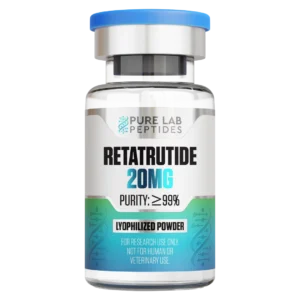
Quickstart Highlights
Retatrutide is an investigational triple-receptor agonist peptide (targets GLP-1, GIP, and glucagon receptors) under development for obesity and type 2 diabetes[1][2]. Phase 2 trials demonstrated remarkable weight-loss efficacy, with patients losing up to 24% of body weight at 48 weeks on higher doses[3][4]. This educational protocol presents a once-weekly subcutaneous approach with gradual titration to minimize gastrointestinal side effects.
- Reconstitute: Add 2.0 mL bacteriostatic water → ~10.0 mg/mL concentration.
- Typical weekly range: 2–8 mg once weekly (gradual escalation over 8–12 weeks).
- Easy measuring: At 10.0 mg/mL, 1 unit = 0.01 mL ≈ 100 mcg on a U-100 insulin syringe.
- Storage: Lyophilized: freeze at −20 °C (−4 °F); after reconstitution, refrigerate at 2–8 °C (35.6–46.4 °F) for up to 4 weeks.
Dosing & Reconstitution Guide
Educational guide for reconstitution and weekly dosing
Standard / Gradual Approach (2 mL = ~10.0 mg/mL)
| Phase | Weekly Dose | Units (per injection) (mL) | Vials Needed |
|---|---|---|---|
| Weeks 1–4 | 2 mg (2000 mcg) | 20 units (0.20 mL) | 1 vial per dose |
| Weeks 5–8 | 4 mg (4000 mcg) | 40 units (0.40 mL) | 1 vial per dose |
| Weeks 9–12 | 6 mg (6000 mcg) | 60 units (0.60 mL) | 1 vial per dose |
| Weeks 13+ | 8 mg (8000 mcg) | 80 units (0.80 mL) | 1 vial per dose |
Frequency: Inject once weekly subcutaneously[1][2]. All doses ≤12 mg can be drawn from one reconstituted 20 mg vial with 2.0 mL reconstitution. Volumes >1.0 mL may be split into 2 separate subcutaneous injections at different sites to ensure proper absorption[5].
Reconstitution Steps
- Draw 2.0 mL bacteriostatic water with a sterile syringe.
- Inject slowly down the vial wall; avoid foaming.
- Gently swirl/roll until dissolved (do not shake).
- Label with date and refrigerate at 2–8 °C (35.6–46.4 °F), protected from light.
- Use within 4 weeks of reconstitution[16].
Advanced / Aggressive Protocol (2 mL = ~10.0 mg/mL)
| Phase | Weekly Dose | Units (per injection) (mL) | Vials Needed |
|---|---|---|---|
| Weeks 1–4 | 2 mg (2000 mcg) | 20 units (0.20 mL) | 1 vial per dose |
| Weeks 5–8 | 4 mg (4000 mcg) | 40 units (0.40 mL) | 1 vial per dose |
| Weeks 9–12 | 8 mg (8000 mcg) | 80 units (0.80 mL) | 1 vial per dose |
| Weeks 13+ | 12 mg (12000 mcg) | 120 units (1.20 mL) | 1 vial per dose |
Note: The 12 mg dose represents the highest dose tested in Phase 2 trials[3][4], producing maximum weight-loss efficacy (~24% body weight at 48 weeks). All doses ≤12 mg can be drawn from one reconstituted 20 mg vial with 2.0 mL reconstitution. Volumes >1.0 mL should be split into 2 injections at separate sites. Gradual titration is critical to minimize gastrointestinal side effects[6].
Supplies Needed
Plan based on a 12–24 week weekly protocol with gradual titration.
-
Peptide Vials (Retatrutide, 20 mg each):
- 12 weeks (Standard to 6 mg): 3 vials
- 24 weeks (Standard to 8 mg): 8 vials
- 12 weeks (Aggressive to 8 mg): 3 vials
-
Insulin Syringes (U-100, 1 mL capacity):
- Per week: 1–2 syringes (depending on dose; higher doses require split injections)
- 12 weeks: 12–24 syringes
- 24 weeks: 24–48 syringes
-
Bacteriostatic Water (10 mL bottles): Use ~2.0 mL per vial for reconstitution.
- 12 weeks (3 vials): 6 mL → 1 × 10 mL bottle
- 24 weeks (8 vials): 16 mL → 2 × 10 mL bottles
-
Alcohol Swabs: One for the vial stopper + one for each injection site.
- Per week: 2–4 swabs (1 per vial + 1–2 per injection site)
- 12 weeks: ~50 swabs → recommend 1 × 100-count box
- 24 weeks: ~100 swabs → recommend 1 × 100-count box
Protocol Overview
Concise summary of the once-weekly regimen.
- Goal: Support significant weight reduction and metabolic improvements through triple-receptor activation[1][7].
- Schedule: Weekly subcutaneous injections for 12–48 weeks (clinical trials ranged 36–48 weeks)[2].
- Dose Range: 2–12 mg weekly with gradual 4-week titration steps[3][4].
- Reconstitution: 2.0 mL per 20 mg vial (~10.0 mg/mL) for accurate unit measurements.
- Storage: Lyophilized frozen at −20 °C (−4 °F); reconstituted refrigerated at 2–8 °C (35.6–46.4 °F) for up to 4 weeks[16].
Dosing Protocol
Suggested weekly titration approach from clinical trials.
- Start: 2 mg weekly for 4 weeks to assess tolerance[6].
- Escalate: Increase by 2–4 mg every 4 weeks as tolerated.
- Target: 6–8 mg weekly (standard); 12 mg weekly (advanced/aggressive).
- Frequency: Once per week (subcutaneous), same day each week.
- Cycle Length: Minimum 24 weeks; trials extended to 48 weeks[3][4].
- Timing: Any consistent day/time; rotate injection sites with each dose.
Storage Instructions
Proper storage preserves peptide quality and stability.
- Lyophilized: Store at −20 °C (−4 °F) or colder in dry, dark conditions; stable for up to 24 months[16].
- Reconstituted: Refrigerate at 2–8 °C (35.6–46.4 °F); use within 4 weeks[16].
- Allow vials to reach room temperature before opening to reduce condensation.
- For extended storage, aliquot reconstituted solution and freeze at −20 °C (−4 °F); thaw only once before use[17].
Important Notes
Practical considerations for consistency and safety.
- Use new sterile insulin syringes for each injection; dispose in a sharps container[14].
- Rotate injection sites (abdomen, thighs, upper arms) systematically to reduce local irritation and lipohypertrophy[13].
- For volumes >1.0 mL, split into 2 separate injections at different sites for better absorption[5].
- Inject slowly; wait a few seconds before withdrawing the needle to ensure full dose delivery.
- Document weekly dose, date, and injection sites to maintain consistency.
- Gradual titration is essential to minimize gastrointestinal side effects; never skip escalation steps[6].
How This Works
Retatrutide’s unique mechanism of action stems from its triple-agonist design. By activating GLP-1 and GIP receptors, it enhances insulin secretion (when glucose is present) and suppresses appetite, similar to existing incretin therapies[7][8]. Additionally, Retatrutide’s glucagon receptor agonism raises metabolic rate and promotes energy expenditure, further amplifying fat burning and weight loss beyond GLP-1/GIP effects alone[7]. The peptide is engineered with a fatty-acid moiety to extend its circulation time (half-life ~6 days), allowing for once-weekly dosing[2]. The combined hormonal activation leads to reduced calorie intake, increased satiety, and enhanced lipid oxidation, yielding potent weight loss and glycemic control[8][9]. Preclinical studies confirmed that adding glucagon activity helps counteract the body’s adaptive slowing of metabolism during weight loss[7]. In essence, Retatrutide tackles three metabolic pathways at once, resulting in greater efficacy in lowering blood glucose and body fat than single- or dual-agonist therapies.
Clinical Benefits & Side Effects
Observations from Phase 2 human clinical trials.
Benefits
- Exceptional weight loss: Patients with obesity (without diabetes) lost an average of 22–24% of body weight at 48 weeks on 8–12 mg doses[3][4].
- Glycemic control: In type 2 diabetes patients, HbA1c dropped by 1.3–2.0% (from ~8.0% to ~6.0%) with 4–12 mg doses[1]; ~82% reached HbA1c ≤6.5%.
- Cardiometabolic improvements: Reductions in blood pressure, LDL cholesterol, waist circumference, and liver fat content (>80% resolution of hepatic steatosis on high doses)[10][11].
- Universal response: 100% of participants on 8–12 mg achieved at least 5% weight reduction[4].
Side Effects
- Gastrointestinal symptoms: Most common adverse effects were mild-to-moderate nausea, vomiting, and diarrhea, occurring primarily during dose escalation[6][12].
- Side effects were dose-dependent and transient; gradual titration (4-week intervals) significantly reduced GI discomfort compared to rapid escalation[6].
- No severe hypoglycemia or serious treatment-related adverse events reported in trials[1][2].
- Safety profile comparable to GLP-1 agonists when properly titrated[12].
Lifestyle Factors
Complementary strategies for optimal metabolic outcomes.
- Maintain a balanced, protein-forward diet with adequate micronutrients to support lean mass during weight loss.
- Combine resistance training (2–3×/week) with regular aerobic activity to preserve muscle and enhance metabolic adaptations.
- Prioritize sleep (7–9 hours) and stress management to support adherence and hormonal balance.
- Stay well-hydrated and monitor for signs of dehydration, especially during GI side effects.
- Work with healthcare providers to monitor metabolic markers (HbA1c, lipids, liver function) throughout the protocol.
Injection Technique
Subcutaneous injection guidance from clinical best-practice resources[13][14][15].
- Clean the vial stopper and injection site with alcohol; allow to dry completely.
- Pinch a skinfold; insert the needle at 45–90° into subcutaneous tissue[13].
- Do not aspirate for subcutaneous injections; inject slowly and steadily[13].
- For volumes >1.0 mL, split into 2 injections at different sites (e.g., left and right abdomen)[5].
- Rotate sites systematically (abdomen preferred; also thighs, upper arms) to avoid lipohypertrophy[14].
- Wait a few seconds after injecting before withdrawing needle to ensure full dose delivery.
- Dispose of used syringes immediately in an FDA-approved sharps container[14].
Important Note
This content is intended for therapeutic educational purposes only and does not constitute medical advice, diagnosis, or treatment. Retatrutide is not FDA-approved and is available only for research purposes. All information presented is based on published clinical trial data and is not intended to encourage off-label use.
References
-
The Lancet (2023)
— Rosenstock J, et al. Retatrutide for type 2 diabetes: Phase 2 trial results (36-week study, HbA1c reductions, weight loss) -
New England Journal of Medicine (2023)
— Jastreboff AM, et al. Triple-hormone-receptor agonist Retatrutide for obesity: Phase 2 trial (48-week study, up to 24% weight loss) -
American Diabetes Association (2023)
— ADA Press Release: Novel agent Retatrutide results in substantial weight reduction (83rd Scientific Sessions, Phase 2 data) -
ADA Meeting News (2023)
— Phase 2 trial results: benefits of Retatrutide in obesity, type 2 diabetes, NASH (83rd ADA Scientific Sessions coverage) -
ClinicalTrials.gov
— Study of Retatrutide (LY3437943) in adults with obesity (NCT04881760; protocol details, dosing regimens) -
Current Obesity Reports (2025)
— Hamza M, et al. Triple agonism based therapies for obesity (review; titration strategies, GI side effect management) -
Cell Metabolism (2022)
— Coskun T, et al. LY3437943 (Retatrutide): discovery to clinical proof of concept (triple GLP-1/GIP/glucagon agonist, preclinical mechanism) -
Nature Reviews Endocrinology (2024)
— Multi-receptor agonists for metabolic disease (mechanism of GLP-1/GIP/glucagon co-activation) -
Diabetes Care (2024)
— Incretin-based therapies: GLP-1, GIP, and glucagon receptor pharmacology (metabolic pathways, energy expenditure) -
NEJM (2023) — Supplementary Material
— Jastreboff et al. obesity trial: cardiometabolic markers, liver fat reduction, lipid profiles -
Hepatology (2024)
— Triple agonists in NAFLD/NASH: hepatic steatosis resolution (preclinical and clinical evidence) -
The Lancet (2023) — Supplementary Data
— Rosenstock et al. diabetes trial: adverse event profiles, GI tolerability, titration schedules -
CDC
— Vaccine administration: subcutaneous route (angle/site guidance; no aspiration required) -
Johns Hopkins Arthritis Center
— How to give a subcutaneous injection (technique, site rotation, sharps disposal) -
NCBI Bookshelf
— Administration of medication: subcutaneous injections (aseptic technique, preparation) -
GenScript Peptide Services
— Peptide storage and handling guidelines (lyophilized and reconstituted storage conditions, stability) -
Journal of Pharmaceutical Sciences (2018)
— Stability of peptides during freeze-thaw cycles (best practices for aliquoting and storage) -
Pure Lab Peptides
— Retatrutide (20 mg) product page (quality specifications, batch documentation, supplier information)