
Oxytocin (10 mg Vial) Dosage Protocol
Quickstart Highlights
Oxytocin is a peptide hormone (nonapeptide) known for its role in childbirth and lactation, and it also influences social bonding and behavior[1]. In research settings, synthetic oxytocin is used to explore effects ranging from stress and anxiety to social cognition[2]. Oxytocin 10 mg is available as a lyophilized powder for research use[3], requiring reconstitution before dosing. This protocol compiles evidence‑based guidance on dosing, administration, and storage for oxytocin peptide.
- Reconstitute: Add 3.0 mL bacteriostatic water → ~3.33 mg/mL concentration.
- Typical daily range: 100–500 mcg once daily (gradual titration).
- Easy measuring: At 3.33 mg/mL, 1 unit = 0.01 mL ≈ 33.3 mcg on a U‑100 insulin syringe.
- Storage: Lyophilized: freeze at −20 °C (−4 °F) or refrigerate at 2–8 °C (35.6–46.4 °F); after reconstitution, refrigerate at 2–8 °C (35.6–46.4 °F) for up to 28–30 days.
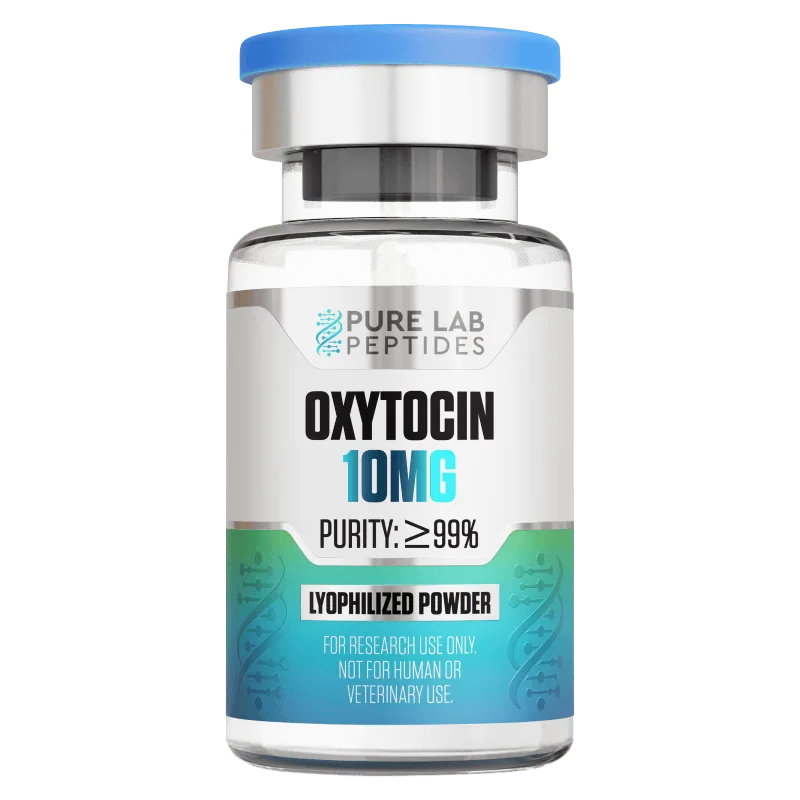
Dosing & Reconstitution Guide
Educational guide for reconstitution and daily dosing
Standard / Gradual Approach (3 mL = ~3.33 mg/mL)
| Week | Daily Dose (mcg) | Units (per injection) (mL) |
|---|---|---|
| Weeks 1–2 | 100 mcg | 3 units (0.03 mL) |
| Weeks 3–4 | 200 mcg | 6 units (0.06 mL) |
| Weeks 5–6 | 300 mcg | 9 units (0.09 mL) |
| Weeks 7–8 | 400 mcg | 12 units (0.12 mL) |
| Weeks 9–12 | 500 mcg | 15 units (0.15 mL) |
Frequency: Inject once daily subcutaneously. This schedule uses the standard 3.0 mL dilution for practical unit measurements on insulin syringes. For ≤10‑unit (≤0.10 mL) administrations, consider 30‑ or 50‑unit insulin syringes for improved readability.
Reconstitution Steps
- Draw 3.0 mL bacteriostatic water with a sterile syringe.
- Inject slowly down the vial wall; avoid foaming.
- Gently swirl/roll until dissolved (do not shake).
- Label and refrigerate at 2–8 °C (35.6–46.4 °F), protected from light.
Supplies Needed
Plan based on an 8–16 week daily protocol with gradual titration.
-
Peptide Vials (Oxytocin, 10 mg each):
- 8 weeks ≈ 3 vials
- 12 weeks ≈ 5 vials
- 16 weeks ≈ 6 vials
-
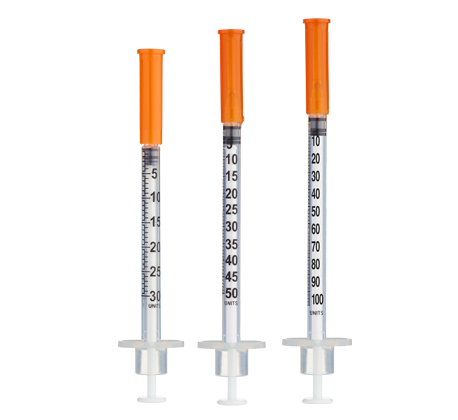
Insulin Syringes (U‑100):
- Per week: 7 syringes (1/day)
- 8 weeks: 56 syringes
- 12 weeks: 84 syringes
- 16 weeks: 112 syringes
-
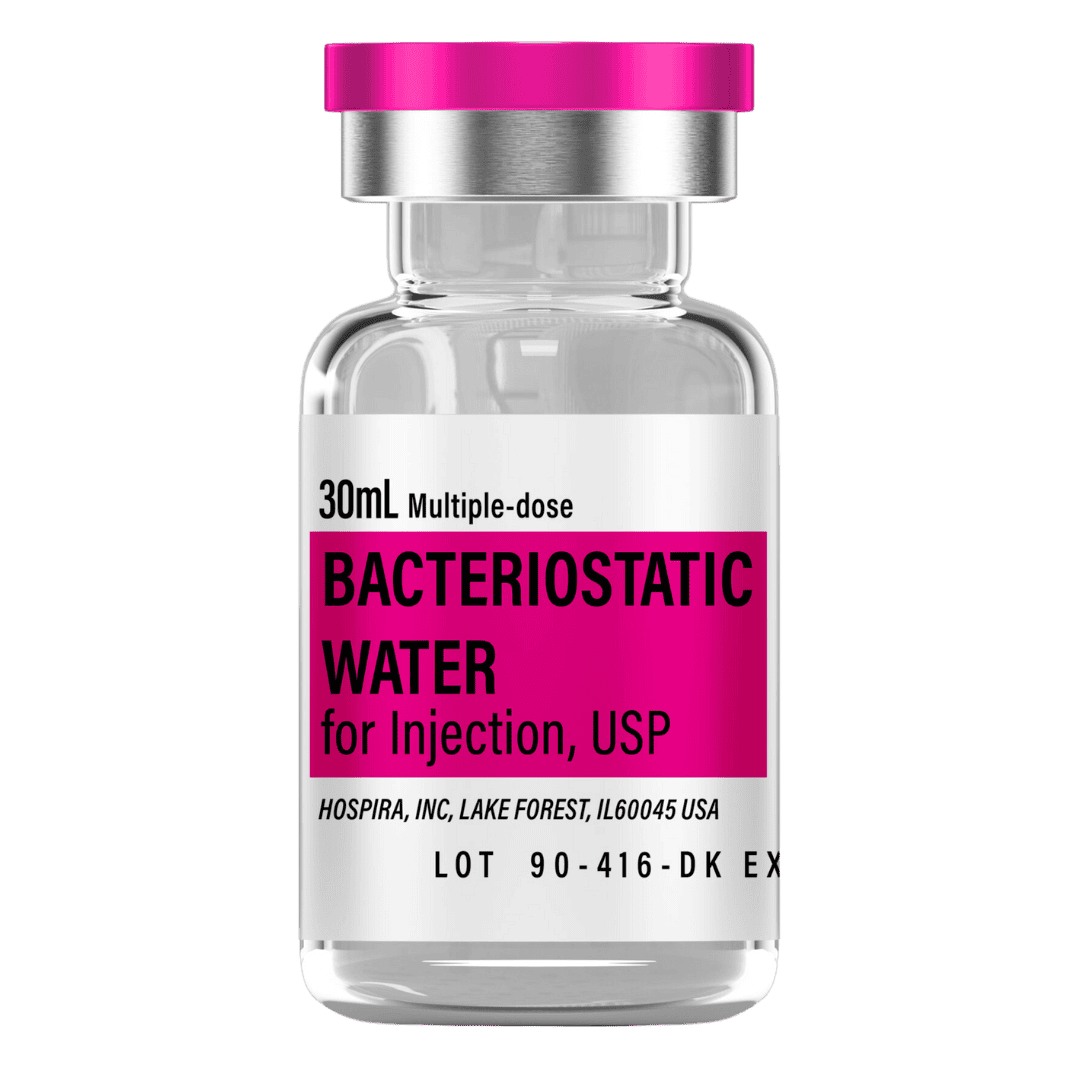
Bacteriostatic Water (10 mL bottles): Use ~3.0 mL per vial for reconstitution.
- 8 weeks (3 vials): 9 mL → 1 × 10 mL bottle
- 12 weeks (5 vials): 15 mL → 2 × 10 mL bottles
- 16 weeks (6 vials): 18 mL → 2 × 10 mL bottles
-
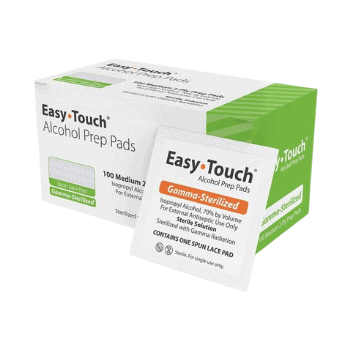
Alcohol Swabs: One for the vial stopper + one for the injection site each day.
- Per week: 14 swabs (2/day)
- 8 weeks: 112 swabs → recommend 2 × 100‑count boxes
- 12 weeks: 168 swabs → recommend 2 × 100‑count boxes
- 16 weeks: 224 swabs → recommend 3 × 100‑count boxes
Protocol Overview
Concise summary of the once‑daily regimen.
- Goal: Explore oxytocin’s effects on social bonding, stress reduction, metabolic function, and pain modulation[1][2].
- Schedule: Daily subcutaneous injections for 8–12 weeks (extend to 16 weeks if desired).
- Dose Range: 100–500 mcg daily with gradual titration.
- Reconstitution: 3.0 mL per 10 mg vial (~3.33 mg/mL) for accurate unit measurements.
- Storage: Lyophilized frozen or refrigerated; reconstituted refrigerated for up to 28–30 days; avoid repeated freeze–thaw cycles.
Dosing Protocol
Suggested daily titration approach based on published research protocols[4][5].
- Start: 100 mcg daily for 2 weeks; increase to 200 mcg for weeks 3–4.
- Titration: Increase by ~100 mcg every 2 weeks as tolerated (300 mcg weeks 5–6, 400 mcg weeks 7–8).
- Target: 500 mcg daily by weeks 9–12 (typical upper limit for research protocols).
- Frequency: Once per day (subcutaneous); rotate injection sites.
- Cycle Length: 8–12 weeks; optional extension to 16 weeks.
- Timing: Any consistent time; oxytocin has rapid clearance, so effects are acute per dose.
Storage Instructions
Proper storage preserves peptide quality[14][15].
- Lyophilized: Store at −20 °C (−4 °F) or lower for long‑term storage; refrigerate at 2–8 °C (35.6–46.4 °F) for shorter periods. Protect from light and moisture.
- Reconstituted: Refrigerate at 2–8 °C (35.6–46.4 °F); stable for up to 28–30 days with bacteriostatic water. Mark date of reconstitution and discard after 4 weeks.
- Extended Storage: Can aliquot reconstituted solution into sterile vials and freeze at −20 °C (−4 °F). Do not subject to repeated freeze–thaw cycles; thaw each aliquot only once.
- Allow vials to reach room temperature before opening to reduce condensation uptake.
Important Notes
Practical considerations for consistency and safety.
- Use new sterile insulin syringes for each injection; dispose in a sharps container.
- Rotate injection sites (abdomen, thighs, upper arms) to reduce local irritation and lipohypertrophy[13].
- Inject slowly; wait a few seconds before withdrawing the needle.
- Use aseptic technique when withdrawing doses to avoid introducing contaminants.
- Discard reconstituted solution if it becomes cloudy, discolored, or contains particles.
- Document daily dose and site rotation to maintain consistency.
How This Works
Oxytocin exerts its effects by binding to oxytocin receptors (OXTR), which are G‑protein coupled receptors widely expressed in both central and peripheral tissues[6]. In the brain, oxytocin acts as a neuromodulator: it is produced in the hypothalamus and released from the posterior pituitary, and also directly released within brain regions involved in emotion and social behavior. Activation of central OXTR influences neurotransmitter systems (e.g., enhancing prosocial signaling via dopamine and reducing stress responses via the hypothalamic–pituitary–adrenal axis)[7]. These actions underlie oxytocin’s observed effects on increasing trust, empathy, and social bonding.
Peripherally, oxytocin causes contraction of smooth muscles—for example, uterine muscle contraction during labor and milk ejection in lactation[1]. It also can modulate pain perception and inflammation; studies show subcutaneous oxytocin produces local analgesia, likely by acting on sensory nerves or immune cells in skin tissue[8]. Importantly, oxytocin does not significantly cross the blood–brain barrier from the bloodstream. Thus, peripheral administration primarily targets peripheral OXTR (with some indirect central effects), while intranasal administration is thought to better engage central receptors by bypassing the blood–brain barrier. Overall, oxytocin’s mechanism in research contexts involves enhancing social‑affiliative behaviors and modulating physiological stress and metabolic processes through its receptor‑mediated signaling pathways.
Potential Benefits & Side Effects
Research on oxytocin has uncovered a range of potential benefits:
- Social and Behavioral Effects: Oxytocin is associated with increased trust, social bonding, and reduced anxiety in social situations[2]. Clinical research is investigating oxytocin as a therapy for conditions like autism spectrum disorder and social anxiety, due to its prosocial effects. Early studies show intranasal oxytocin can modestly improve social cognition or reduce anxiety in some populations, with a good safety profile.
- Psychiatric and Neurological: Beyond autism and anxiety, oxytocin is being explored in conditions such as PTSD, depression, and addiction. Its role in reducing the stress response and fear (via effects on the amygdala and other limbic structures) makes it a candidate for adjunctive treatment in these disorders. While results are mixed, oxytocin generally has shown anxiolytic (anxiety‑reducing) and mood‑modulating properties in short‑term studies without significant side effects[9].
- Metabolic and Weight Management: Oxytocin may influence appetite and metabolism. In humans, a single intranasal oxytocin dose has been shown to reduce caloric intake at a test meal and increase fat oxidation[10]. Animal studies and small trials suggest chronic oxytocin treatment can lead to modest weight loss, improved insulin sensitivity, and reduced visceral fat[5][11], possibly by acting on hypothalamic circuits that regulate hunger and energy expenditure.
- Analgesic and Anti‑inflammatory: Emerging evidence indicates oxytocin can have pain‑reducing benefits. A randomized trial in healthy adults found that a subcutaneous injection of oxytocin (4 mcg) significantly reduced ratings of heat pain intensity and unpleasantness on the treated arm[8]. Oxytocin receptors in the skin and other tissues may mediate analgesia and wound‑healing processes, suggesting a potential role in pain management and recovery.
- Reproductive Health: As an established uterotonic, oxytocin (administered in much larger doses than research use) is routinely used to induce labor or reduce postpartum bleeding. In a research context, this effect is a reminder of oxytocin’s powerful influence on smooth muscle.
Published human trials of oxytocin have reported a placebo‑like safety profile at doses roughly equivalent to 18–40 IU intranasally per administration (approximately 30–67 mcg)[9]. Daily cumulative doses in research are often in the tens to low hundreds of micrograms. For example, an 8‑week trial in adults used 96 IU per day intranasally (24 IU four times daily) with no serious adverse events[4]. A systematic review noted no reliable side effects with short‑term oxytocin in the 18–40 IU range, and even higher daily exposures (approximately 96 IU or approximately 160 mcg) did not differ from placebo in adverse event frequency[9].
Lifestyle Factors
Complementary strategies for best outcomes.
- Pair with a balanced, nutrient‑dense diet tailored to energy needs and research goals (e.g., caloric intake for metabolic studies).
- Engage in regular physical activity; combine resistance training and aerobic exercise to support overall metabolic health.
- Prioritize sleep (7–9 hours) and stress management to support neuroendocrine function and adherence.
- Maintain consistent injection timing and site rotation practices for optimal absorption and minimal local reactions.
Injection Technique
Proper subcutaneous injection technique is critical for consistent dosing and safety[12][13].
- Supplies: A U‑100 insulin syringe (1 mL, 100 units) with a fine‑gauge needle (e.g., 29–31 G), alcohol swabs, and a sharps disposal container.
- Site Selection: Choose a site with a layer of subcutaneous fat. Common SC injection areas include the abdomen (avoiding 1–2 inches around the navel), outer upper arms, thighs, or buttocks. Rotate injection sites systematically; do not inject into the same spot repeatedly—maintain at least approximately 1.5 inch spacing from the last site.
- Injection Steps: Clean the chosen site with an alcohol pad and let dry. Using one hand, pinch a fold of skin between your thumb and forefinger to elevate the subcutaneous layer. Hold the syringe like a pencil or dart and insert the needle at a 45°–90° angle into the pinched skin fold (for most, a 90° angle is fine; a 45° angle may be used if limited subcutaneous depth). Insert the needle fully into the subcutaneous tissue. Slowly depress the plunger to inject the oxytocin solution. After the full dose is delivered, withdraw the needle at the same angle. If slight bleeding occurs, gently press an alcohol swab on the site (do not rub vigorously). Dispose of the used syringe and needle immediately in a puncture‑proof sharps container.
- Technique Tips: Injecting subcutaneously should be relatively painless with a fine needle; inserting quickly through the skin can minimize discomfort. Always use a new sterile needle/syringe for each injection. Ensure no air bubbles in the syringe to improve accuracy. If the volume is very small (less than 0.1 mL), be extra careful to expel any air and inject slowly, as low volumes are harder to measure precisely.
Recommended Source
We recommend Pure Lab Peptides for high‑purity Oxytocin (10 mg).
Why Pure Lab Peptides?
- High‑purity, third‑party‑tested lots with batch COAs.
- Consistent, ISO‑aligned handling and documentation.
- Reliable fulfillment to maintain cold‑chain integrity.
Important Note
This content is intended for therapeutic educational purposes only and does not constitute medical advice, diagnosis, or treatment.
References
-
Cleveland Clinic
— Oxytocin: What It Is, Function & Effects (overview of oxytocin hormone and its physiological roles) -
Wikipedia
— Oxytocin (comprehensive encyclopedia entry on oxytocin biochemistry, physiology, and research) -
Pure Lab Peptides
— Buy Oxytocin 10mg (product page for research oxytocin peptide) -
PubMed
— Intranasal Oxytocin for Obesity (8‑week trial using 96 IU per day in adults) -
Aging Journal
— Peripheral oxytocin treatment ameliorates obesity by reducing food intake and visceral fat mass -
PLOS One
— Prolonged Subcutaneous Administration of Oxytocin in Male Rats (study on SC oxytocin effects) -
Science Direct
— The physiology and pharmacology of oxytocin in labor and in the puerperium -
PubMed
— Subcutaneous Oxytocin Injection Reduces Heat Pain: A Randomized‑Controlled Trial -
PubMed
— A review of safety, side‑effects and subjective reactions to intranasal oxytocin in human research -
PubMed
— The effects of oxytocin on eating behaviour and metabolism in humans -
PMC
— Oxytocin: A Potential Therapeutic for Obesity (review of oxytocin’s metabolic effects) -
Johns Hopkins Arthritis Center
— How to give a subcutaneous injection (step‑by‑step technique guide) -
PMC
— Pharmacologic Considerations in the Disposition of Antibodies and Antibody‑Drug Conjugates (subcutaneous drug injection review) -
Eurogentec (HiLyte Biosciences)
— Oxytocin Peptide Technical Data Sheet (peptide storage and handling specifications) -
FDA Accessdata
— Chemistry Review Document (oxytocin drug chemistry and stability information)