
Neuroxelin (48 mg Vial) Dosage Protocol
Quickstart Highlights
Neuroxelin dosage protocols are designed to support neuroprotection and cognitive recovery following brain injury or stroke. As a synthetic neuroprotective peptide, Neuroxelin may help reduce excitotoxic damage, modulate neuroinflammation, and support neural repair processes[1][2]. Research suggests that Neuroxelin-class peptides can promote improved neurological outcomes and cognitive function when administered consistently over several weeks[3][4]. This educational protocol outlines a once-daily subcutaneous approach optimized for sustained neuroprotective coverage.
- Reconstitute: Add 3.0 mL bacteriostatic water → 16 mg/mL concentration.
- Typical daily range: 250–1000 mcg once daily (standard dose: 500 mcg).
- Easy measuring: At 16 mg/mL, 1 unit = 0.01 mL = 160 mcg on a U-100 insulin syringe.
- Storage: Lyophilized: freeze at −20 °C (−4 °F); after reconstitution, refrigerate at 2–8 °C (35.6–46.4 °F); avoid freeze–thaw cycles.
Dosing & Reconstitution Guide
Educational guide for reconstitution and daily dosing
Standard / Gradual Approach (3 mL = 16 mg/mL)
| Week | Daily Dose (mcg) | Units (per injection) (mL) |
|---|---|---|
| Weeks 1–4 | 500 mcg | 3 units (0.03 mL) |
| Weeks 5–8 | 750 mcg | 4.7 units (0.047 mL) |
Frequency: Inject once daily subcutaneously, preferably in the morning. For ≤10-unit (≤0.10 mL) administrations, consider 30- or 50-unit insulin syringes for improved readability.
Alternative Dosing Tiers
| Tier | Daily Dose (mcg) | Units (per injection) (mL) |
|---|---|---|
| Conservative | 250 mcg | 1.6 units (0.016 mL) |
| Typical | 500 mcg | 3.1 units (0.031 mL) |
| Aggressive | 1000 mcg | 6.3 units (0.063 mL) |
Reconstitution Steps
- Allow lyophilized vial to reach room temperature before opening.
- Draw 3.0 mL bacteriostatic water with a sterile syringe.
- Inject slowly down the vial wall; avoid foaming.
- Gently swirl/roll until dissolved (do not shake).
- Label with concentration (16 mg/mL) and date; refrigerate at 2–8 °C (35.6–46.4 °F), protected from light.
Supplies Needed
Plan based on an 8–12 week daily protocol at the typical 500 mcg dose.
-
Peptide Vials (Neuroxelin, 48 mg each):
- 8 weeks (500 mcg/day): 1 vial (28 mg used; ~58% of vial)
- 12 weeks (500 mcg/day): 1 vial (42 mg used; ~88% of vial)
- 8 weeks (1000 mcg/day): 2 vials (56 mg needed)
-
Insulin Syringes (U-100, 30- or 50-unit recommended):
- Per week: 7 syringes (1/day)
- 8 weeks: 56 syringes
- 12 weeks: 84 syringes
-
Bacteriostatic Water (10 mL bottles): Use 3.0 mL per vial for reconstitution.
- 1 vial reconstitution: 3 mL → 1 × 10 mL bottle
- 2 vials reconstitution: 6 mL → 1 × 10 mL bottle
-
Alcohol Swabs: One for the vial stopper + one for the injection site each day.
- Per week: 14 swabs (2/day)
- 8 weeks: 112 swabs → recommend 2 × 100-count boxes
- 12 weeks: 168 swabs → recommend 2 × 100-count boxes


Protocol Overview
Concise summary of the once-daily regimen for neuroprotection and cognitive recovery.
- Goal: Support neuroprotection, reduce neuroinflammation, and enhance cognitive recovery following brain injury[1][2].
- Schedule: Daily subcutaneous injections for 8–12 weeks (extend if desired).
- Dose Range: 250–1000 mcg daily; typical dose is 500 mcg.
- Reconstitution: 3.0 mL per 48 mg vial (16 mg/mL) for practical unit measurements.
- Storage: Lyophilized frozen at −20 °C; reconstituted refrigerated at 2–8 °C; use within 4 weeks of reconstitution.
Dosing Protocol
Suggested daily dosing approach with optional titration.
- Start: 500 mcg daily for Weeks 1–4; assess tolerance.
- Adjust: Increase to 750–1000 mcg daily from Week 5 if well-tolerated and more aggressive support is desired.
- Frequency: Once per day (subcutaneous), preferably morning.
- Cycle Length: 8–12 weeks; re-assess every 8 weeks for extension.
- Timing: Administer at the same time each morning; rotate injection sites.
Storage Instructions
Proper storage preserves peptide integrity and potency.
- Lyophilized: Store at −20 °C (−4 °F) in dry, dark conditions; stable for months to years[5].
- Reconstituted: Refrigerate at 2–8 °C (35.6–46.4 °F); use within 4 weeks; avoid freeze–thaw cycles[6].
- Allow vials to reach room temperature before opening to reduce condensation and moisture uptake[5].
- Consider aliquoting into sterile cryovials if not using full volume within 4 weeks.
Important Notes
Practical considerations for consistency and safety.
- Use new sterile insulin syringes for each injection; dispose in a sharps container.
- Rotate injection sites (abdomen, thighs, upper arms) to prevent tissue irritation or lipohypertrophy.
- Inject slowly; wait a few seconds before withdrawing the needle.
- Document daily dose, time, and injection site to maintain consistency.
- For doses ≤6 units, use 30- or 50-unit insulin syringes for improved measurement accuracy.
How This Works
Neuroxelin is designed to intervene in the cascade of brain injury through multiple mechanisms. It may dampen excitotoxic neuron death by disrupting NMDA receptor signaling pathways, similar to nerinetide (NA-1), which interferes with PSD-95 protein interactions[1]. Additionally, Neuroxelin-class peptides can reduce neuroinflammation by downregulating microglial activation and cytokine release, as demonstrated in studies of apoE-mimetic peptides like CN-105[2]. The peptide may also provide neurotrophic support by promoting synaptic repair and neurogenesis, supporting neuronal survival and vascular repair following acute brain injuries[3][7].
Potential Benefits & Side Effects
Observations from preclinical and clinical literature on related neuropeptides.
- Research suggests improved neurological outcomes and functional recovery following stroke or brain injury[3][8].
- Studies of peptide supplementation show significant improvements in cognitive test scores (MoCA) and information processing speed over 90–360 days[4].
- Animal studies demonstrate reduced neuronal death, decreased microglial activation, and better behavioral outcomes[2].
- Related peptides show low toxicity profiles with no significant difference in adverse events versus placebo in Phase III trials[8][9].
- Possible mild injection-site reactions (redness, irritation) may occur with subcutaneous administration; rotate sites to minimize.
Lifestyle Factors
Complementary strategies to support cognitive recovery.
- Combine with structured physical rehabilitation and cognitive exercises for enhanced outcomes.
- Prioritize quality sleep (7–9 hours) to support neural repair and memory consolidation.
- Maintain a nutrient-rich diet with adequate omega-3 fatty acids, antioxidants, and protein.
- Engage in regular aerobic exercise as tolerated to promote cerebral blood flow.
- Manage stress through mindfulness or relaxation techniques to support recovery.
Injection Technique
General subcutaneous guidance from clinical best-practice resources[10].
- Clean the vial stopper and skin with alcohol; allow to dry completely.
- Pinch a skinfold; insert the needle at 45° into subcutaneous tissue[10][11].
- Do not aspirate for subcutaneous injections; inject slowly and steadily over ~5 seconds[10].
- Rotate sites systematically (abdomen, thighs, upper arms) to avoid tissue irritation[12].
- Use room-temperature solution and allow alcohol to dry before injecting to minimize discomfort.
- Wait 2 seconds after injection before withdrawing the needle; apply gentle pressure with gauze if needed.
Recommended Source
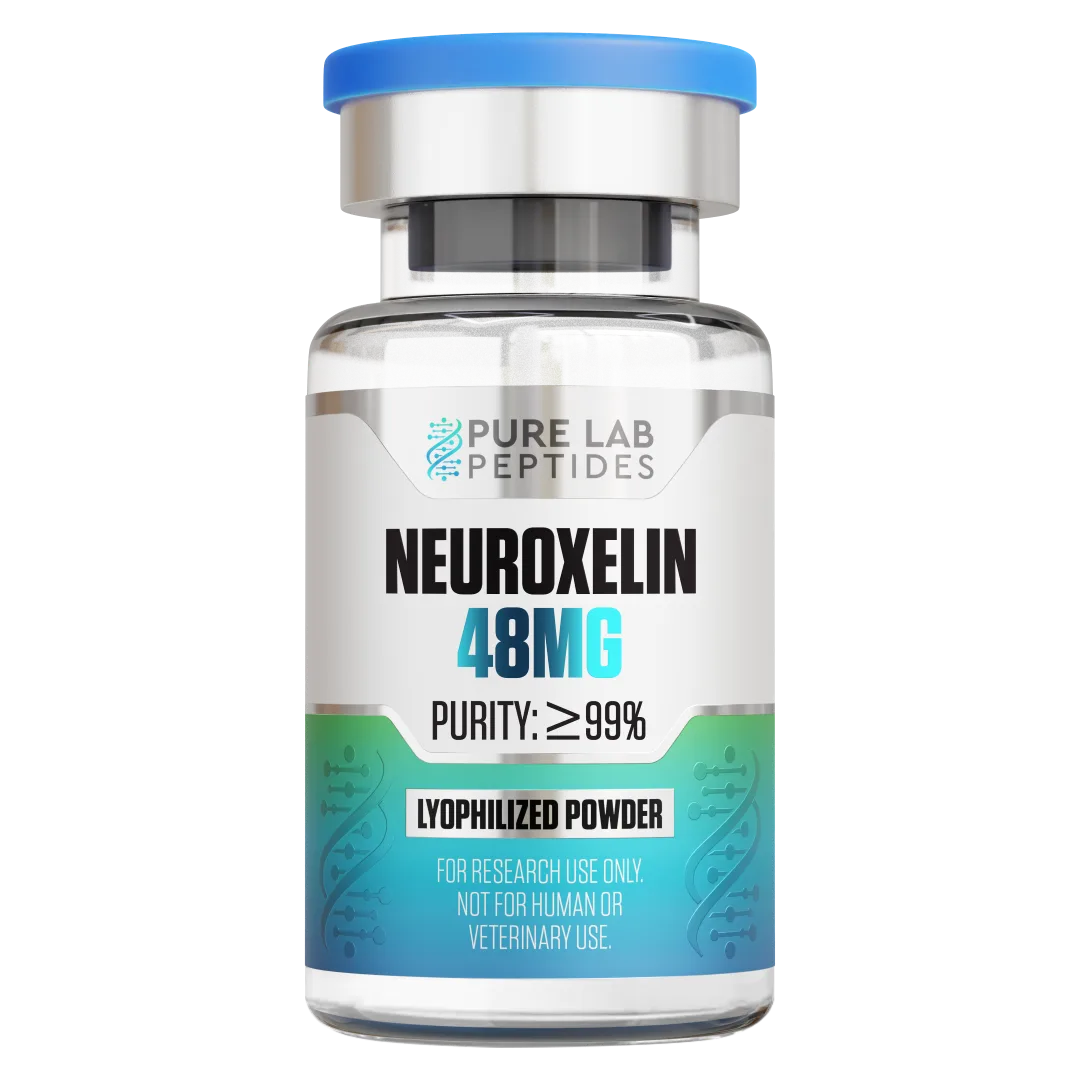
We recommend Pure Lab Peptides for high-purity Neuroxelin (48 mg).
Why Pure Lab Peptides?
- High-purity, third-party-tested lots with batch COAs.
- Consistent, ISO-aligned handling and documentation.
- Reliable fulfillment to maintain cold-chain integrity.
Important Note
This content is intended for therapeutic educational purposes only and does not constitute medical advice, diagnosis, or treatment.
References
-
The Lancet
— Efficacy and safety of nerinetide for acute ischaemic stroke (ESCAPE-NA1): Phase 3 RCT of PSD-95 inhibitor peptide -
Scientific Reports (Nature)
— Neuroprotective pentapeptide CN-105 reduces sterile inflammation and improves outcomes in TBI murine model -
Drugs (Springer/PubMed)
— Efficacy and safety of sovateltide in acute cerebral ischaemic stroke: Phase III clinical trial -
Nutrients (PMC)
— Neuropsychological performance after extended N-Pep-12 supplementation in ischemic stroke (12-month study) -
GenScript
— Peptide storage and handling guidelines: stability, reconstitution, and freeze-thaw considerations -
NIBSC (UK MHRA)
— Peptide handling, dissolution, and storage guidelines from standards agency -
Biochimica et Biophysica Acta (ScienceDirect)
— Advances in clinical studies of peptide drugs in stroke disease: mechanisms and progress -
Stroke (AHA Journals)
— Factors influencing nerinetide effect on infarct volume in stroke patients -
PubMed
— Phase 1 randomized, double-blind, placebo-controlled study of CN-105 safety and pharmacokinetics -
CDC
— Vaccine administration: subcutaneous injection technique (angle, site, no aspiration) -
CDC
— Vaccine administration during vaccination: subcutaneous injection guidance -
Advances in Therapy (PMC)
— Subcutaneous injection of drugs: factors influencing pain sensation at injection site -
Translational Psychiatry (Nature)
— Davunetide effects on memory in prodromal Alzheimer’s disease -
Schizophrenia Research (ScienceDirect)
— Effect of the neuroprotective peptide davunetide (AL-108) on cognition and safety -
Pure Lab Peptides
— Neuroxelin (48 mg) product page (quality and batch documentation)