
MOTS-C (5 mg Vial) Dosage Protocol
Quickstart Highlights
MOTS-C is a 16‑amino-acid mitochondrial‑derived peptide encoded in the mtDNA 12S rRNA region[1][2]. Discovered in 2015, it enhances metabolic homeostasis through AMPK activation[1][3], increases sharply with exercise (~12‑fold in muscle)[3], and declines with age. This educational protocol presents a once‑daily subcutaneous approach aligned with preclinical findings and emerging clinical use.
- Reconstitute: Add 3.0 mL bacteriostatic water → ~1.67 mg/mL concentration.
- Typical daily range: 500–1500 mcg once daily (gradual titration from 500 mcg).
- Easy measuring: At 1.67 mg/mL, 1 unit = 0.01 mL ≈ 16.7 mcg on a U‑100 insulin syringe.
- Storage: Lyophilized: freeze at −20 °C (−4 °F); after reconstitution, refrigerate at 2–8 °C (35.6–46.4 °F) and use within 2–4 weeks.
Dosing & Reconstitution Guide
Educational guide for reconstitution and daily dosing
Standard / Gradual Approach (3 mL = ~1.67 mg/mL)
| Week | Daily Dose (mcg) | Units (per injection) (mL) |
|---|---|---|
| Weeks 1–2 | 500 mcg (0.5 mg) | 30 units (0.30 mL) |
| Weeks 3–4 | 1000 mcg (1.0 mg) | 60 units (0.60 mL) |
| Weeks 5–6 | 1500 mcg (1.5 mg) | 90 units (0.90 mL) |
| Weeks 7–8 | 2000 mcg (2.0 mg) | 120 units (two 60‑unit injections)* |
Frequency: Inject once daily subcutaneously (morning administration preferred). *For 2.0 mg doses (120 units total), split into two separate 60‑unit injections at different sites, or use a more concentrated 2.0 mL reconstitution (2.5 mg/mL → 80 units for 2 mg). Alternate protocol: Some users employ 2–3 injections per week at higher per‑dose amounts (e.g., 3–5 mg twice weekly); consult literature for guidance[6].
Reconstitution Steps
- Draw 3.0 mL bacteriostatic water with a sterile syringe.
- Inject slowly down the vial wall; avoid foaming.
- Gently swirl/roll until dissolved (do not shake vigorously).
- Label and refrigerate at 2–8 °C (35.6–46.4 °F), protected from light; use within 2–4 weeks[12].
Supplies Needed
Plan based on an 8–16 week daily protocol with gradual titration.
-
Peptide Vials (MOTS-C, 5 mg each):
- 8 weeks ≈ 12 vials (average ~1.1 mg/day)
- 12 weeks ≈ 18 vials
- 16 weeks ≈ 24 vials
-
Insulin Syringes (U‑100):
- Per week: 7 syringes (1/day)
- 8 weeks: 56 syringes
- 12 weeks: 84 syringes
- 16 weeks: 112 syringes
-
Bacteriostatic Water (10 mL bottles): Use ~3.0 mL per vial for reconstitution.
- 8 weeks (12 vials): 36 mL → 4 × 10 mL bottles
- 12 weeks (18 vials): 54 mL → 6 × 10 mL bottles
- 16 weeks (24 vials): 72 mL → 8 × 10 mL bottles
-
Alcohol Swabs: One for the vial stopper + one for the injection site each day.
- Per week: 14 swabs (2/day)
- 8 weeks: 112 swabs → recommend 2 × 100‑count boxes
- 12 weeks: 168 swabs → recommend 2 × 100‑count boxes
- 16 weeks: 224 swabs → recommend 3 × 100‑count boxes


Protocol Overview
Concise summary of the once‑daily regimen based on preclinical evidence.
- Goal: Support metabolic homeostasis, enhance insulin sensitivity, and promote healthy aging through AMPK activation[1][2].
- Schedule: Daily subcutaneous injections for 4–8 weeks, followed by an equal‑length break (cycling approach).
- Dose Range: 500–2000 mcg daily with gradual titration over weeks.
- Reconstitution: 3.0 mL per 5 mg vial (~1.67 mg/mL) for accurate unit measurements.
- Storage: Lyophilized frozen at −20 °C (−4 °F); reconstituted refrigerated at 2–8 °C (35.6–46.4 °F); use within 2–4 weeks[11][12].
Dosing Protocol
Suggested daily titration approach aligned with preclinical models[1][2].
- Start: 500 mcg (0.5 mg) daily for weeks 1–2; conservative baseline dose.
- Titrate: Increase to 1000 mcg (1.0 mg) daily for weeks 3–4, then 1500 mcg (1.5 mg) for weeks 5–6.
- Target: 1500–2000 mcg (1.5–2.0 mg) daily by weeks 7–8 if well‑tolerated.
- Frequency: Once per day (subcutaneous); morning administration preferred to mimic exercise‑induced release patterns.
- Cycle Length: 4–8 weeks on, followed by 4–8 weeks off; avoid continuous long‑term use without breaks.
- Timing: Consistent daily timing; rotate injection sites (abdomen, thighs, upper arms).
Storage Instructions
Proper storage preserves peptide quality and potency[11][12].
- Lyophilized: Store at −20 °C (−4 °F) in dry, dark conditions with desiccant; stable for months to years when frozen.
- Reconstituted: Refrigerate at 2–8 °C (35.6–46.4 °F); use within 2–4 weeks for optimal potency (studies show >99% purity for first 1–2 weeks, ~98% by 30 days)[12].
- Handling: Allow vials to reach room temperature before opening to reduce condensation; avoid repeated freeze–thaw cycles[13][14].
- Protect from light and moisture; use aseptic technique when withdrawing doses.
Important Notes
Practical considerations for consistency and safety.
- Use new sterile insulin syringes for each injection; dispose in a sharps container.
- Rotate injection sites systematically (abdomen, thighs, upper arms) to reduce local irritation and lipohypertrophy risk[9].
- Inject slowly; wait a few seconds before withdrawing the needle to ensure complete delivery.
- Document daily dose, time, and site rotation to maintain consistency and monitor response.
- If doses fall below 30 units (0.30 mL), consider using 50‑unit or 30‑unit insulin syringes for improved readability.
- For 2.0 mg doses exceeding single‑syringe capacity (>100 units), split into two separate injections or use 2.0 mL reconstitution.
How This Works
MOTS-C is a mitochondrial‑derived peptide that activates AMPK‑driven metabolic pathways to enhance glucose uptake, increase fat oxidation, and reduce lipid accumulation in muscle and adipose tissue[1][2]. Preclinical studies demonstrate that daily MOTS-C administration (5 mg/kg i.p. in mice) prevents diet‑induced obesity and insulin resistance[2], while short 7‑day courses restore insulin sensitivity in aged mice to youthful levels. Unlike metformin (which acts primarily in the liver), MOTS-C directly targets skeletal muscle and fat tissues[2]. The peptide also translocates to the nucleus under metabolic stress to regulate nuclear gene expression[4]. Endogenous MOTS-C levels rise sharply with exercise (~12‑fold increase in muscle)[3] and decline with age, suggesting therapeutic potential for age‑related metabolic decline. No formal human clinical trials have been completed to date; current human use is investigational and based on preclinical findings[6].
Potential Benefits & Side Effects
Observations from preclinical and emerging investigational use.
Potential Benefits
- Enhanced insulin sensitivity and glucose metabolism in muscle and fat tissue[1][2]
- Increased fat oxidation and reduced diet‑induced obesity in animal models[2]
- Improved exercise capacity and muscle homeostasis during aging[3]
- Modest lifespan extension in rodents with intermittent dosing (15 mg/kg 3×/week)[2]
- No stimulation of IGF‑1 or adverse effects on glucose tolerance (contrast with growth hormone)
- Well‑tolerated in animal studies with no severe adverse effects at typical doses
Potential Side Effects
- Mild injection‑site reactions (temporary redness, inflammation, or bruising) reported anecdotally
- No severe adverse effects or organ toxicity observed in preclinical studies at standard doses[6]
- Long‑term human safety data not yet available; chronic continuous use beyond 8 weeks remains uncharacterized
- Theoretical risk of downregulation with prolonged daily use; cycling approach (4–8 weeks on, equal time off) recommended
Lifestyle Factors
Complementary strategies for optimal metabolic outcomes.
- Pair with a balanced, protein‑forward diet tailored to energy needs; MOTS-C enhances nutrient partitioning and fat utilization.
- Combine resistance training and aerobic activity to reinforce AMPK activation and metabolic adaptations[3].
- Prioritize 7–9 hours of quality sleep; MOTS-C may support mitochondrial function, but recovery remains essential.
- Manage stress through mindfulness or relaxation practices; chronic stress can impair metabolic benefits.
- Maintain hydration and consider timing injections around fasted periods (e.g., morning before breakfast) to mimic exercise‑induced patterns.
Injection Technique
General subcutaneous guidance from clinical best‑practice resources[7][8][9].
- Clean the vial stopper and injection site with alcohol swab; allow to air‑dry.
- Pinch a skinfold (1–2 inches) at the chosen site; insert the needle at 45–90° into subcutaneous tissue[7][8].
- Do not aspirate for subcutaneous injections[7]; inject slowly and steadily over 2–5 seconds.
- Withdraw needle at same angle; apply gentle pressure with clean cotton ball or alcohol pad (do not rub)[9].
- Rotate sites systematically (abdomen at least 2 inches from navel, outer thighs, upper arms) to avoid lipohypertrophy or scar tissue[9].
- Allow refrigerated solution to reach room temperature for 5–10 minutes before injection to reduce sting.
- Dispose of used syringe immediately into puncture‑proof sharps container; do not recap needle[9].
Recommended Source
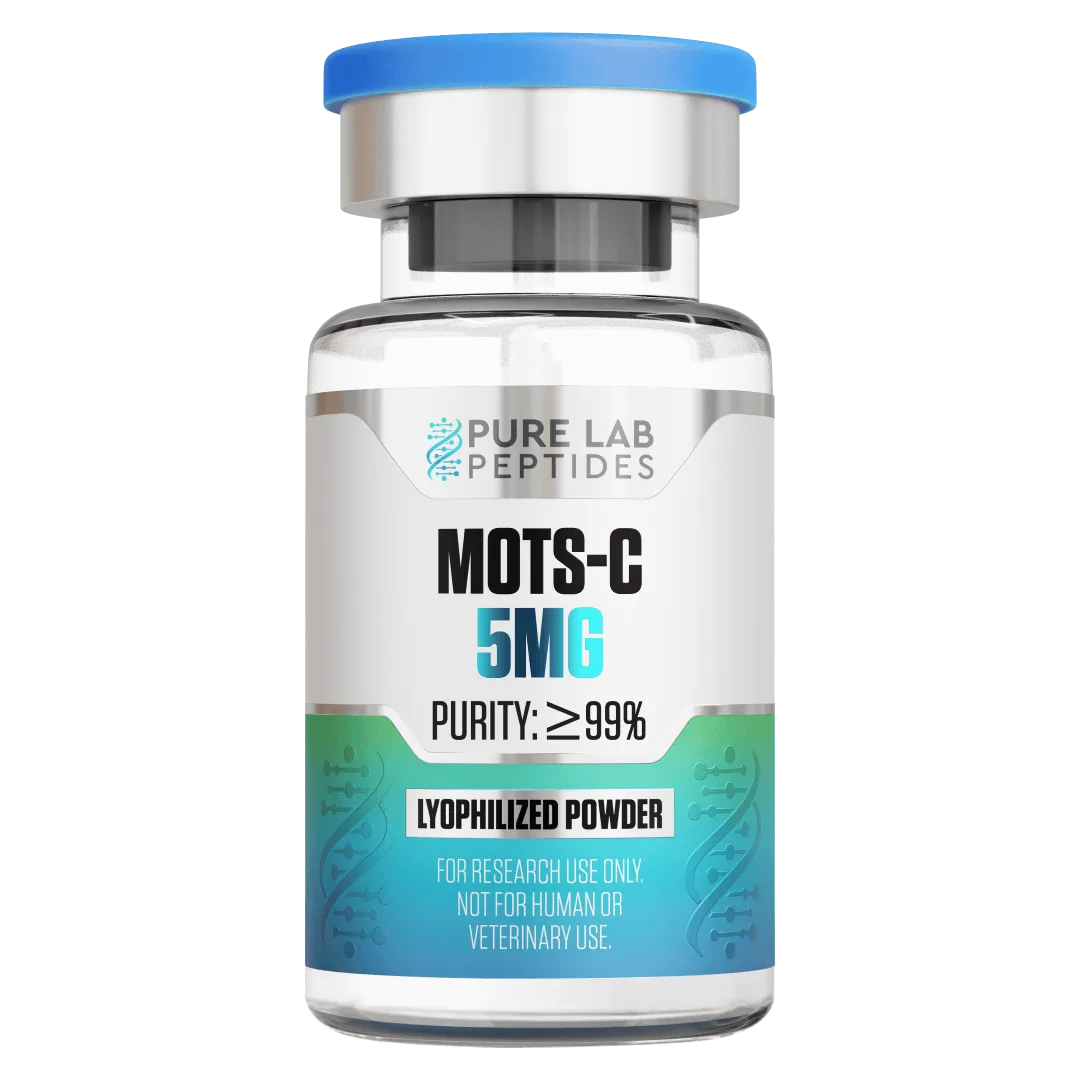
We recommend Pure Lab Peptides for high‑purity MOTS-C (5 mg).
Why Pure Lab Peptides?
- High‑purity (≥98%), third‑party‑tested lots with batch Certificates of Analysis (COA).
- Consistent manufacturing and cold‑chain handling to preserve peptide integrity.
- Reliable fulfillment with discreet packaging and tracking.
- Transparent documentation and customer support for research applications.
Important Note
This content is intended for therapeutic educational purposes only and does not constitute medical advice, diagnosis, or treatment. MOTS-C is an experimental research peptide that is not approved by the FDA or other regulatory agencies for human use. It is supplied strictly for laboratory research purposes and is not for human or veterinary consumption. Any discussion of human dosing is hypothetical and for informational purposes only. Individuals should not self‑administer MOTS-C outside of properly supervised clinical research. If considering off‑label use, consult a licensed healthcare professional and comply with all applicable regulations. Neither the authors nor the supplier assume liability for off‑label use or mishandling of MOTS-C.
References
-
Journal of Translational Medicine (2023)
— Wan W, et al. Mitochondria‑derived peptide MOTS‑c: effects and mechanisms related to stress, metabolism and aging -
Cell Metabolism (2015)
— Lee C, et al. The mitochondrial‑derived peptide MOTS‑c promotes metabolic homeostasis and reduces obesity and insulin resistance (PMID: 25738459) -
Nature Communications (2021)
— Reynolds JC, et al. MOTS‑c is an exercise‑induced mitochondrial‑encoded regulator of age‑dependent physical decline and muscle homeostasis (DOI: 10.1038/s41467-020-20790-0) -
Cell Metabolism (2018)
— Kim KH, et al. The Mitochondrial‑Encoded Peptide MOTS‑c Translocates to the Nucleus to Regulate Nuclear Gene Expression in Response to Metabolic Stress (PMID: 29983246) -
Rapid Communications in Mass Spectrometry (2019)
— Knoop A, et al. Development of an MS‑based detection method for the mitochondrion‑derived peptide MOTS‑c in plasma for doping control (DOI: 10.1002/rcm.8337) -
Alzheimer’s Drug Discovery Foundation (2021)
— Cognitive Vitality Profile: MOTS‑c (evidence review detailing preclinical findings and safety) -
CDC
— Vaccine Administration: Administering Vaccines (subcutaneous route guidance; angle, site, no aspiration) -
CDC
— Subcutaneous Injection Technique (PDF diagram and site guidance) -
NCBI Bookshelf
— Best Practices for Injections: asepsis, preparation, administration, and site rotation -
PMC (Pharmacologic Review)
— Pharmacologic considerations of the subcutaneous route for biologics and peptides -
Bachem
— Handling and Storage Guidelines for Peptides (manufacturer best‑practices for lyophilized and reconstituted peptides) -
Peptide Crafters (2025)
— Stability Study of MOTS‑c Peptide Following Reconstitution and Refrigerated Storage (lab report with purity data over 30 days) -
GenScript
— Peptide Storage and Handling Guidelines (freeze‑thaw considerations and best practices) -
Sigma‑Aldrich
— Handling and Storage Guidelines for Peptides and Proteins (moisture control, temperature recommendations) -
Pure Lab Peptides
— MOTS‑C (5 mg) product page (high‑purity research peptide with batch documentation)