AICAR (50 mg Vial) Dosage Protocol
Quickstart Highlights
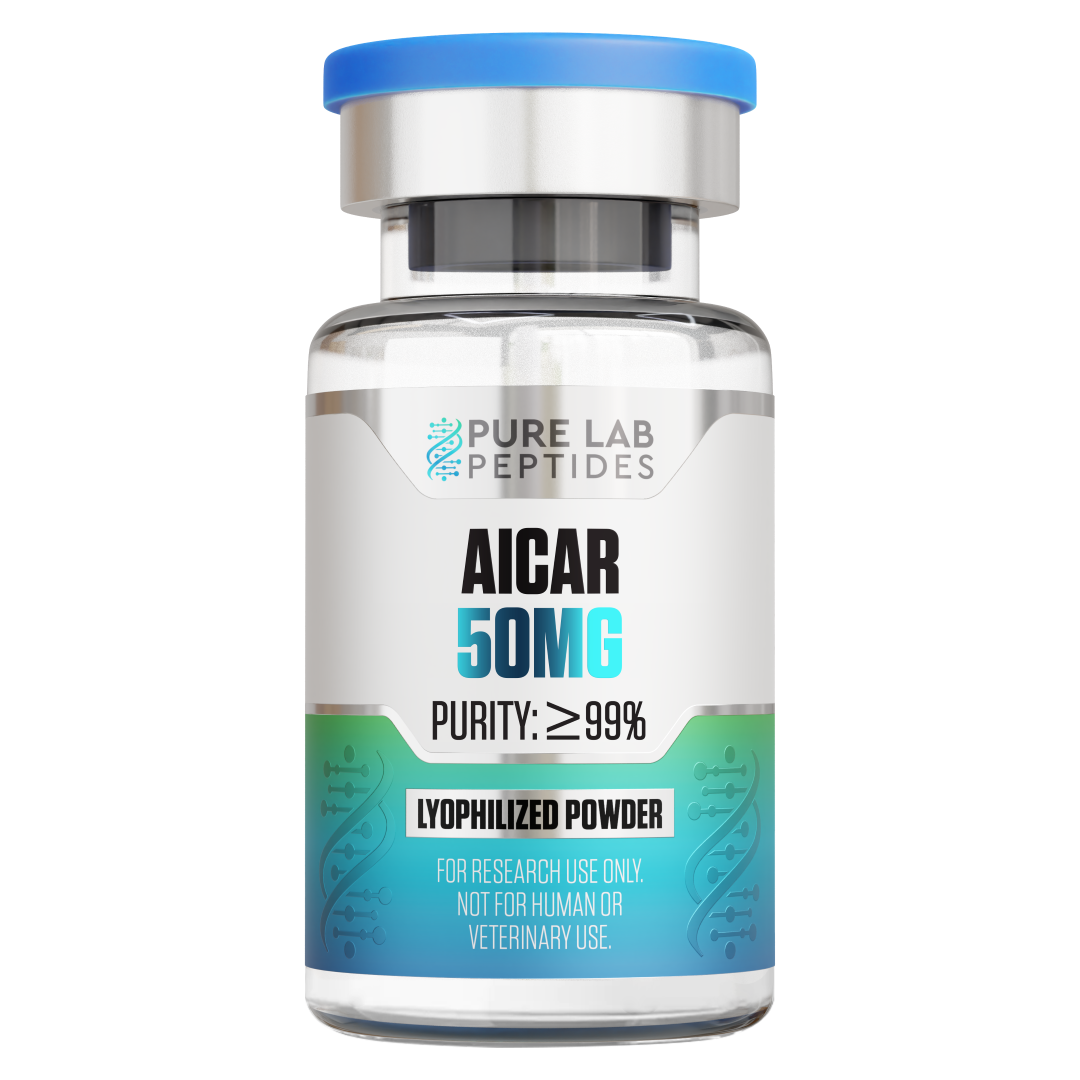
AICAR (5-aminoimidazole-4-carboxamide ribonucleoside) is a research compound that activates AMP-activated protein kinase (AMPK)[1], earning the nickname “exercise pill” after studies showed sedentary animals given AICAR experienced dramatic endurance improvements[2]. AICAR is prohibited in sports (WADA classifies it as a metabolic modulator) and is not approved for therapeutic use in humans[1]. This educational protocol presents a once-daily subcutaneous approach for research purposes only.
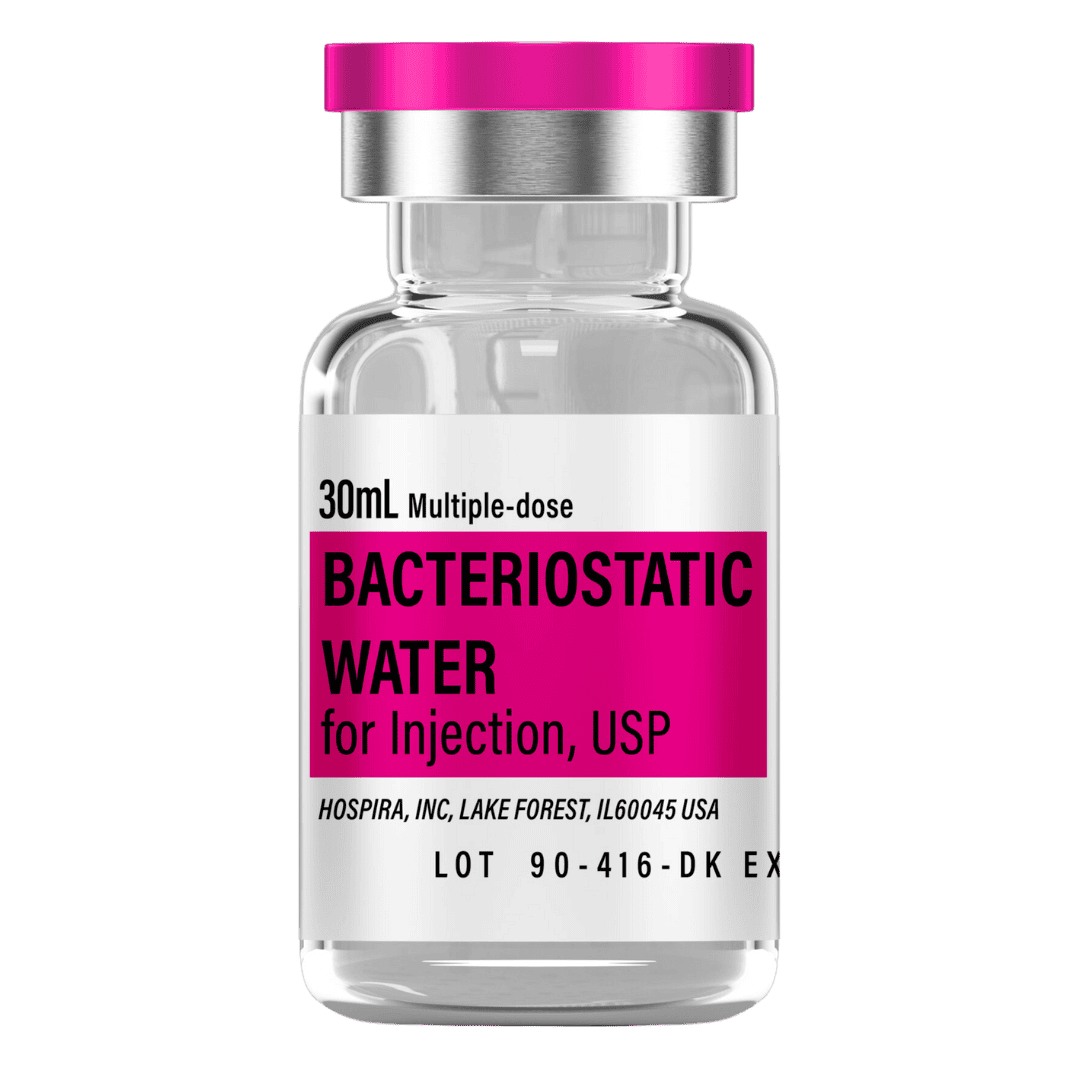
- Reconstitute: Add 3.0 mL bacteriostatic water → ~16.7 mg/mL concentration.
- Research dosing range: 1,000–3,000 mcg once daily (conservative gradual approach).
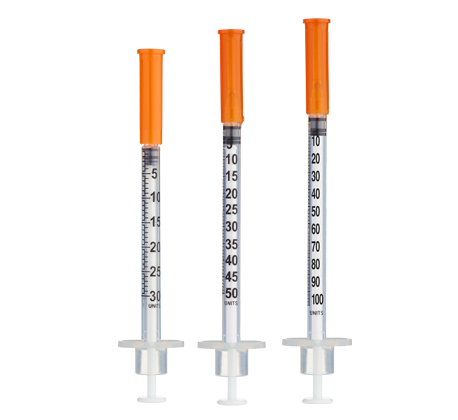
- Easy measuring: At 16.7 mg/mL, 1 unit = 0.01 mL ≈ 167 mcg on a U-100 insulin syringe.
- Storage: Lyophilized: freeze at −20 °C (−4 °F); after reconstitution, refrigerate at 2–8 °C (35.6–46.4 °F) for up to 4 weeks; avoid freeze–thaw cycles.
Dosing & Reconstitution Guide
Educational guide for reconstitution and daily dosing (research use only)
Standard / Gradual Approach (3 mL = ~16.7 mg/mL)
| Week/Phase | Daily Dose | Units (per injection) (mL) |
|---|---|---|
| Weeks 1–2 | 1,000 mcg (1 mg) | 6 units (0.06 mL) |
| Weeks 3–4 | 2,000 mcg (2 mg) | 12 units (0.12 mL) |
| Weeks 5–8 | 3,000 mcg (3 mg) | 18 units (0.18 mL) |
Frequency: Inject once daily subcutaneously[3]. For ≤10-unit (≤0.10 mL) administrations, consider 30- or 50-unit insulin syringes for improved readability.
Reconstitution Steps
- Draw 3.0 mL bacteriostatic water with a sterile syringe.
- Inject slowly down the vial wall; avoid foaming.
- Gently swirl/roll until dissolved (do not shake).
- Label and refrigerate at 2–8 °C (35.6–46.4 °F), protected from light.
Advanced Protocol (Higher Doses)
| Week/Phase | Daily Dose | Units (per injection) (mL) |
|---|---|---|
| Weeks 1–2 | 2,000 mcg (2 mg) | 12 units (0.12 mL) |
| Weeks 3–6 | 3,000 mcg (3 mg) | 18 units (0.18 mL) |
| Weeks 7–12 | 5,000 mcg (5 mg) | 30 units (0.30 mL) |
Note: Higher-dose protocols should only be considered when explicitly supported by literature[4]. Research doses remain well below human safety studies (up to 210 mg/kg IV)[5], providing a wide safety margin.
Supplies Needed
Plan based on an 8-week research protocol (conservative dosing).
-
Peptide Vials (AICAR, 50 mg each):
- 8 weeks (gradual 1–3 mg/day) ≈ 3 vials
- 12 weeks (2–5 mg/day advanced) ≈ 8 vials
-
Insulin Syringes (U-100, or 30/50-unit for precision):
- Per week: 7 syringes (1/day)
- 8 weeks: 56 syringes
- 12 weeks: 84 syringes
-
Bacteriostatic Water (10 mL bottles): Use 3.0 mL per vial for reconstitution.
- 8 weeks (3 vials): 9 mL → 1 × 10 mL bottle
- 12 weeks (8 vials): 24 mL → 3 × 10 mL bottles
-
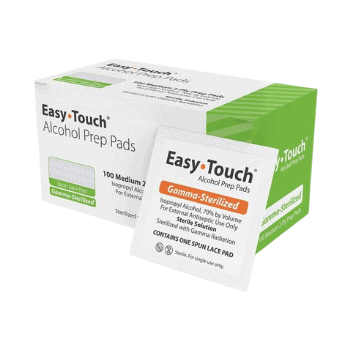
Alcohol Swabs: One for the vial stopper + one for the injection site each day.
- Per week: 14 swabs (2/day)
- 8 weeks: 112 swabs → recommend 2 × 100-count boxes
- 12 weeks: 168 swabs → recommend 2 × 100-count boxes
Protocol Overview
Concise summary of the once-daily research regimen.
- Research Goal: Activate AMPK pathways to mimic exercise-like metabolic effects[1][6].
- Schedule: Daily subcutaneous injections for 8–12 weeks (research protocols).
- Dose Range: 1,000–3,000 mcg daily (conservative); up to 5,000 mcg in advanced protocols.
- Reconstitution: 3.0 mL per 50 mg vial (~16.7 mg/mL) for precise measurements.
- Storage: Lyophilized frozen at −20 °C (−4 °F); reconstituted refrigerated 2–8 °C (35.6–46.4 °F) for up to 4 weeks[14].
Dosing Protocol
Suggested gradual titration approach for research.
- Start: 1,000 mcg daily; increase by 1,000 mcg every 2 weeks as tolerated.
- Target: 2,000–3,000 mcg daily by Weeks 3–8 (conservative).
- Advanced: Up to 5,000 mcg daily if supported by protocol design.
- Frequency: Once per day (subcutaneous); maintain consistent AMPK activation[3].
- Timing: Any consistent time; rotate injection sites daily.
Storage Instructions
Proper storage preserves peptide stability and potency.
- Lyophilized: Store at −20 °C (−4 °F) in dry, dark conditions; stable up to 24 months[14].
- Reconstituted: Refrigerate at 2–8 °C (35.6–46.4 °F); use bacteriostatic water; stable ~4 weeks[14].
- Freeze–Thaw: Avoid repeated cycles; consider aliquots for long-term storage at −20 °C (−4 °F) (3–6 months)[14].
- Allow vials to reach room temperature before opening to minimize condensation.
Important Notes
Practical considerations for research protocols.
- Use new sterile insulin syringes for each injection; dispose in a sharps container.
- Rotate injection sites (abdomen, thighs, upper arms) to reduce local irritation[11].
- Inject slowly; wait a few seconds before withdrawing the needle.
- Document daily dose, administration time, and site rotation for consistency.
- AICAR is prohibited by WADA and not approved for human therapeutic use[1].
How This Works
AICAR functions as an AMPK agonist, essentially mimicking an energy-depleted cellular state[6]. After administration, AICAR enters skeletal muscle and other cells where it is metabolized to ZMP (AICAR monophosphate), an analog of AMP that directly activates AMP-activated protein kinase (AMPK)[6]. AMPK serves as the master regulator of cellular energy homeostasis, and its activation stimulates glucose uptake and fatty-acid oxidation in muscle while promoting mitochondrial biogenesis to boost cellular energy output[1][6]. This metabolic shift “tricks” cells into responding as if exercising or fasting, activating pathways that improve energy metabolism and endurance capacity without actual physical activity.
Potential Benefits & Side Effects
Observations from preclinical and limited human research.
- Endurance Enhancement: Sedentary mice treated with AICAR showed a remarkable +44% increase in endurance without training[2], demonstrating exercise-mimetic effects.
- Metabolic Improvements: Increases mitochondrial enzymes, fatty-acid oxidation capacity, and skeletal muscle glucose uptake[3][6]; improves insulin sensitivity in animal models.
- Therapeutic Potential: Research suggests potential for diabetic neuropathy protection and metabolic syndrome treatment in animal models[7].
- Safety Profile: Human trials (acadesine, IV) showed tolerable safety up to 210 mg/kg single dose with only mild, transient side effects[5]; research subcutaneous doses are a small fraction of this.
- Side Effects: Generally well tolerated in studies; possible mild injection-site reactions (redness, irritation) with subcutaneous use.
- Important: Despite promising preclinical results, AICAR remains experimental; no confirmed clinical benefit in humans has been established, and long-term risks are unknown.
Lifestyle Factors
Complementary strategies for research protocols.
- Maintain a balanced, protein-adequate diet to support metabolic adaptations.
- Combine with structured exercise programs to potentially amplify AMPK-mediated benefits.
- Prioritize sleep quality (7–9 hours) to optimize cellular recovery and energy metabolism.
- Monitor hydration status, especially during endurance activities.
Injection Technique
General subcutaneous guidance from clinical best-practice resources[11].
- Clean the vial stopper and injection site with alcohol swabs; allow to dry completely[11].
- Pinch a skinfold at the chosen site; insert the needle at 45–90° angle into subcutaneous tissue[12].
- Inject slowly and steadily; do not aspirate for subcutaneous injections[12].
- Wait a few seconds after full injection before withdrawing the needle.
- Rotate sites systematically (abdomen at least 2 inches from navel, outer thighs, back of upper arms) to prevent lipohypertrophy[11].
- Apply gentle pressure with gauze if minor bleeding occurs; do not rub the injection site[11].
Recommended Source
We recommend Pure Lab Peptides for high-purity AICAR (50 mg) research peptides.
Why Pure Lab Peptides?
- High-purity, third-party-tested lots with batch Certificates of Analysis (COAs).
- Consistent quality control and ISO-aligned handling procedures.
- Reliable cold-chain shipping to maintain peptide integrity.
- Comprehensive product documentation and storage guidelines.
Important Note
This content is intended for therapeutic educational purposes only and does not constitute medical advice, diagnosis, or treatment. AICAR is for research use only and is not approved for human consumption. AICAR is prohibited by the World Anti-Doping Agency (WADA) for use in competitive sports.
References
-
U.S. Anti-Doping Agency (USADA)
— What Athletes Should Know About AICAR and Other Prohibited AMPK Activated Protein Kinase Activators (official guidance, 2022) -
PubMed
— Doping control study of AICAR; endurance enhancement in sedentary animals (Drug Testing and Analysis, 2017) -
PMC (PubMed Central)
— AICAR treatment for 14 days normalizes obesity-induced dysregulation in skeletal muscle (Am. J. Physiol., 2010) -
MDPI (International Journal of Molecular Sciences)
— AICAR prevents and reverses diabetic polyneuropathy by regulating mitophagy (2024) -
PubMed
— Acadesine (AICAR) Phase I/II study; maximum tolerated dose 210 mg/kg IV (Cancer Chemotherapy and Pharmacology, 2013) -
Cell Signaling Technology
— AICAR (Acadesine) Product Data Sheet; AMPK activation mechanism and cellular effects (2021) -
JAMA Network
— Effect of adenosine-regulating agent acadesine in cardiac surgery; IV infusion protocol (JAMA, 1997) -
Endocrinology (Oxford University Press)
— AICAR stimulates fatty acid oxidation via β-adrenergic pathway in skeletal muscle -
PMC
— AICAR enhances glucose transport and mitochondrial function in muscle cells -
NCBI Bookshelf
— Best practices for injection procedures; asepsis, preparation, and administration guidelines -
MedlinePlus Medical Encyclopedia
— Subcutaneous (SQ) injections: patient instructions for proper technique and site rotation (NIH, 2023) -
CDC
— Vaccine administration: subcutaneous route guidelines (angle, site selection, no aspiration) -
PMC
— Pharmacologic considerations of subcutaneous drug injection; bioavailability and technique review -
Pure Lab Peptides
— AICAR 50mg product specification and storage instructions; quality documentation (2025) -
Biolog Life Science Institute
— Technical Information about AICAR-5′-MP (AICA Ribonucleotide); stability and handling (2018)