
Glutathione (600 mg Vial) Dosage Protocol
Quickstart Highlights
Glutathione dosage protocols leverage this master antioxidant tripeptide (γ-L-glutamyl-L-cysteinyl-glycine) to support cellular detoxification, reduce oxidative stress, and maintain redox balance throughout the body[1][2]. As the most abundant intracellular thiol, glutathione plays a central role in neutralizing free radicals, supporting liver function, enhancing immune cell activity, and protecting against environmental toxins[3][4]. This educational protocol presents a subcutaneous injection approach using a practical dilution for clear insulin-syringe measurements.
- Reconstitute: Add 2.0 mL bacteriostatic water → 300 mg/mL concentration.
- Typical daily range: 100–200 mg subcutaneously (gradual titration recommended).
- Easy measuring: At 300 mg/mL, 1 unit = 0.01 mL = 3 mg on a U-100 insulin syringe.
- Storage: Lyophilized: store at −20 °C (−4 °F); after reconstitution, refrigerate at 2–8 °C (35.6–46.4 °F); avoid freeze–thaw cycles.
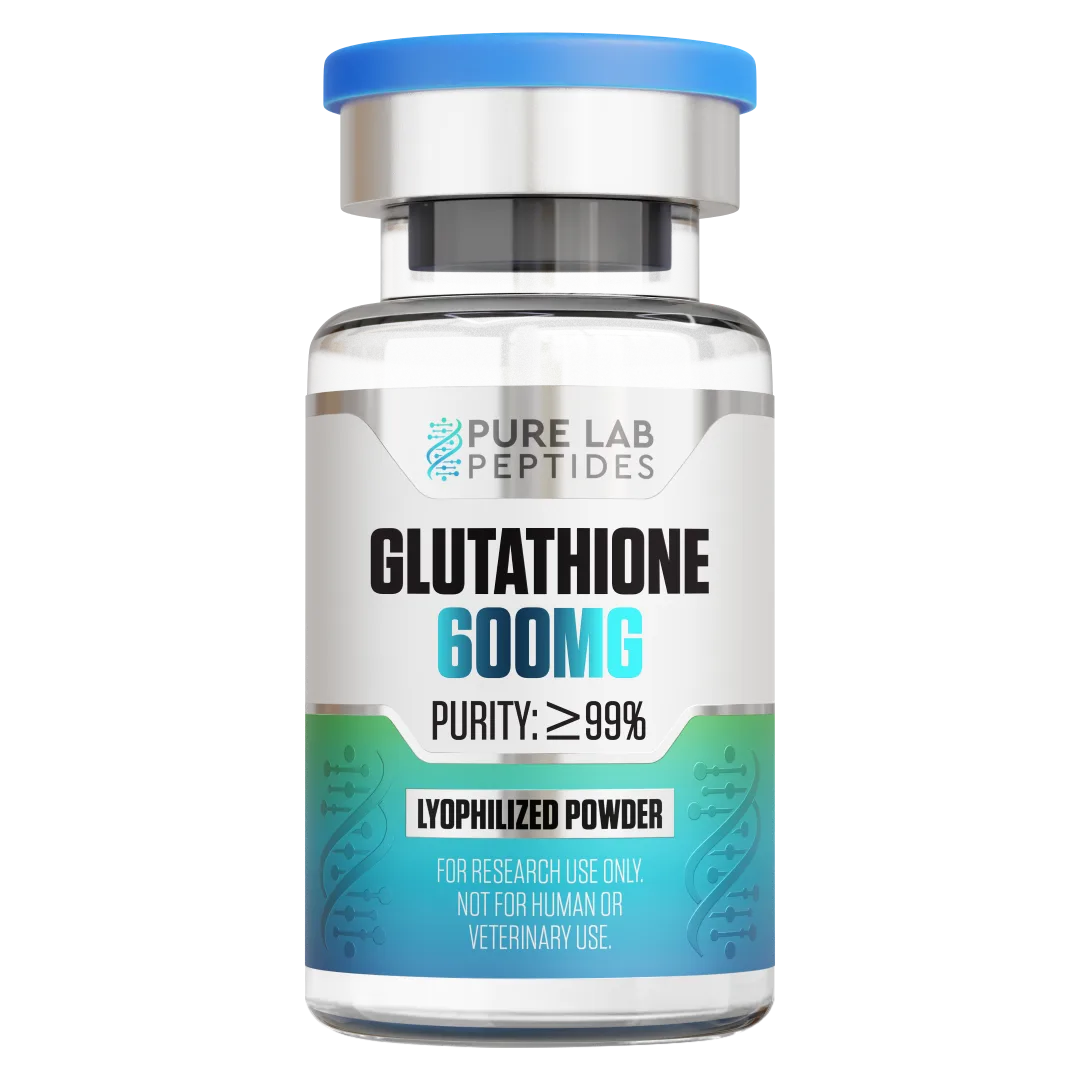
Dosing & Reconstitution Guide
Educational guide for reconstitution and daily dosing
Standard / Gradual Approach (2 mL = 300 mg/mL)
| Week | Daily Dose (mg) | Units (per injection) (mL) |
|---|---|---|
| Weeks 1–2 | 100 mg | 33 units (0.33 mL) |
| Weeks 3–4 | 150 mg | 50 units (0.50 mL) |
| Weeks 5–8 | 200 mg | 67 units (0.67 mL) |
Frequency: Inject once daily subcutaneously, or split into every-other-day dosing based on protocol goals[5]. Some protocols utilize 200 mg 1–2 × weekly for maintenance[6]. This schedule uses a practical 2.0 mL dilution for accurate measurements with standard insulin syringes.
Reconstitution Steps
- Draw 2.0 mL bacteriostatic water with a sterile syringe.
- Inject slowly down the vial wall; avoid foaming.
- Gently swirl/roll until dissolved (do not shake).
- Label and refrigerate at 2–8 °C (35.6–46.4 °F), protected from light.
Supplies Needed
Plan based on a 4–8 week daily protocol with gradual titration.
-
Peptide Vials (Glutathione, 600 mg each):
- 4 weeks (100–150 mg/day avg) ≈ 3 vials
- 8 weeks (150–200 mg/day avg) ≈ 7 vials
-
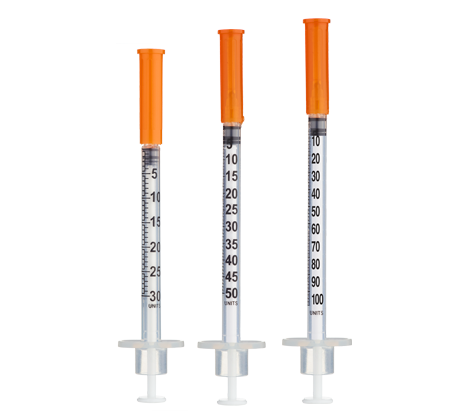
Insulin Syringes (U-100):
- Per week: 7 syringes (1/day)
- 4 weeks: 28 syringes
- 8 weeks: 56 syringes
-
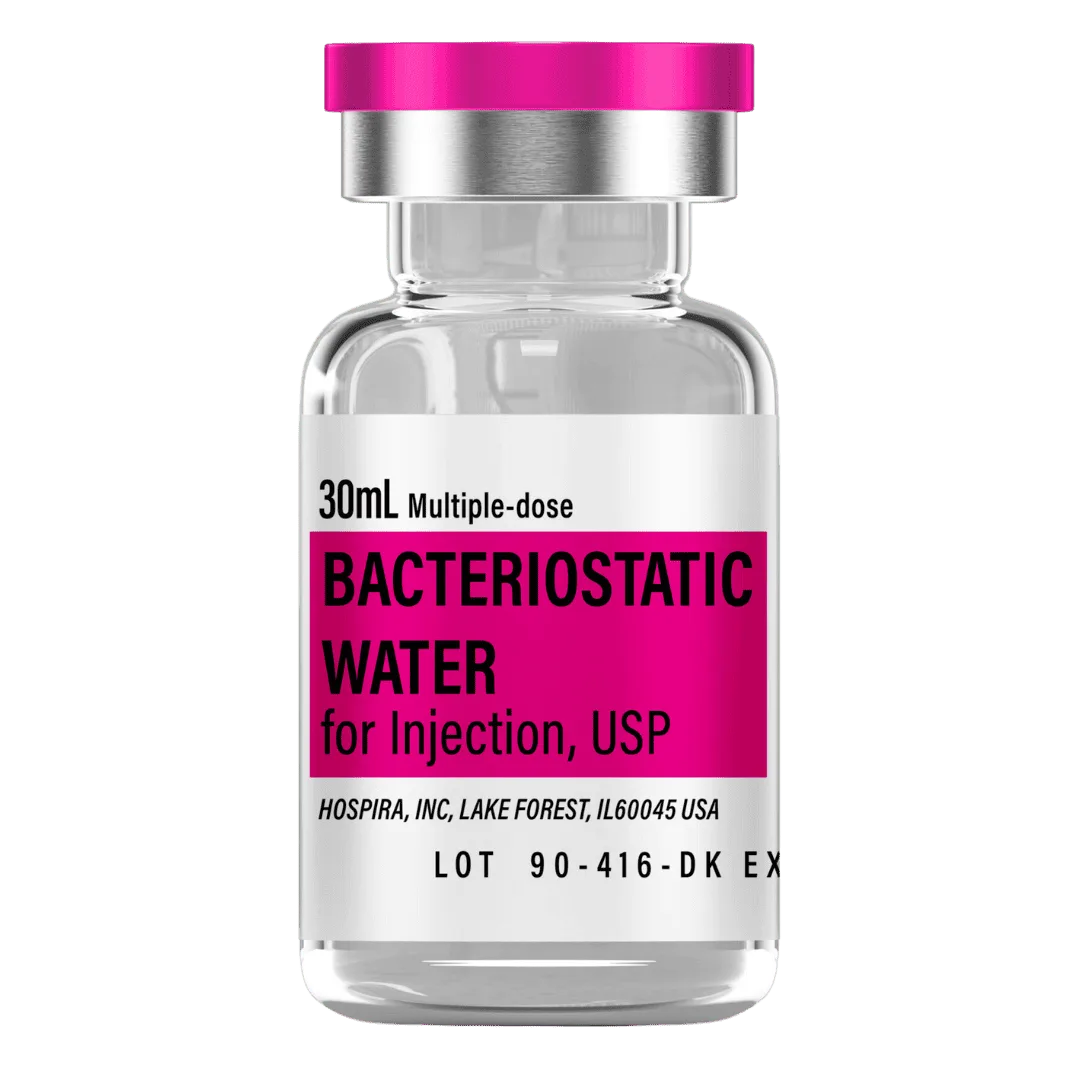
Bacteriostatic Water (10 mL bottles): Use ~2.0 mL per vial for reconstitution.
- 4 weeks (3 vials): 6 mL → 1 × 10 mL bottle
- 8 weeks (7 vials): 14 mL → 2 × 10 mL bottles
-
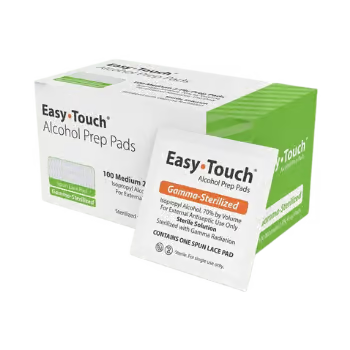
Alcohol Swabs: One for the vial stopper + one for the injection site each day.
- Per week: 14 swabs (2/day)
- 4 weeks: 56 swabs → recommend 1 × 100-count box
- 8 weeks: 112 swabs → recommend 2 × 100-count boxes
Protocol Overview
Concise summary of the subcutaneous regimen.
- Goal: Support antioxidant defense, cellular detoxification, and immune function[1][3].
- Schedule: Daily or every-other-day subcutaneous injections for 4–8 weeks.
- Dose Range: 100–200 mg daily with gradual titration.
- Reconstitution: 2.0 mL per 600 mg vial (300 mg/mL) for accurate unit measurements.
- Storage: Lyophilized frozen; reconstituted refrigerated; avoid repeated freeze–thaw.
Dosing Protocol
Suggested daily titration approach.
- Start: 100 mg daily; increase by ~50 mg every 1–2 weeks as tolerated.
- Target: 150–200 mg daily by Weeks 3–8.
- Frequency: Once per day (subcutaneous) or every other day for maintenance.
- Cycle Length: 4–8 weeks; optional cycling off for 2–4 weeks between protocols.
- Timing: Any consistent time; rotate injection sites.
Storage Instructions
Proper storage preserves peptide quality.
- Lyophilized: Store at −20 °C (−4 °F) in dry, dark conditions; minimize moisture exposure.
- Reconstituted: Refrigerate at 2–8 °C (35.6–46.4 °F); use promptly and avoid freeze–thaw.
- Allow vials to reach room temperature before opening to reduce condensation uptake.
- Glutathione is relatively unstable once reconstituted—use within 2–3 weeks for optimal potency[6].
Important Notes
Practical considerations for consistency and safety.
- Use new sterile insulin syringes; dispose in a sharps container.
- Rotate injection sites (abdomen, thighs, upper arms) to reduce local irritation.
- Inject slowly; wait a few seconds before withdrawing the needle.
- Document daily dose and site rotation to maintain consistency.
How This Works
Glutathione (GSH) is the body’s most abundant intracellular antioxidant, present in virtually every cell at concentrations of 1–10 mM[7]. As a tripeptide composed of glutamate, cysteine, and glycine, it functions as the primary thiol-based redox buffer, neutralizing reactive oxygen species (ROS), supporting Phase II detoxification pathways, and facilitating the excretion of xenobiotics and heavy metals[1][8]. The reduced form (GSH) donates electrons to neutralize free radicals and is then recycled back from its oxidized form (GSSG) by glutathione reductase[2]. Clinical and preclinical research demonstrates that maintaining optimal GSH levels supports liver function, immune cell activity, mitochondrial protection, and overall cellular homeostasis[3][9].
Potential Benefits & Side Effects
Observations from preclinical and clinical literature.
- Supports reduction of oxidative stress markers and maintenance of cellular redox balance[1][10].
- May enhance liver function and support hepatic detoxification pathways[9][11].
- Research suggests immune-modulating effects, including support for natural killer cell activity and T-cell function[3][12].
- Clinical studies on skin health indicate potential effects on melanin index and skin brightness with sustained use[13][14].
- Generally well tolerated; occasional mild injection-site reactions (redness/itch) may occur with subcutaneous administration.
- Rare reports of gastrointestinal discomfort with high-dose protocols; start with lower doses and titrate gradually.
Lifestyle Factors
Complementary strategies for best outcomes.
- Consume sulfur-rich foods (cruciferous vegetables, garlic, onions) to support endogenous GSH synthesis[15].
- Minimize alcohol consumption, which depletes hepatic glutathione stores[7].
- Reduce exposure to environmental toxins and oxidative stressors where possible.
- Prioritize adequate sleep and stress management to support antioxidant recycling.
- Consider complementary nutrients such as vitamin C and selenium that support glutathione recycling[2].
Injection Technique
General subcutaneous guidance from clinical best-practice resources[16].
- Clean the vial stopper and skin with alcohol; allow to dry.
- Pinch a skinfold; insert the needle at 45–90° into subcutaneous tissue[17][18].
- Do not aspirate for subcutaneous injections; inject slowly and steadily[17].
- Rotate sites systematically (abdomen, thighs, upper arms) to avoid lipohypertrophy[19].
Recommended Source
We recommend Pure Lab Peptides for high-purity Glutathione (600 mg).
Why Pure Lab Peptides?
- High-purity, third-party-tested lots with batch COAs.
- Consistent, ISO-aligned handling and documentation.
- Reliable fulfillment to maintain cold-chain integrity.
Important Note
This content is for educational purposes only and is not medical advice.
References
-
PubMed
— The antioxidant glutathione: protective roles, cofactor functions, and regeneration mechanisms -
PubMed
— Glutathione and glutathione-dependent enzymes: coordinated defense against oxidative stress -
PMC
— Glutathione: roles in immune function, detoxification, and clinical applications -
PubMed
— The interplay of glutathione-related processes in antioxidant defense -
PMC
— Exploring safety and efficacy of glutathione supplementation: narrative review -
PubMed
— Glutathione as a skin-lightening agent and in melasma: systematic review -
PMC
— Glutathione: pharmacological aspects and implications for clinical use in NAFLD -
PubMed
— Oxidative stress: role of mitochondria and protection by glutathione -
PMC
— Efficacy of glutathione for NAFLD treatment: open-label pilot study -
PMC
— Protective effect of glutathione against oxidative stress-induced cytotoxicity via Nrf2/HO-1 pathway -
PubMed
— Glutathione in the treatment of liver diseases: clinical practice insights -
Nature
— Glutathione system enhancement for cardiac protection against oxidative stress -
PubMed
— Clinical effect of glutathione on skin color and related conditions: systematic review -
PMC
— Glutathione and its antiaging and antimelanogenic effects: RCT at 250 mg/day -
PubMed
— Oxidative stress and regulation of glutathione in lung inflammation -
PMC
— Subcutaneous drug injection review: pharmacologic considerations -
CDC
— Vaccine administration: subcutaneous route (angle/site; no aspiration) -
CDC (Subcut Injection PDF)
— Technique diagram and site guidance for subcutaneous injections -
NCBI Bookshelf
— Best practices for injection (asepsis, preparation, and administration) -
Pure Lab Peptides
— Glutathione (600 mg) product page (quality and batch documentation)