Quickstart Highlights
Pinealon (also known as EDR; sequence Glu‑Asp‑Arg) is an ultrashort tripeptide investigated for neuroprotective and epigenetic regulatory effects, with most peer‑reviewed data from in vitro and animal studies and limited human observations[1][2][3][4][5]. Published literature frequently describes oral administration in clinical contexts; subcutaneous (SC) human dosing is not established and the SC framework below is educational for research settings only[4][5].
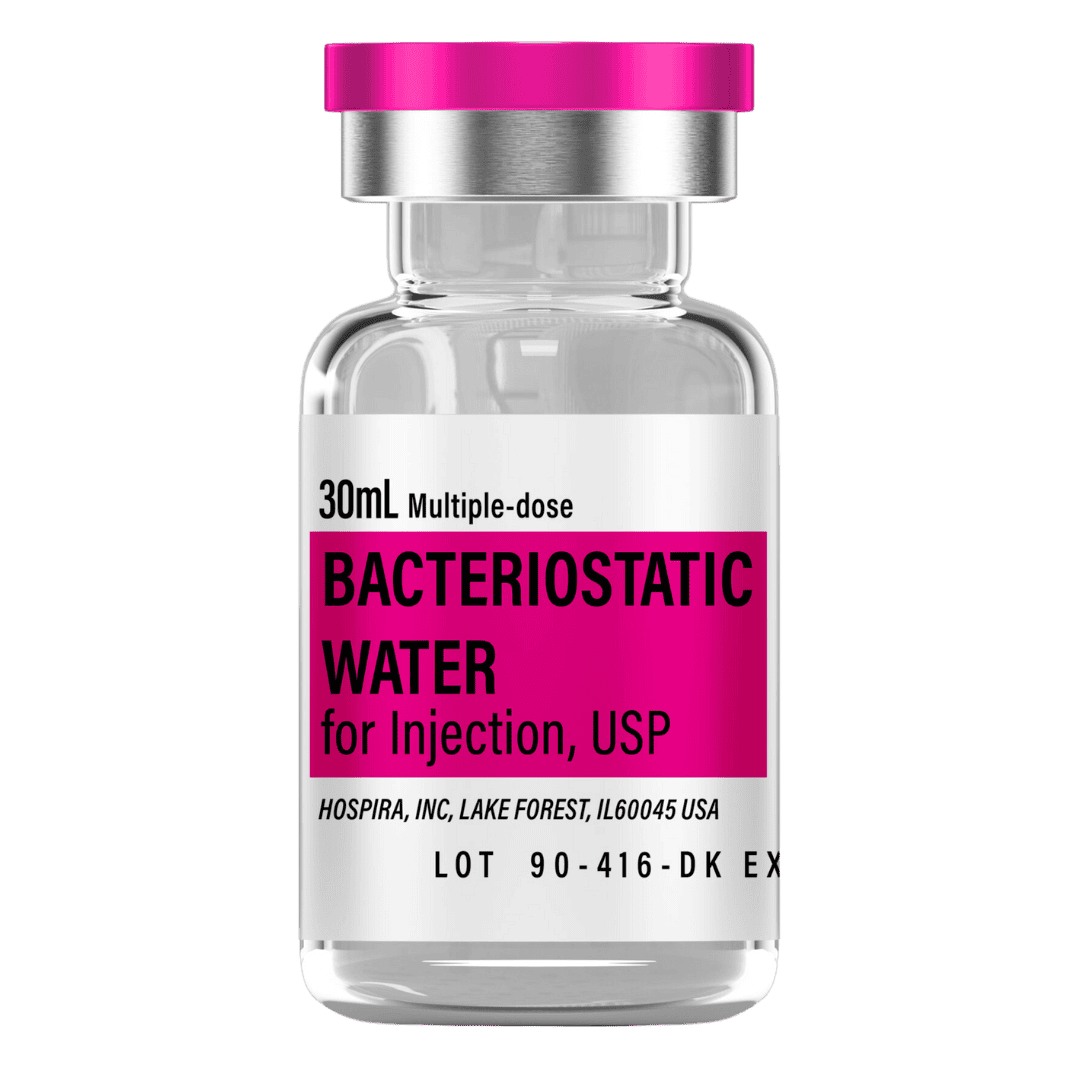
- Reconstitute: Add 3.0 mL bacteriostatic water → ~6.67 mg/mL concentration.
- Research-use daily range (educational): 200–500 mcg once daily with gradual titration (SC route not defined in clinical trials; see Evidence note above).
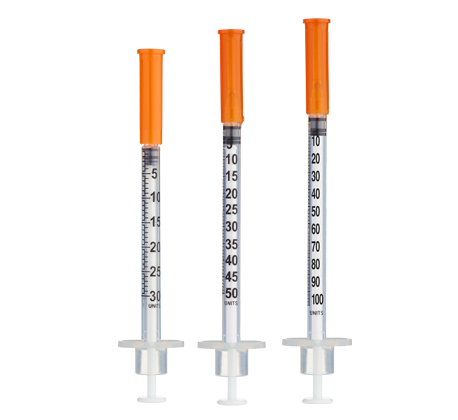
- Insulin‑syringe math: At 6.67 mg/mL, 1 unit = 0.01 mL ≈ 66.7 mcg on a U‑100 insulin syringe.
- Storage: Lyophilized: store at −20 °C (−4 °F) protected from light; after reconstitution, refrigerate at 2–8 °C (35.6–46.4 °F); minimize freeze–thaw cycles[12][13].
Dosing & Reconstitution Guide
Educational guide for reconstitution and daily dosing (research use only).
Standard / Gradual Approach (3 mL = ~6.67 mg/mL)
Route & frequency: Once‑daily subcutaneous (research framework). Evidence note: Peer‑reviewed reports most often describe oral administration in human contexts; subcutaneous human dosing for Pinealon is not established in clinical trials[4][5].
| Week | Daily Dose (mcg) | Units (per injection) (mL) |
|---|---|---|
| Weeks 1–2 | 200 mcg (0.20 mg) | 3 units (0.03 mL) |
| Weeks 3–4 | 300 mcg (0.30 mg) | 4.5 units (0.045 mL) |
| Weeks 5–6 | 400 mcg (0.40 mg) | 6 units (0.06 mL) |
| Weeks 7–12 | 500 mcg (0.50 mg) | 7.5 units (0.075 mL) |
Measuring note: For ≤10‑unit (≤0.10 mL) administrations, consider 30‑ or 50‑unit insulin syringes for improved readability.
Reconstitution Steps
Supplies Needed
Planning for 8–16 weeks of once‑daily administration (research framework).
-
Peptide Vials (Pinealon, 20 mg each):
- 8 weeks ≈ 1 vial (≈19.6 mg total)
- 12 weeks ≈ 2 vials (≈33.6 mg total)
- 16 weeks ≈ 3 vials (≈47.6 mg total)
-
Insulin Syringes (U‑100):
- Per week: 7 syringes (1/day)
- 8 weeks: 56 syringes
- 12 weeks: 84 syringes
- 16 weeks: 112 syringes
-
Bacteriostatic Water (10 mL bottles): Use ~3.0 mL per vial.
- 8 weeks (1 vial): 3 mL → 1 × 10 mL bottle
- 12 weeks (2 vials): 6 mL → 1 × 10 mL bottle
- 16 weeks (3 vials): 9 mL → 1 × 10 mL bottle
-
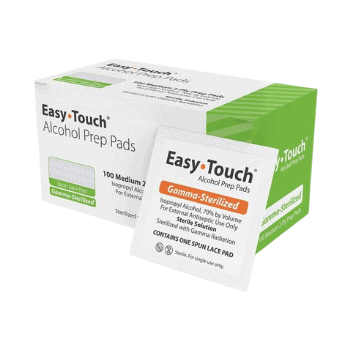
Alcohol Swabs: One for the vial stopper + one for the injection site each day.
- Per week: 14 swabs (2/day)
- 8 weeks: 112 swabs → recommend 2 × 100‑count boxes
- 12 weeks: 168 swabs → recommend 2 × 100‑count boxes
- 16 weeks: 224 swabs → recommend 3 × 100‑count boxes
Protocol Overview
Cautious, research‑only framework reflecting current evidence limitations.
- Goal: Study neuroprotective and stress‑response pathways influenced by EDR/Pinealon[1][3][5].
- Schedule: Once‑daily subcutaneous injections for 8–12 weeks (optional extension to 16 weeks); note oral dosing dominates human literature[4][5].
- Dose Range: 200–500 mcg daily with gradual titration (educational; not derived from SC clinical trials).
- Reconstitution: 3.0 mL per 20 mg vial (~6.67 mg/mL) for clear syringe conversions.
- Storage: Lyophilized at −20 °C (−4 °F); reconstituted at 2–8 °C (35.6–46.4 °F); avoid repeated freeze–thaw[12][13].
Dosing Protocol
Suggested titration for measurement practice and exposure control (research‑only).
- Start: 200–300 mcg daily; increase by ~100 mcg every 1–2 weeks as tolerated.
- Target: 400–500 mcg daily by Weeks 5–12.
- Frequency: Once per day (subcutaneous).
- Cycle Length: 8–12 weeks; optional extension to 16 weeks.
- Timing: Any consistent time; rotate injection sites.
Storage Instructions
Proper storage preserves peptide quality.
Important Notes
Evidence remains preliminary, with limited human data and predominant oral administration in reports. SC dosing parameters are not clinically established for Pinealon[4][5].
- Use new sterile insulin syringes; dispose in a sharps container.
- Rotate injection sites (abdomen, thighs, upper arms) to reduce local irritation.
- Inject slowly; wait a few seconds before withdrawing the needle.
- Document daily dose and site rotation for consistency.
How This Works
EDR/Pinealon may interact with chromatin and regulatory elements, modulating gene expression relevant to neuronal stress responses and plasticity; experimental models show antioxidant effects and preservation of dendritic spines[1][3][5][6][7]. Animal and cellular studies report improved viability under oxidative stress and cognitive/behavioral signals after exposure[1][2].
Potential Benefits & Side Effects
Observations from preclinical and review literature.
- Neuroprotective and anti‑oxidative signals in vitro and in vivo models[1][2].
- Epigenetic modulation and preservation of neuronal structures (spines/synapses) in models[5][6][7].
- Human evidence remains limited and heterogeneous; safety/tolerability for SC use is not characterized in controlled trials[4][5].
- Subcutaneous injections may cause mild local reactions (redness/itch); rotate sites to avoid lipohypertrophy[8][11].
Lifestyle Factors
Complementary strategies for rigorous research protocols.
- Standardize sleep/wake windows and minimize confounders (caffeine/alcohol) when studying cognition.
- Maintain consistent nutrition and training plans to reduce variability.
- Track outcomes with validated tools (e.g., reaction time, memory tasks) pre/post exposure.
Injection Technique
General subcutaneous guidance from authoritative resources[8][9][10][11].
- Clean the vial stopper and skin with alcohol; allow to dry.
- Pinch a skinfold; insert the needle at 45–90° into subcutaneous tissue[8].
- Aspiration is not recommended for routine subcutaneous vaccine‑type injections[9][11].
- Rotate sites (abdomen, thighs, upper arms) to prevent lipohypertrophy and ensure consistent absorption[10].
Recommended Source
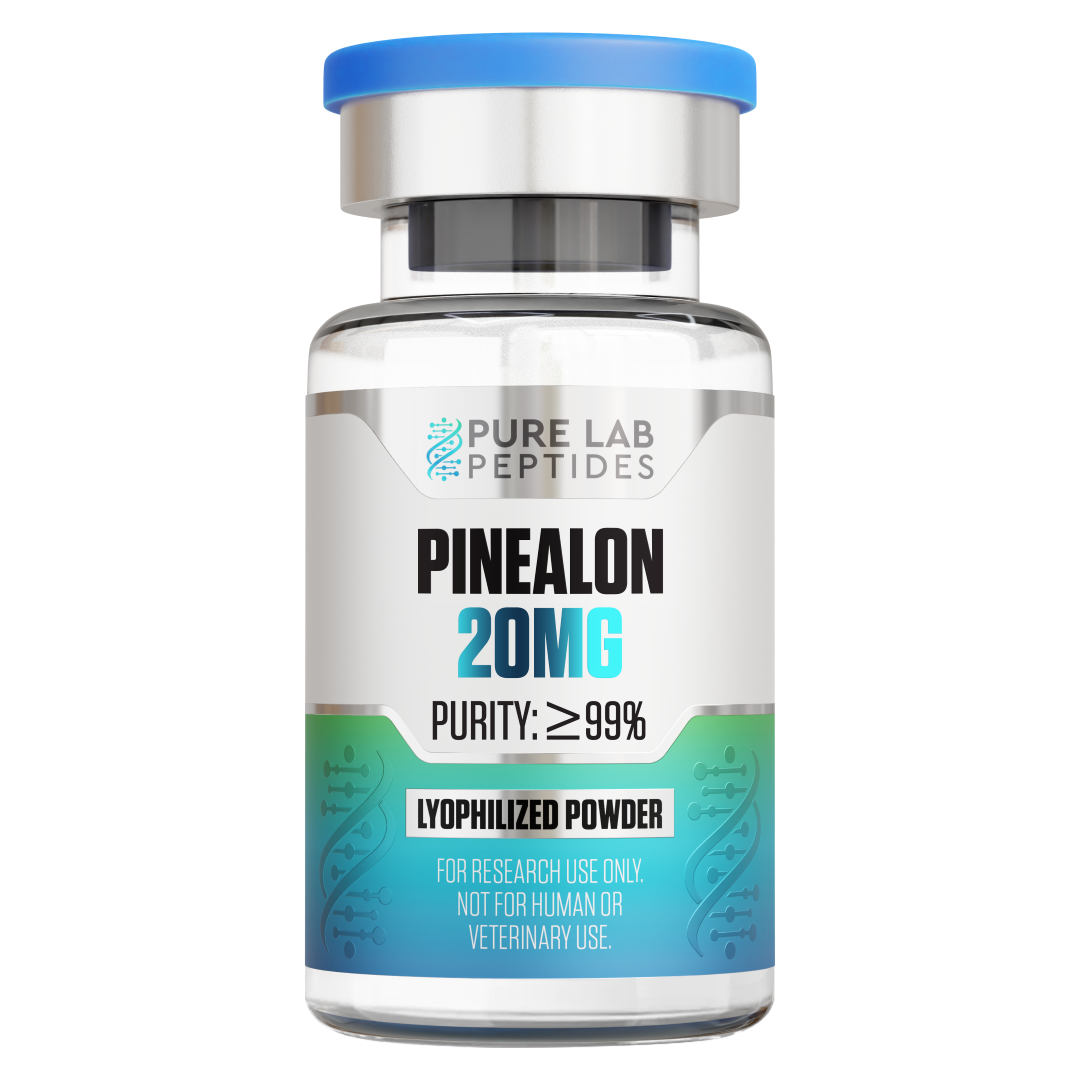
We recommend Pure Lab Peptides for high‑purity Pinealon (20 mg).
Why Pure Lab Peptides?
- High‑purity, third‑party‑tested lots with batch COAs.
- Consistent, ISO‑aligned handling and documentation.
- Cold‑chain conscientious fulfillment.
Product ID: 14274
Important Note
This content is intended for therapeutic educational purposes only and does not constitute medical advice, diagnosis, or treatment.
References
-
Rejuvenation Research — Khavinson et al. (2011). Pinealon increases cell viability by suppression of free radical levels (in vitro; mechanistic).
-
Behavioral and Brain Functions (PMC) — Arutjunyan et al. (2012). Pinealon protects rat offspring from prenatal hypoxia (animal).
-
Molecules (PMC) — Khavinson et al. (2020). EDR peptide: possible mechanisms of gene expression/protein synthesis regulation (review).
-
Pharmaceuticals (MDPI) — Khavinson et al. (2021). Neuroprotective effects of tripeptides—epigenetic regulators; reports of oral EDR in human contexts (review).
-
Int. J. Mol. Sci. (PMC) — Ilina et al. (2022). Neuroepigenetic mechanisms of ultrashort peptides in Alzheimer’s disease (review).
-
Bulletin of Experimental Biology and Medicine (Springer) — Kraskovskaya et al. (2017). Tripeptides restore the number of neuronal spines (in vitro/in vivo models).
-
Int. J. Mol. Sci. (MDPI) — Kraskovskaya et al. (2024). Short peptides protect fibroblast‑derived induced neurons (cell model of human neuronal aging).
-
Drugs & R&D (PMC) — Usach et al. (2019). Subcutaneous injection of drugs: technique and pharmacology (review; angle, volumes).
-
CDC — Vaccine administration: during vaccination (subcutaneous route overview; aspiration not needed).
-
NCBI Bookshelf — Best practices for injection (asepsis, preparation, site rotation).
-
CDC Pink Book — Chapter 6: Vaccine Administration (aspiration not recommended).
-
Pharmaceutics (PMC) — Shi et al. (2023). Strategies to overcome protein/peptide instability; lyophilized storage at −20 °C; minimize freeze–thaw (review).
-
Clinical Chemistry (PMC) — Hoofnagle et al. (2016). Recommendations for peptide generation/quantification/storage (guidance for −20 °C dry; 2–8 °C solutions).
-
Journal of Neurology & Neuroscience (PDF) — Khavinson et al. (2016). Neuroprotective effect of EDR peptide in mouse model of Huntington’s disease (animal).
-
Mechanisms Review (ScienceDirect) — Dörmer et al. (2004). EDR as stress‑related survival factor; low‑range activity (preclinical).
-
Pure Lab Peptides — Pinealon (20 mg) product page (supplier; research use only).